
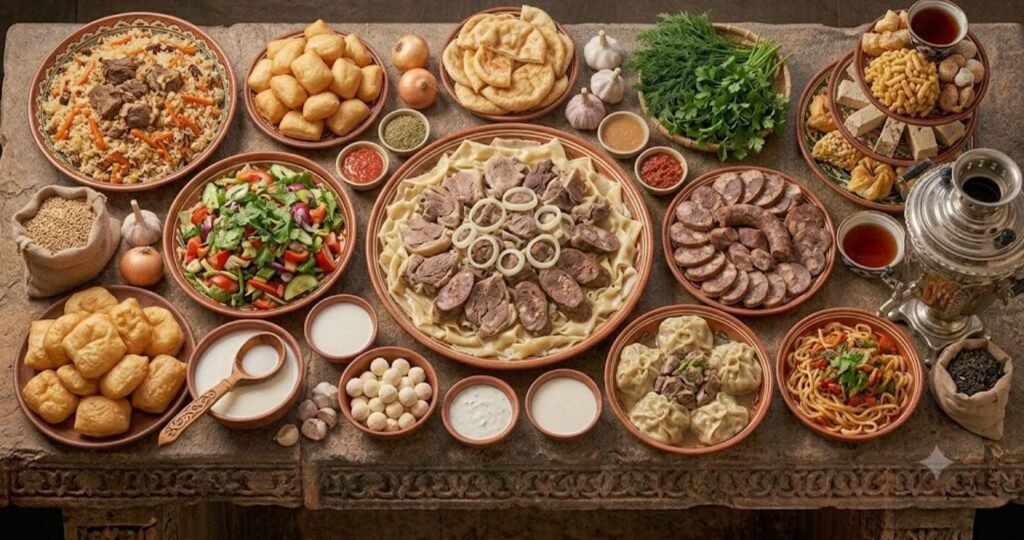
Kazakhstan Food is known for its rich culinary heritage, authentic Central Asian flavors, and deep nomadic traditions. The cuisine features hearty meat dishes, fresh dairy products, homemade breads, and simple recipes that families have passed down for generations. Traditional meals reflect the country’s history, culture, and hospitality while making the most of locally available ingredients. Famous dishes such as beshbarmak, kazy, kuyrdak, and baursak showcase the unique flavors that make Kazakhstan Food stand out. Every dish tells a story of survival, community, and respect for nature, making the cuisine both meaningful and delicious.
One of the defining characteristics of Kazakhstan Food is its focus on fresh, high-quality ingredients and traditional cooking techniques. Families often prepare meals using beef, lamb, horse meat, dairy products, flour, and seasonal vegetables. These ingredients give Kazakhstan Food its rich and satisfying flavors while preserving recipes that families have passed down for centuries. Kazakh cooks slowly prepare many traditional meals to develop deep flavors and tender textures. They continue to follow time-honored cooking methods that reflect the country’s rich culinary heritage. Kazakh people also value hospitality and warmly welcome guests with generous portions of food and refreshing traditional drinks.
Kazakhstan Food also reflects the country’s diverse cultural influences. Over the centuries, trade routes along the Silk Road introduced new ingredients and cooking methods that blended with local traditions. As a result, the cuisine offers a unique combination of authentic Kazakh recipes and regional flavors that continue to attract food lovers from around the world. Whether you enjoy savory meat dishes, freshly baked bread, or fermented dairy drinks, Kazakhstan Food provides a memorable culinary experience.
Whether you are discovering Kazakhstan Food for the first time or already appreciate Central Asian cuisine, this guide covers everything you need to know. You will explore the history of Kazakhstan’s cuisine, its most iconic dishes, essential ingredients, health benefits, and cultural traditions. By the end of this article, you will understand why Kazakhstan deserves far greater global recognition and why it remains one of Central Asia’s most fascinating and flavorful cuisines.
The History Behind Kazakhstan Food
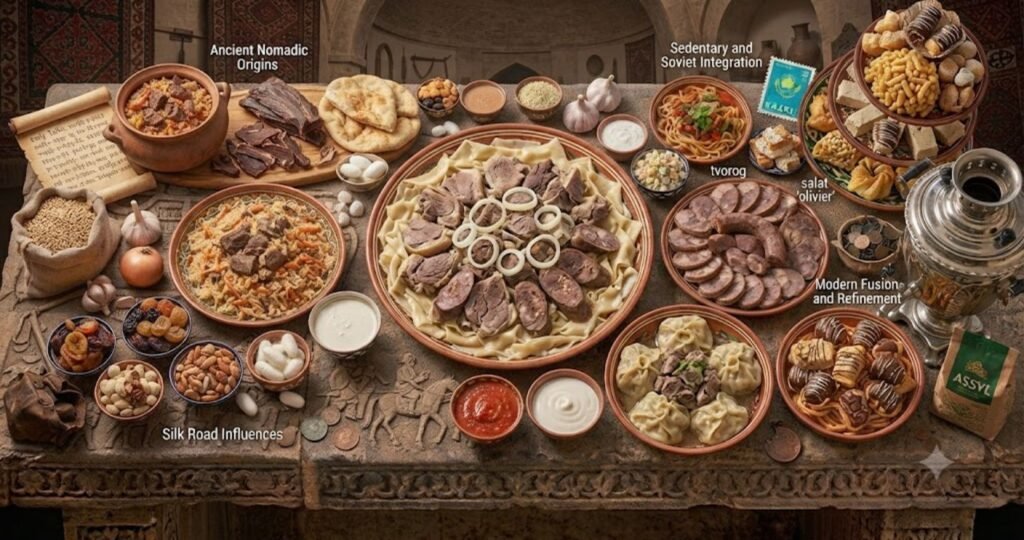
Kazakhstan food has deep roots in the nomadic traditions of the Kazakh people, who roamed the vast Central Asian steppes for centuries. Early Kazakh communities relied heavily on livestock such as horses, sheep, and camels, since these animals could survive the harsh climate and provide both meat and dairy. Furthermore, the nomadic lifestyle demanded foods that travelers could prepare quickly and carry easily, which shaped many of the simple but hearty dishes still central to Kazakhstan food today.
The Silk Road played a major role in shaping Kazakhstan food, as merchants and travelers passed through the region carrying spices, rice, and new cooking techniques from China, Persia, and beyond. In addition, Russian influence grew significantly during the 19th and 20th centuries when Kazakhstan became part of the Russian Empire and later the Soviet Union. As a result, Kazakhstan food absorbed elements of Russian cuisine, including certain breads, pickled vegetables, and cooking methods. However, the Kazakh people preserved their nomadic culinary identity throughout this period, ensuring that meat and dairy remained at the heart of Kazakhstan food. Therefore, modern Kazakhstan food represents a fascinating blend of ancient nomadic tradition and centuries of cultural exchange.
Most Popular Kazakhstan Food Dishes
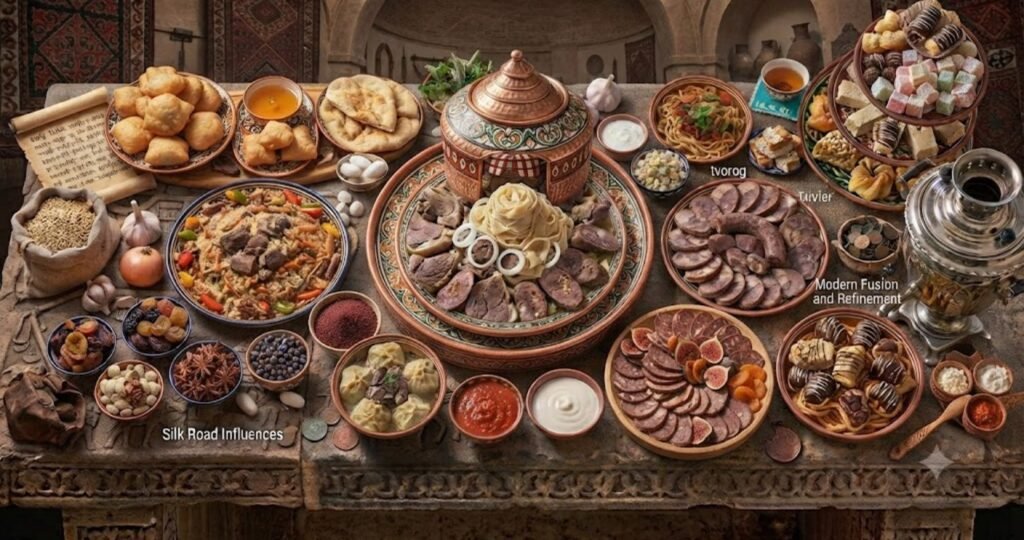
Kazakhstan food offers a range of dishes that highlight the country's pastoral heritage and resourceful cooking traditions. In addition, most Kazakhstan food dishes use simple, hearty ingredients that provide warmth and sustenance, especially during the long, cold winters. Here are five iconic Kazakhstan food dishes that every food lover should try.
Beshbarmak
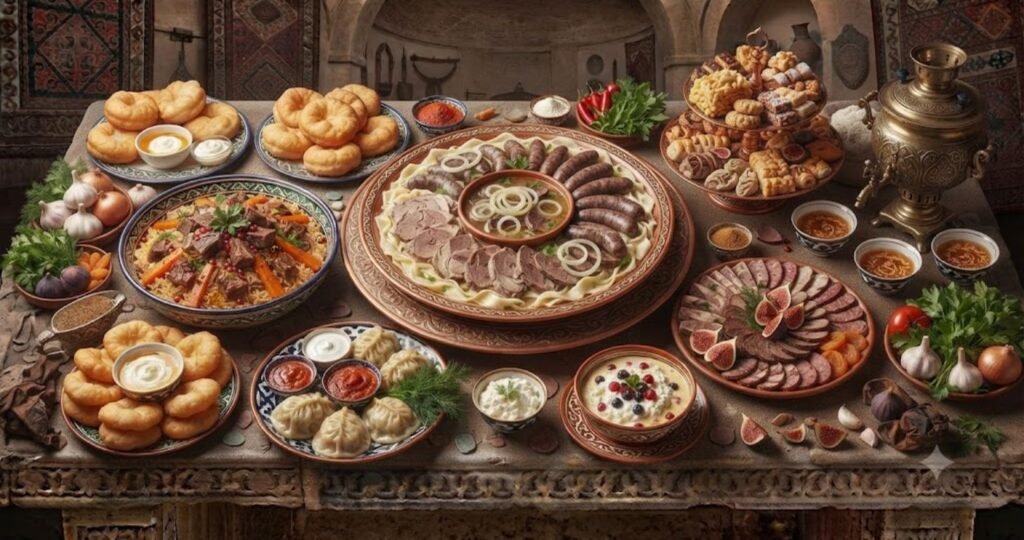
Beshbarmak stands as the undisputed national dish of Kazakhstan food and a symbol of Kazakh hospitality and tradition. Cooks prepare beshbarmak by boiling large pieces of horse meat or lamb for several hours until the meat becomes tender and falls easily from the bone. Furthermore, they serve the meat over wide, hand-cut noodles and pour a rich onion broth generously over the entire dish. In addition, families and guests traditionally eat beshbarmak together from a large communal plate, which reflects the deep cultural importance of sharing food in Kazakh society. Therefore, beshbarmak captures the essence of Kazakhstan food — generous portions, communal eating, and deep respect for tradition.
Kazy
Kazy is a beloved horse meat sausage that holds an honored place in Kazakhstan food, especially during celebrations and festive occasions. Cooks prepare kazy by stuffing seasoned horse meat and fat into natural casings, then smoking or boiling the sausage until it develops a rich, distinctive flavor. Furthermore, Kazakh families often serve kazy as part of a larger meat platter alongside other cuts of horse meat during weddings, holidays, and important gatherings. In addition, kazy demonstrates the central role that horse meat plays in Kazakhstan food, a tradition rooted directly in the country's nomadic equestrian heritage. As a result, kazy remains one of the most prized and respected delicacies within Kazakhstan food culture.
Baursak
Baursak is a beloved fried bread that appears at nearly every gathering and celebration in Kazakhstan food culture. Cooks prepare baursak by mixing a simple dough of flour, yeast, milk, and sugar, then shaping it into small balls or diamonds before deep-frying them until golden and puffy. Furthermore, the outside of baursak turns wonderfully crisp while the inside stays soft and slightly chewy, creating an irresistible texture combination. In addition, Kazakh families serve baursak with tea, honey, jam, or alongside savory dishes, making it one of the most versatile items in Kazakhstan food. Therefore, baursak represents the warm, generous spirit of hospitality that defines so much of Kazakhstan food tradition.
Plov Kazakh Style
Plov holds an important place in Kazakhstan food, even though the dish originated in neighboring Uzbekistan and spread throughout Central Asia. Cooks prepare Kazakh-style plov by frying carrots, onions, and meat together before adding rice and broth, then slow-cooking everything until the rice absorbs all the rich, savory flavors. Furthermore, Kazakh cooks often add their own regional touches, such as raisins, garlic, or chickpeas, which distinguish their version from plov found in other Central Asian countries. In addition, plov appears regularly at family dinners, celebrations, and large community gatherings across Kazakhstan. As a result, plov demonstrates how Kazakhstan food has skillfully absorbed and adapted regional influences while still maintaining its own distinct character.
Shubat and Kumis
Shubat and kumis are fermented dairy drinks that represent some of the oldest and most distinctive elements of Kazakhstan. Producers make shubat from fresh camel milk and kumis from mare's milk, carefully fermenting each drink to create a slightly sour, mildly alcoholic beverage with a rich and refreshing flavor. For centuries, Kazakh nomads have enjoyed these traditional drinks during long journeys across the vast steppes because they provide both nourishment and hydration. Many people also value shubat and kumis for their natural probiotics, vitamins, and minerals, which support digestion and overall well-being. Today, families continue to prepare these beverages using traditional methods, while local markets, roadside vendors, and cultural festivals proudly serve them to visitors. Sharing shubat or kumis with guests remains an important symbol of Kazakh hospitality and respect. As a result, these iconic drinks preserve the country's ancient nomadic traditions and continue to play a significant role in Kazakhstan Food, connecting modern generations with their rich cultural heritage.
Key Ingredients Used in Kazakhstan Food
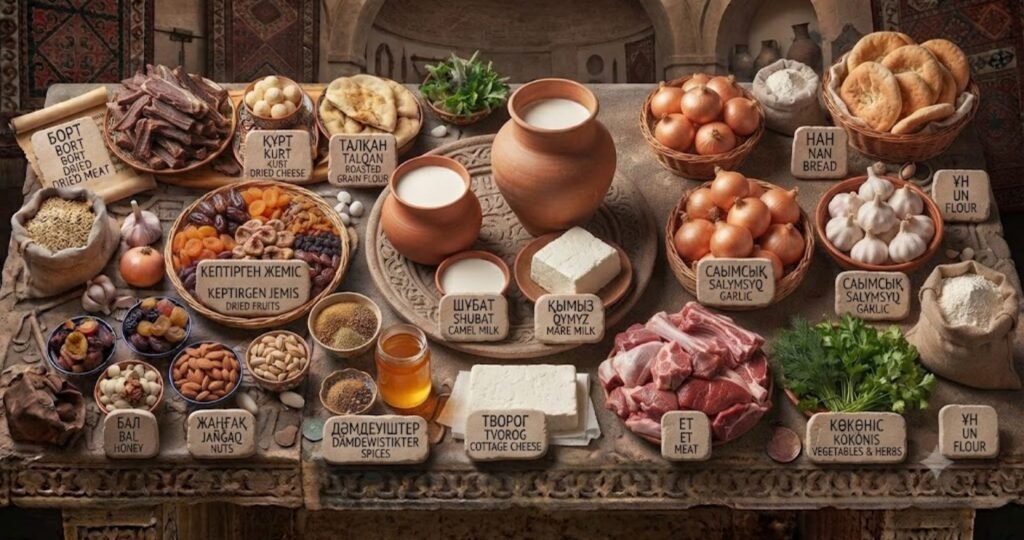
Understanding the key ingredients of Kazakhstan food helps explain why its dishes taste so hearty, distinctive, and deeply satisfying. Furthermore, many of these ingredients trace directly back to the nomadic lifestyle that shaped Kazakh culture for centuries.
Meat forms the absolute foundation of Kazakhstan food, with horse meat, lamb, and beef appearing in the vast majority of traditional dishes. In addition, Kazakh cooks value every part of the animal, using fat, organs, and bones to create rich broths and flavorful sausages that minimize waste. Moreover, dairy products play an equally important role in Kazakhstan food, including fermented drinks like kumis and shubat, as well as dried cheese curds called kurt that nomads historically carried on long journeys.
Wheat flour appears throughout Kazakhstan food in the form of noodles, breads, and fried pastries like baursak. Furthermore, onions, carrots, and potatoes provide the vegetable base for many savory Kazakhstan food dishes, since these hardy vegetables grow well in the country's challenging climate. In addition, rice became an important ingredient in Kazakhstan food through Silk Road trade and Central Asian culinary exchange, particularly in dishes like plov. As a result, Kazakhstan food achieves its distinctive heartiness and flavor through a thoughtful combination of meat, dairy, and simple grains suited perfectly to a demanding climate.
Why Kazakhstan Food Is Famous Worldwide
Kazakhstan food has begun gaining international attention for several important reasons, even though it remains less globally known than other Asian cuisines. First, Kazakhstan food offers an authentic window into nomadic culinary traditions that have nearly disappeared in many other parts of the world. Furthermore, food travelers increasingly seek out unique, lesser-known cuisines, and Kazakhstan food perfectly satisfies this growing curiosity for authentic and unfamiliar flavors.
In addition, Kazakhstan's rapid economic growth and increased international visibility have helped introduce Kazakhstan food to a wider global audience. Major cities like Almaty and Astana have seen a rise in modern restaurants that present traditional Kazakhstan food with contemporary flair, attracting both locals and international visitors. Moreover, documentaries, travel shows, and food bloggers have started highlighting Kazakhstan food as part of a broader interest in Central Asian cuisine. Therefore, Kazakhstan food is slowly stepping into the global spotlight after centuries of relative obscurity.
On the other hand, Kazakhstan food still faces challenges in gaining the same recognition as more famous cuisines from neighboring regions. However, this is gradually changing as more people travel to Central Asia and share their experiences online. Consequently, interest in Kazakhstan food continues to grow steadily among adventurous food lovers worldwide.
Where to Find Authentic Kazakhstan Food
The best place to experience authentic Kazakhstan food is, naturally, Kazakhstan itself. Almaty, the country's largest city, offers an excellent introduction to Kazakhstan food through its mix of traditional restaurants and modern dining establishments. Furthermore, Astana, the capital city, has developed a growing food scene that showcases both classic and contemporary interpretations of Kazakhstan food.
In addition, rural areas and smaller towns across Kazakhstan often provide the most authentic Kazakhstan food experiences, where families prepare dishes using traditional methods passed down through generations. Moreover, food travelers who venture into the Kazakh countryside frequently receive invitations to share meals with local families, offering an unforgettable glimpse into genuine Kazakhstan food culture and hospitality. Therefore, exploring beyond the major cities rewards visitors with some of the most memorable Kazakhstan food experiences available.
For those unable to travel to Kazakhstan, Kazakh and Central Asian restaurants have begun appearing in cities with significant Kazakh or Central Asian communities, including parts of Russia, Turkey, and Western Europe. Furthermore, specialty grocery stores sometimes carry ingredients needed to prepare Kazakhstan food at home, such as dried kurt or specific spice blends. As a result, curious food lovers can begin exploring Kazakhstan food even without immediately traveling to the region.
FAQs
Q1: What is the most famous Kazakhstan food dish?
A: Beshbarmak is the most famous Kazakhstan food dish, widely recognized as the national dish for its tender boiled meat and hand-cut noodles.
Q2: Does Kazakhstan food commonly use horse meat?
A: Yes, horse meat is a traditional and highly valued ingredient in Kazakhstan food, appearing in dishes like beshbarmak and kazy.
Q3: What is the traditional drink in Kazakhstan food culture?
A: Kumis, a fermented mare's milk drink, is one of the most traditional beverages in Kazakhstan food culture and dates back centuries.
Q4: Is Kazakhstan food similar to Uzbek or Russian food?
A: Kazakhstan food shares some similarities with Uzbek and Russian cuisine due to historical trade and cultural exchange, but it maintains its own distinct nomadic identity.
Q5: Where can I find Kazakhstan food restaurants near me?
A: You can find Kazakhstan food restaurants near you by searching "Kazakhstan food" or "Kazakh restaurant" on Google Maps, Yelp, or TripAdvisor.
Conclusion
Kazakhstan food is a cuisine deeply rooted in nomadic tradition, hospitality, and a profound connection to the vast steppes that shaped Kazakh culture for centuries. Furthermore, from the communal warmth of beshbarmak to the ancient flavors of kumis and shubat, Kazakhstan food offers a culinary journey unlike anything found in more widely known cuisines. In addition, the resourceful use of meat, dairy, and simple grains reflects a way of life built on resilience and generosity.
Moreover, as more travelers and food enthusiasts discover Kazakhstan food, this remarkable cuisine continues gaining the recognition it has long deserved. Therefore, whether you visit Kazakhstan directly, seek out a Kazakh restaurant abroad, or attempt to recreate classic recipes at home, you are engaging with one of the world's most authentic and historically rich food traditions. As a result, now is an excellent time to explore and appreciate everything that Kazakhstan food has to offer.