
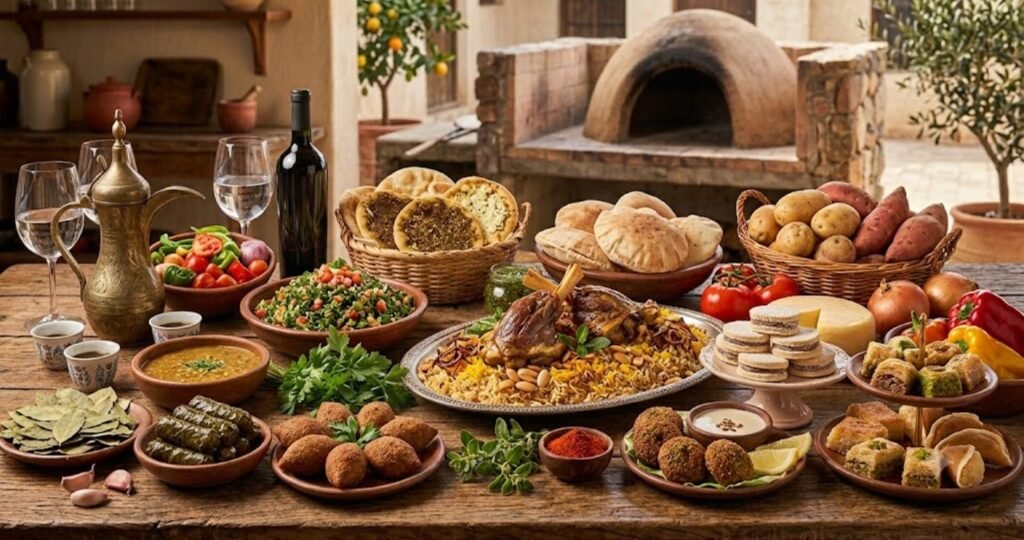
Arabic food is one of the oldest, most diverse, and most celebrated cuisines in the entire world. Furthermore, food lovers across every continent recognize Arabic for its extraordinary use of spices, fresh herbs, and wholesome ingredients that create unforgettable flavors. The Arab world stretches across more than 20 countries, from Morocco in the west to Oman in the east, and each region contributes its own unique dishes and traditions to the broader Arabic culture. In addition, Arabic reflects thousands of years of history, trade, and cultural exchange along ancient spice routes that once connected the world. As a result, every dish in Arabic tells a rich and layered story of civilization, hospitality, and a profound love of feeding others well.
Whether you are exploring Arabic for the first time or you are a longtime admirer of its bold and aromatic flavors, this guide covers everything you need to know. Moreover, by the end of this article, you will have a deep appreciation for the dishes, ingredients, and cultural values that make Arabic one of the world’s truly great culinary traditions.
The History Behind Arabic Food
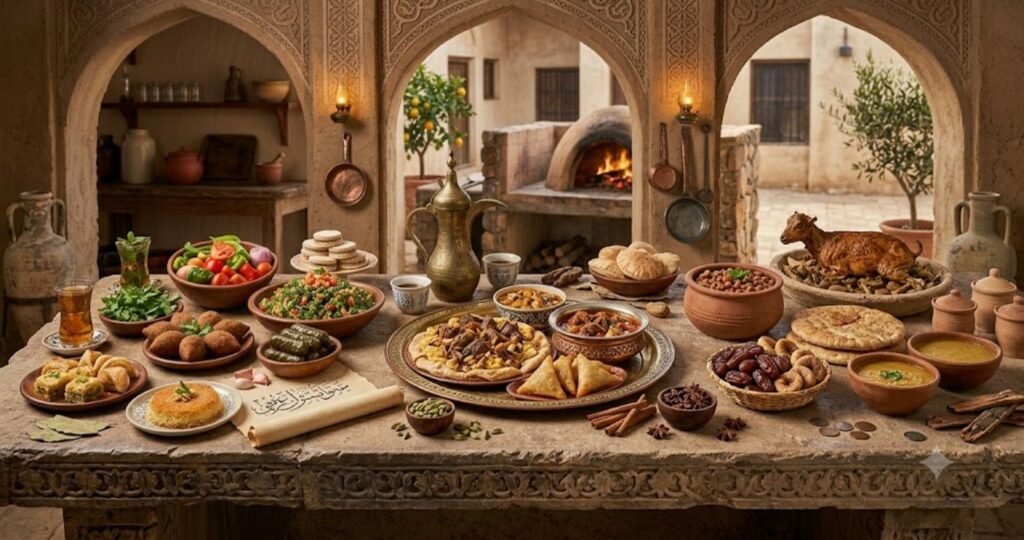
Arabic food has a history that stretches back thousands of years to the ancient civilizations of Mesopotamia, the Levant, and the Arabian Peninsula. The earliest Arab communities developed their diets around the resources available in their environments dates, grains, legumes, lamb, and camel milk formed the foundation of early Arabic. However, the rise of the Islamic Golden Age between the 8th and 13th centuries transformed Arabic into something far more sophisticated and refined.
During this remarkable period, Arab scholars, traders, and travelers brought spices, cooking techniques, and ingredients from Persia, India, Africa, and the Mediterranean world back into the heart of Arabic culture. Furthermore, Arab merchants played a central role in the global spice trade, which gave Arabic cooks access to cardamom, cinnamon, saffron, turmeric, and dozens of other fragrant spices that became defining features of the cuisine. In addition, the Ottoman Empire later added its own culinary influence, spreading dishes and techniques across a vast region that further enriched Arabic traditions. As a result, Arabic today represents one of the most historically layered and culturally significant cuisines in the world.
Most Popular Arabic Food Dishes
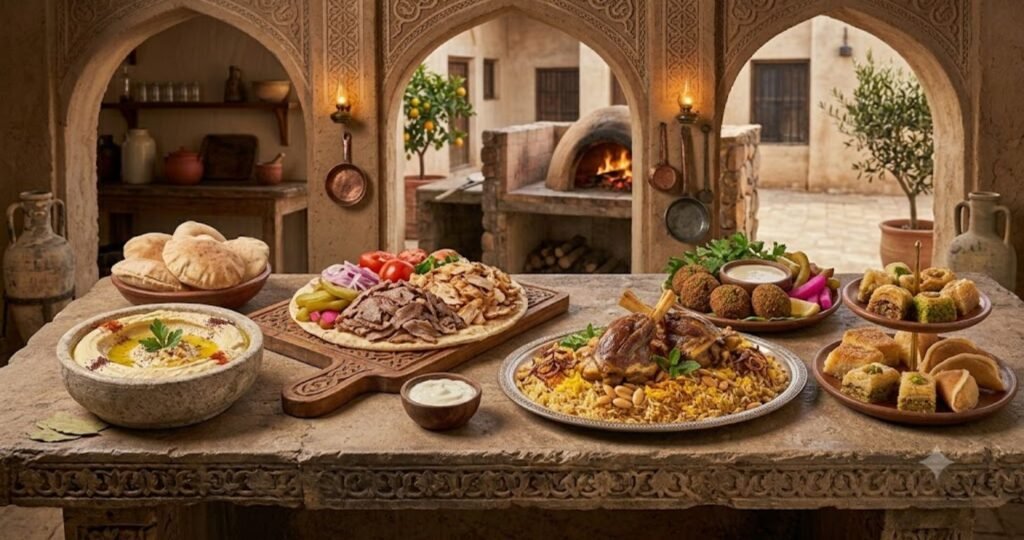
Arabic food offers an extraordinary range of dishes that span from light and refreshing appetizers to rich and hearty main courses and indulgent sweets. Moreover, most Arabic dishes use natural, plant based, or high quality protein ingredients that make them both delicious and nourishing. Here are five iconic Arabic dishes that every food lover must experience.
Hummus
Hummus is perhaps the most globally recognized dish in all of Arabic and a true ambassador of the cuisine to the wider world. Cooks prepare hummus by blending cooked chickpeas with tahini, fresh lemon juice, garlic, and olive oil into a smooth, creamy paste. Furthermore, they garnish the dish with a drizzle of extra virgin olive oil, a sprinkle of paprika, and sometimes whole chickpeas or fresh herbs. In addition, Arabic tables almost always feature hummus as part of the mezze spread a collection of small dishes shared communally among diners. As a result, hummus has traveled far beyond the Arab world and now appears on menus and supermarket shelves in countries across every continent, making it one of the most successful exports of Arabic culture.
Shawarma
Shawarma is one of the most beloved street foods in all of Arabic foods and a dish that has conquered taste buds around the globe. Cooks prepare shawarma by stacking marinated layers of chicken, beef, or lamb onto a large vertical rotisserie spit and slow roasting the meat for hours until it becomes incredibly tender and deeply flavored. Furthermore, they shave thin slices of the cooked meat and serve it wrapped in flatbread with garlic sauce, tahini, pickled vegetables, and fresh tomatoes. In addition, shawarma shops operate in nearly every city across the Arab world, offering a fast, affordable, and deeply satisfying Arabic experience to millions of people every day. Therefore, shawarma represents the accessible, crowd-pleasing heart of Arabic food street culture.
Mansaf
Mansaf is the national dish of Jordan and one of the most ceremonially significant dishes in all of Arabic. Cooks prepare mansaf by slow-cooking large pieces of lamb in a rich, tangy sauce made from dried fermented yogurt called jameed, which gives the dish its distinctive sharp and savory flavor. Furthermore, they serve the lamb over a generous bed of fragrant rice and flatbread, then pour the jameed sauce liberally over the entire dish before garnishing it with toasted nuts and fresh herbs. In addition, mansaf plays a central role in Jordanian culture, appearing at weddings, funerals, celebrations, and important gatherings as a symbol of hospitality and generosity. As a result, mansaf is far more than just an Arabic dish it is a deeply meaningful cultural experience that brings communities together.
Falafel
Falafel is one of the most iconic vegetarian dishes in Arabic food and a street food that has earned devoted fans worldwide. Cooks prepare falafel by grinding soaked chickpeas or fava beans with garlic, onion, fresh herbs like parsley and cilantro, and a blend of spices including cumin and coriander. Furthermore, they shape the mixture into small balls or patties and deep-fry them until the outside turns perfectly crispy and golden while the inside stays moist and herb-flecked. In addition, vendors serve falafel tucked inside warm pita bread with tahini sauce, fresh salad, and pickled vegetables to create a satisfying and completely plant-based Arabic meal. Therefore, falafel proves that Arabic delivers just as much flavor and satisfaction without meat as it does with it.
Baklava
Baklava is the most famous dessert in Arabic and a sweet that has captivated people around the world for centuries. Bakers prepare baklava by layering dozens of paper-thin sheets of phyllo pastry with generous fillings of chopped pistachios, walnuts, or cashews, then baking the whole creation until it turns golden and crisp. Furthermore, they soak the freshly baked baklava in a fragrant syrup made from honey, sugar, rosewater, or orange blossom water, which gives the dessert its signature sticky sweetness and floral aroma. In addition, baklava appears in endless regional variations across the Arab world, with different countries adding their own local touches to the classic recipe. As a result, baklava stands as one of the greatest and most universally loved sweets that Arabic has ever produced.
Key Ingredients Used in Arabic Food
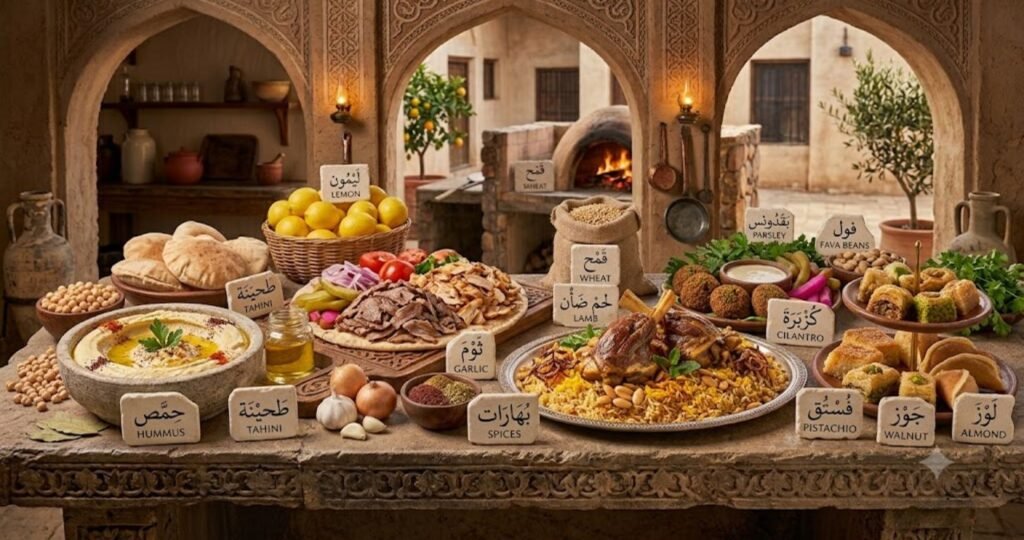
Understanding the core ingredients of Arabic food reveals why its dishes taste so aromatic, satisfying, and unlike anything else in the culinary world. Furthermore, many of these ingredients have traveled from the Arab world to kitchens across the globe, influencing countless other cuisines along the way.
Spices form the soul of Arabic food, and cooks use them with remarkable skill and generosity. Cumin, coriander, cinnamon, cardamom, turmeric, saffron, and sumac appear regularly across Arabic recipes, each adding its own distinctive warmth, depth, and complexity. In addition, tahini a smooth paste made from ground sesame seeds plays an essential supporting role in Arabic, appearing in hummus, baba ganoush, salad dressings, and meat marinades. Moreover, olive oil serves as the primary cooking fat in many Arabic traditions, especially across the Levant region covering Lebanon, Syria, Palestine, and Jordan.
Legumes such as chickpeas, lentils, and fava beans provide protein and substance to many classic Arabic dishes. Furthermore, rice and flatbreads like pita and khubz appear at virtually every Arabic table as essential accompaniments to main dishes. In addition, fresh herbs including parsley, mint, and cilantro bring brightness and freshness to Arabic food salads and garnishes. As a result, Arabic achieves its extraordinary depth of flavor not through complicated techniques but through a masterful combination of quality ingredients used with confidence and care.
Why Arabic Food Is Famous Worldwide
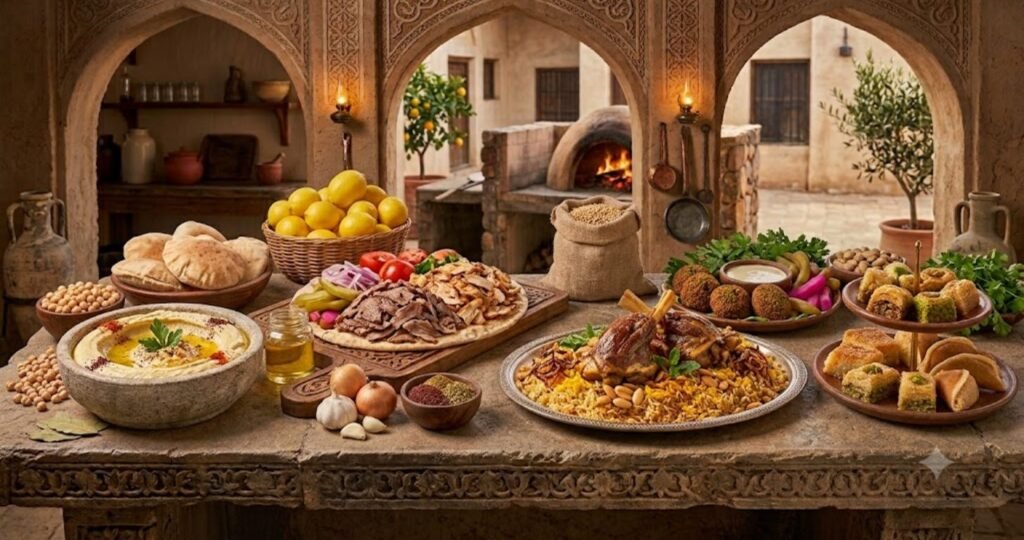
Arabic food has achieved remarkable global fame for several powerful reasons. First, its flavors are bold, complex, and immediately appealing to a wide range of palates, which makes Arabic incredibly accessible to people from diverse cultural backgrounds. Furthermore, many Arabic dishes are naturally healthy, relying on plant-based ingredients, lean proteins, and beneficial spices rather than heavy creams or processed foods. As a result, health-conscious food lovers around the world have embraced Arabic enthusiastically.
In addition, the massive Arabic diaspora has spread Arabic food culture to cities across Europe, North America, Australia, and beyond. Arabic restaurants, bakeries, and street food stalls now operate in virtually every major city in the world, giving millions of people daily access to authentic Arabic. Moreover, the concept of mezze sharing many small dishes communally around a table resonates deeply with modern dining trends that celebrate sharing, variety, and connection. Therefore, Arabic fits perfectly into the way people want to eat today.
Furthermore, social media has played a powerful role in spreading the appeal of Arabic to new global audiences. Stunning images of colorful mezze spreads, perfectly grilled shawarma, and jewel-like baklava consistently go viral online, attracting curiosity and admiration from food lovers who have never visited an Arab country. Consequently, Arabic continues to grow in global popularity and cultural influence with each passing year.
Where to Try Arabic Food
The most authentic way to experience Arabic is to visit one of the many incredible countries that make up the Arab world. Beirut in Lebanon is widely considered the culinary capital of Arabic, offering an extraordinary concentration of restaurants, bakeries, and street food vendors serving some of the finest dishes in the region. Furthermore, cities like Dubai, Cairo, Amman, Marrakech, and Istanbul all offer vibrant Arabic scenes that reward curious food travelers with unforgettable meals at every turn.
However, you do not need to travel to the Arab world to enjoy excellent Arabic food. In addition, Arabic restaurants operate in virtually every major city across Europe, North America, and Australia, serving everything from casual shawarma wraps to elaborate multi-course feasts. Moreover, many supermarkets worldwide now stock Arabic staples such as hummus, tahini, pita bread, and falafel mix, making it easier than ever to recreate classic Arabic food dishes at home. Therefore, no matter where you live, authentic Arabic food flavors are well within your reach.
For home cooks, Arabic food recipes are widely available in cookbooks, food blogs, and YouTube channels dedicated to Middle Eastern cuisine. Furthermore, the ingredients for most classic Arabic food dishes are simple, affordable, and easy to find. As a result, you can bring the warmth, aroma, and generosity of Arabic food into your own kitchen any day of the week.
FAQs
Q1: What is the most famous Arabic food dish?
A: Hummus is one of the most famous Arabic food dishes, enjoyed across the world for its creamy texture, rich flavor, and incredible versatility.
Q2: Is Arabic food spicy?
A: Arabic food is richly spiced and aromatic but generally not very hot or spicy, as Arab cooks prioritize depth of flavor over intense heat.
Q3: What makes Arabic food unique compared to other cuisines?
A: Arabic food stands out for its masterful use of fragrant spices, communal dining traditions, and a remarkable balance of bold savory and delicate sweet flavors.
Q4: Is Arabic food healthy?
A: Yes, Arabic food is generally very healthy because it relies heavily on legumes, fresh vegetables, lean proteins, olive oil, and antioxidant-rich spices.
Q5: Where can I find Arabic food restaurants near me?
A: You can find Arabic food restaurants near you by searching “Arabic food” or “Middle Eastern restaurant” on Google Maps, Yelp, or TripAdvisor.
Conclusion
Arabic food is a cuisine that carries the weight of history, the warmth of hospitality, and the brilliance of centuries of culinary innovation in every single dish. Furthermore, from the silky creaminess of hummus to the smoky perfection of shawarma, the ceremonial grandeur of mansaf, the crispy joy of falafel, and the honeyed sweetness of baklava, Arabic food delivers experiences that nourish both the body and the soul. In addition, the global rise of Arabic food shows clearly that its appeal crosses every cultural boundary with ease.
Moreover, as more people around the world discover Arabic food, this magnificent cuisine continues to grow in influence, respect, and popularity. Therefore, whether you visit an Arabic restaurant in your city, cook a classic recipe at home, or travel to the Arab world to experience it firsthand, you are stepping into one of humanity’s greatest and most generous food traditions. As a result, now is the perfect time to explore and fall deeply in love with everything that Arabic food has to offer.