
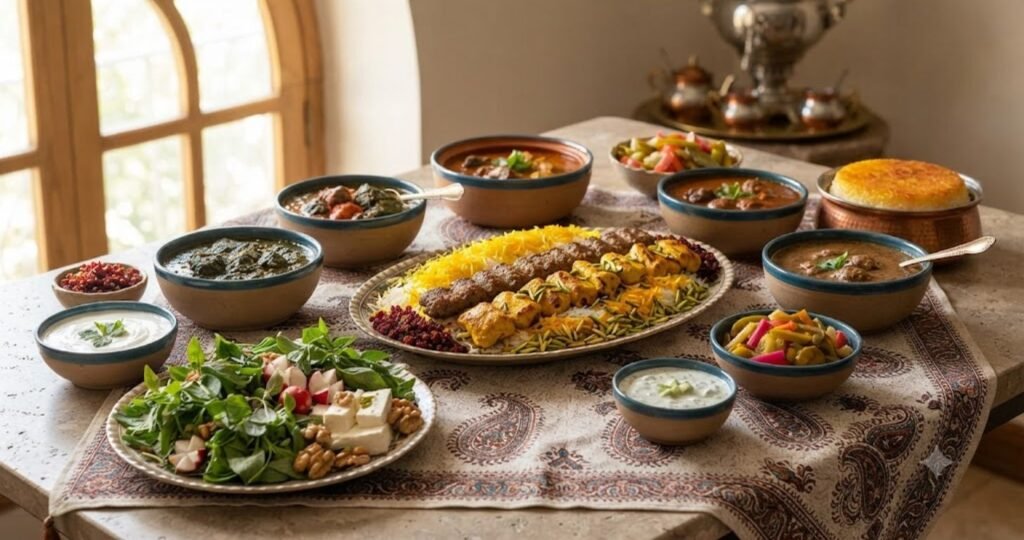
Iranian food stands as one of the most refined and flavorful cuisines in the world. Rich in history, color, and aroma, it tells the story of a civilization that has flourished for thousands of years. Furthermore, Persian cuisine combines simple, wholesome ingredients with complex cooking methods to produce meals that satisfy both the body and the soul.
Every dish in Iranian food carries cultural meaning. From saffron-infused rice to slow-simmered herb stews, each recipe reflects generations of culinary wisdom. In addition, Iranian cooks balance sweet, sour, and savory flavors with remarkable skill. As a result, the food offers a deeply layered taste experience unlike any other.
Moreover, Iranian food continues to gain global recognition. Food lovers around the world now seek out Persian restaurants and recipes. Therefore, understanding Iranian food means exploring not just flavors, but also art, tradition, and identity. This guide covers everything you need to know — from its ancient roots to its most beloved dishes.
THE HISTORY AND CULTURAL BACKGROUND OF IRANIAN FOOD
Iranian food carries a history that stretches back more than 3,000 years. Ancient Persia developed sophisticated cooking traditions long before many other civilizations discovered refined cuisine. In fact, historians trace the roots of Persian food culture to the Achaemenid Empire, where royal kitchens prepared elaborate feasts for kings and nobles.
Furthermore, Iran sits at the crossroads of the ancient Silk Road. Traders and travelers brought spices, herbs, and ingredients from China, India, the Arab world, and Central Asia. As a result, Iranian food absorbed influences from many cultures while maintaining its own distinct identity. The cuisine evolved into something uniquely Persian bold yet balanced, complex yet approachable.
In addition, Zoroastrian beliefs shaped early Iranian cooking habits. The religion emphasized purity, balance, and gratitude, which influenced how Iranians prepared and consumed food. Seasonal eating and the use of fresh herbs became deeply rooted traditions. Moreover, the celebration of Nowruz, the Persian New Year, brought families together around special dishes that still appear on Iranian tables today.
Over centuries, Iranian food also influenced neighboring cuisines. Turkish, Afghan, and even Indian culinary traditions carry traces of Persian cooking. Therefore, when you explore Iranian food, you explore a living cultural legacy that connects past and present with every bite.
MOST POPULAR IRANIAN FOOD DISHES
RICE DISHES
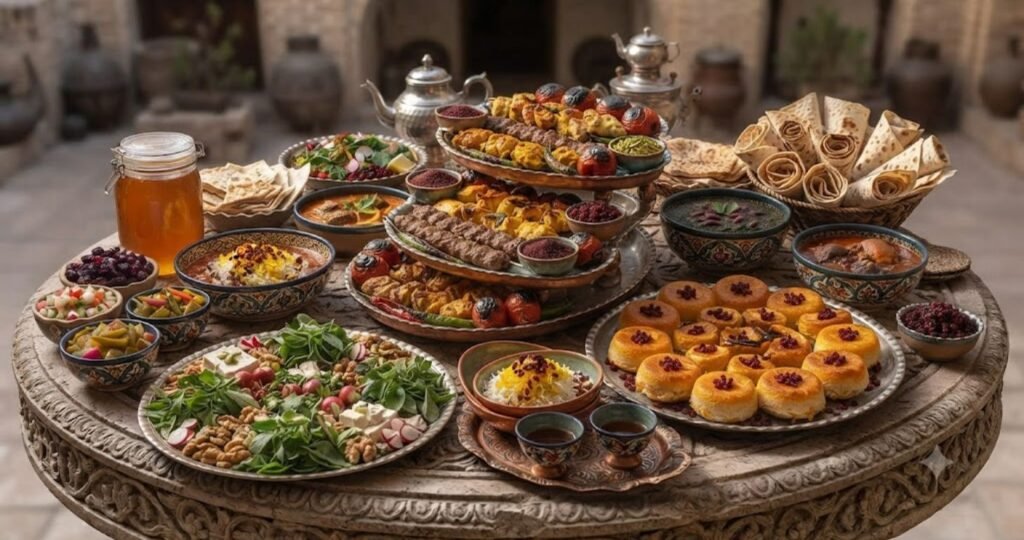
Rice sits at the heart of Iranian food culture. Persians perfected the art of cooking rice centuries ago, and their techniques remain unmatched. Chelow, which is plain steamed rice, appears at nearly every Iranian meal. However, the true crown of Persian rice cookery is Tahdig the golden, crispy crust that forms at the bottom of the pot. Families fight over Tahdig, and for good reason. It delivers a satisfying crunch that complements the soft, fluffy rice above it.
Furthermore, Polo dishes combine rice with herbs, vegetables, or meat. Baghali Polo mixes rice with dill and fava beans, while Zereshk Polo adds sour barberries for a bright contrast. Similarly, Shirin Polo, or sweet rice, includes candied orange peel and saffron for festive occasions.
STEWS AND SLOW COOKED DISHES
Khoresh, meaning stew in Persian, forms another pillar of Iranian food. Ghormeh Sabzi is perhaps the most beloved Iranian dish of all. It combines fenugreek, dried limes, kidney beans, and lamb into a dark, intensely flavored stew. In addition, Fesenjan blends pomegranate molasses and walnuts with chicken or duck, creating a sauce that is simultaneously rich, tangy, and slightly sweet. Moreover, Khoresh-e-Bademjan features tender eggplant slow cooked with lamb and tomatoes.
KEBABS
Kebabs represent Iranian food at its most festive and communal. Koobideh, made from seasoned ground lamb or beef pressed onto flat skewers, grills over open coals and arrives at the table still sizzling. Joojeh Kebab uses saffron-marinated chicken for a golden, aromatic result. Similarly, Barg kebab features thinly sliced lamb fillet, tender and smoky from the grill.
BREADS
Iranian food also celebrates bread in four main varieties. Lavash is thin and crispy, Sangak is thick and baked on pebbles, Barbari is oval and chewy, while Taftoon is soft and slightly charred. Each bread serves a different purpose at the Iranian table.
KEY INGREDIENTS USED IN IRANIAN FOOD
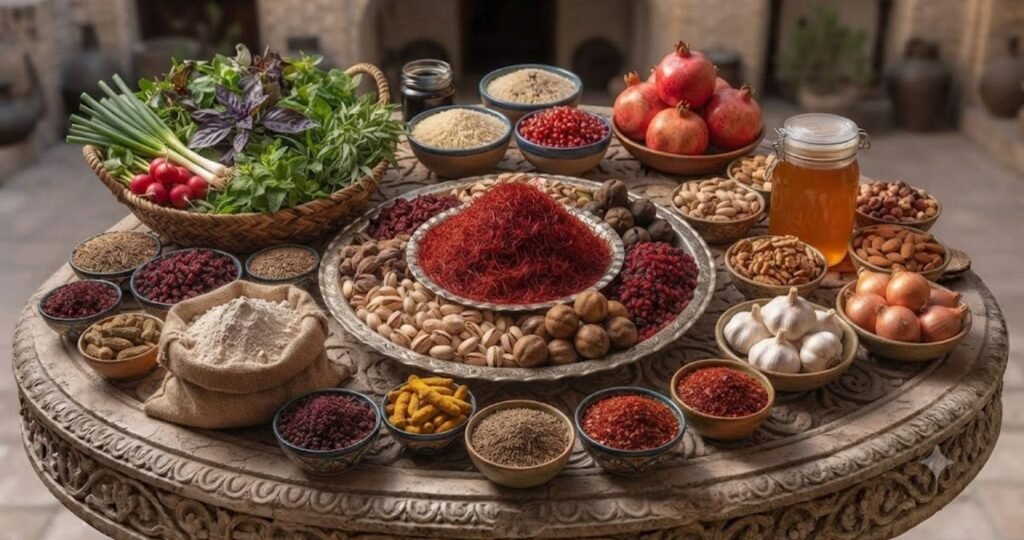
Iranian food draws its distinctive character from a carefully chosen set of ingredients. Saffron tops the list Iranians use it more than any other cuisine in the world. This precious spice adds golden color, floral aroma, and subtle sweetness to rice, stews, and sweets. In fact, Iran produces the majority of the world’s saffron supply.
Furthermore, dried limes, known as Limu Omani, provide a sharp, sour depth to stews and soups that no other ingredient can replicate. Rose water adds gentle floral notes to desserts and drinks. In addition, pomegranate molasses delivers tartness and complexity to sauces and marinades. Barberries, known as Zereshk, supply a jewel like sourness that brightens rice dishes.
Fresh herbs also define Iranian food. Iranians consume more fresh herbs per capita than almost any other nation. Fenugreek, parsley, coriander, dill, and mint appear constantly in cooking and on the table as fresh accompaniments. Moreover, walnuts feature prominently in both savory stews and sweet confections. Lamb and chicken serve as the primary proteins, while turmeric, cinnamon, and cardamom provide warmth and depth in seasoning.
IRANIAN FOOD AND ITS HEALTH BENEFITS
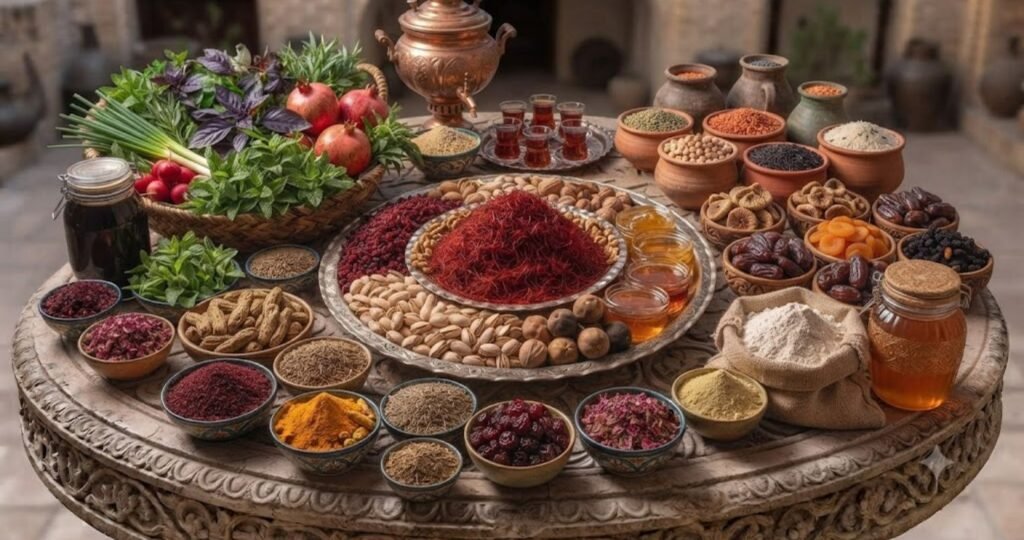
Iranian food offers impressive health benefits rooted in its traditional ingredients. Saffron, for example, contains powerful antioxidants like crocin and safranal. Research suggests these compounds support mood regulation, reduce inflammation, and protect eye health. Therefore, regular consumption of saffron-rich dishes contributes meaningfully to overall wellbeing.
Furthermore, the abundant use of fresh herbs in Iranian food delivers high levels of vitamins, minerals, and phytonutrients. Fenugreek supports blood sugar regulation. Pomegranate molasses is rich in polyphenols that protect heart health. In addition, legumes like kidney beans and chickpeas, which appear frequently in Persian stews, provide excellent plant based protein and dietary fiber.
Moreover, Iranian cooking methods tend to be gentle and slow. Long simmering preserves nutrients while developing deep flavors without excessive fat or frying. As a result, many traditional Iranian dishes align closely with Mediterranean dietary principles high in vegetables, legumes, lean proteins, and healthy fats. Similarly, the emphasis on seasonal, fresh ingredients keeps meals nutritionally dense throughout the year.
IRANIAN FOOD AROUND THE WORLD
Iranian food has earned devoted fans on every continent. As Iranian communities settled across Europe, North America, and Australia, they brought their culinary traditions with them. Today, Persian restaurants thrive in cities like London, Los Angeles, Toronto, and Sydney. In fact, Los Angeles hosts one of the largest Iranian diaspora communities in the world, and its Persian food scene reflects that richness.
Furthermore, food media and travel culture have helped introduce Iranian food to mainstream audiences. Culinary documentaries, food blogs, and social media have brought dishes like Ghormeh Sabzi and Tahdig to global attention. As a result, many non-Iranian chefs now incorporate Persian flavors and techniques into their own cooking.
In addition, the growing interest in Middle Eastern and Central Asian cuisines has benefited Iranian food enormously. Specialty grocery stores now stock saffron, barberries, dried limes, and rose water to meet rising demand. Moreover, cooking classes focused on Persian cuisine sell out quickly in major cities around the world. Therefore, Iranian food is not just surviving beyond its homeland it is thriving and winning new admirers every day.
However, authenticity remains important to the Iranian food community. Chefs and home cooks who grew up with these dishes work hard to preserve traditional recipes and techniques. As a result, the global spread of Iranian food carries with it genuine cultural knowledge and respect.
FAQS
Q1: What makes Iranian food different from other Middle Eastern cuisines?
A: Iranian food uses saffron, rose water, and dried limes as signature flavors that set it apart from Arab or Turkish cooking.
Q2: Is Iranian food spicy?
A: No Iranian food is aromatic and flavorful, but it rarely uses chili heat the way South Asian or Mexican cuisines do.
Q3: What is the most popular dish in Iranian food?
A: Ghormeh Sabzi, a herb and lamb stew, is widely considered Iran’s national dish and most beloved meal.
Q4: Can vegetarians enjoy Iranian food?
A: Yes many Iranian food dishes feature rice, legumes, herbs, and vegetables that are naturally vegetarian-friendly.
Q5: What is Tahdig in Iranian food?
A: Tahdig is the crispy golden rice crust that forms at the bottom of the pot and is considered the prize of any Persian meal.