
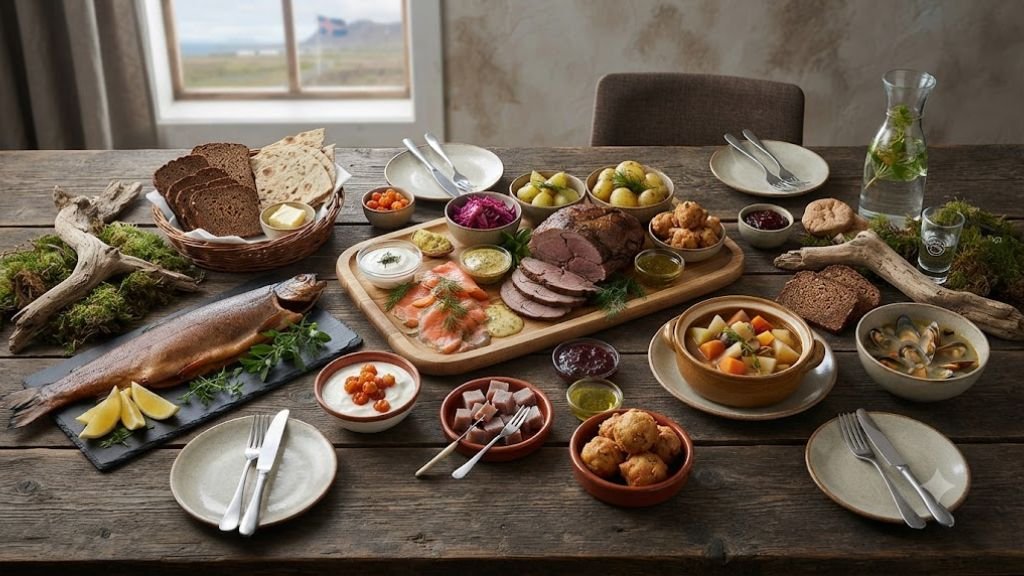
Icelandic food tells a story of survival, resourcefulness, and deep respect for nature. For centuries, Icelanders lived on a remote volcanic island with harsh winters and limited farmland, so they learned to preserve fish, cure meats, and rely heavily on dairy. Today, however, Icelandic Dishes has evolved into a modern culinary scene that blends ancient tradition with fresh, high-quality ingredients. If you want to understand Iceland, you must first taste Icelandic Dishes.
This article explores the history, popular dishes, regional variations, key ingredients, and dining culture that make Icelandic Dishes so fascinating. By the end, you will know exactly what to order, how a few classic dishes come together, and why this cuisine deserves far more attention on the global food scene.
The History Behind Icelandic Food
Icelandic food did not develop through abundance; instead, it developed through necessity. Early settlers arrived on an island with few trees, short growing seasons, and unpredictable weather. As a result, they turned to the sea for protein and relied on preservation methods like smoking, drying, and fermenting to survive long winters.
Despite these harsh beginnings, Icelandic Dishes eventually flourished into something distinctive. Fishing communities perfected techniques for curing cod and haddock, while farmers raised hardy sheep that thrived in the rugged terrain. Meanwhile, modern chefs have started blending these traditional methods with international techniques, and this combination makes today’s Icelandic Dishes both authentic and innovative.
What Makes Icelandic Food Unique
Icelandic food stands out because it relies on some of the freshest seafood and lamb in the world. Cooks embrace minimal seasoning, and they let the natural quality of local ingredients take center stage. Additionally, Icelandic Dishes reflects the country’s volcanic landscape, since geothermal energy plays a surprising role in food production.
Here are a few defining traits of Icelandic food:
- Heavy use of fresh fish, especially cod and haddock
- A strong emphasis on lamb raised on wild mountain grass
- Traditional preservation methods like smoking and fermenting
- Skyr, a thick dairy product similar to yogurt
- Geothermal bread baked underground using natural heat
Popular Icelandic Dishes You Must Try
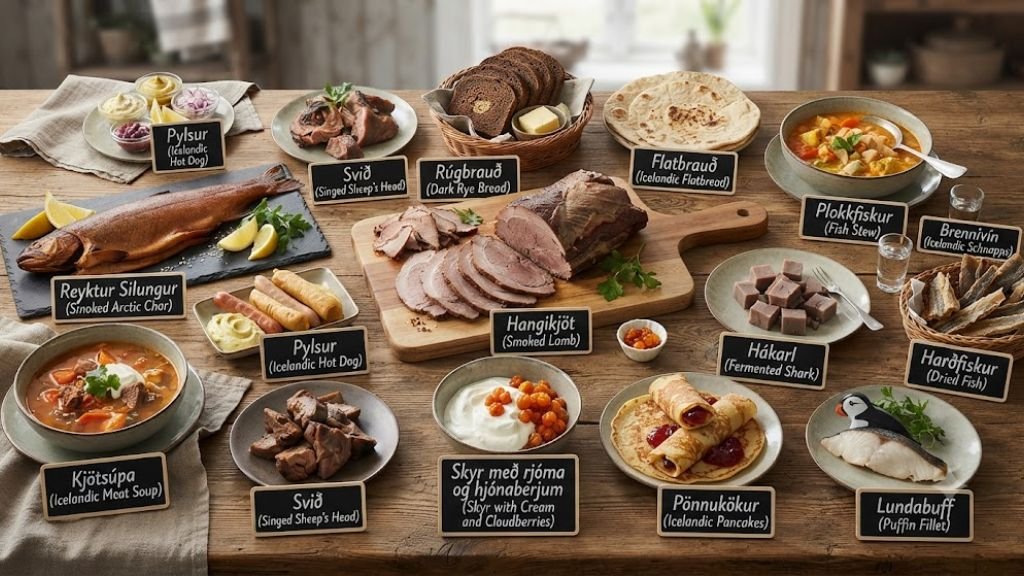
Icelandic Dishes offers something for every palate, from fresh seafood to hearty lamb stews and unique dairy products. Below are some of the most iconic dishes you will encounter throughout the country.
Plokkfiskur
Plokkfiskur ranks as one of the most comforting examples of Icelandic Dishes. Cooks mash boiled fish, potatoes, onions, and a creamy white sauce together into a warm, hearty dish. Families often serve it with dark rye bread, and the combination creates a simple yet deeply satisfying meal.
Skyr
Skyr appears on nearly every Icelandic table, and it remains a staple of everyday Icelandic Dishes. This thick, protein-rich dairy product resembles yogurt, though it actually falls into the cheese category. People eat skyr plain, mix it with berries, or use it in desserts and smoothies.
Kjötsúpa
Kjötsúpa combines lamb, root vegetables, and fresh herbs into a warming, hearty soup. Home cooks simmer the ingredients slowly, allowing the flavors to deepen over time. This dish highlights how Icelandic Dishes transforms simple, local ingredients into deeply nourishing meals.
Harðfiskur
Harðfiskur consists of wind-dried fish, usually cod or haddock, that locals eat as a snack. Vendors sell it in strips, and people often pair it with butter for extra richness. This dish represents the resourceful, preservation-focused roots of Icelandic Dishes.
Hangikjöt
Hangikjöt is smoked lamb, traditionally prepared using birch wood or dried sheep dung for fuel. Families slice it thin and serve it during holidays and special occasions. This dish shows how smoking techniques remain central to Icelandic Dishes even today.
Regional Variations in Icelandic Food
Icelandic Dishes changes depending on which part of the country you visit, even though Iceland is a relatively small nation. Coastal towns focus heavily on fresh seafood, since fishing remains a major industry along the shoreline. In contrast, inland farming regions emphasize lamb, dairy, and root vegetables that grow well in cooler climates.
In the south, geothermal activity allows farmers to grow vegetables in heated greenhouses, which adds variety to otherwise limited produce options. In the north, however, traditional preservation methods like fermenting and smoking remain more common, reflecting the region’s historical isolation. Because of this diversity, no single dish can fully represent Icelandic food; instead, the cuisine reveals itself through many regional specialties.
Key Ingredients in Icelandic Cooking
Icelandic food relies on a handful of core ingredients that appear again and again across different dishes. Understanding these staples helps you appreciate the cuisine on a deeper level.
- Fresh fish: Cod, haddock, and Arctic char feature prominently
- Lamb: Raised freely on wild mountain grass and herbs
- Dairy: Skyr, butter, and fresh milk appear in many dishes
- Root vegetables: Potatoes, carrots, and turnips grow well locally
- Rye bread: Often baked slowly using geothermal heat
- Herbs: Wild thyme and angelica add subtle flavor
These ingredients combine to create the clean, hearty flavors that define Icelandic food across the entire island.
Icelandic Dining Culture
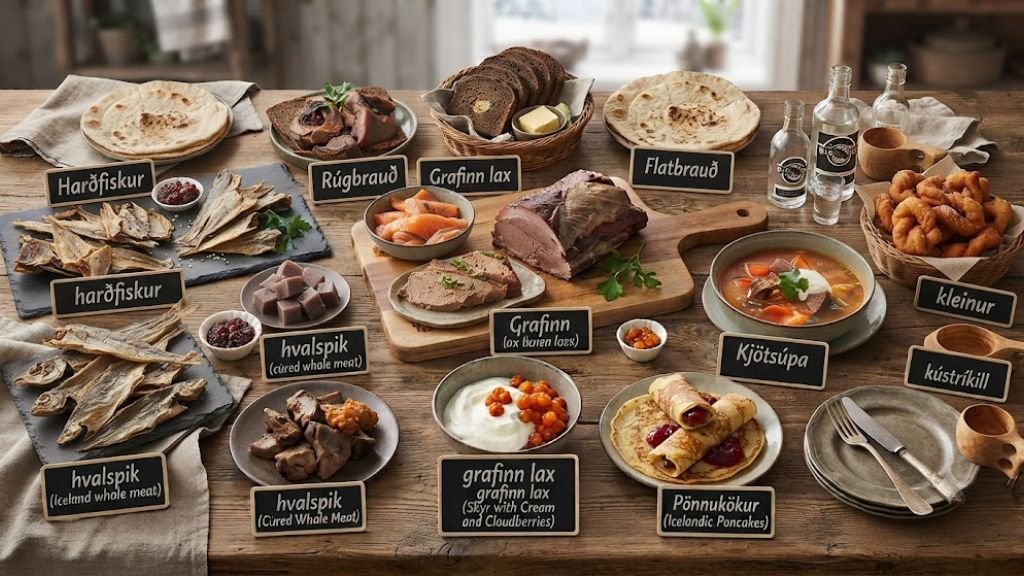
Icelandic food is not just about taste; it also reflects deep cultural values around resourcefulness and community. When you visit an Icelandic home, hosts will almost always offer coffee and something homemade, even during a short visit. This tradition reflects the warmth that exists despite Iceland’s cold, remote environment.
Meals often bring families together, especially during long winter months when outdoor activities become limited. Sunday dinners frequently feature lamb or fish, and conversation stretches on for hours around the table. This unhurried approach to dining shows how Icelandic food functions as a source of comfort during dark, cold seasons.
Coffee culture also plays a meaningful role in daily life. Icelanders drink coffee throughout the day, often pairing it with pastries or homemade bread. This tradition offers a small, cozy escape from the island’s unpredictable weather.
Where to Experience Authentic Icelandic Food
Travelers who want to taste real Icelandic food should visit local fish markets, family-run restaurants, and small coastal villages rather than tourist-focused establishments. Reykjavik offers excellent examples of modern Icelandic food, often prepared using recipes passed down for generations alongside contemporary techniques.
Coastal towns such as Akureyri and Höfn serve incredible fresh seafood, while rural farming regions showcase hearty, traditional Icelandic food built around lamb and dairy. Wherever you travel in Iceland, you will find warm hospitality and generous portions waiting for you.
Tips for Cooking Icelandic Food at Home
You do not need to travel to Iceland to enjoy this cuisine. With a few key ingredients, you can recreate authentic Icelandic food in your own kitchen.
- Stock up on high-quality fish, since it forms the base of many dishes.
- Use fresh dill and herbs to season fish dishes naturally.
- Do not rush slow-cooked soups; low, gentle heat develops richer flavor.
- Pair dishes with dark rye bread, just as Icelandic families do.
- Try skyr as a healthy alternative to regular yogurt in recipes.
By following these tips, you can bring the clean, comforting charm of Icelandic food straight to your dinner table.
Conclusion
Icelandic food deserves a place among the world’s great regional cuisines. It combines centuries-old survival techniques with fresh, high-quality ingredients, and it reflects a deep respect for nature that few other cuisines share. Whether you try a bowl of plokkfiskur at a local café or sample smoked lamb during a holiday feast, you will discover flavors that feel both rustic and refreshingly clean.
If you have not yet explored Icelandic food, now is the perfect time to start. Visit a local Icelandic restaurant, try cooking a traditional dish at home, or plan a trip to Iceland itself. Once you taste the honest, hearty flavors of this cuisine, you will understand why so many food lovers consider it one of the world’s most underrated culinary treasures.
FAQS
1. What is the most popular Icelandic food? Plokkfiskur, a creamy fish and potato dish, is widely considered the most popular Icelandic food.
2. Is Icelandic food spicy? Icelandic food is generally mild and relies on natural ingredient quality rather than heavy spice.
3. What do Icelanders eat for breakfast? Icelanders commonly eat skyr with berries alongside coffee and bread for breakfast.
4. Is Icelandic food mostly seafood? Icelandic food features plenty of seafood, though lamb and dairy also play major roles.
5. What meat is most common in Icelandic food? Lamb appears most frequently in traditional Icelandic food, especially in soups and smoked dishes.