
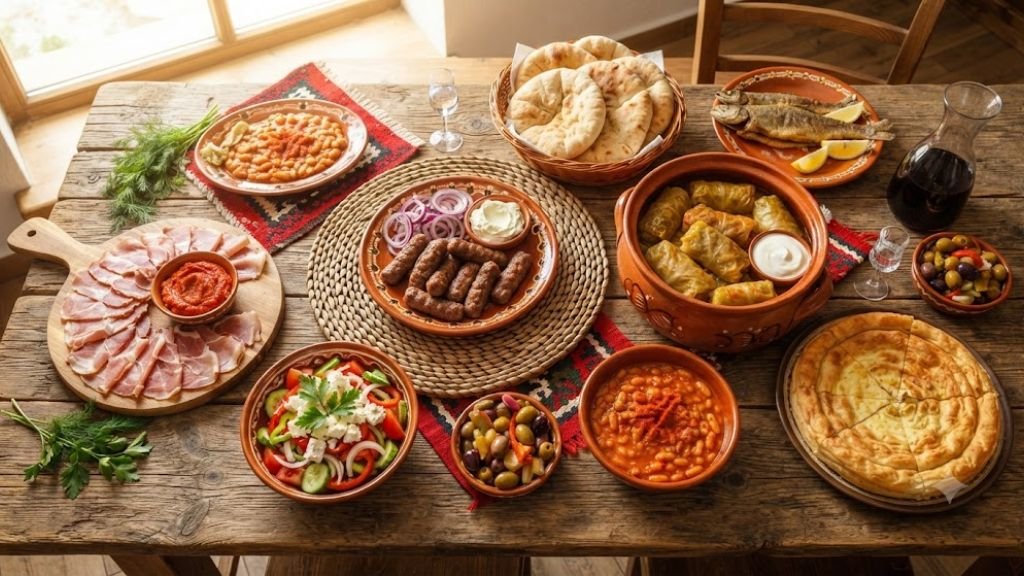
Serbian food captures the warmth, generosity, and history of the Balkans in every dish. Sitting at a crossroads between Central Europe, the Mediterranean, and the Ottoman East, Serbia has absorbed a wide range of culinary influences while keeping its own bold identity intact. Grilled meats, rich stews, and fresh vegetables all play a central role in daily meals. If you want to understand Serbian culture, you must first sit down at a Serbian table.
This article explores the history, popular dishes, regional variations, key ingredients, and dining culture that make Serbian Dishes so memorable. By the end, you will know exactly what to order, how a few classic dishes come together, and why this cuisine deserves far more recognition on the global food scene.
The History Behind Serbian Food
Serbian Dishes did not develop in isolation. Centuries of Ottoman rule introduced grilled meats, sweet pastries, and strong coffee culture. Meanwhile, Austro-Hungarian influence added rich stews, breaded dishes, and hearty baked goods to the mix. Mediterranean neighbors contributed olive oil, fresh vegetables, and lighter cooking techniques to certain regions.
Despite these outside influences, Serbian Dishes never lost its own character. Families still gather for large Sunday lunches, and grandmothers still preserve vegetables and meats using traditional methods passed down for generations. As a result, modern Serbian Dishes blends historical influence with strong regional pride, and this combination makes it endlessly interesting for travelers and food lovers alike.
What Makes Serbian Food Unique
Serbian food stands out because it relies heavily on grilled meats, fresh dairy, and slow-cooked stews. Cooks favor bold, hearty flavors over delicate seasoning, and they take pride in generous portion sizes. Additionally, Serbian Dishes varies by region, since the country includes fertile plains, mountainous areas, and river valleys.
Here are a few defining traits of Serbian Dishes:
- Heavy use of grilled and smoked meats
- A strong emphasis on fresh dairy products like kajmak
- Rich stews simmered slowly for deep flavor
- Fresh vegetables such as peppers, tomatoes, and cabbage
- A love for hearty bread served with every meal
Popular Serbian Dishes You Must Try
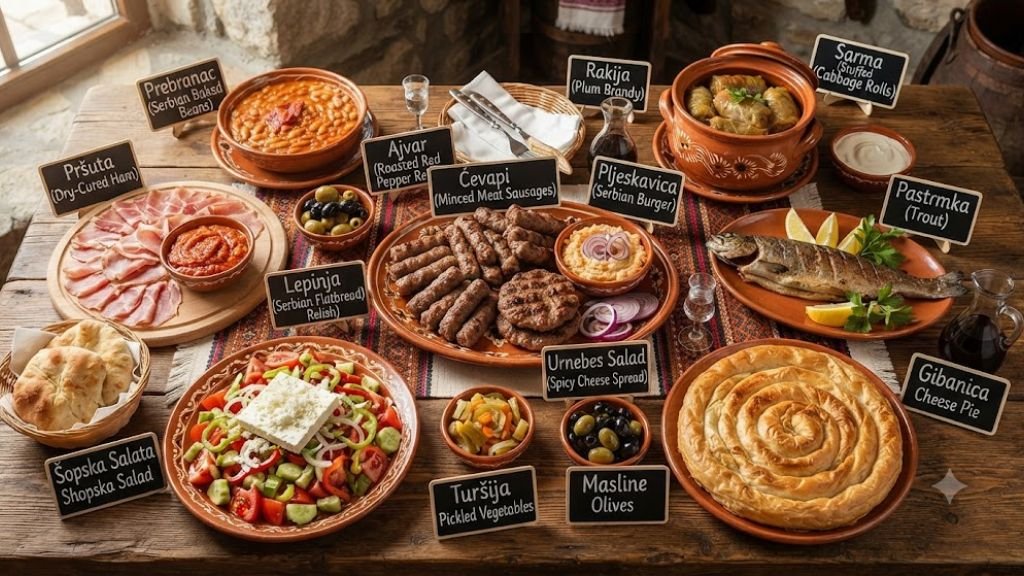
Serbian food offers something for every palate, from grilled meat platters to comforting stews and savory pastries. Below are some of the most iconic dishes you will encounter throughout the country.
Ćevapi
Ćevapi ranks as one of the most beloved examples of Serbian Dishes. Cooks grill small, seasoned sausages made from minced meat until they develop a smoky, charred exterior. Vendors typically serve them with flatbread, chopped onions, and a creamy dairy spread called kajmak.
Sarma
Sarma consists of cabbage leaves stuffed with minced meat, rice, and spices, then slow-cooked until tender. This dish appears frequently during holidays and family gatherings, and it remains a comforting staple of everyday Serbian Dishes. The slow cooking process allows the flavors to blend beautifully.
Pljeskavica
Pljeskavica is a large, seasoned meat patty similar to a hamburger, though far more flavorful and hearty. Grill masters cook it over open flames, and vendors often stuff it with cheese or serve it inside soft bread. This dish highlights the bold, satisfying nature of Serbian Dishes.
Karađorđeva Šnicla
This dish features a rolled, breaded piece of meat filled with kajmak or cheese, then fried until golden and crispy. Named after a Serbian ruler, it remains a celebrated example of hearty, indulgent Serbian food often served at special occasions.
Kajmak
Kajmak is a rich, creamy dairy product similar to clotted cream, made by skimming the top layer off boiled milk. Serbians spread it on bread or pair it with grilled meats. This ingredient represents the dairy-loving side of Serbian Dishes.
Regional Variations in Serbian Food
Serbian Dishes changes noticeably depending on which part of the country you visit. Northern regions like Vojvodina reflect Central European influence, favoring rich stews, breaded dishes, and hearty baked goods. In contrast, southern regions embrace bolder, spicier flavors influenced by Ottoman and Mediterranean cooking traditions.
In mountainous areas, cooks rely more heavily on preserved meats and dairy, since colder climates historically limited fresh produce availability. Along river valleys, however, fresh fish and lighter dishes become more common. Because of this diversity, no single dish can fully represent Serbian food; instead, the cuisine reveals itself through many regional specialties.
Key Ingredients in Serbian Cooking
Serbian food relies on a handful of core ingredients that appear again and again across different dishes. Understanding these staples helps you appreciate the cuisine on a deeper level.
- Meat: Pork, beef, and lamb feature prominently
- Dairy: Kajmak and fresh cheese appear in many dishes
- Vegetables: Peppers, tomatoes, and cabbage form the base of many meals
- Paprika: Adds warmth and color to stews and sausages
- Bread: Freshly baked and served with nearly every meal
- Rakija: A strong fruit brandy often served before meals
These ingredients combine to create the bold, satisfying flavors that define Serbian food across the entire country.
Serbian Dining Culture
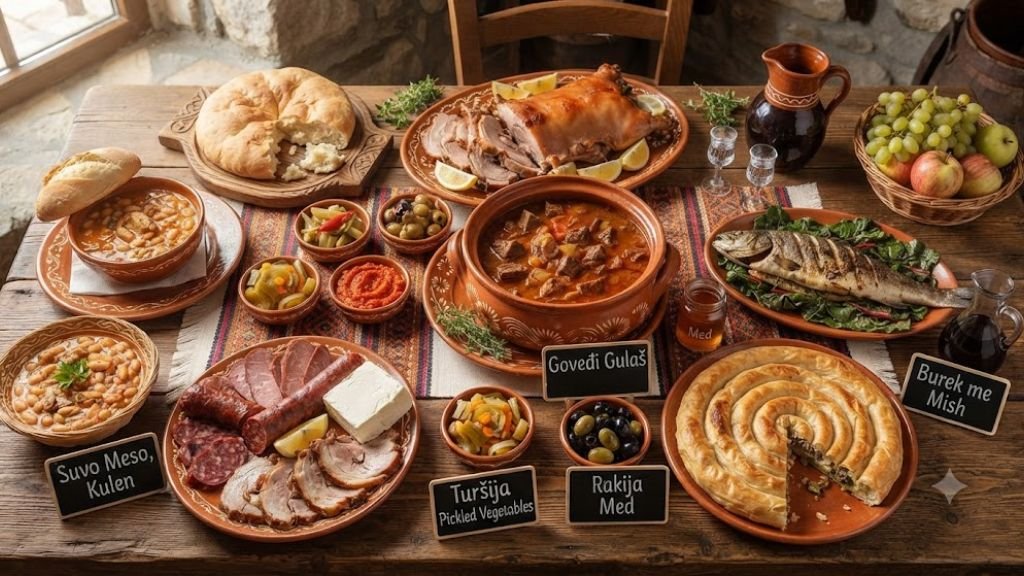
Serbian food is not just about taste; it also reflects deep cultural values around hospitality and togetherness. When you visit a Serbian home, hosts will almost always offer rakija, coffee, and something homemade, even during a short visit. Refusing this offer can seem impolite, so most guests happily accept.
Meals often stretch for hours, especially during weekend family gatherings and holiday celebrations. Multiple courses arrive slowly, and conversation flows freely between bites. This unhurried approach to dining shows how Serbian food functions as a social experience that strengthens family bonds.
Coffee culture also plays a significant role in daily life. Serbians frequently meet friends at cafés to sip strong coffee and chat for hours. This tradition, borrowed partly from Ottoman influence, remains a cherished part of everyday routine.
Where to Experience Authentic Serbian Food
Travelers who want to taste real Serbian food should visit local markets, family-run restaurants, and small countryside taverns rather than tourist-focused establishments. Belgrade offers excellent examples of traditional cooking, often prepared using recipes passed down for generations alongside modern culinary trends.
Cities like Novi Sad showcase Central European influence, while southern towns highlight bolder, spicier Serbian food shaped by Ottoman history. Wherever you travel in Serbia, you will find warm hospitality and generous portions waiting for you.
Tips for Cooking Serbian Food at Home
You do not need to travel to Serbia to enjoy this cuisine. With a few key ingredients, you can recreate authentic Serbian food in your own kitchen.
- Stock up on quality paprika, since it forms the base of many dishes.
- Use fresh minced meat for authentic ćevapi and pljeskavica.
- Do not rush slow-cooked stews; low, gentle heat develops richer flavor.
- Pair dishes with fresh, crusty bread, just as Serbian families do.
- Try kajmak as a rich, creamy topping for grilled meats.
By following these tips, you can bring the bold, comforting charm of Serbian food straight to your dinner table.
Conclusion
Serbian food deserves a place among the world’s great regional cuisines. It combines Ottoman, Central European, and Mediterranean influences, and it reflects centuries of cultural exchange without losing its own strong identity. Whether you try a plate of ćevapi at a local grill or sit down for a slow, generous family feast, you will discover flavors that feel both hearty and deeply satisfying.
If you have not yet explored Serbian food, now is the perfect time to start. Visit a local Serbian restaurant, try cooking a traditional dish at home, or plan a trip to Serbia itself. Once you taste the bold, comforting flavors of this cuisine, you will understand why so many food lovers consider it one of Europe’s hidden culinary treasures.
FAQS
1. What is the most popular Serbian food? Ćevapi, grilled minced meat sausages, is widely considered the most popular Serbian food.
2. Is Serbian food spicy? Serbian food is generally mild, though paprika adds warmth and depth to many dishes.
3. What do Serbians eat for breakfast? Serbians commonly eat bread with kajmak alongside strong coffee for breakfast.
4. Is Serbian food similar to Turkish food? Serbian food shares similarities with Turkish cuisine due to centuries of Ottoman influence.
5. What meat is most common in Serbian food? Pork appears most frequently in traditional Serbian food, followed closely by beef and lamb.