
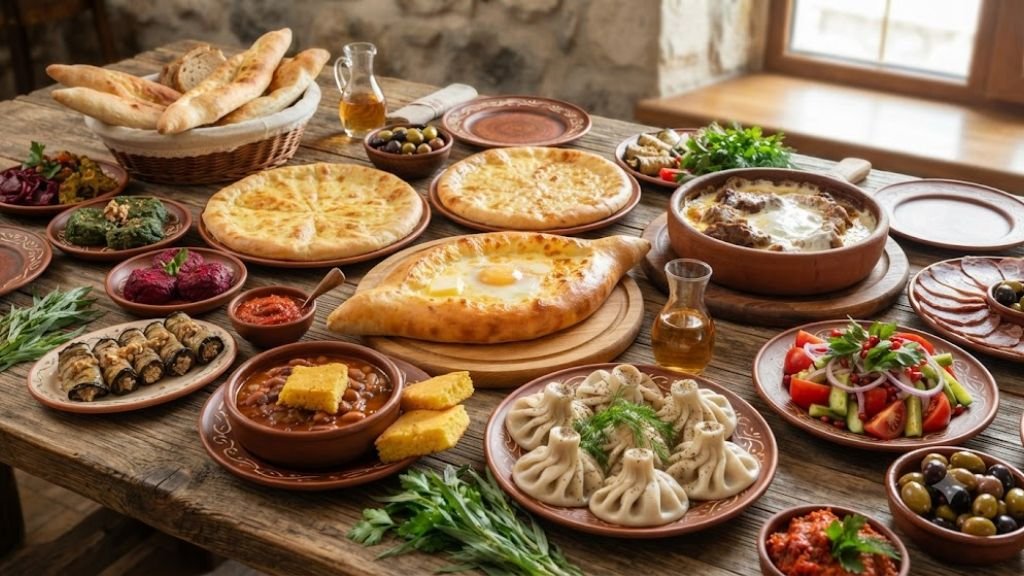
Georgian food offers one of the most underrated culinary experiences in the world. Nestled between Europe and Asia, Georgia has developed a cuisine that blends bold spices, fresh herbs, and generous hospitality into every meal. Centuries of trade along the Silk Road introduced new ingredients, while the country’s own fertile valleys and mountain regions shaped distinct local flavors. If you want to understand Georgian culture, you must first sit down at a Georgian table.
This article explores the history, popular dishes, regional variations, key ingredients, and dining culture that make Georgian food so remarkable. By the end, you will know exactly what to order, how to prepare a few classic dishes, and why this cuisine deserves a spot on every food lover’s list.
The History Behind Georgian Food
Georgian food did not develop overnight. Instead, it evolved over thousands of years through trade, conquest, and cultural exchange. Persian influence introduced saffron and rich stews, while Ottoman rule brought sweet pastries and coffee culture. Meanwhile, Georgia’s own winemaking tradition, one of the oldest in the world, shaped how people paired food with drink.
Despite these outside influences, Georgian kept its own identity firmly intact. Families still gather around large feasts called supra, and recipes still pass down through generations without much change. As a result, modern Georgian blends ancient tradition with regional creativity, and this balance makes it endlessly fascinating for travelers and food lovers alike.
What Makes Georgian Food Unique
Georgian food stands out because it relies heavily on fresh herbs, walnuts, and bold spice blends. Cooks avoid bland seasoning, and they favor rich, layered flavors that surprise the palate. Additionally, Georgian varies significantly by region, since the country includes coastal areas, mountain villages, and fertile lowlands.
Here are a few defining traits of Georgian food:
- Heavy use of walnuts, garlic, and fresh coriander
- A strong emphasis on cheese-filled breads and pastries
- Slow-cooked stews packed with warming spices
- Fresh tomatoes, cucumbers, and herbs in nearly every salad
- A deep-rooted wine culture that complements every meal
Popular Georgian Dishes You Must Try
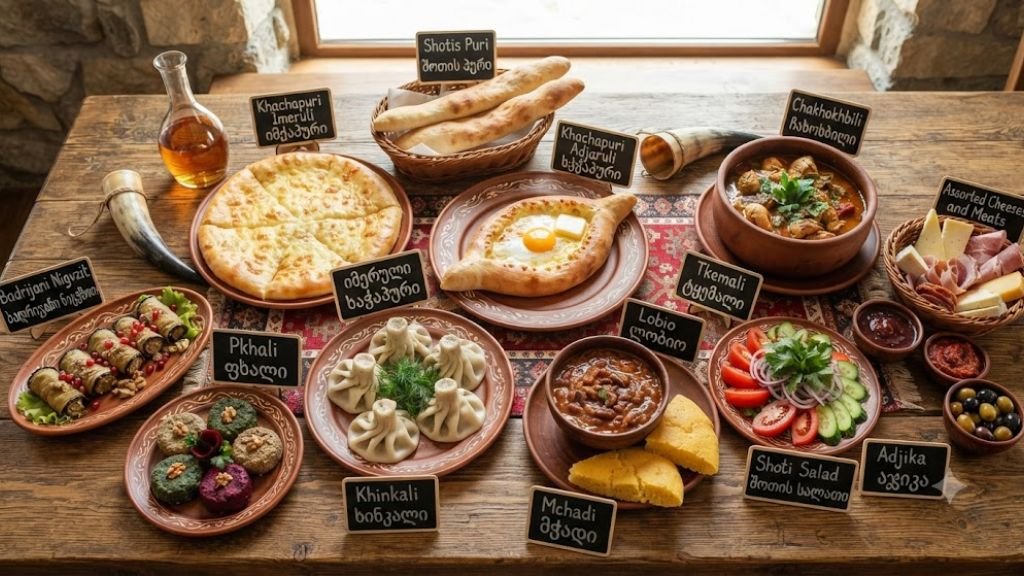
Georgian food offers something for every palate, from cheesy breads to hearty stews and fragrant dumplings. Below are some of the most iconic dishes you will encounter throughout the country.
Khachapuri
Khachapuri ranks as the most famous example of Georgian. Bakers fill soft, boat-shaped bread with melted cheese, and in some regions, they crack a raw egg on top before serving. The result delivers a warm, gooey, and utterly comforting bite that locals eat at almost every meal.
Khinkali
Khinkali are large, twisted dumplings filled with spiced meat and broth. Diners hold the dumpling by its thick knot, take a careful bite, and sip the flavorful juice inside before finishing the rest. This dish remains a staple of everyday Georgian and a favorite at social gatherings.
Pkhali
Pkhali combines finely chopped vegetables, such as spinach or beetroot, with ground walnuts, garlic, and herbs. Cooks roll the mixture into small balls and often top them with pomegranate seeds. This dish highlights how Georgian transforms simple vegetables into deeply flavorful appetizers.
Chakhokhbili
Chakhokhbili is a rich chicken stew simmered with tomatoes, onions, and fresh herbs. The dish develops a tangy, savory depth as it cooks slowly on low heat. Families often serve it with fresh bread to soak up every drop of sauce.
Churchkhela
Churchkhela offers a sweet, chewy treat made from walnuts dipped repeatedly in grape or fruit juice thickened with flour. Vendors sell this candy-like snack throughout markets, and it represents the playful, dessert side of Georgian.
Regional Variations in Georgian Food
Georgian food changes noticeably depending on which part of the country you visit. Coastal regions along the Black Sea, such as Adjara, focus on lighter dishes and unique bread styles like Adjarian khachapuri. In contrast, mountain regions favor hearty stews, preserved meats, and dairy products that sustain people through harsh winters.
In the west, cooks often use more corn-based dishes and tangy sauces, reflecting the region’s agricultural roots. In the east, however, meat and bread dominate the menu, especially in regions known for winemaking. Because of this diversity, no single dish can fully capture Georgian food; instead, the cuisine reveals itself through many regional specialties.
Key Ingredients in Georgian Cooking
Georgian food relies on a handful of core ingredients that appear again and again across different dishes. Understanding these staples helps you appreciate the cuisine on a deeper level.
- Walnuts: Ground into sauces, salads, and desserts
- Fresh herbs: Coriander, tarragon, and dill add brightness
- Cheese: Sulguni and imeruli cheese fill breads and pastries
- Spice blends: Khmeli suneli adds warmth to stews
- Wine: Made using ancient qvevri clay-pot methods
- Bread: Freshly baked and served with nearly every meal
These ingredients combine to create the bold, layered flavors that define Georgian food from the coast to the mountains.
Georgian Dining Culture
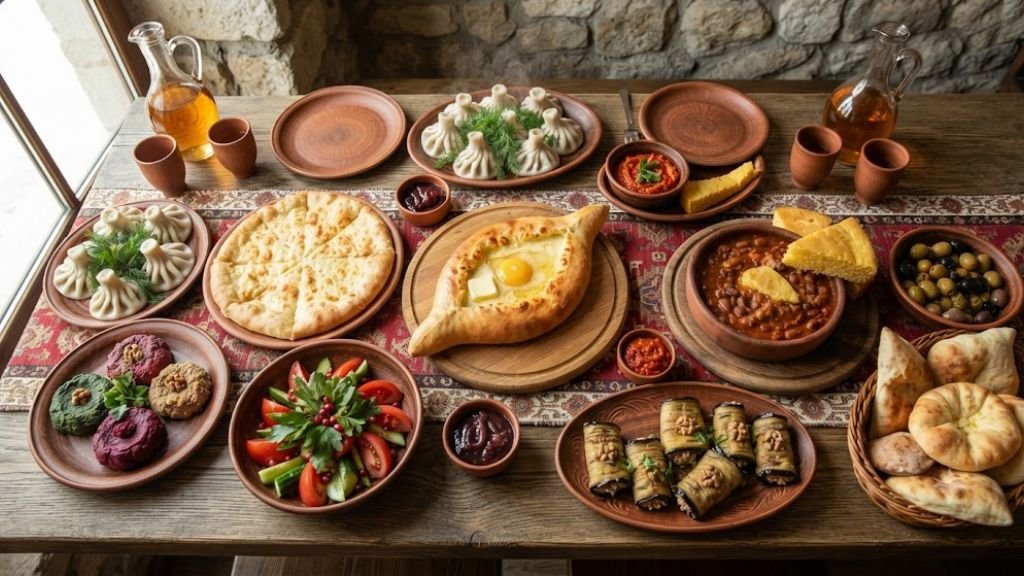
Georgian food is not just about taste; it also reflects deep cultural values around hospitality and celebration. When you visit a Georgian home, hosts will almost always prepare a supra, a traditional feast filled with multiple dishes and endless toasts. Refusing an invitation to a supra can seem impolite, so most guests happily accept.
A toastmaster, known as the tamada, leads the meal by offering heartfelt toasts to family, friends, and life itself. Meals often stretch for hours, and conversation flows freely between courses. This unhurried approach to dining shows how Georgian Dishes functions as a social and even spiritual experience, not just a way to satisfy hunger.
Wine also plays a central role in daily life. Georgians have produced wine using clay vessels called qvevri for over eight thousand years, and this tradition remains a source of national pride. Every supra includes wine, and every toast celebrates something meaningful.
Where to Experience Authentic Georgian Food
Travelers who want to taste real Georgian Dishes should visit local markets, family-run restaurants, and small mountain guesthouses rather than tourist-focused establishments. Cities like Tbilisi, Kutaisi, and Signagi offer excellent examples of traditional cooking, often prepared using recipes passed down for generations.
Coastal towns such as Batumi serve fresh seafood alongside classic Adjarian khachapuri, while mountain regions like Kazbegi showcase hearty, rustic Georgian food built around meat and dairy. Wherever you travel in Georgia, you will find warm hospitality and overflowing plates waiting for you.
Tips for Cooking Georgian Food at Home
You do not need to travel to Georgia to enjoy this cuisine. With a few key ingredients, you can recreate authentic Georgian food in your own kitchen.
- Stock up on walnuts, since they form the base of many sauces.
- Use fresh herbs instead of dried ones whenever possible.
- Do not rush slow-cooked stews; low, gentle heat develops richer flavor.
- Pair dishes with fresh, crusty bread, just as Georgian families do.
- Experiment with khmeli suneli spice blend to add authentic warmth.
By following these tips, you can bring the bold, comforting charm of Georgian food straight to your dinner table.
Conclusion
Georgian food deserves a place among the world’s great regional cuisines. It combines ancient winemaking traditions with bold, herb-driven flavors, and it reflects centuries of cultural exchange without losing its own identity. Whether you try a slice of khachapuri from a street vendor or sit down for a long, toast-filled supra, you will discover flavors that feel both comforting and completely unique.
If you have not yet explored Georgian food, now is the perfect time to start. Visit a local Georgian restaurant, try cooking a traditional dish at home, or plan a trip to Georgia itself. Once you taste the rich, bold flavors of this cuisine, you will understand why so many food lovers consider it one of the world’s hidden culinary treasures.
FAQS
1. What is the most popular Georgian food? Khachapuri, a cheese-filled bread, is widely considered the most popular Georgian food.
2. Is Georgian food spicy? Georgian food is generally mild and relies on herbs and walnuts rather than heavy spice for flavor.
3. What do Georgians eat for breakfast? Georgians commonly eat khachapuri or eggs alongside fresh bread and cheese for breakfast.
4. Is Georgian food similar to Middle Eastern food? Georgian food shares some similarities with Middle Eastern cuisine due to shared spices and Silk Road trade history.
5. What meat is most common in Georgian food? Beef and pork appear most frequently in traditional Georgian food, especially in stews and dumplings.