
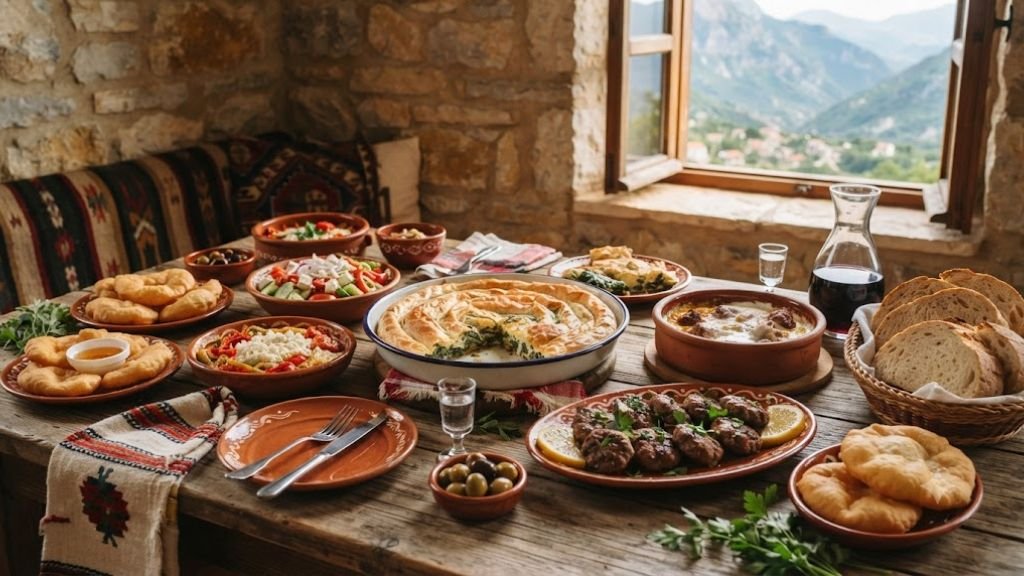
Albanian food tells a story of history, culture, and geography on every plate. Sitting at the crossroads of the Mediterranean and the Balkans, Albania has absorbed influences from Greek, Turkish, and Italian kitchens while keeping its own unique identity alive. Locals grow fresh vegetables, raise livestock in mountain villages, and fish along a stunning coastline, and all of these elements shape the country’s cuisine. If you want to understand Albania, you must first taste Albanian food.
This article explores the history, popular dishes, regional variations, key ingredients, and dining culture that make Albanian food so special. By the end, you will know exactly what to order, how to cook a few classic dishes, and why this cuisine deserves far more attention on the global food scene.
The History Behind Albanian Food
Albanian food did not develop in isolation. Centuries of Ottoman rule introduced spices, pastries, and slow-cooked stews. Meanwhile, Italian neighbors across the Adriatic Sea brought pasta, olive oil, and fresh herbs into Albanian kitchens. Greek influence added grilled meats, yogurt-based sauces, and hearty pies.
Despite these outside influences, Albanian never lost its own character. Farmers still rely on age-old techniques, and families still pass down recipes from grandmother to granddaughter. As a result, modern Albanian blends tradition with adaptability, and this balance makes it endlessly interesting for travelers and food lovers alike.
What Makes Albanian Food Unique
Albanian food stands out because it relies heavily on fresh, local, and seasonal ingredients. Cooks avoid heavy processing, and they favor simple preparation methods that let natural flavors shine. Additionally, Albanian varies significantly by region, since the country includes mountains, coastal towns, and fertile valleys.
Here are a few defining traits of Albanian food:
- Heavy use of olive oil, garlic, and fresh herbs
- A strong emphasis on grilled meats and fresh dairy
- Seasonal vegetables like peppers, tomatoes, and eggplant
- Slow-cooked stews that develop deep, rich flavors
- A love for simple, rustic bread served with every meal
Popular Albanian Dishes You Must Try
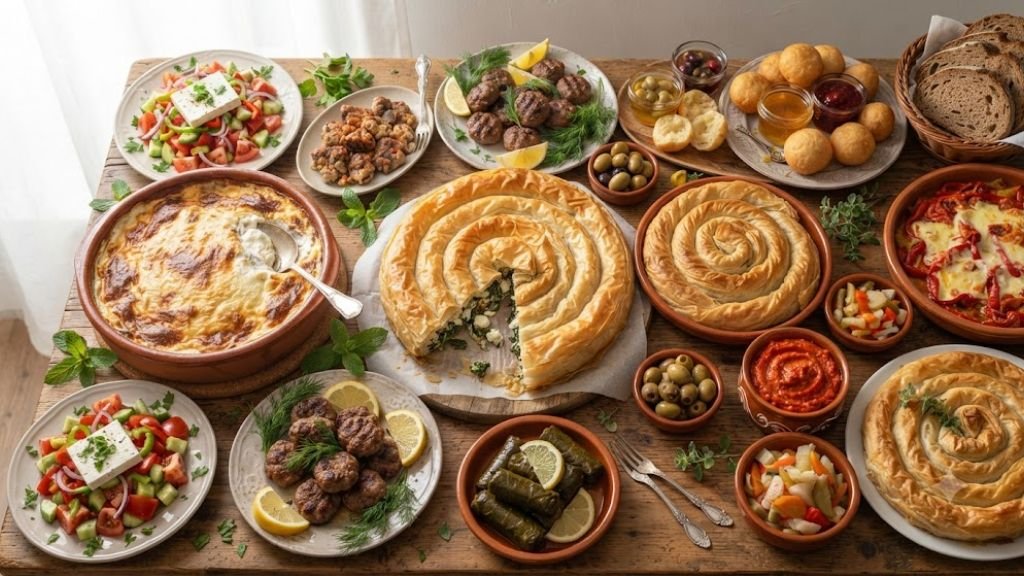
Albanian food offers something for every palate, from savory pies to grilled meats and comforting soups. Below are some of the most iconic dishes you will encounter throughout the country.
Tavë Kosi
Tavë kosi ranks as one of the most beloved examples of Albanian. Cooks bake lamb with rice and a creamy yogurt-egg mixture until the top turns golden brown. The dish delivers a tangy, savory flavor that pairs perfectly with a simple green salad.
Byrek
Byrek appears on nearly every Albanian table, and it remains a staple of everyday Albanian. Bakers layer thin pastry sheets with fillings like spinach, cheese, or minced meat, then bake the pie until it turns crisp and golden. Street vendors sell byrek throughout the day, making it a popular grab-and-go breakfast.
Fërgesë
Fërgesë combines peppers, tomatoes, and cottage cheese into a rich, comforting dish. In addition, many home cooks add minced meat for extra heartiness. As a result, the dish becomes even more filling and flavorful. Moreover, it highlights how Albanian transforms humble vegetables into deeply satisfying meals. Overall, Fërgesë is a perfect example of simple ingredients creating rich, authentic flavors.
Qofte
Qofte are seasoned meatballs, usually made from beef or lamb, mixed with herbs and spices. Grill masters cook them over open flames, which gives them a smoky, charred exterior. You will find qofte at nearly every family gathering and street food stall.
Speca të Mbushur (Stuffed Peppers)
Cooks stuff bell peppers with rice, minced meat, and herbs, then bake them until tender. This dish represents the comfort-food side of Albanian, and families often prepare it in large batches for gatherings.
Regional Variations in Albanian Food
Albanian food changes dramatically depending on which part of the country you visit. Coastal towns along the Adriatic and Ionian Seas focus on fresh seafood, olive oil, and light salads. Furthermore, mountain regions favor hearty stews, dairy products, and preserved meats that sustain people through cold winters.
In the south, cooks often use more olive oil and fresh vegetables, similar to Greek and Mediterranean cooking. In the north, however, dairy and meat dominate the menu, reflecting the pastoral lifestyle of highland communities. Because of this diversity, no single dish can fully represent Albanian; instead, the cuisine reveals itself through many regional specialties.
Key Ingredients in Albanian Cooking
Albanian food relies on a handful of core ingredients that appear again and again across different dishes. Understanding these staples helps you appreciate the cuisine on a deeper level.
- Olive oil: Used generously in almost every dish
- Fresh herbs: Oregano, mint, and parsley add brightness
- Dairy products: Yogurt, feta-style cheese, and fresh milk
- Vegetables: Peppers, tomatoes, eggplant, and onions
- Meat: Lamb, beef, and chicken feature prominently
- Bread: Freshly baked and served with nearly every meal
These ingredients combine to create the earthy, comforting flavors that define Albanian food from north to south.
Albanian Dining Culture
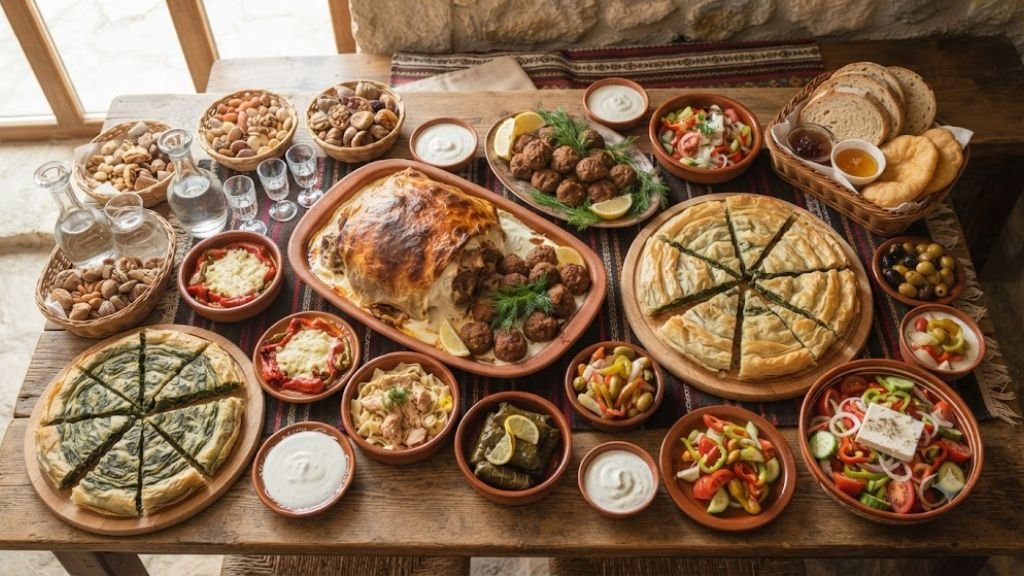
Albanian food is not just about taste; it also reflects deep cultural values around hospitality and family. When you visit an Albanian home, hosts will almost always offer food and drink, even during a short visit. Refusing this offer can seem impolite, so most guests happily accept.
Meals often stretch for hours, especially during weekend family gatherings. Multiple courses arrive at a leisurely pace, and conversation flows freely between bites. This unhurried approach to dining shows how Albanian functions as a social experience, not just a way to satisfy hunger.
Coffee culture also plays a major role in daily life. Albanians frequently meet friends at cafés to sip strong coffee and chat for hours. This tradition, borrowed partly from Ottoman and Italian influences, remains a cherished part of everyday routine.
Where to Experience Authentic Albanian Food
Travelers who want to taste real Albanian should visit local markets, family-run restaurants, and small coastal taverns rather than tourist-focused establishments. Cities like Tirana, Berat, and Gjirokastër offer excellent examples of traditional cooking, often prepared using recipes passed down for generations.
Coastal towns such as Sarandë and Vlorë serve incredible seafood, while mountain regions like Theth showcase hearty, rustic Albanian built around dairy and preserved meats. Wherever you travel in Albania, you will find warm hospitality and generous portions waiting for you.
Tips for Cooking Albanian Food at Home
You do not need to travel to Albania to enjoy this cuisine. With a few key ingredients, you can recreate authentic Albanian food in your own kitchen.
- Stock up on high-quality olive oil, since it forms the base of most dishes.
- Use fresh herbs instead of dried ones whenever possible.
- Do not rush slow-cooked stews; low, gentle heat develops richer flavor.
- Pair dishes with fresh, crusty bread, just as Albanian families do.
- Experiment with yogurt-based sauces to add tang and creaminess.
By following these tips, you can bring the comforting, rustic charm of Albanian food straight to your dinner table.
Final Thoughts on Albanian Food
Albanian deserves a place among the world’s great regional cuisines. It combines Mediterranean freshness with Balkan heartiness, and it reflects centuries of cultural exchange without losing its own identity. Whether you try a slice of byrek from a street vendor or sit down for a slow, multi-course family meal, you will discover flavors that feel both comforting and completely unique.
If you have not yet explored Albanian, now is the perfect time to start. Visit a local Albanian restaurant, try cooking a traditional dish at home, or plan a trip to Albania itself. Once you taste the rich, honest flavors of this cuisine, you will understand why so many food lovers consider it one of Europe’s hidden culinary treasures.
FAQS
1. What is the most popular Albanian food? Tavë kosi, a baked lamb and yogurt dish, is widely considered the most popular Albanian food.
2. Is Albanian food spicy? Albanian food is generally mild and relies on herbs rather than heavy spice for flavor.
3. What do Albanians eat for breakfast? Albanians commonly eat byrek, a savory pastry, alongside strong coffee for breakfast.
4. Is Albanian food similar to Greek food? Albanian food shares similarities with Greek cuisine, especially in the south, due to shared Mediterranean ingredients.
5. What meat is most common in Albanian food? Lamb and beef appear most frequently in traditional Albanian food.