

Greek food holds a special place in the hearts of millions of people around the world. Furthermore, it stands as one of the oldest and most celebrated culinary traditions in human history. Whether you enjoy a simple plate of hummus or a slow cooked lamb stew, Greek delivers bold flavors, fresh ingredients, and a deep sense of culture with every bite.
In addition, Greek forms the foundation of the Mediterranean diet one of the healthiest eating patterns that experts recognize globally. Consequently, people from all over the world now adopt Greek cooking habits to improve their health and enjoy great taste at the same time.
This guide explores everything you need to know about Greek its rich history, most popular dishes, health advantages, cultural traditions, and where to find authentic experiences. Therefore, whether you are a first-time visitor or a longtime fan, read on and discover the magic of Greek cuisine.
The History and Origins of Greek Food

Greek carries thousands of years of history on its plate. Ancient Greeks relied heavily on olives, grapes, wheat, and legumes to sustain their civilization. As a result, these four ingredients still dominate modern Greek cooking today. Moreover, ancient Greek philosophers like Hippocrates the father of medicine wrote extensively about the healing power of food and diet.
Over centuries, Greek absorbed influences from the Ottoman Empire, the Byzantine era, and neighboring Mediterranean cultures. However, it retained its core identity through the consistent use of olive oil, fresh herbs, and simple cooking techniques. In contrast to modern trends, Greek cuisine still celebrates slow cooking and natural flavors.
Furthermore, UNESCO recognized the Mediterranean diet which Greek largely represents as an Intangible Cultural Heritage of Humanity. This recognition confirmed what food lovers already knew: Greek cuisine is not just food but a way of life that communities pass down through generations.
Most Popular Greek Dishes You Must Try

Greek offers a wide variety of dishes that appeal to every taste. For example, moussaka tops the list as one of the most iconic Greek meals. Cooks layer eggplant, seasoned minced meat, and a creamy béchamel sauce, then bake everything to golden perfection. As a result, the dish delivers a rich, satisfying flavor that keeps people coming back.
Souvlaki and Gyros
Souvlaki and gyros represent two of the most popular street foods in all of Greek culture. Souvlaki features skewered and grilled meat usually pork or chicken served with pita bread, fresh tomatoes, and tzatziki sauce. Meanwhile, gyros wrap seasoned meat sliced from a vertical rotisserie inside warm pita with similar fresh toppings. Both dishes deliver incredible flavor in a simple, affordable format.
Spanakopita and Tiropita
Spanakopita spinach and feta cheese wrapped in crispy phyllo pastry stands as another beloved classic of Greek. In addition, tiropita offers a similar experience with a pure cheese filling. Both pies appear at Greek family tables, festivals, and bakeries daily. Therefore, they represent the perfect introduction to Greek baking traditions.
Greek Salad and Mezze
No discussion of Greek is complete without the classic Greek salad. Chefs combine ripe tomatoes, cucumbers, olives, red onions, and a thick slice of feta cheese, then drizzle everything with extra virgin olive oil. Furthermore, mezze a spread of small shared dishes forms the heart of Greek social dining. Mezze typically includes hummus, tzatziki, dolmades (stuffed grape leaves), and grilled halloumi cheese.
Health Benefits of Greek
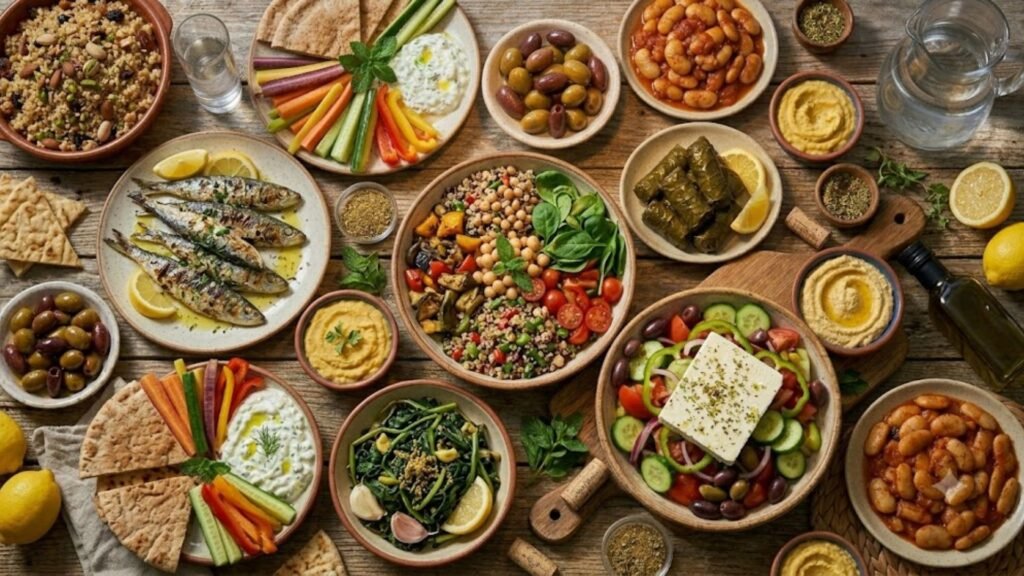
Greek does not just taste amazing it also delivers powerful health benefits that researchers continue to study and confirm. First and foremost, Greek cuisine relies heavily on olive oil, which contains heart-healthy monounsaturated fats and powerful antioxidants. Consequently, people who eat Greek regularly tend to experience lower rates of heart disease and inflammation.
In addition, Greek emphasizes fresh vegetables, legumes, fish, and whole grains over processed foods and red meat. Therefore, the diet provides an excellent balance of fiber, protein, and essential vitamins. Moreover, the regular use of fresh herbs like oregano, thyme, and rosemary adds natural antimicrobial and anti-inflammatory compounds to daily meals.
Studies consistently link the Mediterranean diet with Greek food at its core to longer life expectancy, better brain health, and lower risk of chronic diseases like diabetes and obesity. As a result, health professionals worldwide now recommend adopting Greek eating habits as part of a balanced lifestyle.
Greek Food Culture and Traditions
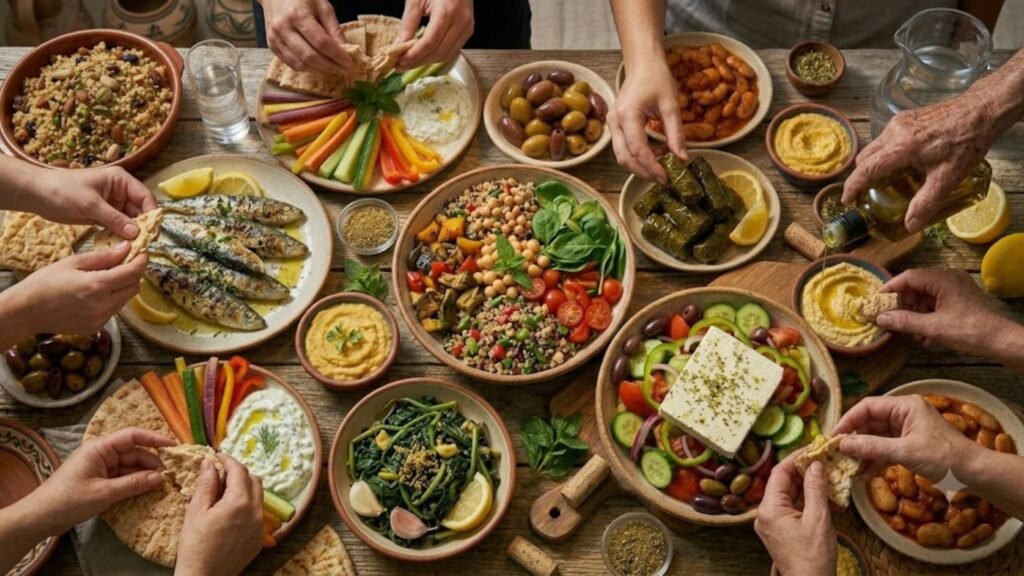
Greek food culture runs much deeper than just the dishes on the table. In Greek tradition, meals bring families and communities together in a spirit of joy and generosity. For example, the concept of “philoxenia” hospitality toward guests means that hosts always offer food and drink to anyone who visits. Consequently, eating together forms the backbone of Greek social life.
Furthermore, Greek food connects deeply to religious and seasonal traditions. During Easter the most important holiday in Greek Orthodox Christianity families prepare specific dishes like lamb on the spit, magiritsa soup, and red-dyed eggs. Similarly, each region of Greece develops its own unique specialties based on local ingredients and historical influences.
In addition, Greek coffee culture deserves special mention. Greeks enjoy their coffee slowly, often over long conversations at a kafeneio traditional coffee house. Therefore, food and drink together create a lifestyle not just a meal in Greek culture.
Where to Find Authentic Greek Food

You can find authentic Greek food in many places around the world today. However, nothing compares to eating in Greece itself especially in small family-run tavernas where grandmothers still cook using generations-old recipes. For instance, the islands of Crete, Santorini, and Mykonos offer some of the most memorable Greek food experiences available anywhere.
Moreover, Greek communities in cities like Melbourne, Chicago, London, and New York maintain strong culinary traditions through authentic restaurants and food festivals. Therefore, even if you cannot travel to Greece, you can still access genuine Greek food relatively easily. Furthermore, many Greek restaurants outside Greece import key ingredients like feta cheese, Kalamata olives, and Greek olive oil directly from their homeland.
In addition, cooking Greek food at home is easier than most people assume. Simple ingredients, straightforward techniques, and bold flavors make Greek recipes accessible to beginners and experienced cooks alike. As a result, Greek food continues to grow in popularity with home cooks globally.
Conclusion
Greek food stands as one of the most complete, healthy, and culturally rich cuisines in the world. Furthermore, it offers something for everyone from meat lovers to vegetarians, from street food fans to fine dining enthusiasts. In addition, its deep roots in history and community make every meal feel meaningful and special. Therefore, whether you visit a Greek restaurant, cook at home, or travel to Greece itself, you will discover a culinary tradition that nourishes both the body and the soul. Greek food truly deserves its place as a global treasure.
FAQs
Q1: What is the most popular Greek food dish?
Moussaka is one of the most popular Greek food dishes, featuring layered eggplant, minced meat, and béchamel sauce baked to golden perfection.
Q2: Is Greek food healthy?
Yes, Greek food is extremely healthy because it relies on fresh vegetables, olive oil, legumes, and lean proteins that support heart health and longevity.
Q3: What are the staple ingredients in Greek food?
Olive oil, feta cheese, olives, fresh vegetables, garlic, lemon, and herbs like oregano and thyme form the essential staples of Greek food.
Q4: What makes Greek food different from other Mediterranean cuisines?
Greek food stands apart through its unique combination of feta cheese, phyllo pastry, specific herb blends, and thousands of years of unbroken culinary tradition.
Q5: Can I easily make Greek food at home?
Absolutely Greek food uses simple, widely available ingredients and straightforward cooking techniques that make it very accessible for home cooks at any skill level.