
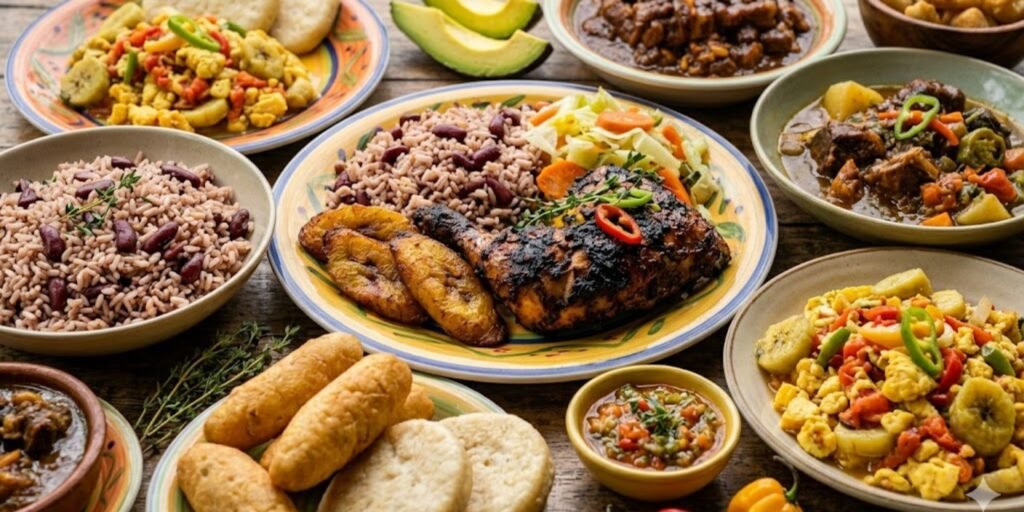
Jamaican Food stands among the most flavorful and recognizable cuisines in the world. Known for its bold spices, fresh ingredients, and rich cultural heritage, it offers a unique dining experience that reflects the island’s diverse history. From smoky jerk chicken to hearty stews and tropical fruits, Jamaican Food combines African, European, Asian, and Indigenous influences into unforgettable dishes. As a result, food lovers across the globe continue to embrace the vibrant flavors and traditions that define Jamaica’s culinary identity.
The History of Jamaican Food
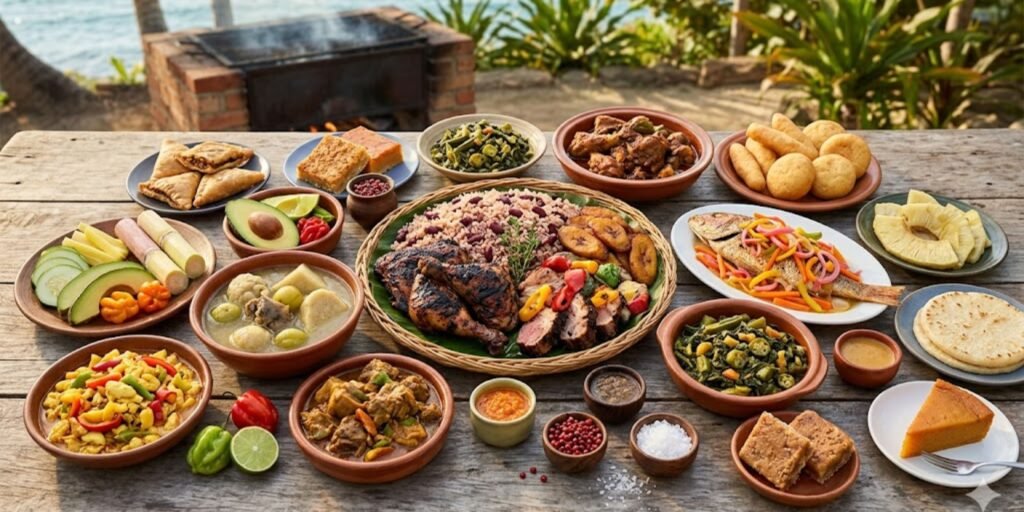
The story of Jamaican cuisine begins long before modern tourism introduced the island to international travelers. The Indigenous Taíno people first cultivated crops such as cassava, maize, and sweet potatoes. Later, European colonization and the transatlantic slave trade brought new ingredients and cooking techniques to the island.
Over time, African communities introduced methods of seasoning, slow cooking, and preserving food. Meanwhile, British, Spanish, Indian, and Chinese immigrants contributed additional flavors and ingredients. Consequently, Jamaican cuisine evolved into a rich fusion of cultures that continues to shape modern cooking throughout the Caribbean.
Today, Jamaican Food represents centuries of cultural exchange, resilience, and creativity.
Cultural Influences on Jamaican Food
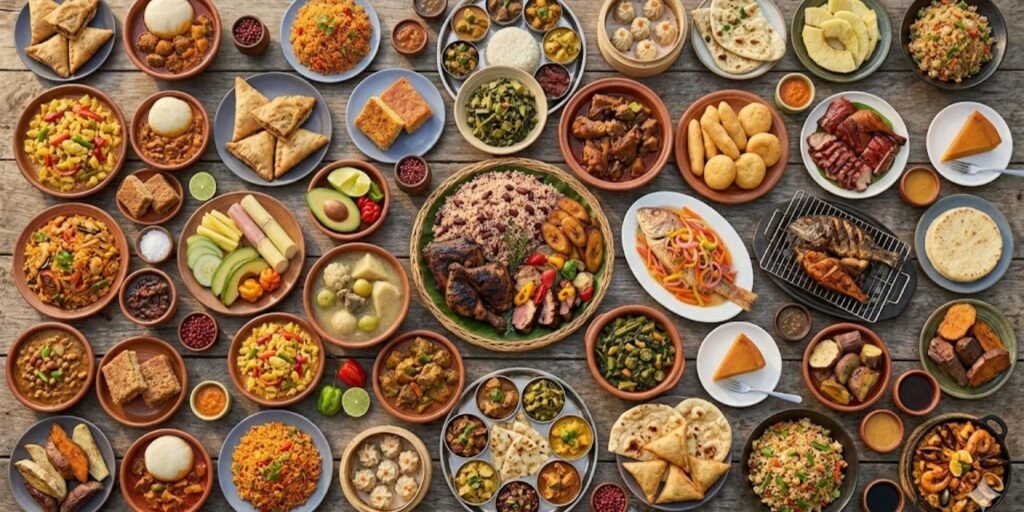
Jamaica’s diverse population has played a major role in shaping its culinary traditions.
African Influence Jamaican food
African heritage remains one of the strongest influences on Jamaican cooking. Many traditional dishes rely on ingredients, spices, and cooking methods that originated in West Africa. Popular foods such as callaloo and various stews reflect these roots.
British Influence Jamaican food
British settlers introduced ingredients such as salted cod, bread, and various baking techniques. Ackee and saltfish, Jamaica’s national dish, demonstrates this lasting influence.
Indian Influence Jamaican food
Indian laborers brought curry spices and cooking methods to Jamaica during the nineteenth century. Today, curry goat remains one of the country’s most beloved dishes.
Chinese Influence
Chinese immigrants introduced stir-frying techniques and ingredients that influenced local recipes. Their impact remains visible in many modern Jamaican dishes.
Traditional Jamaican Food Dishes
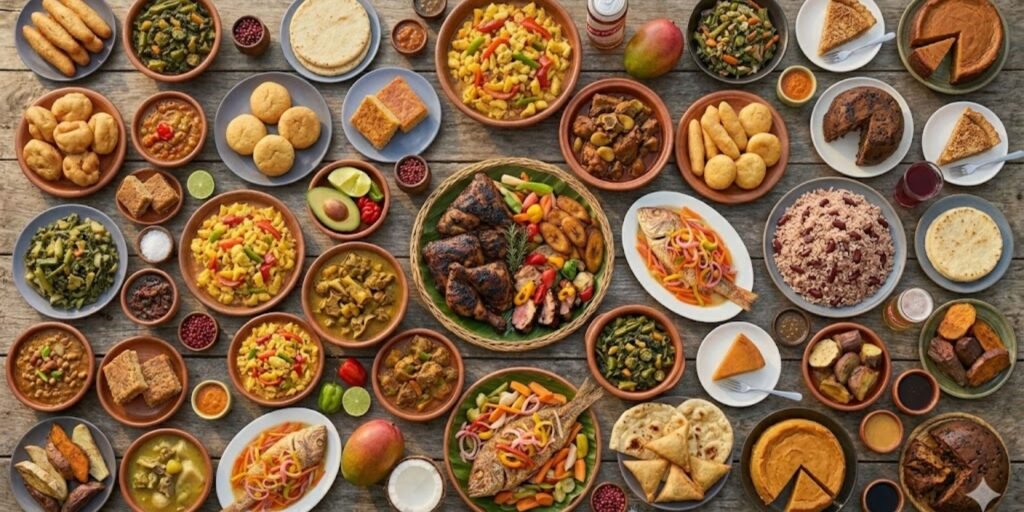
Many iconic recipes showcase the unique flavors of Jamaican cuisine.
Jerk Chicken
Jerk chicken remains one of the most famous Jamaican dishes worldwide. Cooks marinate chicken in a blend of allspice, Scotch bonnet peppers, garlic, thyme, and other seasonings before grilling it over pimento wood.
Ackee and Saltfish
This national dish combines salted cod with ackee fruit, onions, tomatoes, and spices. The result delivers a savory and satisfying meal enjoyed throughout Jamaica.
Curry Goat
Curry goat features tender meat simmered in a fragrant blend of curry spices. Families often serve it during celebrations and special occasions.
Oxtail Stew
Oxtail stew offers rich flavors and a comforting texture. Slow cooking allows the meat to become exceptionally tender while absorbing aromatic spices.
Rice and Peas
Despite its name, this popular side dish uses kidney beans, rice, coconut milk, and herbs. It accompanies many traditional meals.
Famous Street in Jamaican Food
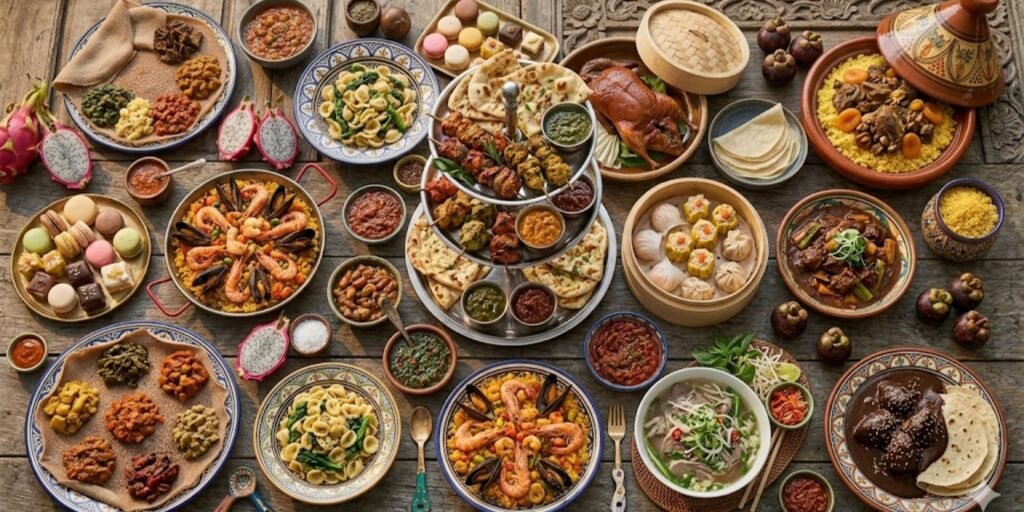
Street food forms an important part of daily life across the island.
Jamaican Patties
These flaky pastries contain fillings such as beef, chicken, vegetables, or seafood. They provide a quick and satisfying meal for locals and visitors alike.
Roast Corn
Vendors grill fresh corn over open flames and season it with spices for a simple yet delicious snack.
Festival
Festival consists of lightly sweetened fried dough that pairs perfectly with fish and other savory dishes.
Pepper Shrimp
This spicy seafood snack features shrimp marinated in fiery seasonings. Many travelers seek it out for an authentic local experience.
Roast Yam
Roasted yam offers a hearty and nutritious street food option. Vendors often serve it with spicy sauces or fish.
Essential Ingredients in Jamaican Food
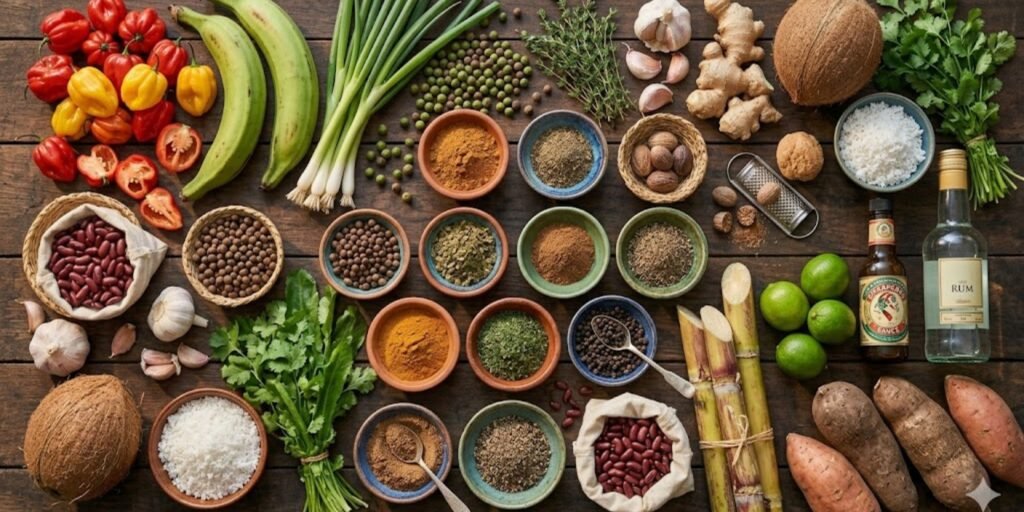
Several ingredients form the foundation of authentic Jamaican cooking.
Scotch Bonnet Peppers
These peppers deliver intense heat and fruity flavor. Many traditional recipes rely on them for their signature kick.
Allspice
Also known as pimento, allspice contributes warm notes of cinnamon, nutmeg, and cloves.
Coconut Milk
Coconut milk adds richness to soups, curries, desserts, and rice dishes.
Thyme
Fresh thyme appears frequently in marinades, stews, and sauces.
Ackee
Ackee serves as a staple ingredient in Jamaican cuisine and remains central to the national dish.
Plantains
Cooks fry, boil, or bake plantains to create versatile side dishes and snacks.
Popular Jamaican Food Spices and Seasonings
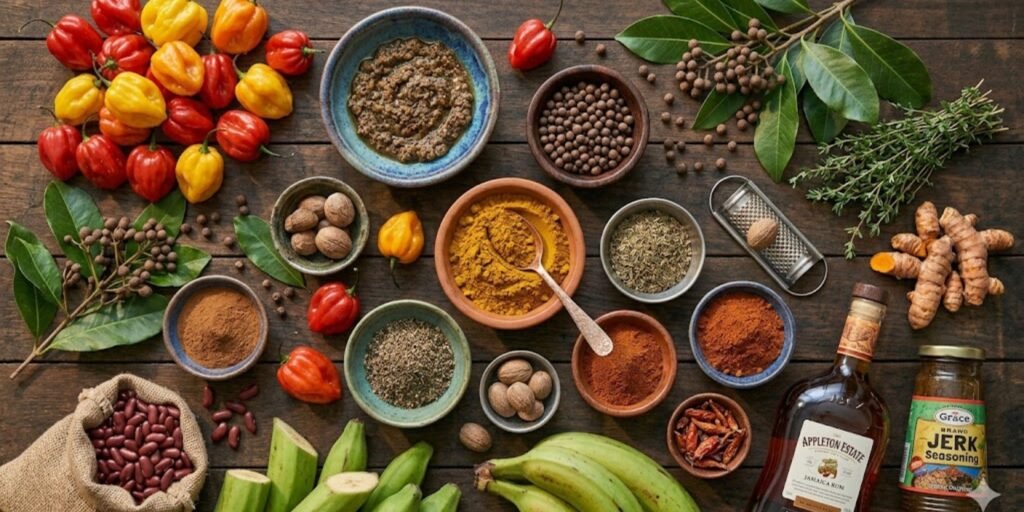
Seasonings play a crucial role in creating the bold flavors associated with Jamaican Food.
Jerk Seasoning
Jerk seasoning combines allspice, Scotch bonnet peppers, garlic, thyme, ginger, and other spices. This blend creates Jamaica’s most recognizable flavor profile.
Curry Powder
Jamaican curry powder often contains turmeric, coriander, cumin, fenugreek, and other aromatic spices.
Escovitch Seasoning
Escovitch recipes use vinegar, onions, carrots, and peppers to create a tangy and flavorful finish.
Garlic and Ginger
These ingredients add depth and complexity to countless dishes throughout the island.
Jamaican Food Drinks and Desserts
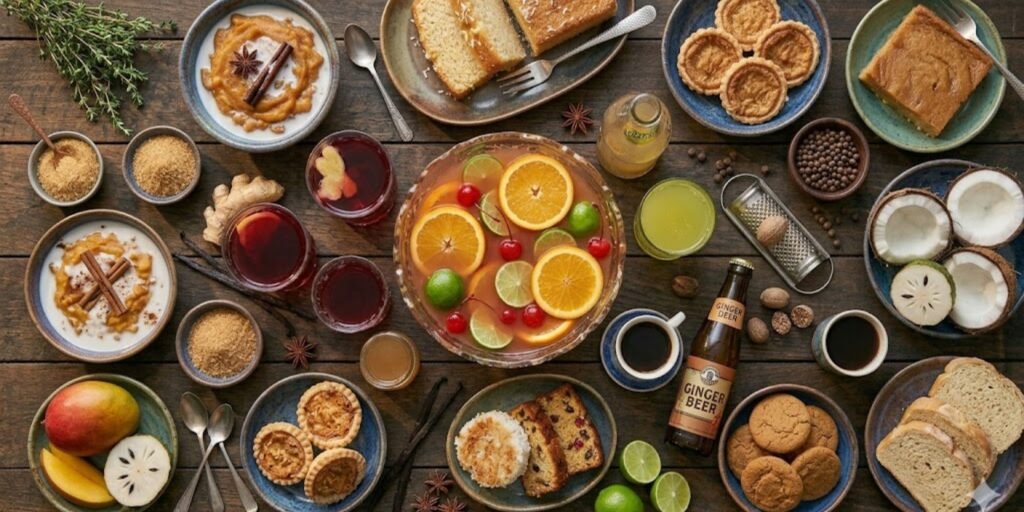
Jamaican cuisine extends far beyond savory meals.
Sorrel Drink
Sorrel drink combines hibiscus petals, ginger, and spices to create a refreshing beverage often enjoyed during holidays.
Jamaican Rum Punch
Rum punch blends fruit juices, rum, and spices into a festive tropical drink.
Gizzada
This traditional pastry features a sweet coconut filling wrapped in a crisp crust.
Sweet Potato Pudding
Sweet potato pudding combines grated sweet potatoes, coconut milk, spices, and sugar for a rich dessert.
Rum Cake
Rum cake remains a popular treat during celebrations and festive gatherings.
Health Benefits of Jamaican Food
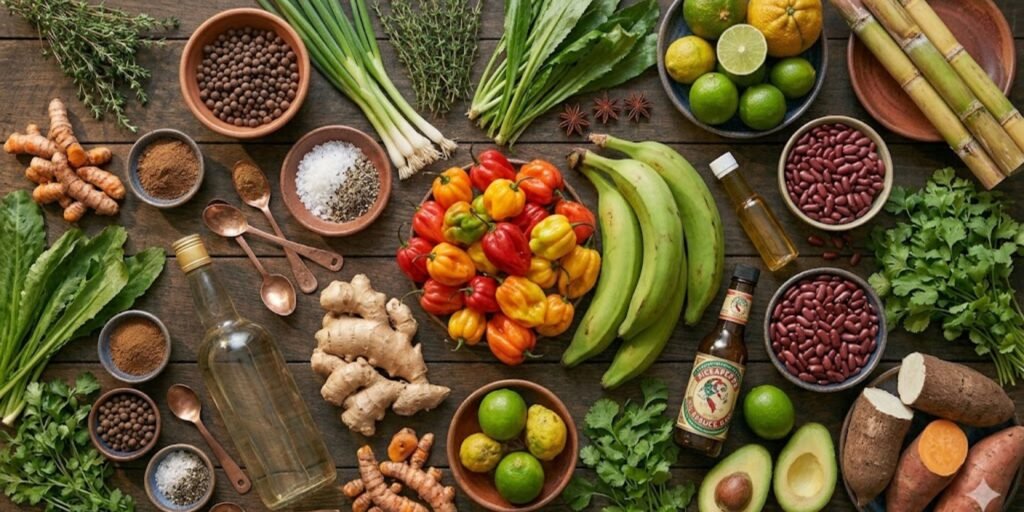
Many traditional Jamaican dishes provide valuable nutrients while delivering exceptional flavor.
Fresh vegetables, legumes, herbs, and tropical fruits contribute vitamins, minerals, and antioxidants. In addition, ingredients such as thyme, ginger, garlic, and Scotch bonnet peppers offer potential health-supporting properties.
Many meals also include lean proteins, seafood, and fiber-rich foods. Therefore, Jamaican cuisine can fit well within a balanced diet when prepared with moderate amounts of fat and salt.
Jamaican Food Culture and Dining Traditions
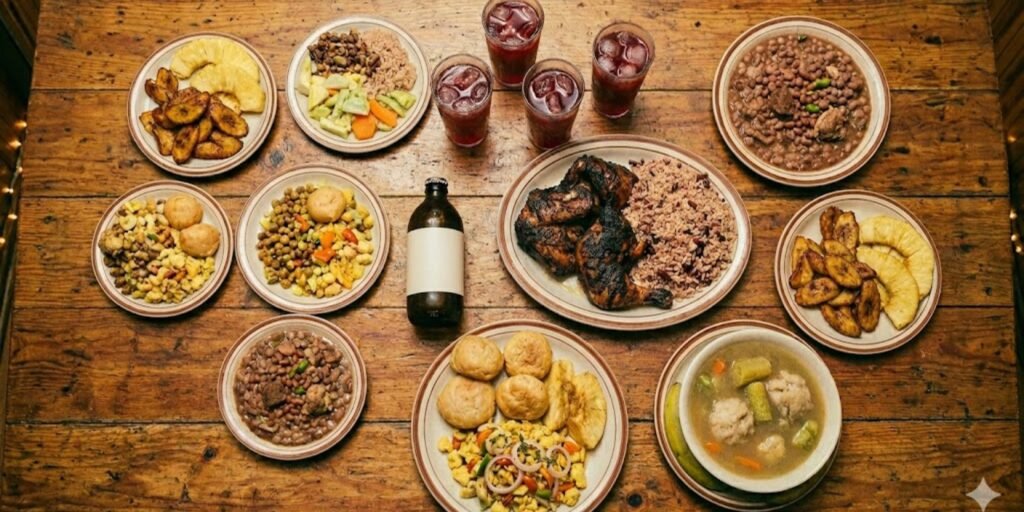
Food plays a central role in Jamaican family life and community gatherings. People often come together to celebrate milestones, holidays, and festivals with shared meals.
Sunday dinners remain particularly important. Families gather around tables filled with rice and peas, chicken, fish, vegetables, and desserts. Furthermore, outdoor cookouts and jerk festivals strengthen social bonds while showcasing local culinary traditions.
Music, storytelling, and hospitality frequently accompany meals, creating memorable experiences for guests and family members alike.
Tips for Cooking Authentic Jamaican Food at Home
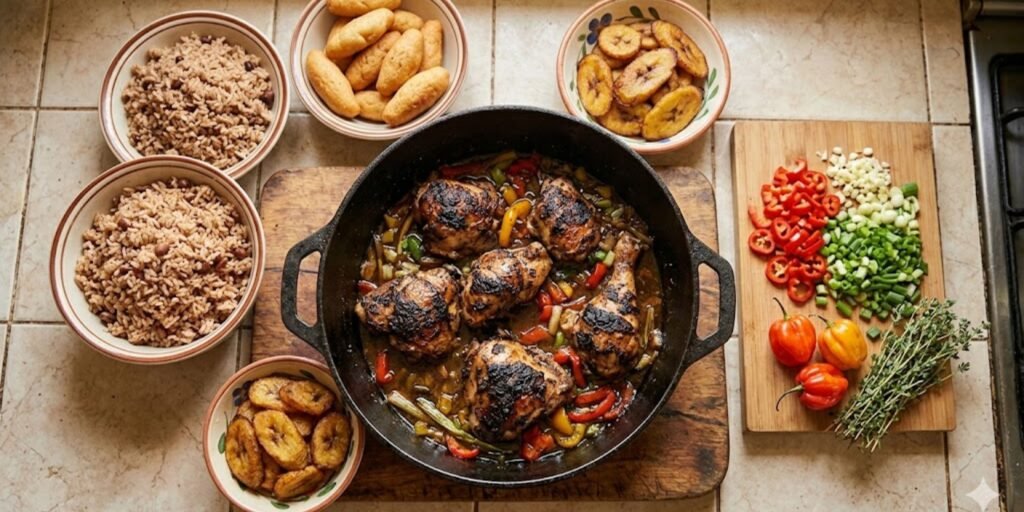
Preparing Jamaican dishes at home can be both enjoyable and rewarding.
Use Fresh Ingredients
Fresh herbs, vegetables, and spices create the best flavor and authenticity.
Don’t Skip the Scotch Bonnet Peppers
These peppers contribute a distinctive taste that defines many traditional recipes.
Marinate Proteins Properly
Allow meats to absorb seasonings for several hours before cooking.
Balance Spice and Flavor
While heat remains important, authentic Jamaican cooking also emphasizes depth and complexity.
Experiment with Traditional Recipes
Start with classic dishes such as jerk chicken, curry goat, or rice and peas before exploring more advanced recipes.
FAQs
What is the most famous Jamaican dish?
Jerk chicken is the most famous Jamaican dish worldwide.
Is Jamaican Food very spicy?
Many Jamaican dishes contain spicy ingredients, but cooks can adjust the heat level.
What is Jamaica’s national dish?
Ackee and saltfish serves as Jamaica’s national dish.
What makes Jamaican Food unique?
Its blend of cultural influences and bold seasonings makes it unique.
Can I cook Jamaican Food at home?
Yes, many authentic Jamaican recipes are easy to prepare at home.
Conclusion
Jamaican Food offers a remarkable combination of history, culture, and flavor. Its diverse influences, vibrant ingredients, and beloved dishes continue to attract food enthusiasts worldwide. Whether you enjoy jerk chicken, ackee and saltfish, curry goat, or sweet tropical desserts, Jamaican cuisine provides something for every palate. By exploring traditional recipes and cooking techniques, anyone can experience the rich culinary heritage that makes Jamaican Food truly unforgettable.