
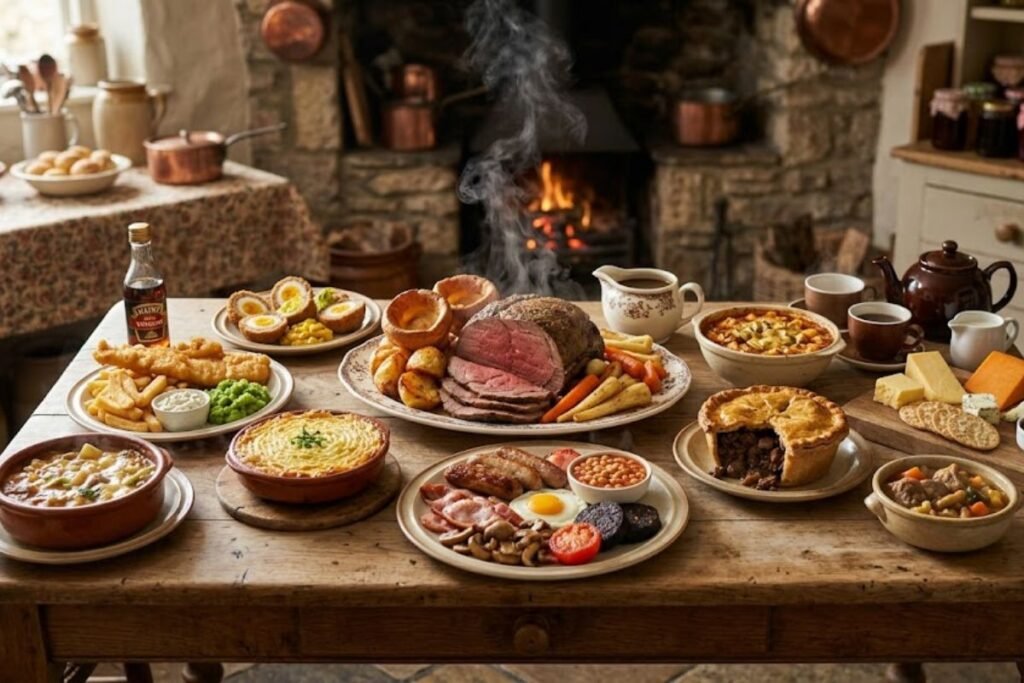
British foods carry a charm that no other cuisine quite matches. From steaming bowls of porridge on cold mornings to golden fish and chips wrapped in paper, the UK has given the world some truly iconic dishes. Furthermore, British foods reflect centuries of history, cultural change, and regional pride. Whether you grew up eating Sunday roasts or you simply want to explore UK food culture, this guide covers everything you need to know. In addition, you will find that many classic British meals are easier to make and more delicious than you might expect.
The History Behind British Foods
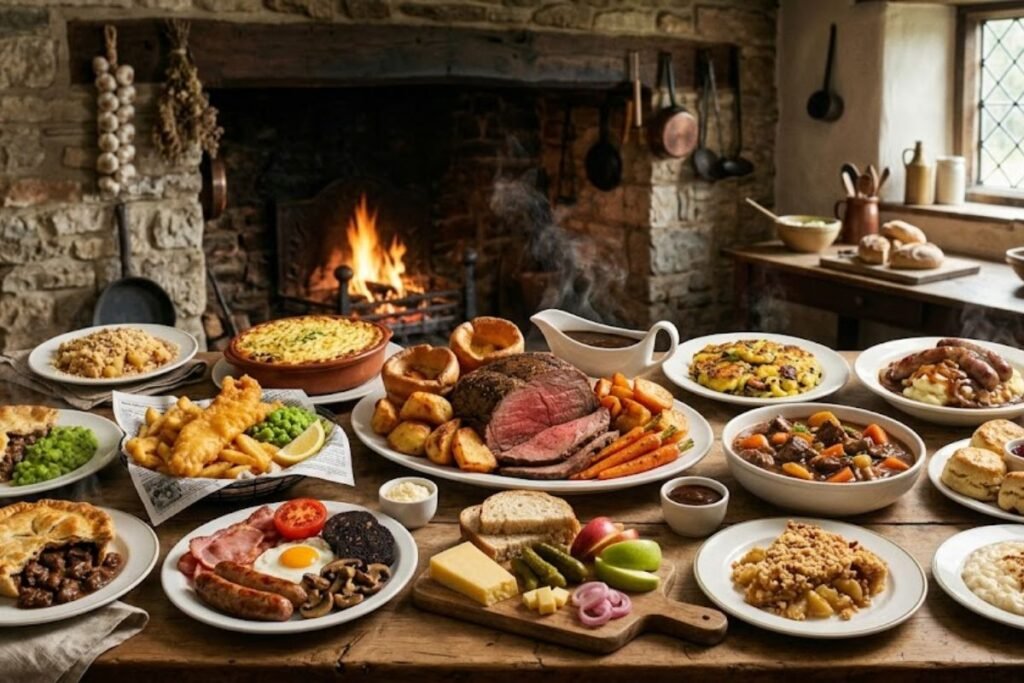
British cuisine has evolved dramatically over hundreds of years. In the past, people relied on simple, hearty ingredients like root vegetables, grains, and locally sourced meat. However, as trade routes expanded, spices, sugar, and exotic ingredients began to influence the British kitchen. As a result, traditional British cuisine became a fascinating blend of local and global flavors. Furthermore, invasions and immigration over the centuries added even more variety, making UK food culture one of the most diverse in the world.
Meanwhile, the Industrial Revolution played a big role too. It moved large numbers of people into cities and changed how families cooked and ate. Consequently, fast, affordable, and filling meals became the backbone of everyday British cooking. Today, those humble roots still show up in many beloved classic British meals.
Most Popular British Foods You Must Try
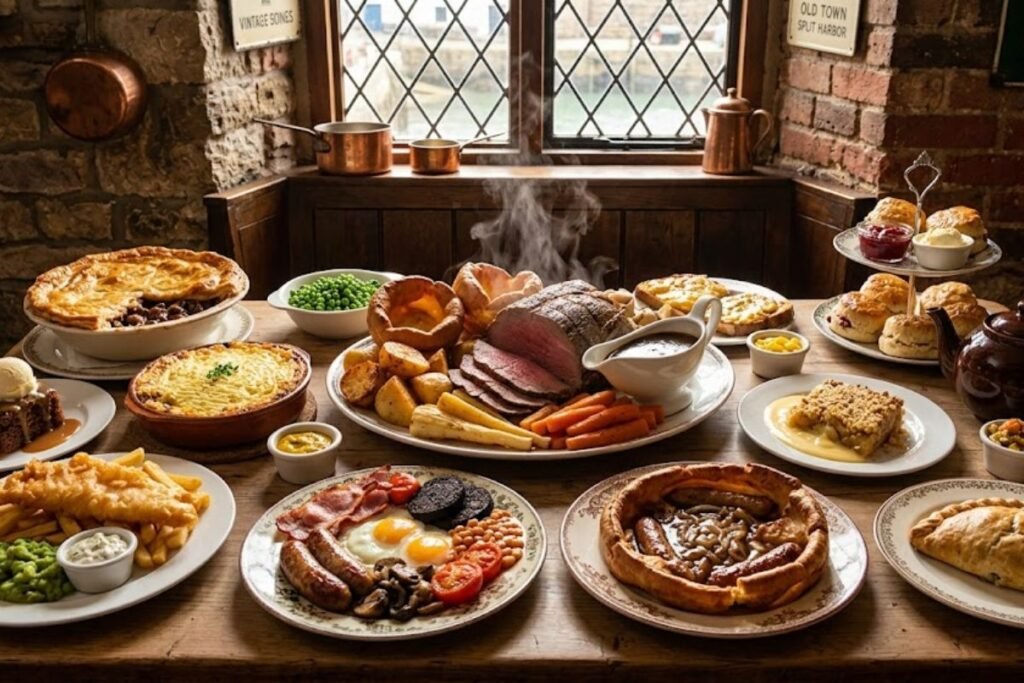
When people think of British foods, a few iconic dishes immediately come to mind. Therefore, it makes sense to start with the classics before diving deeper into regional specialties.
Fish and Chips
Fish and chips stand as the most recognizable of all British foods. Crispy battered fish served alongside thick-cut chips satisfies both locals and tourists alike. In addition, you can find this dish in small seaside stalls and upscale restaurants across the UK. Chefs typically use cod or haddock, and they fry it in a light, golden batter. Consequently, the result is a perfectly crunchy exterior with tender, flaky fish inside.
Full English Breakfast
The full English breakfast also called a “fry up” represents a cornerstone of UK food culture. It includes eggs, bacon, sausages, baked beans, grilled tomatoes, black pudding, and toast. Furthermore, many people consider it the ultimate comfort meal after a long week or a cold morning. However, each region of England puts its own spin on the plate, so the experience changes slightly wherever you go.
Shepherd’s Pie
Shepherd’s pie brings together minced lamb, rich gravy, and a golden mashed potato topping. This dish dates back to the late 1700s when cooks needed a way to use leftover roast meat. As a result, it became a staple of traditional British cuisine and remains a family favorite today. Meanwhile, the similar cottage pie swaps lamb for beef and delivers the same hearty satisfaction.
Regional British Foods Worth Exploring

British foods differ enormously from one region to another. Therefore, exploring regional dishes helps you appreciate the full richness of UK food culture.
Scotland offers the famous haggis, a savory mixture of sheep offal, oatmeal, and spices packed into a natural casing. In addition, Scottish tablet a crumbly, sweet confection satisfies anyone with a sweet tooth. Wales, on the other hand, takes pride in cawl, a warming lamb and leek soup that locals have enjoyed for centuries. Furthermore, Welsh rarebit, a rich cheese sauce served on toast, has become popular far beyond Wales itself.
Northern Ireland contributes the Ulster fry, a hearty variation of the traditional cooked breakfast with soda bread and potato bread added to the mix. Consequently, every corner of the UK offers something unique and delicious. These regional differences make British foods endlessly interesting to discover.
Traditional British Foods Desserts and Sweet Treats

No guide to British foods would be complete without covering desserts. Traditional British cuisine boasts some of the most comforting puddings and sweet treats in the world. Therefore, dessert lovers have a lot to look forward to when exploring the UK.
Sticky toffee pudding tops most people’s lists. It features a moist sponge cake made with dates, covered in a rich toffee sauce. Furthermore, this dessert works perfectly on cold evenings and pairs wonderfully with a scoop of vanilla ice cream. In addition, Victoria sponge a light jam and creamfilled cake graces tea tables across Britain. Meanwhile, Eton mess, a simple mixture of meringue, strawberries, and whipped cream, delivers an effortless yet impressive dessert.
Bread and butter pudding deserves a mention too. Cooks layer buttered bread with raisins, pour over a custard mixture, and then bake it until golden. As a result, they create a dish that feels indulgent yet uses simple, everyday ingredients a true hallmark of classic British meals.
The Role of Tea in British Food Culture

Tea connects deeply to UK food culture, and no discussion of British foods feels complete without it. Britain consumes around 100 million cups of tea every single day. Furthermore, the tradition of afternoon tea served with sandwiches, scones, clotted cream, and cakes dates back to the 1840s. As a result, it evolved from an aristocratic habit into a beloved national ritual. In addition, a proper builder’s tea, brewed strong with a splash of milk, fuels workers and families across the country every morning.
However, tea in the UK goes far beyond the drink itself. It shapes mealtimes, social gatherings, and even comfort in difficult moments. Therefore, tea holds a cultural status that makes it truly central to the British way of life.
Modern Takes on Classic British Meals
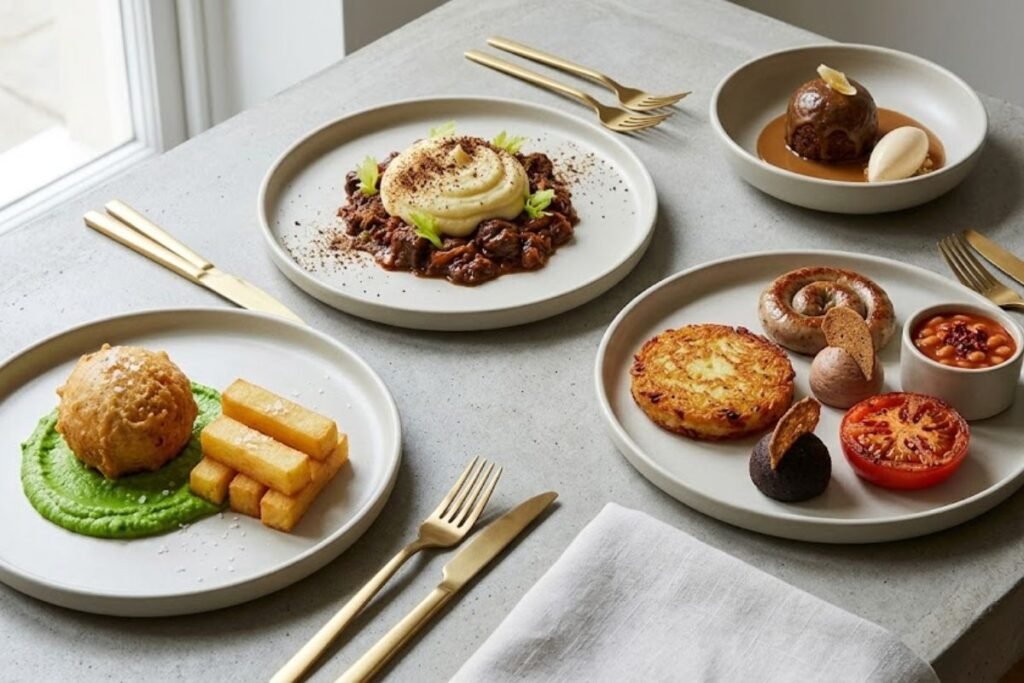
Contemporary chefs across the UK reimagine classic British meals in exciting new ways. They take traditional recipes and add modern techniques, international flavors, and seasonal ingredients. Furthermore, the farm to table movement encourages chefs to source local produce and celebrate British ingredients in fresh ways. As a result, British foods now appear on Michelin-starred menus alongside their humble street food counterparts.
In addition, vegetarian and vegan versions of traditional dishes have become widely popular. Chefs create plant-based shepherd’s pie, vegan sausage rolls, and dairy free puddings that stay true to the spirit of British cooking. Consequently, modern British cuisine welcomes everyone, regardless of dietary preference. Therefore, British foods continue to grow, evolve, and impress food lovers around the world.
Conclusion
British foods offer something special for every kind of food lover. From the crispy perfection of fish and chips to the warming comfort of shepherd’s pie, traditional British cuisine never fails to deliver. Furthermore, regional specialties, indulgent desserts, and the timeless ritual of tea all add depth and character to UK food culture. In addition, modern chefs continue to reinvent classic British meals and push the cuisine forward. Therefore, whether you cook these dishes at home or explore them on a trip to the UK, British foods deserve a place on every food lover’s must try list. Start with one dish and let the flavors speak for themselves.
FAQS
Q1. What are the most famous British foods?
The most famous British foods include fish and chips, full English breakfast, shepherd’s pie, and sticky toffee pudding.
Q2. What makes traditional British cuisine unique?
Traditional British cuisine stands out for its hearty, comforting flavors that reflect centuries of history, regional diversity, and simple yet satisfying ingredients.
Q3. Are British foods popular around the world?
Yes, British foods like fish and chips, crumpets, and Victoria sponge enjoy popularity in countries across the globe.
Q4. What is a classic British meal for dinner?
A classic British dinner typically features a Sunday roast with beef or lamb, roasted vegetables, Yorkshire pudding, and rich gravy.
Q5. How important is tea in UK food culture?
Tea plays a central role in UK food culture, with Britain consuming over 100 million cups daily and the tradition of afternoon tea remaining a cherished national ritual.