
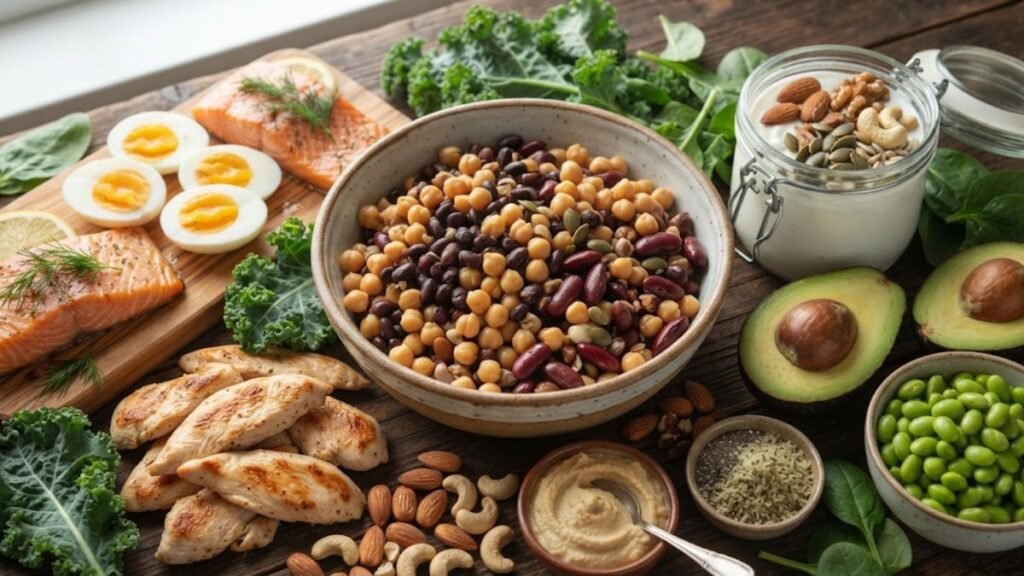
Protein shows up in almost every conversation about balanced eating, and for good reason. Choosing the right high protein food can make meals more satisfying, support muscle maintenance, and help you feel fuller for longer. Whether you eat meat, follow a plant-based diet, or land somewhere in between, there are plenty of options to choose from.
This guide breaks down what makes a food high in protein, walks through the best animal- and plant-based sources, and offers practical ideas for breakfast, snacks, and everyday meals.
What Is High Protein Food?
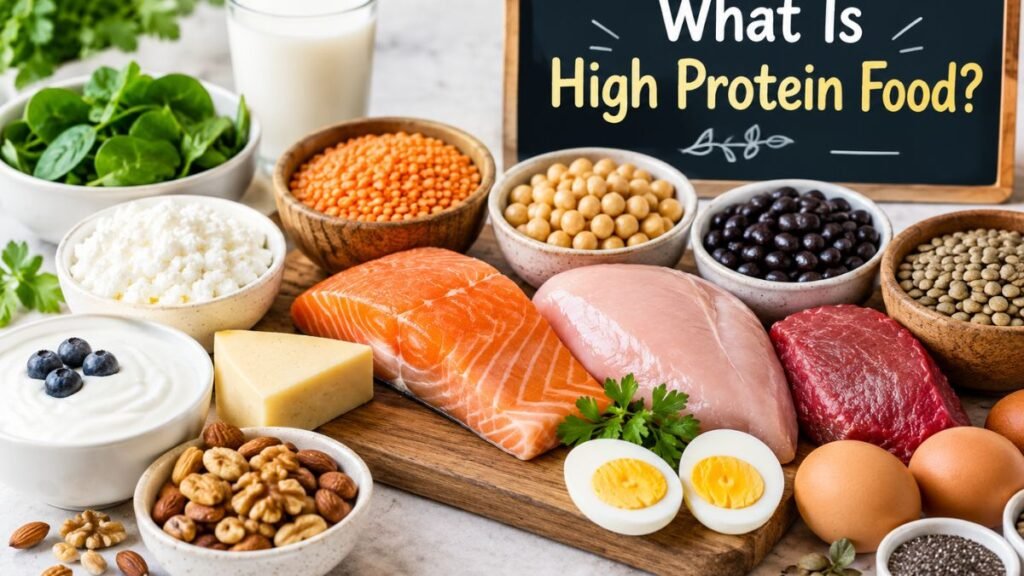
Protein is one of the three main macronutrients, alongside carbohydrates and fats. It’s made up of amino acids, which the body uses to repair tissue, support immune function, and maintain muscle mass.
A food is generally considered high in protein when it provides a meaningful amount relative to its calorie content. For example, a food with 20 grams of protein per serving, and relatively few calories from fat or sugar, would typically be classified as a strong protein source.
Not all protein sources are equal, though. Some come from animals and contain all essential amino acids, while others come from plants and may need to be combined with other foods to provide a complete amino acid profile. Both types can fit comfortably into a healthy diet.
High Protein Food Sources
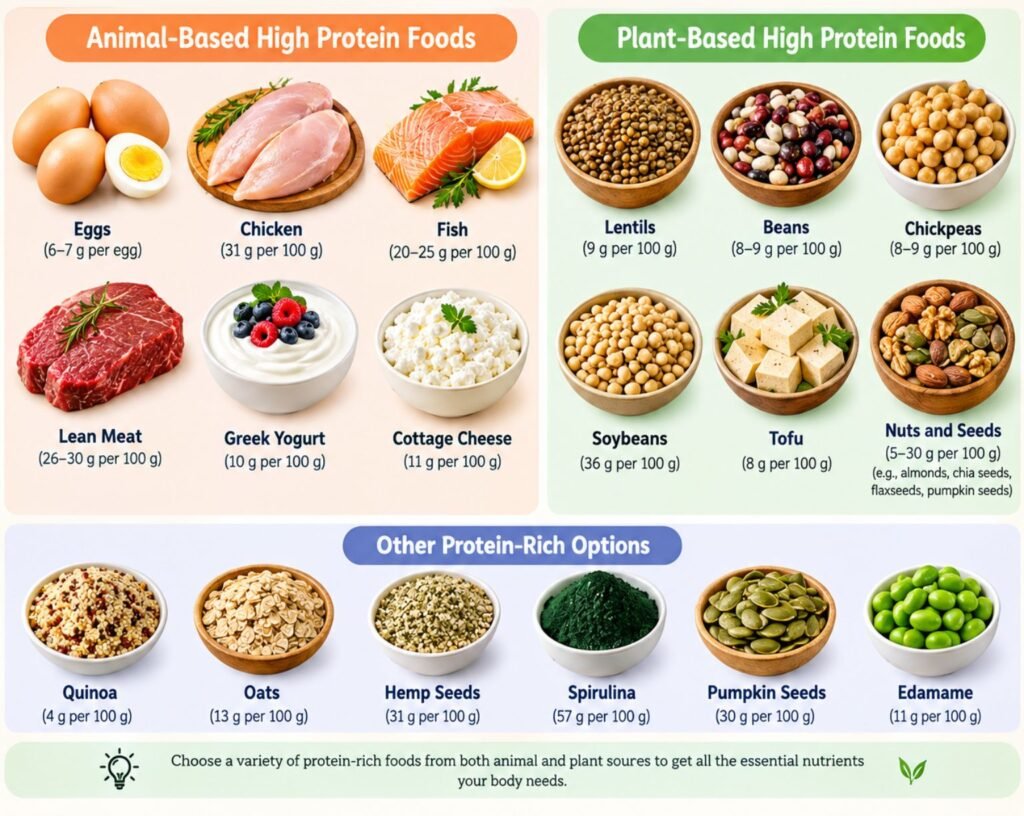
Protein-rich foods generally fall into two broad categories: animal-based and plant-based. Including a mix of both tends to offer the widest range of nutrients, since each group brings something slightly different to the table.
Animal-Based High Protein Foods
Animal products are often the most concentrated protein sources, and many are easy to prepare with minimal effort.
- Eggs provide roughly 6 grams of protein each and are versatile enough for any meal of the day.
- Chicken breast is a lean option that offers about 25 grams of protein per 100 grams, making it a popular staple for simple meals.
- Fish, including salmon, tuna, and tilapia, delivers high-quality protein along with beneficial fats, especially in fatty varieties like salmon.
- Lean meat, such as beef or pork tenderloin, provides protein along with iron and B vitamins.
- Greek yogurt stands out for its higher protein content compared to regular yogurt, often exceeding 15 grams per cup.
- Cottage cheese is another underrated option, offering a similar protein punch with a mild, creamy texture.
Plant-Based High Protein Foods
Plant-based proteins have grown in popularity, and many double as excellent sources of fiber.
- Lentils provide about 18 grams of protein per cooked cup, along with a hearty dose of fiber.
- Beans, including black beans and kidney beans, offer a similarly strong protein-to-fiber combination.
- Chickpeas work well in salads, soups, or roasted as a crunchy snack.
- Soybeans, whether eaten as edamame or processed into other forms, are one of the few plant foods considered a complete protein.
- Tofu absorbs flavor easily and adapts to nearly any cuisine, making it a flexible protein source.
- Nuts and seeds, such as almonds, peanuts, and pumpkin seeds, add protein along with healthy fats.
Best High Protein Food for Breakfast
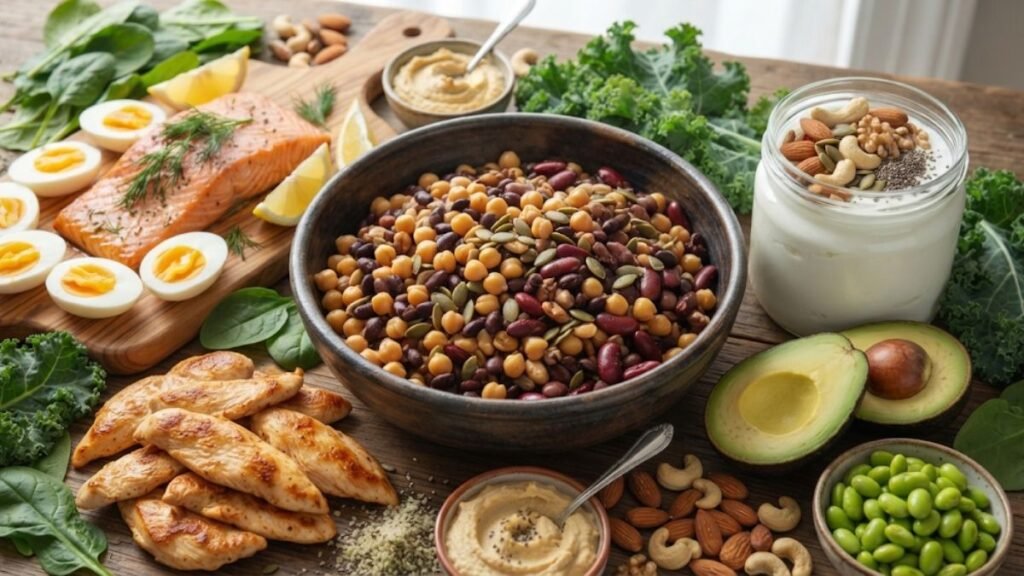
Starting the day with protein can help curb mid-morning hunger and keep energy levels steadier. A few practical ideas include:
- Scrambled or boiled eggs paired with whole-grain toast
- Greek yogurt topped with berries and a spoonful of nuts or seeds
- Cottage cheese with sliced fruit for a quick, no-cook option
- A smoothie made with milk or a plant-based alternative, plus a scoop of protein powder or nut butter
- Overnight oats mixed with chia seeds and a splash of milk for added protein
Any of these options takes only a few minutes to prepare, which makes them realistic for busy mornings.
High Protein Food for Vegetarians
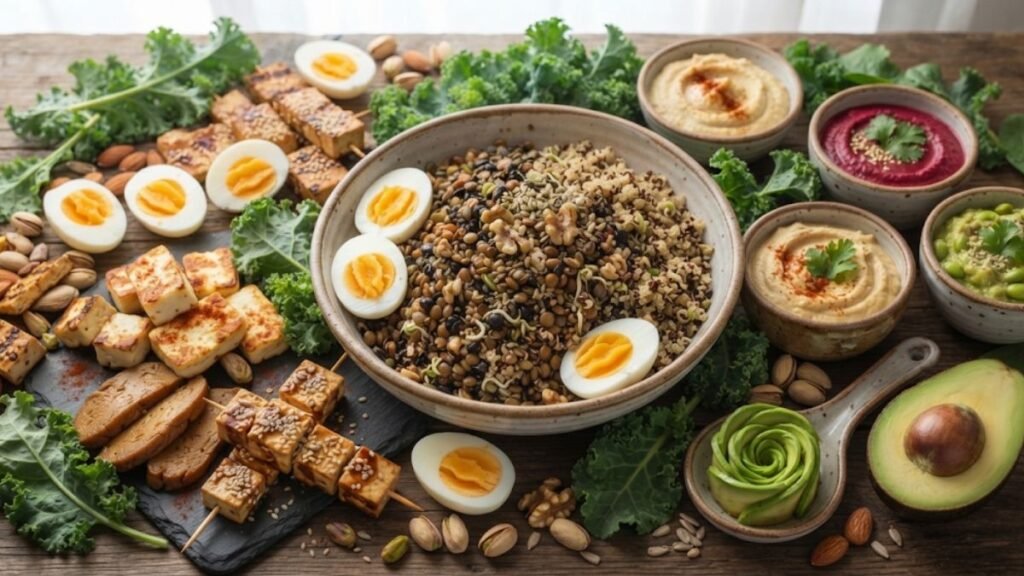
Vegetarians have no shortage of protein-rich choices, even without meat or fish. Eggs and dairy products like Greek yogurt and cottage cheese remain accessible options for those who include them. For fully plant-based eaters, lentils, beans, chickpeas, tofu, and soy-based products like tempeh provide substantial protein.
Combining different plant sources throughout the day, such as rice with beans or hummus with whole-grain pita, helps ensure a well-rounded amino acid intake. Nuts and seeds can also be sprinkled into meals for an extra protein boost without much extra effort.
High Protein Snacks
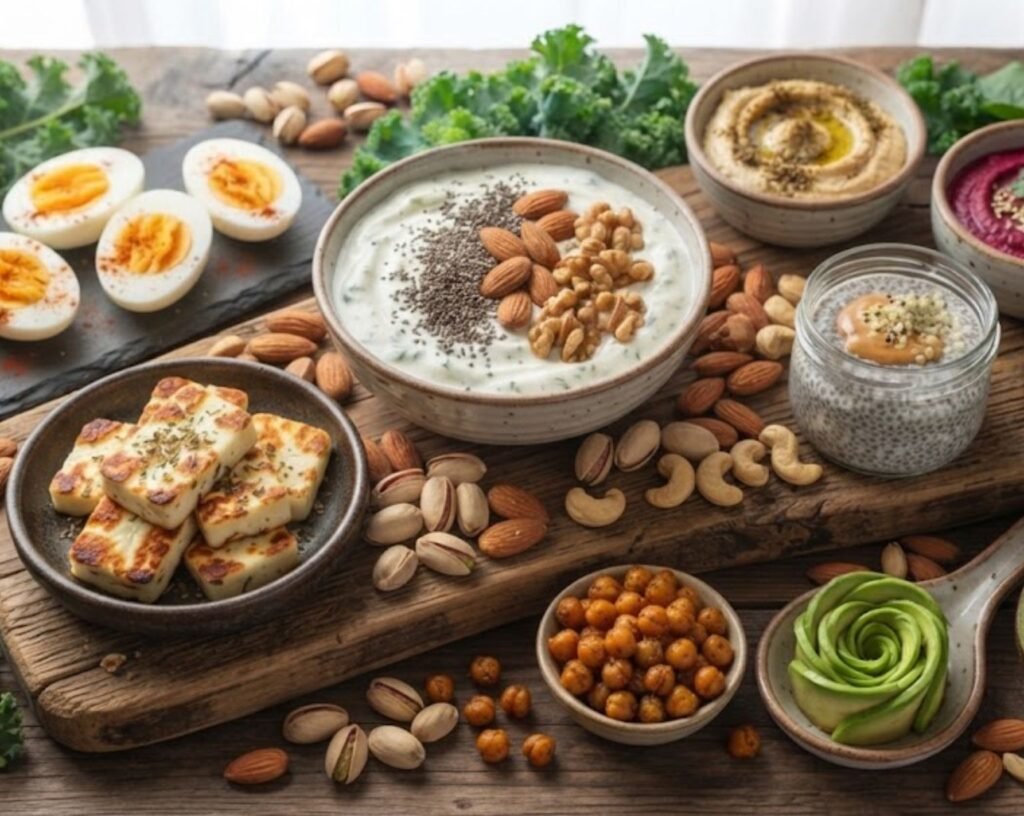
Snacking doesn’t have to mean sacrificing nutrition. These options offer a solid protein boost without much preparation:
- A handful of almonds or mixed nuts
- Hard-boiled eggs, which travel well and require no reheating
- Hummus with vegetable sticks for a fiber-and-protein combination
- Edamame, lightly salted and ready in minutes
- String cheese or cottage cheese cups for a quick dairy-based option
- Roasted chickpeas for a crunchy, portable snack
Keeping a few of these on hand makes it easier to avoid reaching for less nutritious alternatives when hunger strikes.
How Much Protein Do You Need?
Protein needs vary significantly from person to person. Factors like age, body size, activity level, and overall health all play a role in determining the right amount for an individual. Someone who exercises regularly or is working to maintain muscle mass may need more than someone with a largely sedentary routine.
Rather than following a one-size-fits-all number, it’s often more useful to focus on including a protein source at each meal and adjusting based on how you feel and your personal goals. A registered dietitian or healthcare provider can offer more tailored guidance for specific circumstances.
Easy Ways to Add More Protein to Your Diet
Boosting protein intake doesn’t require a complete diet overhaul. Consider these simple adjustments:
- Add eggs or Greek yogurt to your usual breakfast routine.
- Include a protein source with lunch, such as grilled chicken, tofu, or a bean-based salad.
- Swap refined snacks for nuts, seeds, or roasted chickpeas.
- Stir lentils or beans into soups, stews, or grain bowls.
- Choose Greek yogurt or cottage cheese over lower-protein alternatives when possible.
- Keep quick options on hand, like hard-boiled eggs or string cheese, for busy days.
Small changes like these add up over time and are far easier to maintain than drastic dietary shifts.
Common Mistakes When Choosing Protein Foods
Even with good intentions, a few common missteps can undermine the benefits of a high protein food approach.
- Relying too heavily on processed protein products, such as protein bars or shakes, instead of whole foods can mean missing out on fiber and other nutrients.
- Ignoring overall dietary balance by focusing only on protein while neglecting vegetables, whole grains, and healthy fats.
- Overcooking meat or fish, which can affect texture and, in some cases, nutrient retention.
- Assuming more protein is always better, when in fact needs vary and excessive intake isn’t necessarily beneficial.
- Skipping variety, which can lead to nutrient gaps since different protein sources offer different vitamins and minerals.
Being mindful of these patterns helps ensure protein intake supports overall health rather than becoming the sole focus of a diet.
FAQs
1. What is considered a high protein food? A food is generally considered high in protein when it provides a substantial amount per serving relative to its calories, such as eggs, chicken, or lentils.
2. Can plant-based diets provide enough protein? Yes, combining foods like beans, lentils, tofu, and soy products can meet protein needs on a plant-based diet.
3. Is it better to get protein from food or supplements? Whole foods generally offer additional nutrients like fiber and vitamins that supplements don’t provide.
4. Does everyone need the same amount of protein? No, protein needs vary based on age, activity level, body size, and individual health circumstances.
5. Can eating too much protein cause problems? Excessive protein intake isn’t automatically better and should be balanced with overall dietary needs, ideally with guidance from a healthcare provider.
Conclusion
Including a variety of high protein food options, from eggs and Greek yogurt to lentils and tofu, supports a well-rounded, satisfying diet. There’s no single best source, since animal- and plant-based proteins each offer distinct benefits. By mixing different options across meals and snacks, and avoiding an overreliance on processed products, you can build sustainable eating habits that support your overall nutrition goals over time.