
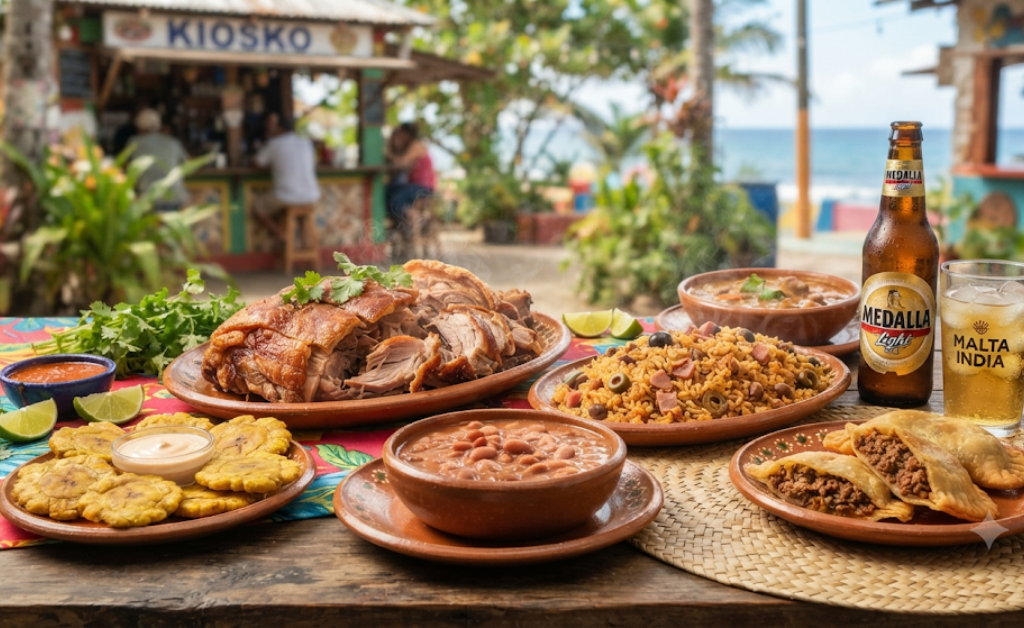
Puerto Rican food tells a story before you even take a bite. It carries the voices of Taino natives, Spanish settlers, and African ancestors, all blending into one plate. Every dish reflects centuries of history, yet it still feels fresh and exciting today. If you love bold flavors and hearty meals, Puerto Rican food will win your heart quickly. This guide walks you through the dishes, ingredients, and traditions that make this cuisine so special.
What Makes Puerto Rican Food Unique
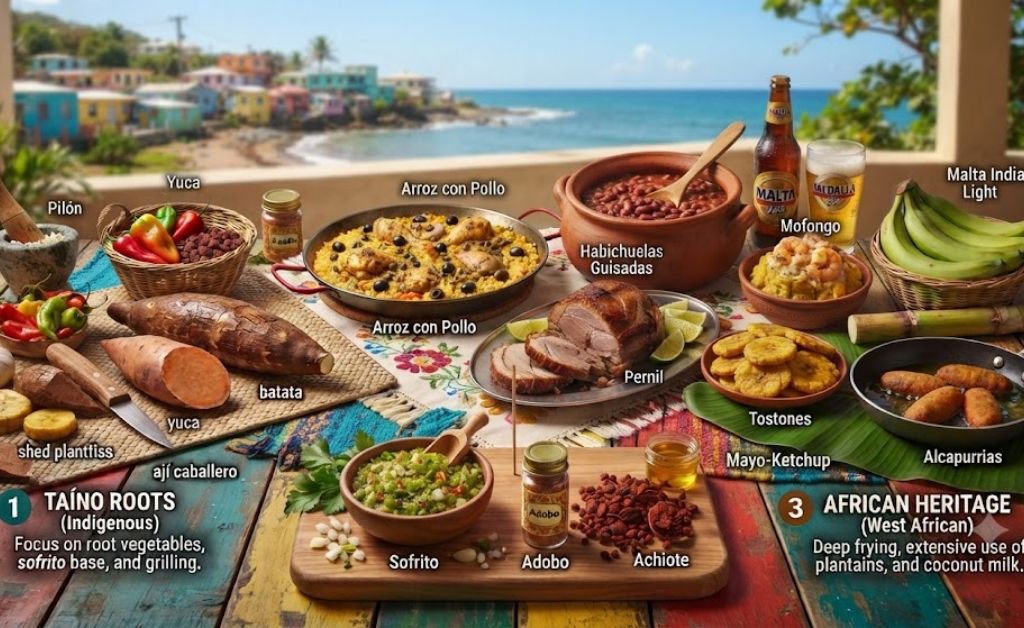
It stands out because it blends three distinct cultures into one kitchen. Spanish settlers brought rice, olive oil, and citrus fruits. African communities introduced plantains, okra, and unique cooking techniques. Meanwhile, the native Taino people contributed cassava, corn, and tropical fruits. As a result, every dish carries layers of flavor that few other cuisines can match.
Moreover, cooks in Puerto Rico rely heavily on a seasoning base called sofrito. This mixture of garlic, onions, peppers, and herbs forms the heart of countless recipes. Without sofrito, many classic dishes would lose their signature depth. In addition, achiote oil adds a warm color and earthy taste to rice, stews, and meats.
Popular Puerto Rican Dishes You Must Try
Mofongo
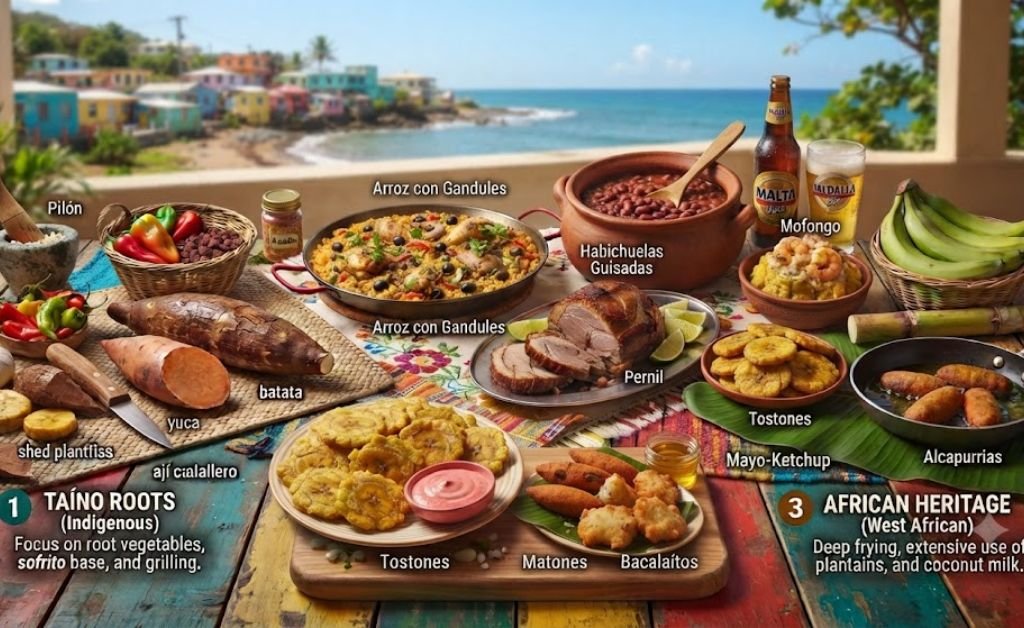
Mofongo ranks as one of the most iconic Puerto Rican food dishes. Cooks mash fried green plantains with garlic, olive oil, and pork cracklings called chicharrón. Then, they shape the mixture into a dome and often stuff it with shrimp, chicken, or beef. The texture feels dense and satisfying, while the garlic adds a punch of flavor.
Arroz con Gandules
This rice dish combines pigeon peas, sofrito, and often pork or ham. Families across Puerto Rico serve arroz con gandules during holidays and celebrations. However, you can also find it on everyday menus, since it pairs well with almost any protein.
Pasteles
Pasteles resemble tamales, but they use a masa made from grated green bananas, plantains, and root vegetables instead of corn. Cooks fill them with seasoned pork, then wrap everything in banana leaves before boiling. This labor-intensive dish usually appears during Christmas, yet many restaurants serve it year-round.
Lechón
Lechón refers to whole roasted pig, slow-cooked until the skin turns crispy and golden. Puerto Rican families often prepare lechón for large gatherings, especially in mountain towns like Guavate. The meat stays juicy inside, while the skin delivers a satisfying crunch.
Tostones
Tostones are twice-fried green plantain slices, pressed flat and fried again until crispy. Cooks typically serve them as a side dish or appetizer with a garlic dipping sauce called mojo. Because they taste crunchy and savory, tostones pair well with almost any main course.
Alcapurrias
Alcapurrias are fritters made from a mashed mixture of green bananas and yautía, then stuffed with seasoned meat. Vendors fry them until golden brown, creating a crispy shell around a savory filling. You will often find alcapurrias sold at beachside food stands across the island.
Key Ingredients in Puerto Rican Cooking
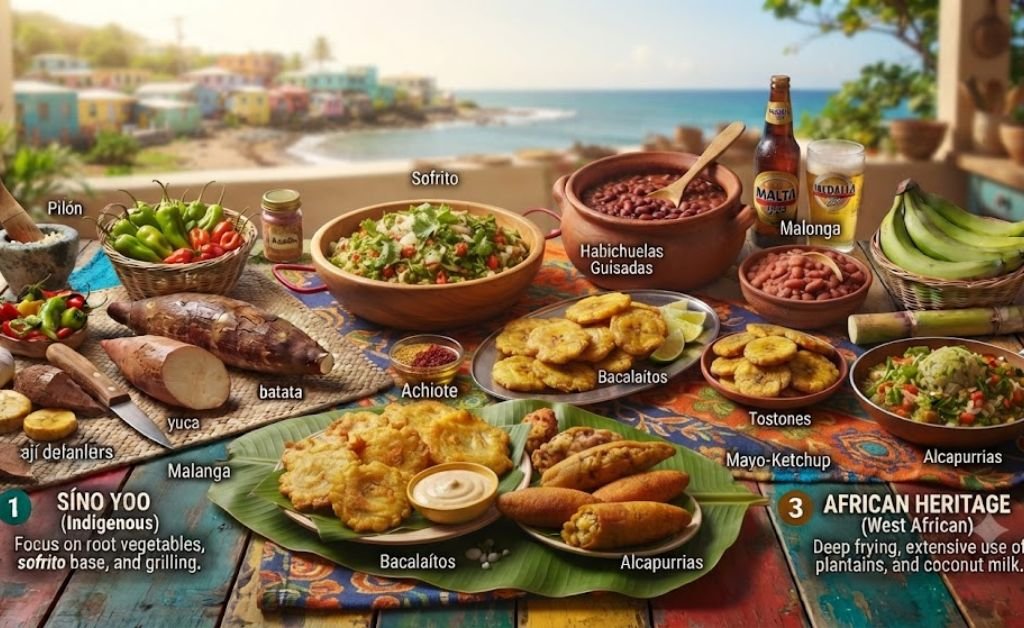
Several ingredients appear again and again throughout Puerto Rican food. Plantains show up in nearly every meal, whether fried, boiled, or mashed. Rice and beans also form the backbone of daily cooking, providing a filling and affordable base. In addition, root vegetables like yuca, yautía, and batata add texture and heartiness to stews.
Meanwhile, adobo seasoning, made from garlic powder, oregano, and other spices, coats meats before cooking. Sofrito, as mentioned earlier, ties many dishes together with its aromatic base. Finally, tropical fruits such as mango, guava, and passionfruit bring natural sweetness to desserts and drinks.
Cultural Significance of Puerto Rican Food
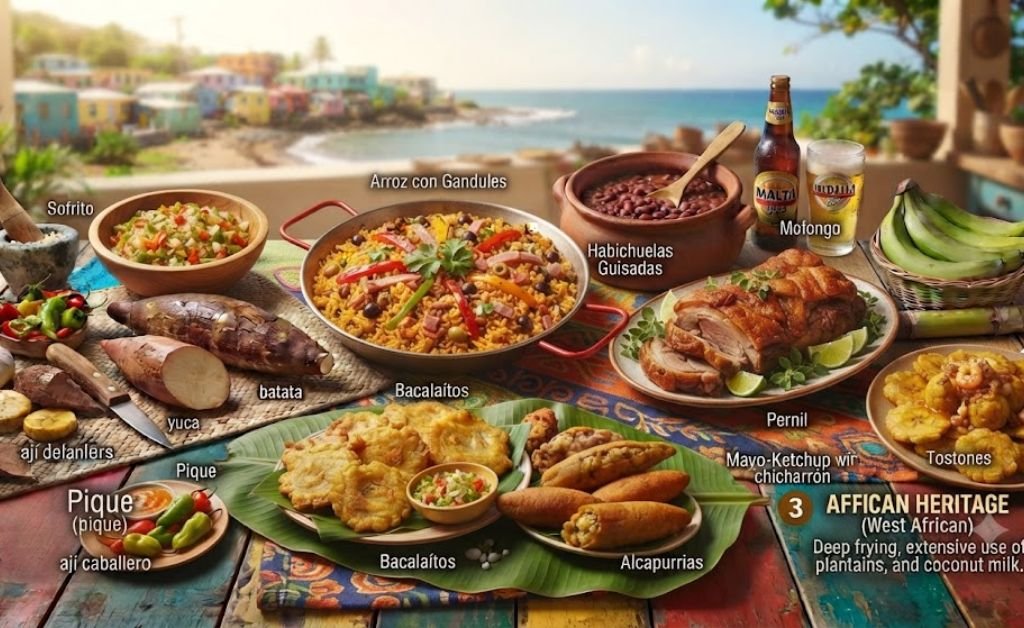
It plays a central role in Puerto Rican identity and family life. Grandmothers often pass down recipes through generations, teaching children how to make sofrito by hand. Holidays revolve around specific dishes, such as pasteles at Christmas or arroz con gandules during family reunions.
Furthermore, Puerto Rican food connects the island to its diaspora communities across the United States. Families living far from Puerto Rico still cook these dishes to stay connected to their roots. As a result, restaurants in cities like New York, Orlando, and Chicago proudly serve authentic Puerto Rican food to keep traditions alive.
Cooking Styles That Define the Cuisine
Puerto Rican cooks favor slow, patient techniques that build deep flavor. Stewing, known as guisar, allows meats and vegetables to simmer together for hours. This method creates tender dishes like carne guisada, a beef stew loaded with potatoes and peppers.
Frying also plays a major role, especially for plantain-based dishes like tostones and alcapurrias. Meanwhile, roasting remains essential for special-occasion dishes like lechón. Because each technique highlights different textures, food offers variety even when using similar ingredients.
Where to Find Authentic Puerto Rican Food
You can find authentic food both on the island and abroad. In Puerto Rico, small roadside stands called kioskos serve some of the best street food, especially in areas like Luquillo. Meanwhile, family-run restaurants called fondas offer homestyle cooking at affordable prices.
In the United States, cities with large Puerto Rican communities often have excellent options. Neighborhoods in New York City, Philadelphia, and Miami feature restaurants that specialize in traditional recipes. Additionally, food festivals celebrating Puerto Rican culture pop up throughout the year, giving visitors a chance to sample multiple dishes at once.
Final Thoughts on Puerto Rican Food
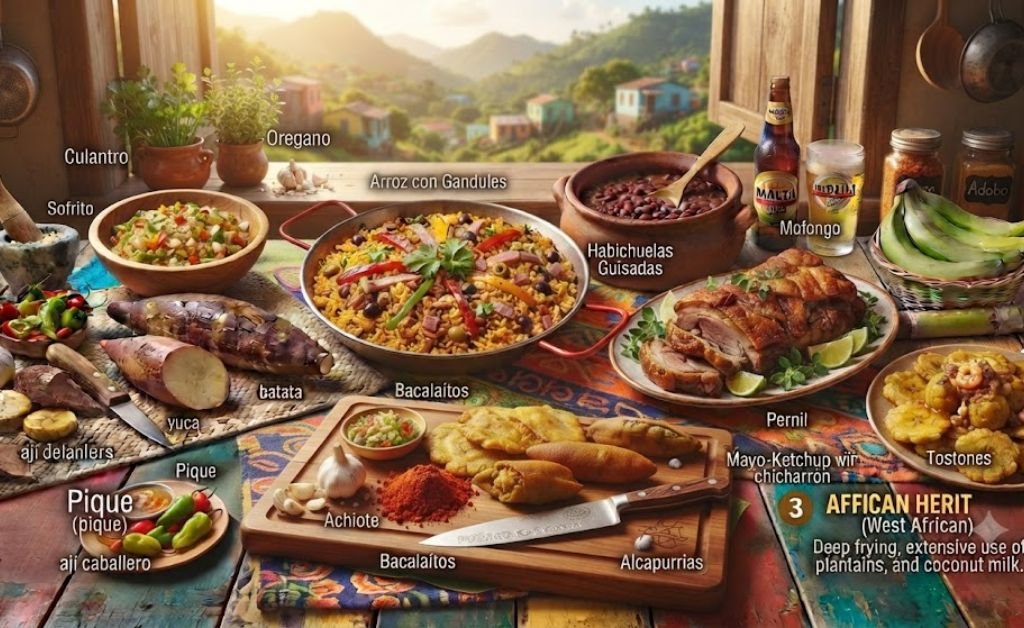
It offers far more than just a meal; it delivers a taste of history, culture, and family tradition. From crispy tostones to slow-roasted lechón, every dish tells its own story. Whether you visit the island or a local restaurant near you, trying Puerto Rican food opens a doorway into a rich and flavorful world. Once you take that first bite, you will understand why this cuisine continues to win hearts around the globe.
FAQs
1. What is the most popular Puerto Rican food?
Mofongo is widely considered the most popular Puerto Rican food.
2. Is Puerto Rican food spicy?
It is generally mild and flavorful rather than spicy.
3. What meat is used most in Puerto Rican cooking? Pork appears most frequently in traditional Puerto Rican dishes.
4. What do Puerto Ricans eat on Christmas?
Pasteles are the traditional Puerto Rican food served during Christmas.
5. Is Puerto Rican food similar to Mexican food?
It differs from Mexican food, relying more on plantains, rice, and sofrito than corn and chili peppers.
Conclusion
Puerto Rican food is a vibrant blend of Spanish, African, and Taíno influences, creating a cuisine that is rich in flavor, tradition, and culture. From iconic dishes like mofongo, arroz con gandules, and lechón asado to delicious desserts and refreshing tropical drinks, every meal tells a story of the island’s heritage. Whether you’re exploring Puerto Rican food for the first time or recreating authentic recipes at home, you’ll discover comforting flavors that celebrate family, community, and history. If you enjoy bold seasonings, fresh ingredients, and hearty meals, Puerto Rican food is a culinary experience worth savoring.