
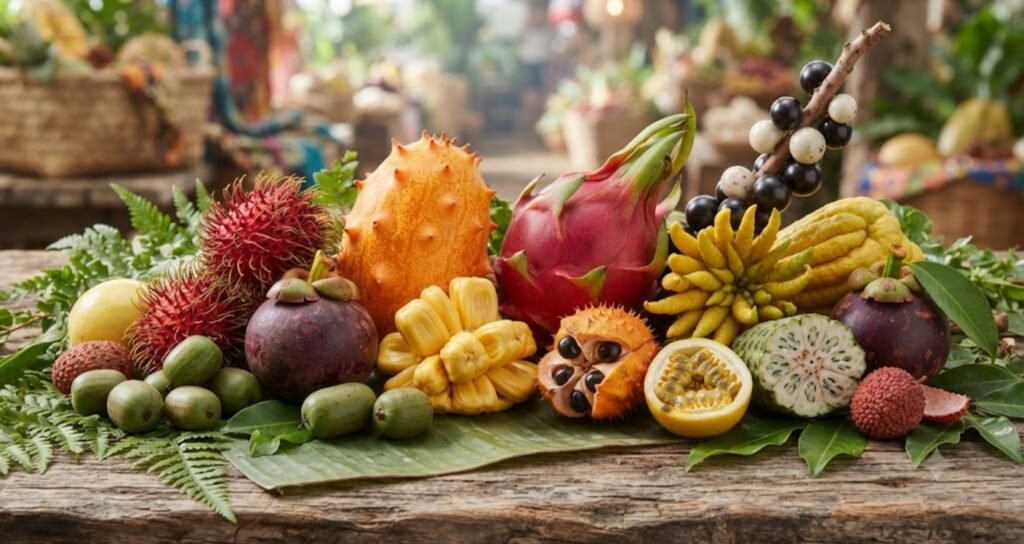
If you think you’ve tried every fruit out there, think again.Rare Fruits Around the World offer unique flavors, fascinating textures, and impressive health benefits that most grocery store produce sections simply can’t match. In addition, these exotic fruits provide essential vitamins, minerals, and antioxidants that support overall well-being. For example, fruits like mangosteen, rambutan, and finger lime are prized for their distinctive taste and nutritional value. Moreover, many rare fruits have deep cultural significance in their native regions and are enjoyed in both traditional and modern recipes. As a result, exploring rare fruits around the world is an exciting way to discover new flavors while expanding your knowledge of global cuisine.From spiky red rambutans to fruit that literally grows straight out of tree trunks, nature has a lot more to offer than apples and bananas.
In this guide, we’ll take you on a journey through 30 rare fruits around the world, exploring where they come from, what they taste like, and why they’re worth seeking out. Whether you’re a curious foodie, a home gardener, or someone who simply loves exotic fruits, this list will expand your palate in ways you never expected.
By the end of this article, you’ll know exactly which unique fruits around the world to try first, where to find them, and how to store and enjoy them properly. Let’s get started.
What Are Rare Fruits Around the World?
Rare fruits around the world are fruits that grow in limited regions, have short growing seasons, or simply haven’t made their way into mainstream global markets yet. Many of these fruits thrive only in specific climates, such as tropical rainforests or high-altitude regions, which limits their availability elsewhere.
Unlike common fruits such as apples, oranges, or grapes, these unusual fruits often require specific soil, humidity, or temperature conditions to grow well. This makes large-scale farming and international shipping difficult, keeping them rare outside their native regions.
That said, “rare” doesn’t always mean impossible to find. Some of these exotic fruits are common in local markets across Asia, Africa, and South America but are considered rare fruits in North America, Europe, or Australia simply because they aren’t exported widely.
Why Are Some Fruits Considered Rare?
There are several reasons certain fruits remain rare despite their incredible taste and nutritional value.
Climate restrictions. Many rare tropical fruits, such as cupuaçu and langsat, only thrive in specific tropical climates near the equator. As a result, they can be cultivated in only a limited number of regions around the world.
Short shelf life. Fruits like mangosteen and rambutan spoil quickly after harvest. Therefore, transporting them over long distances is challenging and often requires careful handling and specialized storage. Consequently, these fruits are less commonly available in many international markets.
Low commercial demand. Some fruits from different countries simply haven’t been marketed internationally, so large-scale distribution networks don’t exist yet.
Labor-intensive harvesting. Fruits such as jabuticaba grow directly on tree trunks in small clusters, requiring careful hand-harvesting that increases costs.
Limited genetic availability. Certain rare fruits, like white sapote, don’t have widely cultivated commercial varieties, so they remain confined to home gardens and local farms.
Understanding these factors helps explain why some of the world’s rarest fruits are treasured delicacies in their home countries but remain virtually unknown elsewhere.
30 Rare Fruits Around the World
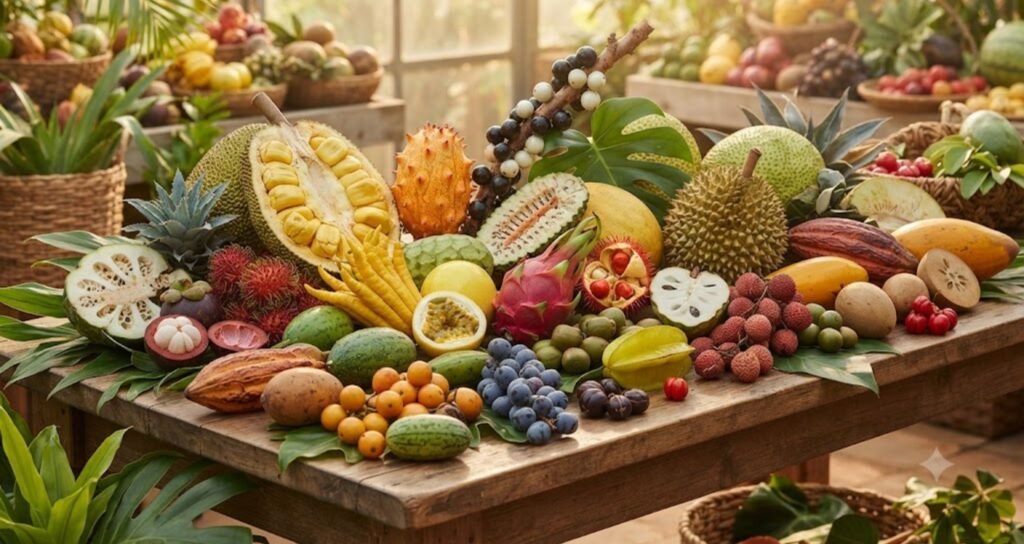
Ready to explore the full list? Here are 30 rare fruits around the world, complete with everything you need to know about each one.
1. Durian
- Scientific Name: Durio zibethinus
- Origin: Southeast Asia (Indonesia, Malaysia, Thailand)
- Appearance: Large, spiky green-brown husk with creamy yellow flesh inside
- Flavor Profile: Custard-like sweetness with a strong, pungent aroma
- Nutritional Benefits: High in fiber, potassium, and vitamin C
- Culinary Uses: Eaten fresh, used in desserts, ice cream, and pastries
- Fun Fact: Durian is banned on public transportation in several Southeast Asian countries due to its intense smell.
2. Mangosteen
- Scientific Name: Garcinia mangostana
- Origin: Southeast Asia
- Appearance: Deep purple rind with white, segmented flesh inside
- Flavor Profile: Sweet and tangy, often compared to a mix of peach and citrus
- Nutritional Benefits: Rich in antioxidants called xanthones
- Culinary Uses: Eaten fresh, used in salads and fruit desserts
- Fun Fact: Mangosteen is often called the “Queen of Fruits” in Southeast Asia.
3. Buddha’s Hand
- Scientific Name: Citrus medica var. sarcodactylis
- Origin: China and Northeast India
- Appearance: Yellow citrus fruit shaped like elongated, finger-like segments
- Flavor Profile: Intensely fragrant, with little to no pulp or juice
- Nutritional Benefits: Contains vitamin C and citrus flavonoids
- Culinary Uses: Zest used in desserts, cocktails, and as a natural air freshener
- Fun Fact: Buddha’s Hand is often used as a symbolic offering in Buddhist temples.
4. Salak (Snake Fruit)
- Scientific Name: Salacca zalacca
- Origin: Indonesia
- Appearance: Reddish-brown scaly skin resembling snake skin
- Flavor Profile: Crisp texture with a sweet-tart, apple-like taste
- Nutritional Benefits: Good source of fiber and antioxidants
- Culinary Uses: Eaten fresh, pickled, or made into chips
- Fun Fact: Salak grows on palm trees close to the ground rather than high branches.
5. Jabuticaba
- Scientific Name: Plinia cauliflora
- Origin: Brazil
- Appearance: Small, dark purple fruit that grows directly on the tree trunk
- Flavor Profile: Sweet, grape-like flavor with a thick skin
- Nutritional Benefits: High in antioxidants and vitamin C
- Culinary Uses: Eaten fresh, made into jams, juices, and wine
- Fun Fact: Jabuticaba is one of the few fruits in the world that grows directly on bark.
6. Miracle Fruit
- Scientific Name: Synsepalum dulcificum
- Origin: West Africa
- Appearance: Small, oval, bright red berry
- Flavor Profile: Mildly sweet on its own, but temporarily makes sour foods taste sweet
- Nutritional Benefits: Contains a unique protein called miraculin
- Culinary Uses: Used in flavor-tripping food experiences and dessert experiments
- Fun Fact: Miracle fruit is often used at “flavor-tripping parties” where guests taste lemons that suddenly seem sweet.
7. Rambutan
- Scientific Name: Nephelium lappaceum
- Origin: Southeast Asia
- Appearance: Red, hairy exterior with translucent white flesh inside
- Flavor Profile: Sweet and juicy, similar to lychee
- Nutritional Benefits: Rich in vitamin C and copper
- Culinary Uses: Eaten fresh, added to fruit salads and desserts
- Fun Fact: The name rambutan comes from the Malay word for “hair.”
8. Ackee
- Scientific Name: Blighia sapida
- Origin: West Africa, widely grown in Jamaica
- Appearance: Red pod that opens to reveal yellow arils and black seeds
- Flavor Profile: Mild, buttery, slightly nutty taste
- Nutritional Benefits: Good source of healthy fats and vitamin A
- Culinary Uses: Jamaica’s national dish, ackee and saltfish
- Fun Fact: Unripe ackee is toxic and must be fully mature before it’s safe to eat.
9. Cupuaçu
- Scientific Name: Theobroma grandiflorum
- Origin: Amazon Rainforest, Brazil
- Appearance: Large, brown, oval fruit related to cacao
- Flavor Profile: Tropical flavor combining chocolate, pineapple, and pear notes
- Nutritional Benefits: High in antioxidants and vitamin C
- Culinary Uses: Used in juices, desserts, and cosmetics
- Fun Fact: Cupuaçu is a cousin of the cacao tree, the source of chocolate.
Rare Fruits starting with A-M
10. Cherimoya
- Scientific Name: Annona cherimola
- Origin: Andes region of South America
- Appearance: Green, heart-shaped fruit with scale-like skin
- Flavor Profile: Creamy texture tasting like a blend of banana, pineapple, and strawberry
- Nutritional Benefits: High in fiber, vitamin C, and antioxidants
- Culinary Uses: Eaten fresh with a spoon, used in smoothies and desserts
- Fun Fact: Mark Twain once called cherimoya “the most delicious fruit known to men.”
11. Langsat
- Scientific Name: Lansium parasiticum
- Origin: Southeast Asia
- Appearance: Small, round, pale yellow fruit growing in clusters
- Flavor Profile: Sweet and slightly acidic, similar to grapefruit
- Nutritional Benefits: Contains vitamin C, riboflavin, and antioxidants
- Culinary Uses: Eaten fresh, occasionally used in desserts
- Fun Fact: Langsat trees can produce fruit for over 50 years.
12. Santol
- Scientific Name: Sandoricum koetjape
- Origin: Southeast Asia
- Appearance: Round, yellow-orange fruit with thick rind
- Flavor Profile: Sweet-tart flesh with a cotton-like texture around the seeds
- Nutritional Benefits: Good source of fiber and vitamin C
- Culinary Uses: Eaten fresh, used in savory Filipino stews and candies
- Fun Fact: Santol is sometimes called “cotton fruit” due to its fibrous flesh texture.
13. Monstera Deliciosa Fruit
- Scientific Name: Monstera deliciosa
- Origin: Central America
- Appearance: Long, green, scaly fruit resembling a corn cob
- Flavor Profile: Tropical mix of pineapple and banana flavors when fully ripe
- Nutritional Benefits: Contains vitamin C and potassium
- Culinary Uses: Eaten fresh once scales naturally fall off
- Fun Fact: The same plant is a popular houseplant, but the fruit is rarely seen since it takes over a year to ripen.
14. African Horned Melon (Kiwano)
- Scientific Name: Cucumis metuliferus
- Origin: Sub-Saharan Africa
- Appearance: Bright orange, spiky exterior with vibrant green, jelly-like flesh
- Flavor Profile: Mild flavor blending cucumber, banana, and lime
- Nutritional Benefits: High water content, vitamin C, and vitamin A
- Culinary Uses: Eaten fresh, used as a garnish or in fruit salads
- Fun Fact: Kiwano can be stored for months without spoiling due to its thick skin.
15. Bael Fruit
- Scientific Name: Aegle marmelos
- Origin: India and Southeast Asia
- Appearance: Hard, woody shell with orange pulp inside
- Flavor Profile: Sweet, aromatic, and slightly tangy
- Nutritional Benefits: Traditionally used to support digestive health, rich in fiber
- Culinary Uses: Made into juices, jams, and traditional remedies
- Fun Fact: Bael fruit is considered sacred in Hindu culture and used in religious offerings.
16. Lucuma
- Scientific Name: Pouteria lucuma
- Origin: Peru, Chile, and Ecuador (Andean region)
- Appearance: Round, green-yellow fruit with dry, starchy flesh
- Flavor Profile: Sweet, maple-like flavor with hints of sweet potato
- Nutritional Benefits: Good source of fiber, iron, and beta-carotene
- Culinary Uses: Popular in Peruvian ice cream and smoothies, often used as a natural sweetener powder
- Fun Fact: Lucuma is sometimes called “the gold of the Incas.”
17. Medlar
- Scientific Name: Mespilus germanica
- Origin: Southwest Asia and Southeastern Europe
- Appearance: Small, brown fruit resembling a rosehip
- Flavor Profile: Tart until “bletted” (softened by frost), then sweet and spiced
- Nutritional Benefits: Contains fiber, vitamin C, and antioxidants
- Culinary Uses: Used in jams, jellies, and traditional European desserts
- Fun Fact: Medlars must partially decompose before they become edible, a process called bletting.
18. Feijoa
- Scientific Name: Acca sellowiana
- Origin: South America, widely grown in New Zealand
- Appearance: Green, egg-shaped fruit with gritty, translucent flesh
- Flavor Profile: Combination of pineapple, guava, and mint
- Nutritional Benefits: High in vitamin C and dietary fiber
- Culinary Uses: Eaten fresh, used in smoothies, jams, and baked goods
- Fun Fact: Feijoa season in New Zealand is so beloved it inspires an annual harvest frenzy.
19. Finger Lime
- Scientific Name: Citrus australasica
- Origin: Australia
- Appearance: Small, finger-shaped citrus with caviar-like juice vesicles
- Flavor Profile: Tart, citrusy burst similar to lime with a slight sweetness
- Nutritional Benefits: High in vitamin C and folate
- Culinary Uses: Used as a garnish for seafood, cocktails, and desserts
- Fun Fact: Finger lime is often called “citrus caviar” due to its unique pearl-like pulp.
Rare Fruits starting with G-Z
20. Black Sapote
- Scientific Name: Diospyros nigra
- Origin: Mexico and Central America
- Appearance: Green skin that turns nearly black when ripe, with dark, custard-like flesh
- Flavor Profile: Tastes remarkably like chocolate pudding
- Nutritional Benefits: High in vitamin C and fiber
- Culinary Uses: Used in puddings, smoothies, and vegan chocolate desserts
- Fun Fact: Black sapote is nicknamed the “chocolate pudding fruit.”
21. White Sapote
- Scientific Name: Casimiroa edulis
- Origin: Mexico and Central America
- Appearance: Green to yellow skin with creamy, custard-like flesh
- Flavor Profile: Sweet, custardy flavor similar to banana and peach
- Nutritional Benefits: Contains vitamin C and dietary fiber
- Culinary Uses: Eaten fresh, blended into smoothies and desserts
- Fun Fact: In traditional medicine, white sapote leaves have been used to help with sleep.
22. Rose Apple
- Scientific Name: Syzygium jambos
- Origin: Southeast Asia
- Appearance: Bell-shaped fruit in shades of pink, red, or pale green
- Flavor Profile: Light, watery sweetness with a floral rose aroma
- Nutritional Benefits: Hydrating, contains vitamin C and small amounts of calcium
- Culinary Uses: Eaten fresh, used in salads and light desserts
- Fun Fact: Its crisp texture and floral scent make rose apple a popular fresh snack in Southeast Asian markets.
23. Ice Cream Bean
- Scientific Name: Inga edulis
- Origin: South America
- Appearance: Long, green pod containing fluffy white pulp around seeds
- Flavor Profile: Sweet, creamy flavor reminiscent of vanilla ice cream
- Nutritional Benefits: Contains vitamin C and dietary fiber
- Culinary Uses: Eaten fresh directly from the pod
- Fun Fact: Despite its name, ice cream bean contains no dairy at all—the texture just resembles soft ice cream.
24. Naranjilla
- Scientific Name: Solanum quitoense
- Origin: Andes region of Ecuador and Colombia
- Appearance: Orange, fuzzy-skinned fruit with green, tangy pulp
- Flavor Profile: Tart flavor combining pineapple, rhubarb, and citrus
- Nutritional Benefits: Rich in vitamin C and antioxidants
- Culinary Uses: Used in juices, especially the popular Ecuadorian drink “naranjilla juice”
- Fun Fact: Naranjilla translates to “little orange,” though it’s not related to citrus at all.
25. Gac Fruit
- Scientific Name: Momordica cochinchinensis
- Origin: Vietnam and Southeast Asia
- Appearance: Spiky, orange-red exterior with deep red pulp inside
- Flavor Profile: Mild flavor, mostly used for color and nutrition rather than taste
- Nutritional Benefits: Extremely high in lycopene and beta-carotene
- Culinary Uses: Used in traditional Vietnamese sticky rice dishes for special occasions
- Fun Fact: Gac fruit contains one of the highest concentrations of lycopene of any fruit in the world.
26. Soursop
- Scientific Name: Annona muricata
- Origin: Central America and the Caribbean
- Appearance: Large, spiky green fruit with white, fibrous flesh
- Flavor Profile: Tropical blend of strawberry, pineapple, and citrus
- Nutritional Benefits: High in vitamin C, fiber, and antioxidants
- Culinary Uses: Used in smoothies, juices, and ice cream
- Fun Fact: Soursop leaves are widely used in teas across tropical regions.
27. Breadfruit
- Scientific Name: Artocarpus altilis
- Origin: Pacific Islands
- Appearance: Large, round, green fruit with a bumpy texture
- Flavor Profile: Starchy, potato-like flavor when cooked
- Nutritional Benefits: High in complex carbohydrates, fiber, and potassium
- Culinary Uses: Roasted, fried, or boiled as a starchy staple food
- Fun Fact: A single breadfruit tree can produce hundreds of fruits per season, making it a vital food source across the Pacific.
28. Canistel
- Scientific Name: Pouteria campechiana
- Origin: Central America
- Appearance: Bright yellow-orange fruit with smooth skin
- Flavor Profile: Sweet, custardy texture similar to a baked sweet potato
- Nutritional Benefits: High in vitamin A, niacin, and fiber
- Culinary Uses: Used in milkshakes, custards, and baked goods
- Fun Fact: Canistel is nicknamed the “egg fruit” because of its dense, yolk-like texture.
29. Mamoncillo
- Scientific Name: Melicoccus bijugatus
- Origin: South America and the Caribbean
- Appearance: Small, green, grape-like fruit growing in clusters
- Flavor Profile: Tangy-sweet flavor similar to a cross between lime and lychee
- Nutritional Benefits: Contains vitamin C and antioxidants
- Culinary Uses: Eaten fresh by cracking the shell and sucking the pulp off the seed
- Fun Fact: Mamoncillo is known by many names, including Spanish lime and quenepa.
30. Hala Fruit
- Scientific Name: Pandanus tectorius
- Origin: Pacific Islands and Southeast Asia
- Appearance: Large, spiky fruit made up of individual wedge-shaped segments
- Flavor Profile: Mildly sweet, chewy texture similar to mango near the base
- Nutritional Benefits: Contains vitamin C and dietary fiber
- Culinary Uses: Segments are chewed for their juice, and the fruit is used decoratively
- Fun Fact: Hala fruit segments are sometimes strung together to make traditional Hawaiian leis.
Rare Tropical Fruits Around the World
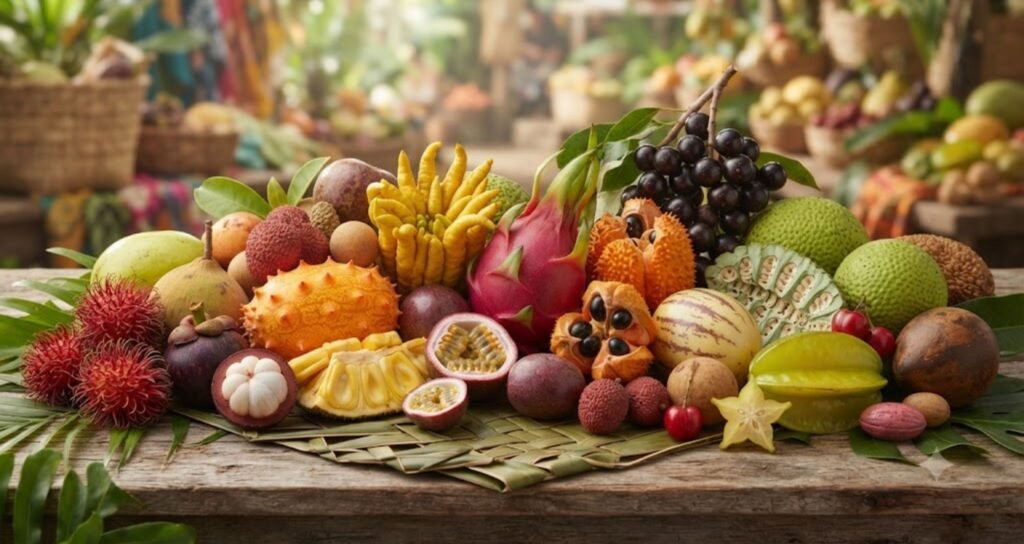
Many of the rarest tropical fruits, including durian, mangosteen, rambutan, and cupuaçu, thrive exclusively in humid, equatorial climates. These rare tropical fruits often struggle to survive outside their native ecosystems, which is exactly why they’re so hard to find in colder regions.
Fruits like soursop and breadfruit also fall into this category, having adapted over centuries to thrive in the consistent warmth and rainfall of tropical zones. If you ever get the chance to travel to Southeast Asia, the Caribbean, or the Amazon Basin, trying these fruits fresh from a local market is an experience well worth seeking out.
Rare Fruits With Amazing Health Benefits
Beyond their unusual appearance, many rare fruits around the world are true nutritional powerhouses. These healthy exotic fruits often contain higher concentrations of antioxidants, vitamins, and minerals compared to more common produce.
Gac fruit, for example, contains extremely high levels of lycopene, an antioxidant linked to heart health. Mangosteen is prized for its xanthones, plant compounds studied for their antioxidant properties, while soursop and cupuaçu both provide strong doses of vitamin C to support immune function.
Meanwhile, nutrient-rich fruits like feijoa and finger lime offer generous fiber content, which supports healthy digestion.Adding a rotation of these exotic fruits to your diet is a simple and enjoyable way to diversify your nutrient intake beyond typical grocery store staples. Moreover, each fruit offers a unique combination of vitamins, minerals, antioxidants, and flavors. As a result, regularly trying different rare fruits can support a balanced diet while introducing exciting new tastes and health benefits.
The Sweetest Rare Fruits Around the World
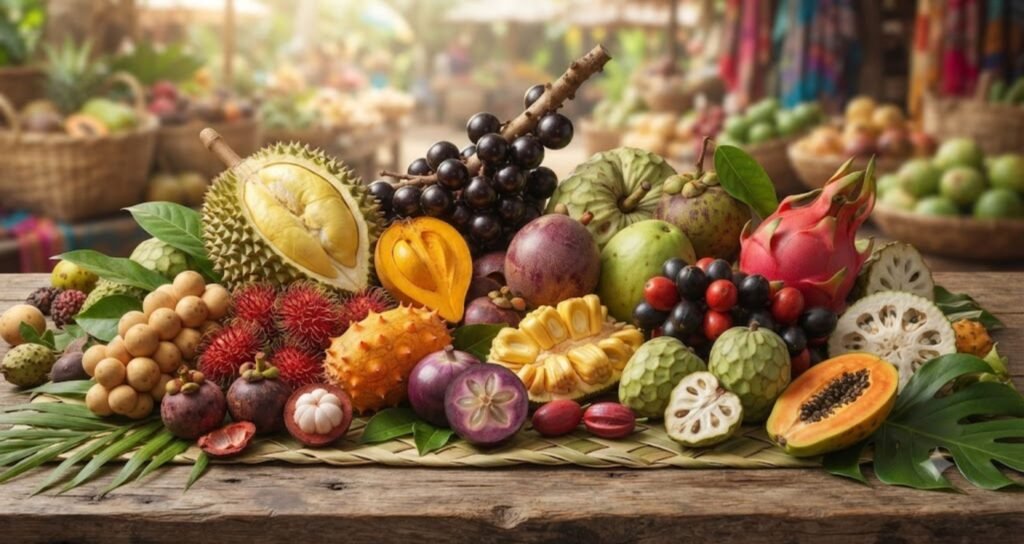
If you have a sweet tooth, several rare fruits stand out for their naturally sugary, dessert-like flavors. Black sapote genuinely tastes like chocolate pudding, while lucuma offers a maple-like sweetness that’s popular in Peruvian ice cream.
Cherimoya is another standout, often described as tasting like a tropical fruit salad blended into a creamy custard. Rambutan and langsat both provide juicy, candy-like sweetness that rivals any store-bought treat.
For those craving something naturally sweet without added sugar, these colorful fruits offer a satisfying and guilt-free way to indulge. In addition, they are naturally rich in vitamins, minerals, fiber, and antioxidants that support overall health. Furthermore, their vibrant flavors and unique textures make healthy snacking more enjoyable. As a result, you can satisfy your sweet cravings while maintaining a balanced and nutritious diet. In addition, they are packed with essential vitamins, minerals, and antioxidants that support overall health. As a result, you can enjoy a naturally sweet treat while making a healthier choice for your daily diet.
Where Can You Find Rare Fruits Around the World?
Finding rare fruits depends largely on where you live, but there are more options than you might expect.
Specialty grocery stores and Asian or Latin markets often carry fruits like rambutan, mangosteen, and salak, especially in larger cities with diverse populations.
Farmers markets in tropical climates, such as those in Florida, Hawaii, and Southern California, frequently sell locally grown exotic fruits like black sapote, canistel, and feijoa.
Botanical gardens and fruit festivals sometimes offer tasting events, giving you a chance to sample unique fruits around the world before committing to a purchase.
Growing your own is also an option for fruits like finger lime, feijoa, and miracle fruit, which can be cultivated in containers in warmer climates or greenhouses.
Tips for Tasting and Storing Rare Fruits
Trying rare fruits for the first time can be intimidating, but a few simple tips make the experience much smoother.
Check ripeness carefully. Many rare fruits, like cherimoya and black sapote, need to soften significantly before they’re ready to eat.
Store tropical fruits at room temperature until ripe, then refrigerate to extend freshness for a few extra days.
Freeze the pulp when possible. Fruits like soursop and cupuaçu freeze exceptionally well, allowing you to enjoy their fresh flavor long after the growing season has ended. In addition, frozen fruit pulp retains much of its nutritional value and is perfect for smoothies, desserts, and beverages. As a result, freezing is a convenient way to reduce waste and enjoy rare fruits throughout the year.
Research before eating unfamiliar fruit. Some fruits, like ackee, are toxic when unripe, so it’s essential to know the proper preparation before diving in.
FAQS
What is the rarest fruit in the world?
While it is difficult to identify a single rarest fruit, jabuticaba and Monstera deliciosa are often considered among the world’s rarest fruits. These unique fruits grow only in specific regions and have very short harvesting seasons. In addition, they are highly perishable, making international distribution challenging. As a result, they are rarely found in regular grocery stores outside their native countries.
Which rare fruit is the healthiest?
Gac fruit is widely regarded as one of the healthiest rare fruits because it contains exceptionally high levels of lycopene and beta-carotene. Moreover, it is packed with antioxidants that support heart health, eye health, and the immune system. As a result, gac fruit is often described as a nutrient-rich superfruit.
Where can I buy rare fruits?
You can purchase rare fruits from specialty Asian or Latin grocery stores, tropical farmers’ markets, online exotic fruit retailers, and selected botanical garden events. Furthermore, many online stores now deliver fresh or frozen exotic fruits directly to your doorstep. Therefore, enjoying rare fruits from around the world has become easier than ever.
Which rare fruit tastes the sweetest?
Black sapote and lucuma are among the sweetest rare fruits in the world. Black sapote has a rich flavor similar to chocolate pudding, while lucuma offers a naturally sweet taste with hints of maple syrup and sweet potato. In addition, both fruits are rich in vitamins, fiber, and antioxidants, making them a healthy choice for desserts and smoothies.
Are rare fruits expensive?
Many rare fruits cost more than common fruits because they are grown in limited regions and require careful harvesting and transportation. In addition, import costs and seasonal availability can increase their price. However, the cost varies depending on the fruit, country, and time of year.
What is the most unusual fruit in the world?
Monstera deliciosa is considered one of the most unusual fruits because of its corn-like appearance and unique ripening process. Moreover, the fruit must ripen completely before it is safe to eat, and its flavor is often compared to a delicious blend of pineapple and banana.
Which rare fruits are found only in Asia?
Several famous rare fruits, including durian, mangosteen, salak, langsat, and santol, are native to Southeast Asia. Although a few are now cultivated in other tropical regions, they remain most commonly found in Asian countries where the climate is ideal for their growth.
Are rare fruits safe to eat?
Most rare fruits are completely safe when they are fully ripe and prepared correctly. However, some fruits, such as ackee, can be toxic if eaten before they ripen. Therefore, it is always important to learn the correct way to prepare unfamiliar fruits before eating them.
What rare fruit should I try first?
If you are trying exotic fruits for the first time, rambutan is an excellent choice. It has a mild sweetness, juicy texture, and refreshing flavor that appeals to most people. In addition, rambutan is becoming increasingly available in specialty grocery stores and Asian markets. As a result, it provides an easy and enjoyable introduction to the fascinating world of rare fruits.
Comparison Table: Rare Fruits Around the World
| Fruit Name | Origin | Taste | Health Benefits | Availability |
|---|---|---|---|---|
| Durian | Southeast Asia | Sweet, custard-like, pungent | High fiber, potassium | Specialty Asian markets |
| Mangosteen | Southeast Asia | Sweet-tangy | Antioxidants (xanthones) | Specialty markets, online |
| Rambutan | Southeast Asia | Sweet, juicy | Vitamin C, copper | Asian markets, some grocers |
| Jabuticaba | Brazil | Sweet, grape-like | Antioxidants, vitamin C | Very limited, home gardens |
| Cherimoya | South America | Creamy, tropical | Fiber, vitamin C | Specialty grocers, seasonal |
| Miracle Fruit | West Africa | Mild, flavor-altering | Unique flavor-modifying protein | Online specialty sellers |
| Black Sapote | Central America | Chocolate pudding-like | Vitamin C, fiber | Tropical farmers markets |
| Feijoa | South America/New Zealand | Pineapple-guava-mint | Vitamin C, fiber | Seasonal, specialty stores |
| Gac Fruit | Vietnam | Mild, earthy | Extremely high in lycopene | Limited, online frozen pulp |
| Finger Lime | Australia | Tart, citrusy | Vitamin C, folate | Specialty grocers, gourmet stores |
Conclusion
Exploring rare fruits around the world opens the door to unique flavors, fascinating textures, and exceptional nutritional benefits that you simply won’t find in a typical grocery haul. In addition, these exotic fruits offer a chance to experience diverse culinary traditions from different cultures. As a result, trying rare fruits can make your diet more exciting while supporting a healthy and balanced lifestyle. From the custard-like sweetness of cherimoya to the chocolate-pudding surprise of black sapote, these unique fruits around the world prove that nature still has plenty of secrets left to discover.
Whether you’re drawn to the health benefits of gac fruit and mangosteen or simply curious about trying the world’s rarest fruits for the adventure of it, there’s never been a better time to expand your fruit bowl. Start with something approachable, work your way toward the bolder options, and enjoy every unexpected bite along the way.
Craving more delicious discoveries? Then explore more exotic food and fruit guides on FlavourEin to uncover unique flavors, fascinating culinary traditions, and hidden gems from around the world. Whether you’re a curious foodie or a passionate traveler, you’ll find plenty of inspiration. So, keep exploring and discover the world’s most extraordinary fruits and foods one delicious bite at a time.