
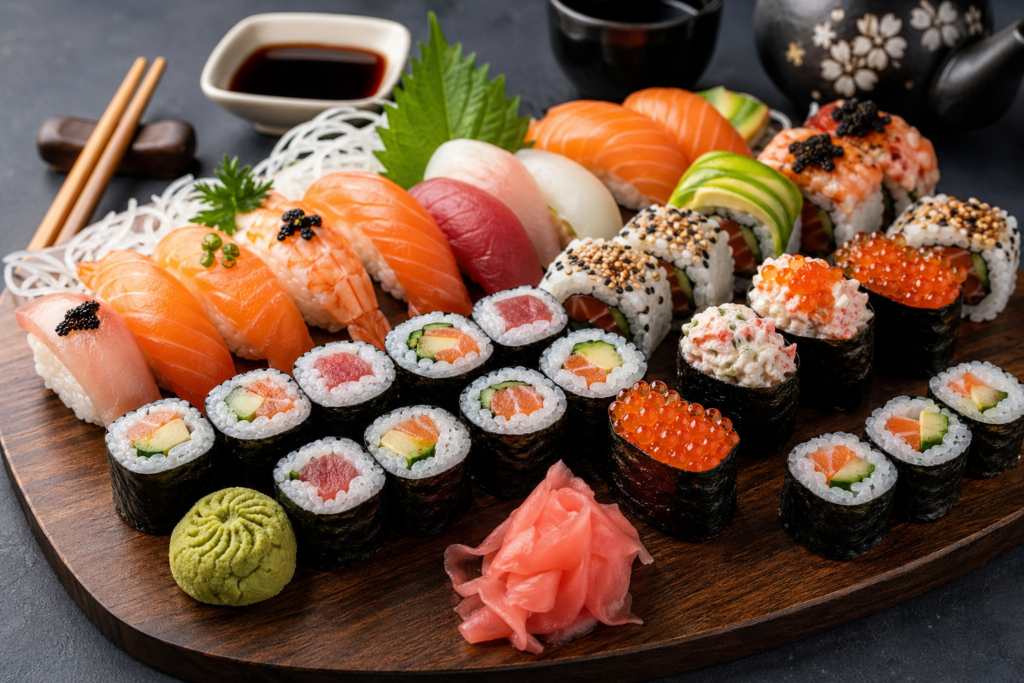
Sushi is one of the most loved Japanese dishes in the world. It offers fresh flavors, beautiful presentation, and endless variety. Moreover, suits many tastes because you can enjoy seafood, vegetables, or cooked fillings. Many people think Sushi is only raw fish, but it includes much more. In this complete guide, you will learn about Sushi history, popular types, ingredients, health benefits, and how to make Sushi at home.
What is Sushi?

This Japanese dish uses vinegared rice combined with seafood, vegetables, or other ingredients. However, the rice is the most important part. Chefs season it with vinegar, sugar, and salt to create the signature flavor.
Many people confuse it with sashimi. It includes rice, while sashimi is sliced raw fish without rice.
History of Sushi
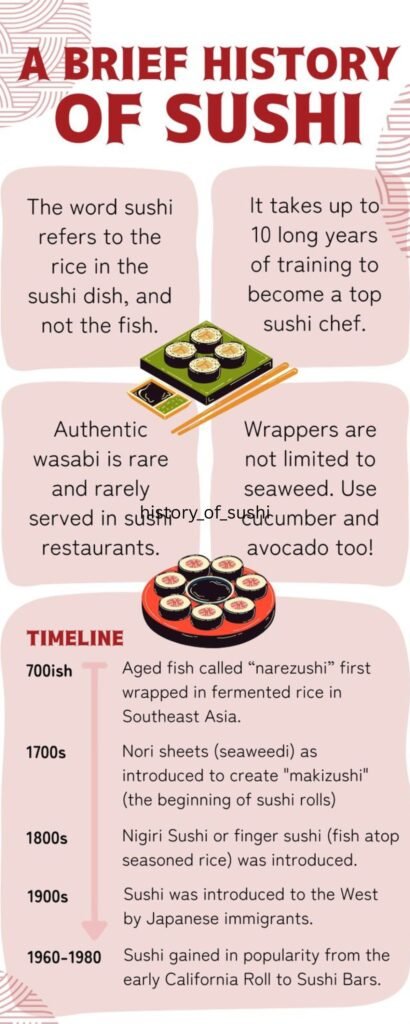
It has a long and fascinating history. It began centuries ago as a way to preserve fish with fermented rice in Southeast Asia. Later, Japan improved the method and created modern styles.
During the 1800s, Tokyo chefs introduced Nigiri. This fast and tasty version became popular quickly. Today, this Japanese dish is famous worldwide and continues to evolve.
Popular Types of Sushi
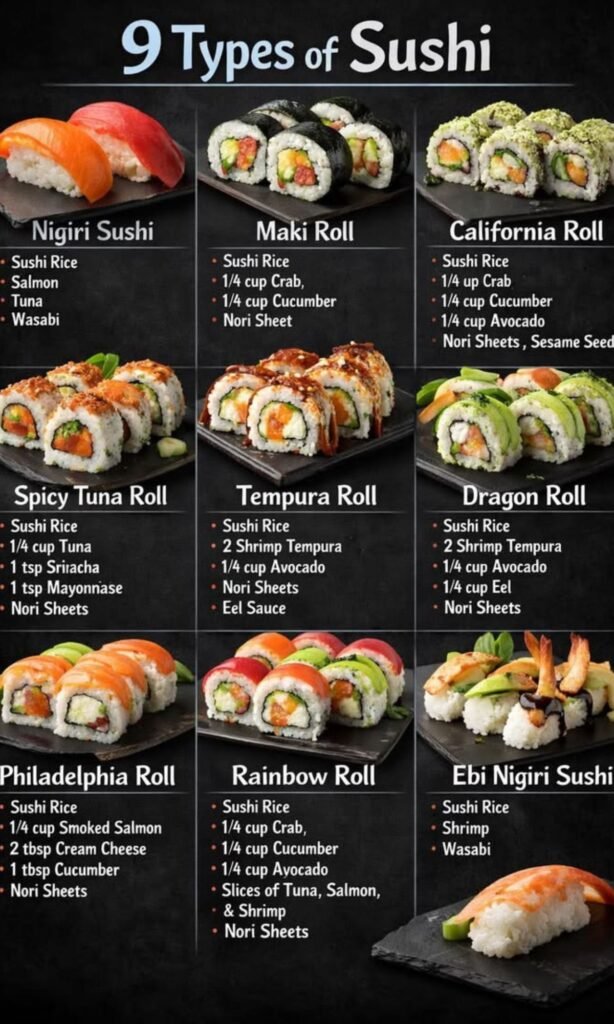
1. Nigiri Sushi
Nigiri features hand-pressed rice topped with fish or seafood.
2. Maki Sushi
Maki includes rice and fillings rolled in seaweed sheets.
3. California Roll Sushi
This popular roll often contains crab, avocado, and cucumber
4. Temaki Sushi
Temaki comes in a cone shape that is easy to hold.
5. Vegetarian Sushi
Vegetarian uses cucumber, avocado, carrot, and other vegetables.
Ingredients Used in Sushi
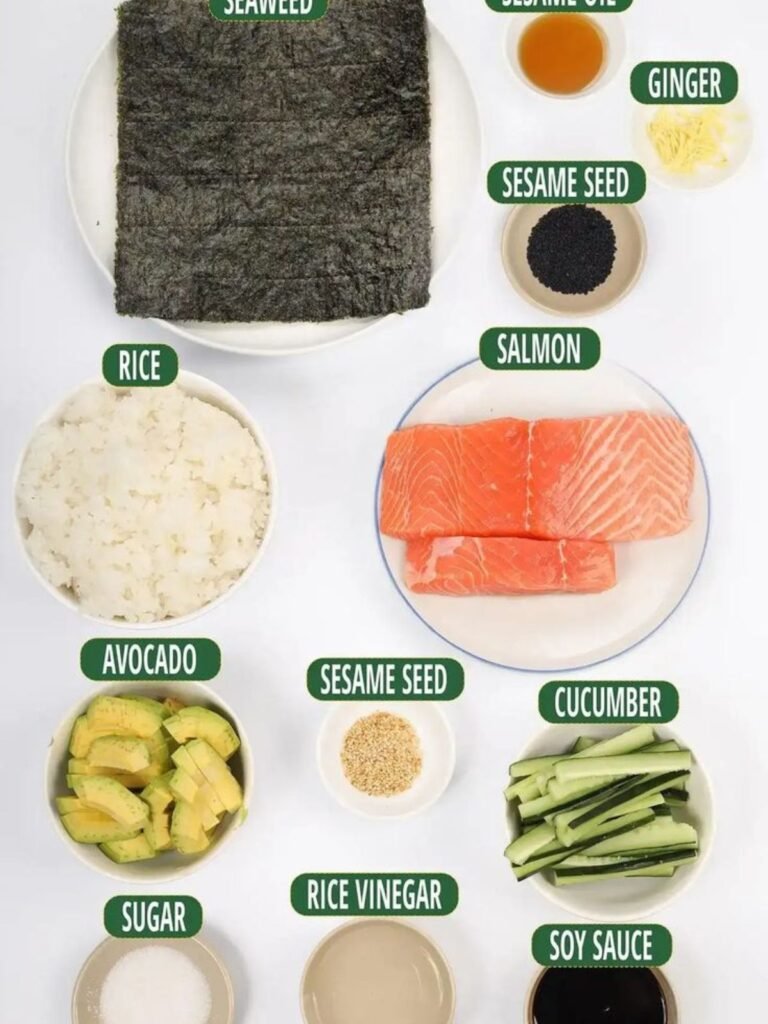
It uses simple but fresh ingredients. Therefore, quality matters a lot.
Common Sushi Ingredients:
- Sushi rice
- Rice vinegar
- Nori seaweed
- Salmon or tuna
- Shrimp
- Avocado
- Cucumber
- Carrot
- Cream cheese
- Soy sauce
- Wasabi
- Pickled ginger
Fresh ingredients always improve taste and texture.
Health Benefits of Sushi
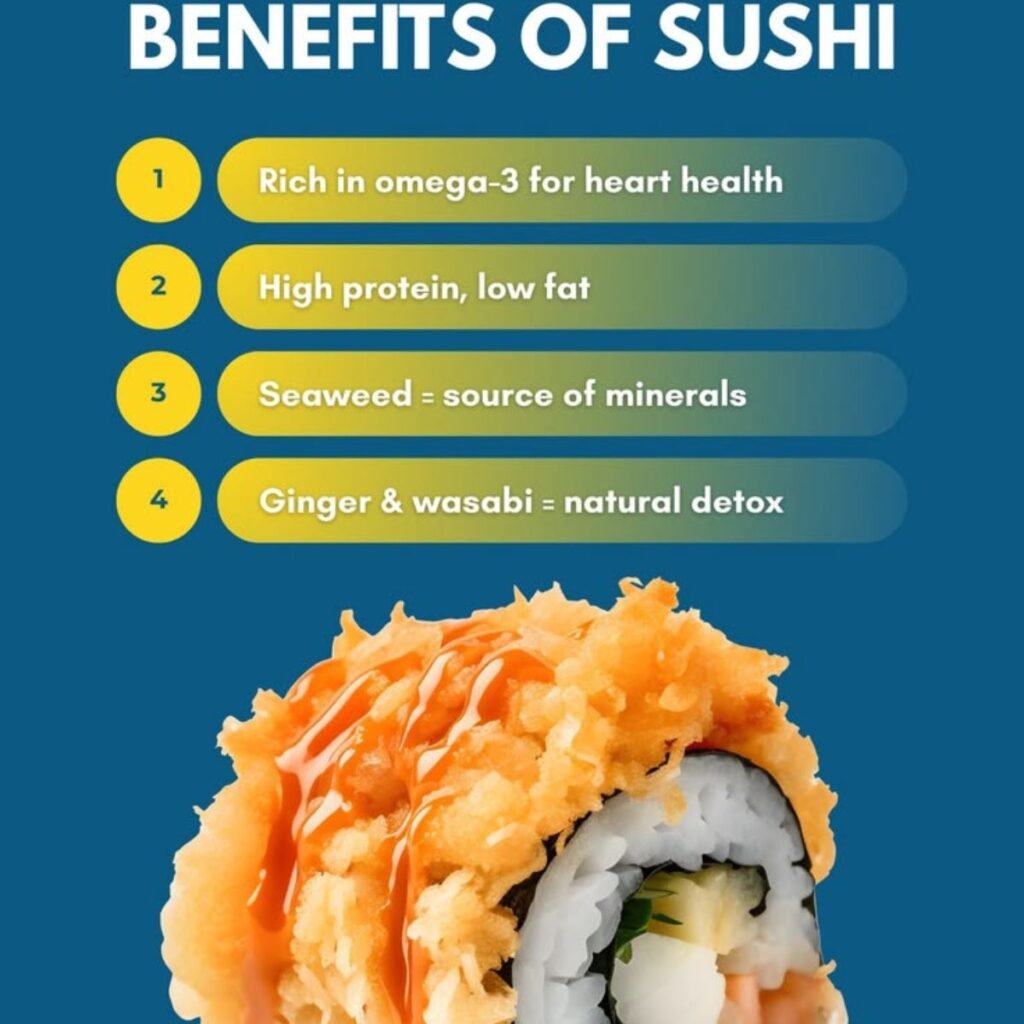
can be a healthy meal when prepared well. Moreover, it provides useful nutrients.
Benefits
- Rich in protein from fish
- Contains omega-3 fatty acids
- Provides vitamins and minerals
- Low in saturated fat
- Includes healthy vegetables
- Offers balanced portions
However, choose moderate soy sauce and fried rolls for better nutrition.
How to Make at Home
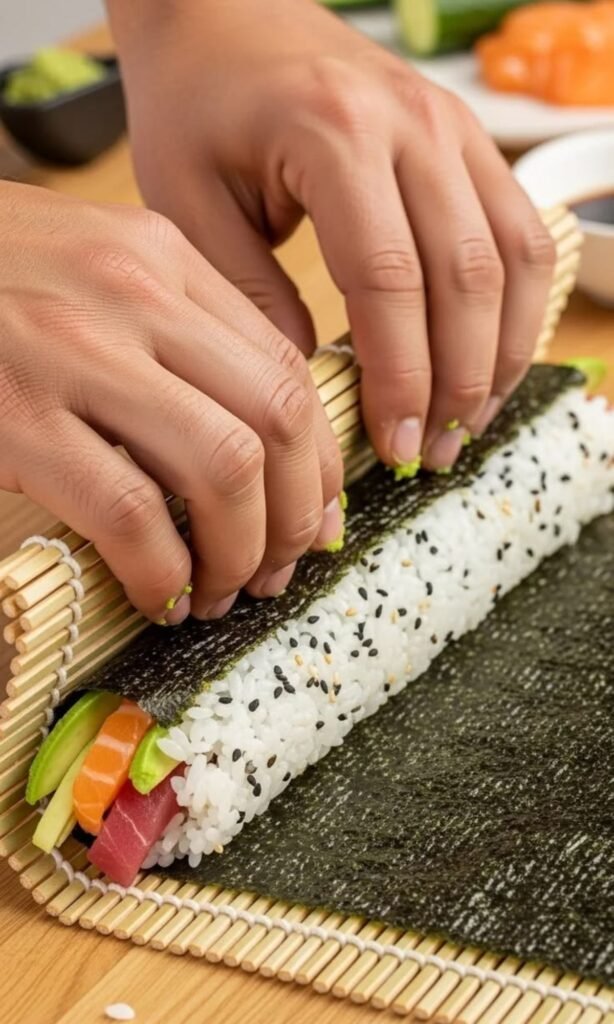
Making at home is easier than many people think.
Step-by-Step Method
1. Cook the Rice
Cook short-grain rice and let it cool slightly.
2. Season the Rice
Mix rice vinegar, sugar, and salt into the rice.
3. Prepare Fillings
Slice fish, avocado, cucumber, or vegetables.
4. Roll
Place nori on a bamboo mat, add rice, then fillings, and roll tightly.
5. Slice and Serve
Cut the roll into equal pieces and serve fresh.
Best Ways to Serve
Serving correctly improves the full experience.
Best Serving Tips:
- Serve fresh and cool
- Add soy sauce in a small bowl
- Include wasabi and ginger
- Use chopsticks or clean hands
- Pair with green tea
- Arrange pieces neatly on a plate
Additionally, serve immediately after preparation.
Common Mistakes to Avoid
Many beginners make simple mistakes. However, you can avoid them easily.
Avoid These Errors:
- Using warm rice
- Overfilling the rolls
- Using dull knives
- Buying low-quality fish
- Adding too much soy sauce
- Rolling too loosely
- Ignoring rice seasoning
Careful preparation always creates better .
Conclusion
This Japanese dish combines flavor, tradition, and creativity in one meal. It offers many styles, from simple nigiri to colorful rolls. Moreover, it can be healthy, fun to make, and perfect for sharing. Whether you eat it at a restaurant or prepare it at home, always delivers a special experience.
FAQs
1. Is Sushi always raw fish?
No, many Sushi types use cooked seafood or vegetables.
2. What rice is best for Sushi?
Short-grain Japanese rice works best for Sushi.
3. Can beginners make Sushi at home?
Yes, beginners can make simple Sushi rolls easily.
4. Is Sushi healthy to eat?
Yes, Its can be healthy with fresh ingredients.
5. How should I store leftover Sushi?
Store Sushi in the fridge and eat it quickly.