
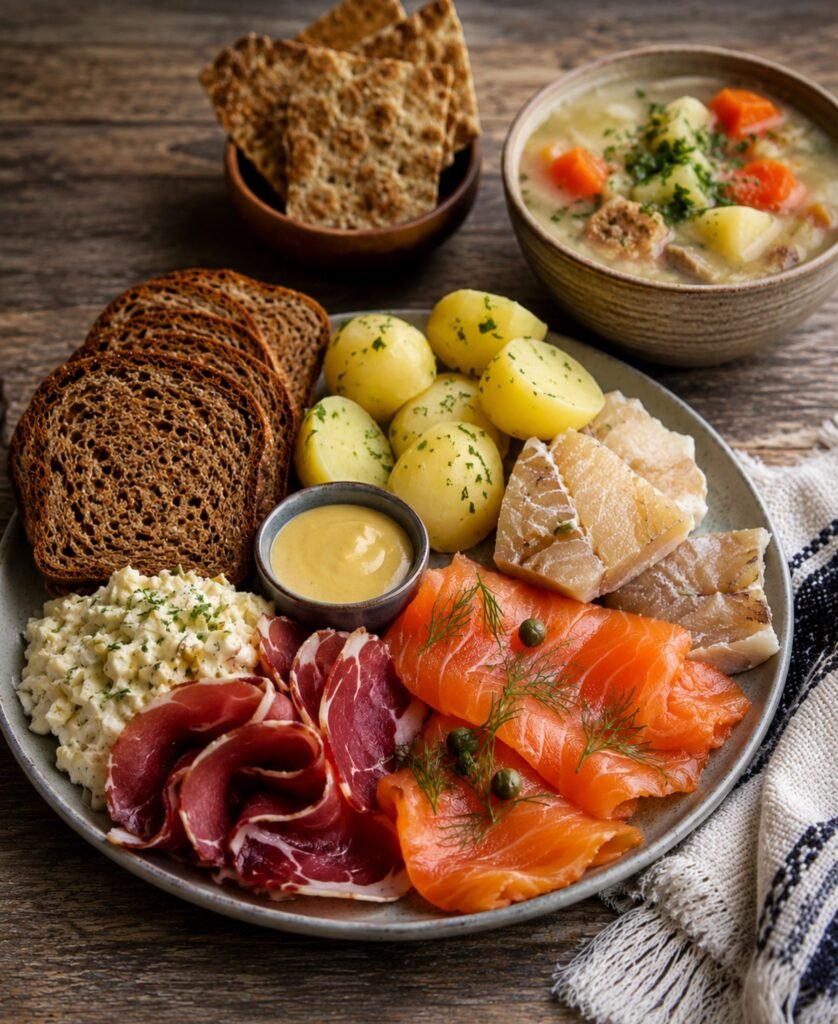
Norwegian food tells a rich story of culture, history, and nature. Norway sits in Northern Europe, surrounded by cold fjords, deep forests, and a long coastline. As a result, its cuisine reflects everything the land and sea offer. From fresh fish to hearty meat dishes, Norwegian food is simple, wholesome, and deeply satisfying. In this guide, you will discover the best traditional Norwegian dishes, food customs, and modern food trends that make Norwegian cuisine truly special.
The History and Culture Behind Norwegian Food and Norway Cuisine
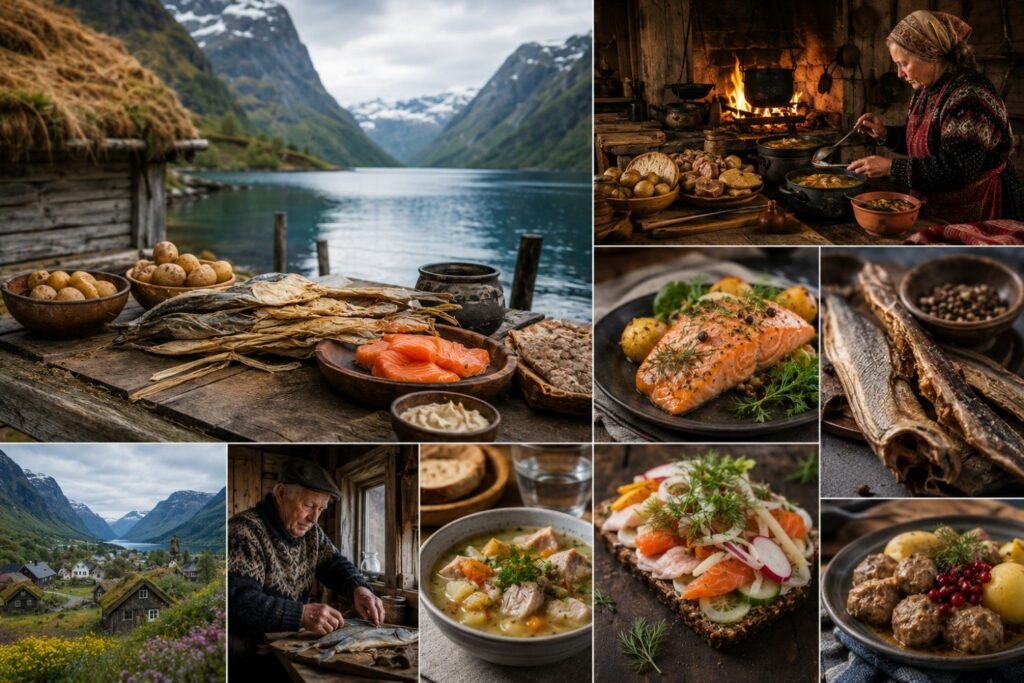
Norwegian food has deep roots that go back hundreds of years. In the past, Norwegians relied heavily on preserving food to survive long, harsh winters. Therefore, they developed techniques like drying, salting, smoking, and fermenting their food. These methods gave birth to iconic dishes that still exist today.
Furthermore, Norse traditions strongly shaped Nordic food culture. Vikings ate simple but nutritious meals that included fish, bread, dairy, and game meat. Over time, trade and travel introduced new ingredients to Norway. However, Norwegians always kept their cooking style honest and grounded in local produce.
Most Popular Traditional Norwegian Food Dishes You Must Know
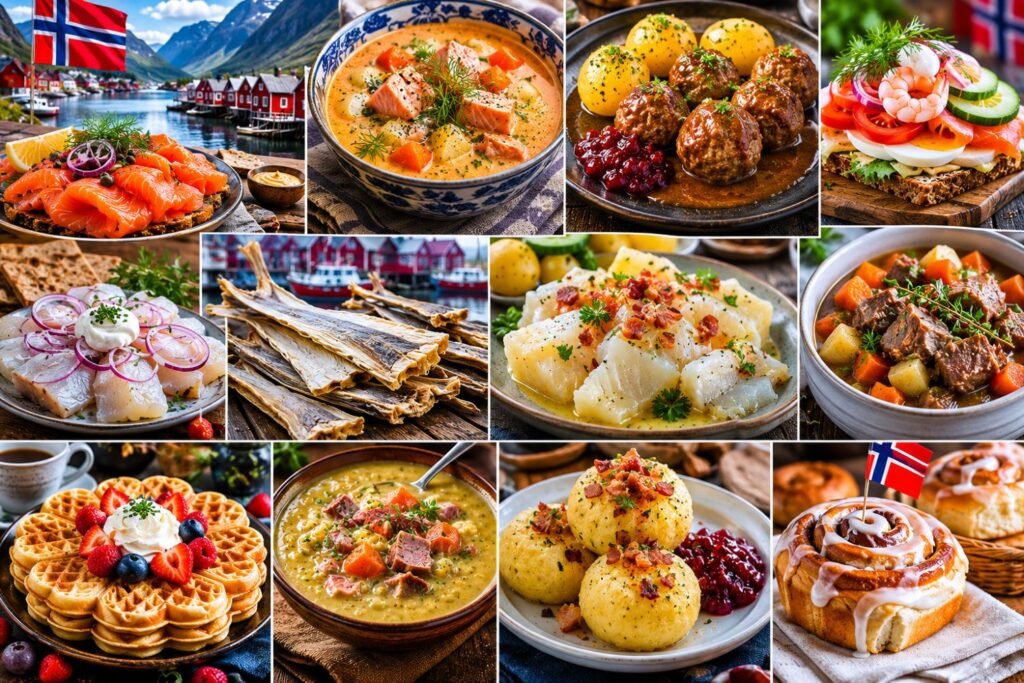
Traditional Norwegian dishes are hearty, flavorful, and made with fresh local ingredients. Moreover, each dish carries a strong sense of national pride.
Fårikål tops the list as Norway’s national dish. This dish combines lamb and cabbage slow-cooked with black pepper and water. It is warm, filling, and perfect for cold autumn evenings. In addition, Norwegians celebrate Fårikål Day every last Thursday of September.
Raspeballer, also called potato dumplings, are another beloved classic. Cooks make them from grated raw potatoes mixed with flour and salt, then boil them until soft. Families serve them with salted meat, sausages, and rutabaga. Furthermore, every Norwegian family has its own special recipe for this dish.
Kjøttkaker, or Norwegian meatballs, differ from Swedish meatballs in both size and seasoning. Cooks shape them larger and serve them in a thick brown gravy with boiled potatoes and peas. This dish is a true staple of everyday Norway cuisine.
Norwegian Seafood and Fish: A Core Part of Norwegian Food Culture
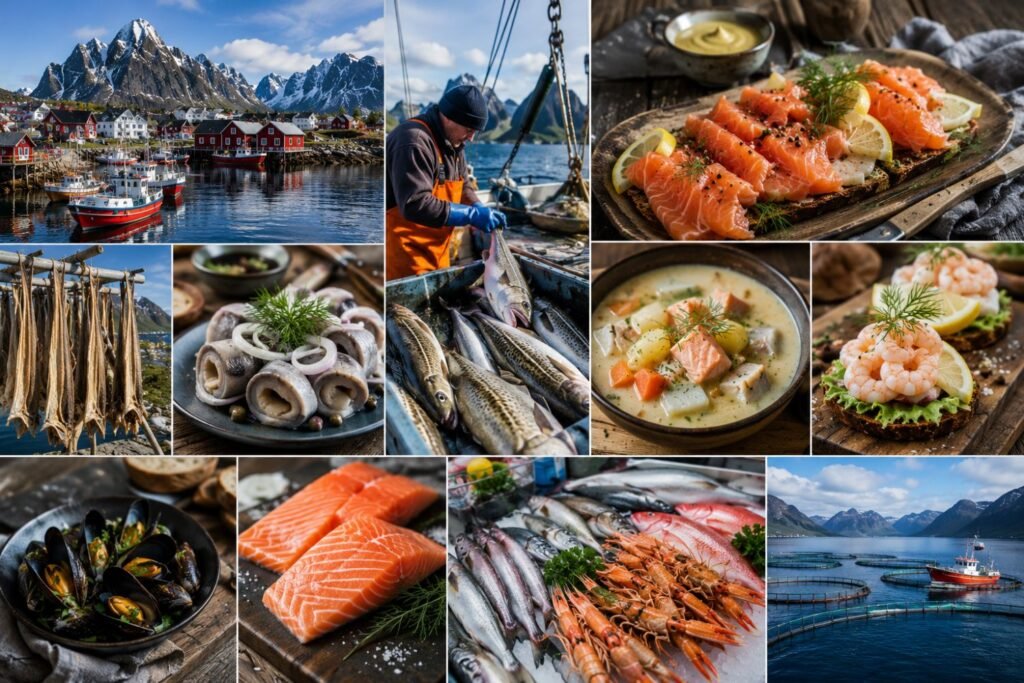
Norway has one of the world’s largest fishing industries. Therefore, Norwegian seafood plays a central role in the national diet. The cold, clean waters of the Norwegian Sea produce some of the finest fish in the world.
Lutefisk stands out as one of the most traditional Norwegian fish dishes. Cooks prepare it by soaking dried whitefish in lye and water for several days. The result is a jelly-like texture with a mild flavor. Moreover, Norwegians typically serve it with boiled potatoes, peas, and melted butter during the Christmas season.
Rakfisk is another iconic dish made from fermented trout or char. Producers salt the fish and ferment it for several months. As a result, it develops a strong, tangy flavor that many Norwegians love. People enjoy it on flatbread with sour cream and raw onions.
Gravlaks, or cured salmon, is perhaps the most internationally recognized Norwegian seafood dish. Cooks cure fresh salmon with salt, sugar, and fresh dill for a few days. The fish turns silky, flavorful, and incredibly tender. In addition, restaurants around the world now serve this classic Norwegian recipe.
Norwegian Food Traditions Breakfast, Lunch, and Dinner in Norway
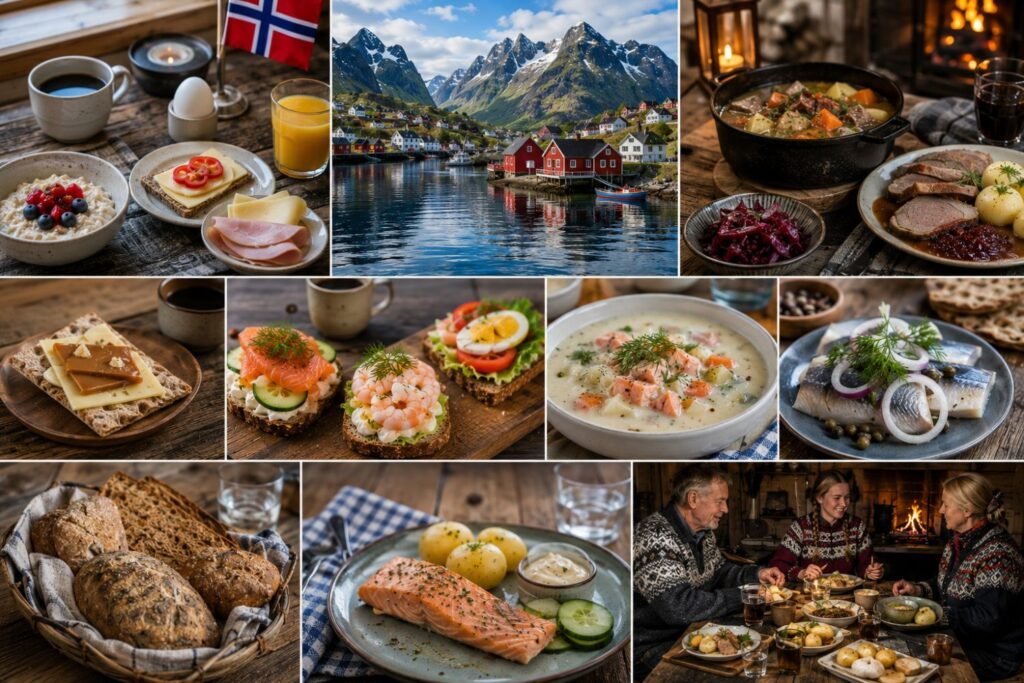
Norwegian food culture follows a structured daily eating routine. Each meal serves a clear purpose and reflects the Norwegian value of simplicity and balance.
Breakfast in Norway is light but nutritious. Most Norwegians start their morning with open-faced sandwiches called smørbrød. They top crisp bread or whole grain bread with cheese, cold cuts, smoked salmon, or jam. Furthermore, many people also enjoy yogurt, oats, or boiled eggs alongside their morning coffee.
Lunch, known as matpakke, is a packed lunch that most Norwegians bring from home. It usually consists of two or three slices of bread with simple toppings. This tradition teaches children from an early age to eat practical, homemade food. Moreover, it reduces food waste and encourages healthy eating habits.
Dinner is the main meal of the day in Norway. Families sit down together and enjoy hot, cooked dishes. Traditional dinners often include fish, potatoes, vegetables, and a simple sauce. However, modern Norwegian dinners now also feature pasta, rice, and international flavors.
Traditional Norwegian Food Desserts and Sweet Treats
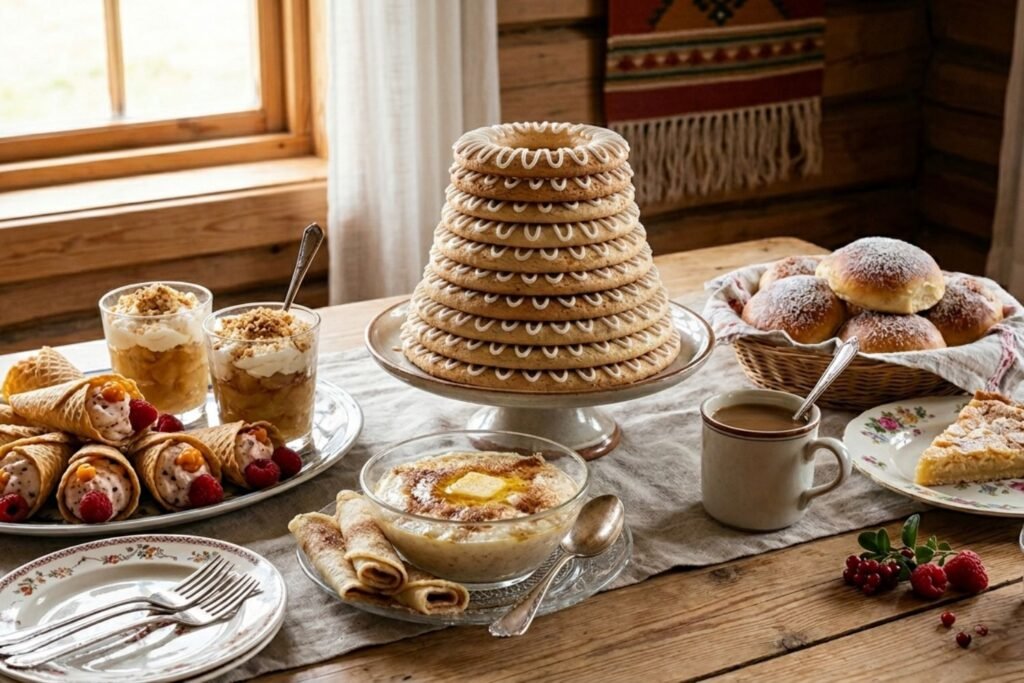
Norwegian food is not complete without its delicious desserts. Norwegians love sweet treats, especially during holidays and celebrations.
Krumkake is a thin, crispy waffle cone rolled into a cone shape. Bakers make it with eggs, butter, flour, and cream, then cook it on a special iron. People fill it with whipped cream or eat it plain. Furthermore, every Norwegian grandmother has a treasured krumkake recipe.
Rømmegrøt is a traditional sour cream porridge that holds a special place in Norwegian culture. Cooks simmer sour cream with flour, milk, sugar, and salt until thick and creamy. They serve it warm with butter, cinnamon, and sugar on top. In addition, this dish appears at nearly every traditional Norwegian celebration.
Skillingsboller, or cinnamon rolls, are a popular everyday sweet in Norway. Norwegian bakeries bake them soft, fluffy, and loaded with cinnamon and cardamom. Moreover, Norwegians enjoy them fresh with a hot cup of coffee.
Modern Norwegian Food Trends Shaping Nordic Food Culture Today
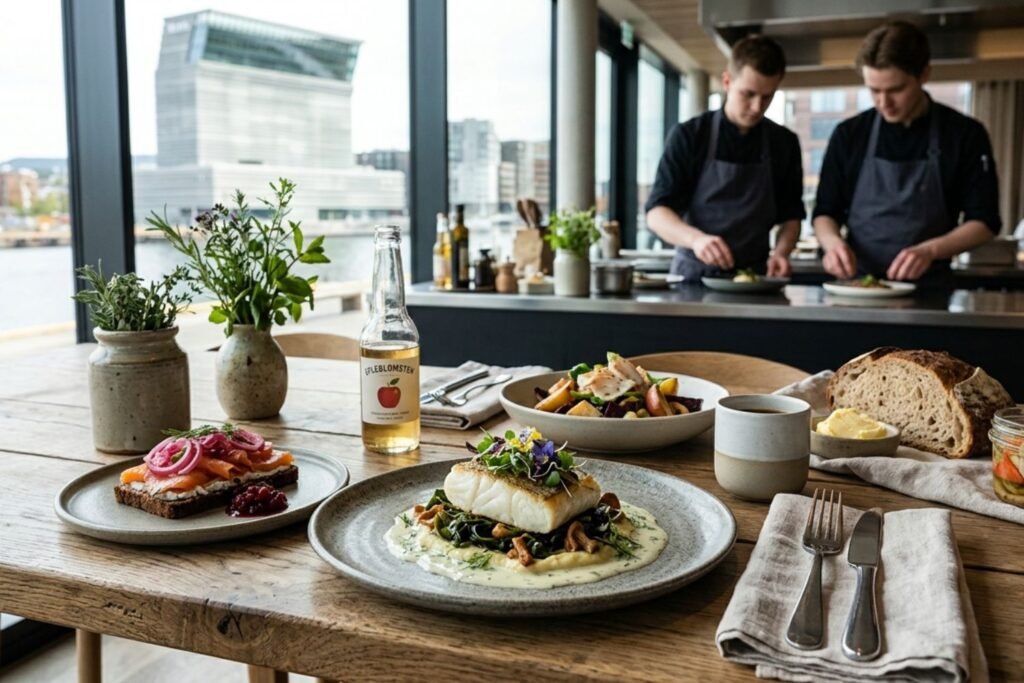
Norway’s food scene continues to grow and evolve. Today, modern Norwegian chefs combine traditional techniques with global influences. As a result, Norwegian cuisine now earns international recognition and respect.
The New Nordic Food movement, which began in the early 2000s, changed how the world sees Scandinavian food. Chefs started focusing on local, seasonal, and sustainable ingredients. Furthermore, Norwegian restaurants like Maaemo in Oslo have earned multiple Michelin stars for their creative approach to Nordic food culture.
Plant-based eating is also rising in popularity across Norway. More Norwegians now choose vegetables, legumes, and plant proteins alongside traditional meat and fish. In addition, Norwegian supermarkets stock a growing range of organic and locally sourced products.
FAQs
Q1: What is the most famous Norwegian food? Fårikål, a slow-cooked lamb and cabbage stew, is Norway’s most famous and beloved national dish.
Q2: What do Norwegians eat for breakfast? Norwegians typically eat open-faced sandwiches called smørbrød topped with cheese, cold cuts, or smoked salmon.
Q3: Is Norwegian food healthy? Yes, Norwegian food is generally very healthy because it focuses on fresh fish, whole grains, and natural ingredients.
Q4: What is a traditional Norwegian Christmas food? Lutefisk and ribbe, a roasted pork rib dish, are the most popular traditional Norwegian Christmas foods.
Q5: What makes Norwegian seafood special? Norway’s cold, clean Arctic waters produce exceptionally fresh and high-quality seafood that stands out globally.
Conclusion
Norwegian food is a beautiful reflection of Norway’s landscape, history, and people. From ancient preservation techniques to modern Michelin-starred restaurants, Norway cuisine continues to impress the world. Whether you try a warm bowl of Fårikål, a plate of gravlaks, or a sweet krumkake, every bite tells a story. Therefore, exploring Norwegian food means exploring the heart of Norway itself.