
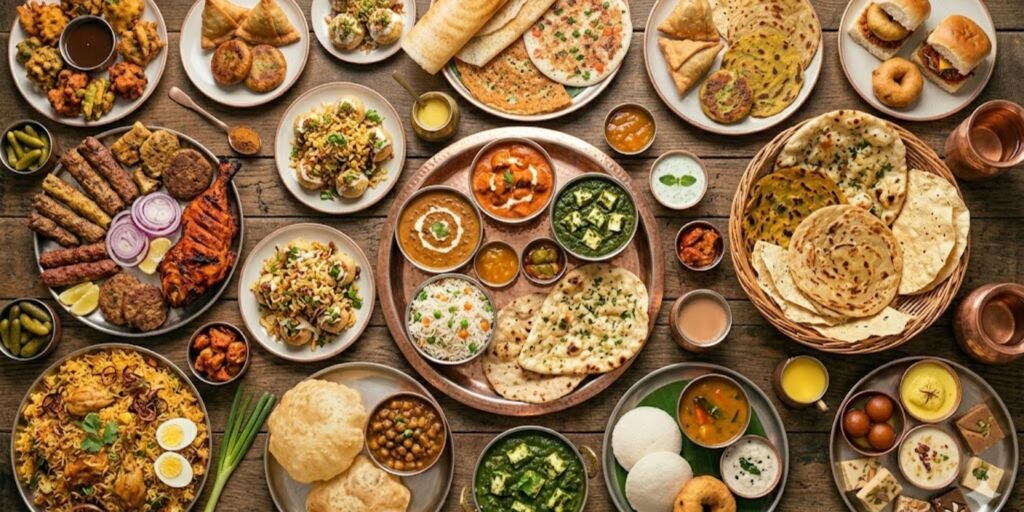
Indian food stands as one of the most celebrated cuisines in the entire world. Millions of people across every continent enjoy its bold flavors, aromatic spices, and colorful presentation every single day. Furthermore, Indian food offers something truly unique it tells the story of a civilization that spans thousands of years. Whether you love spicy curries or mild rice dishes, this cuisine has something special waiting for you. In this guide, you will discover everything worth knowing about food, from its ancient roots to its global reach today.
A Brief History of Indian Food
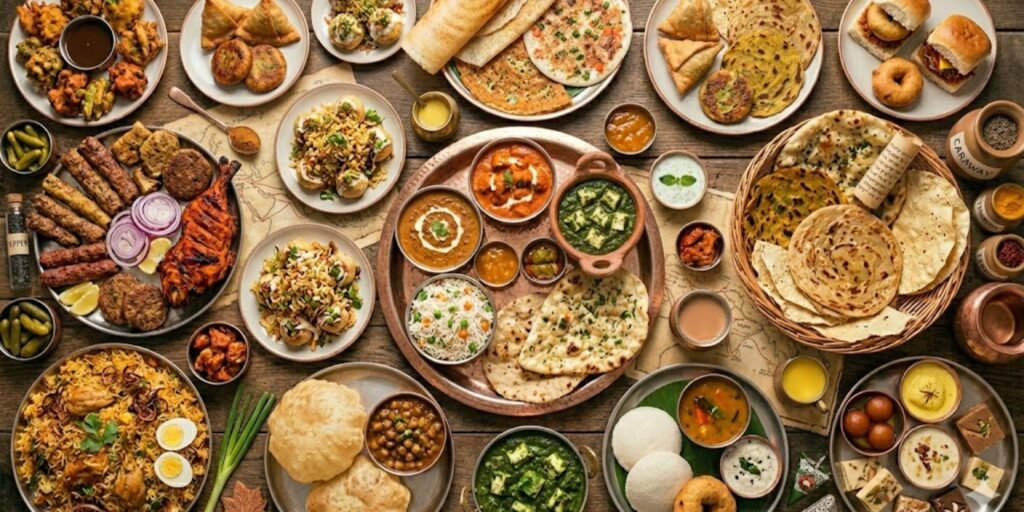
Indian food carries a history that stretches back more than 5,000 years. The Indus Valley Civilization first developed early cooking traditions that still influence modern Indian kitchens today. Moreover, traders from the Middle East, Central Asia, and Europe each added their own flavors to the mix over centuries.
The Mughal Empire left a particularly powerful mark on food. Mughal kings brought rich, slow-cooked meat dishes, creamy sauces, and fragrant rice preparations like biryani to the subcontinent. As a result, northern food today reflects this royal culinary influence very strongly.
Later, the British colonial era introduced new vegetables like potatoes and tomatoes to Indian kitchens. Consequently, dishes that feel traditionally Indian today actually incorporate ingredients that arrived only a few centuries ago. This ongoing evolution makes food one of the most dynamic cuisines in the world.
Popular Dishes in Indian Food Culture
North Indian Favorites
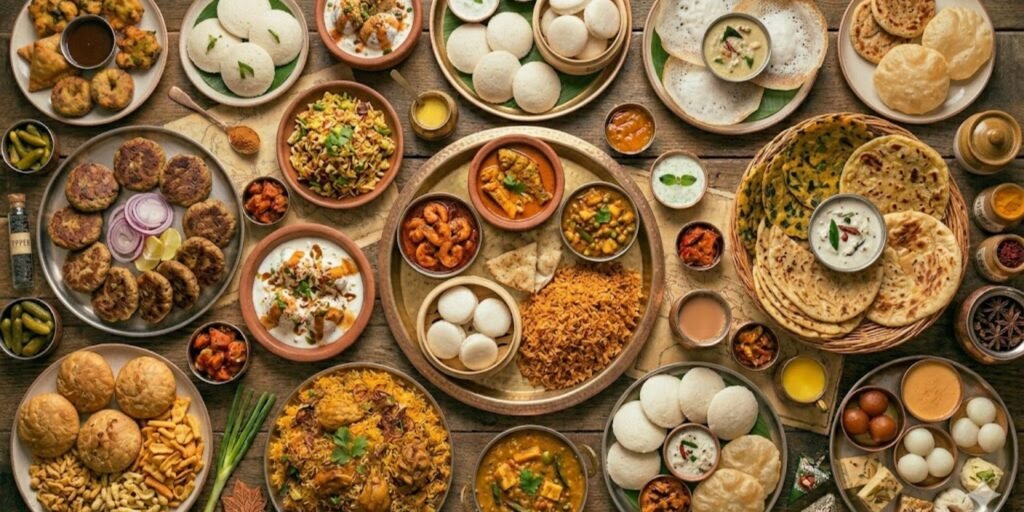
North Indian food centers around bread, dairy, and rich gravies. Butter chicken ranks among the most popular dishes globally. Chefs cook tender chicken pieces in a smooth tomato-butter sauce that feels creamy and mildly spiced. Additionally, dishes like dal makhani, palak paneer, and chole bhature attract food lovers across every age group.
Tandoor cooking defines much of North Indian food culture. Cooks use a clay oven called a tandoor to make naan bread, seekh kebabs, and tandoori chicken. The tandoor gives food a smoky, charred flavor that no other cooking method replicates.
South Indian Specialties
South Indian food takes a completely different approach. Rice, lentils, and coconut form the foundation of most meals here. Dosas thin, crispy crepes made from fermented rice batter remain one of the most iconic items in South Indian food. Sambar, a tangy lentil soup, typically accompanies them.
Furthermore, South Indian cooks use tamarind, mustard seeds, and curry leaves as key flavor builders. These ingredients create a taste profile that feels bright, tangy, and deeply satisfying all at once.
Key Spices and Ingredients in Indian Food
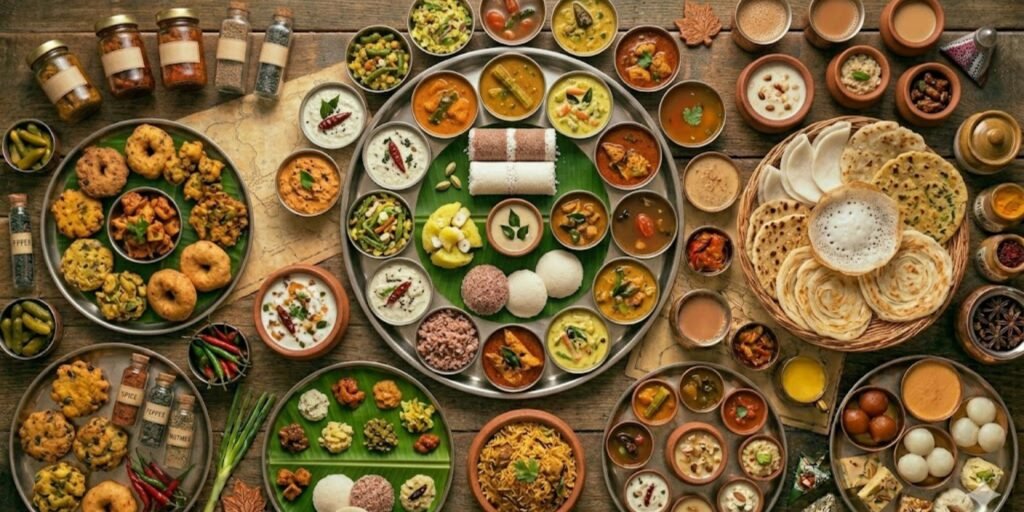
Spices define food more than any other single element. Indian cooks treat spices not just as flavoring agents but as health tools and storytelling devices. Therefore, understanding the spice cabinet is the first step toward understanding food itself.
Turmeric gives many dishes their golden color and offers powerful anti-inflammatory properties. Cumin adds a warm, earthy base note to gravies and rice dishes. Coriander seeds contribute a citrusy, floral note that balances heavier flavors. Moreover, garam masala a spice blend of cardamom, cloves, cinnamon, and black pepper works as a finishing touch in countless recipes.
Ghee, a form of clarified butter, plays a central role in Indian cooking as well. Cooks use it to temper spices, fry bread, and enrich dal. In addition, fresh ginger and garlic appear in nearly every savory recipe, forming the aromatic backbone of food across all regions.
Regional Varieties of Indian Food
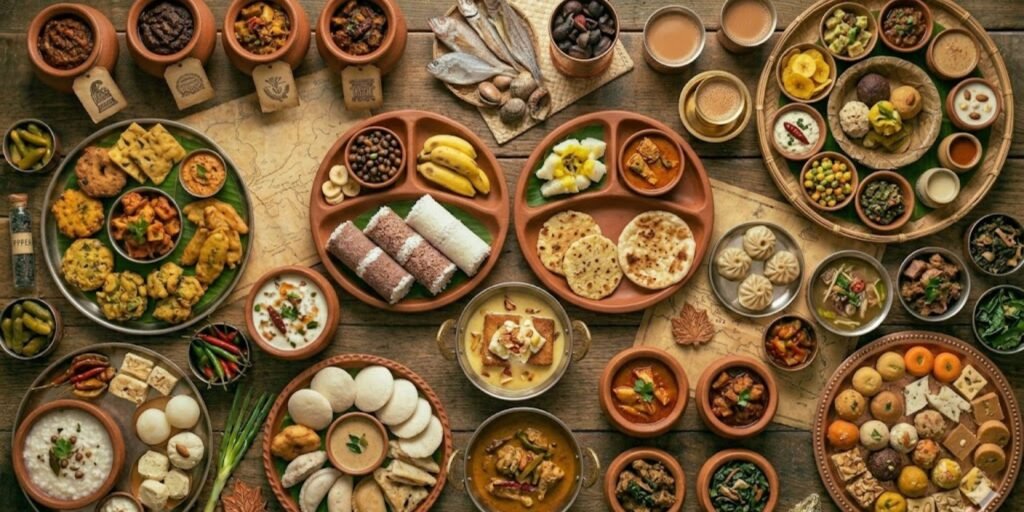
India contains 28 states, and each one produces its own distinct food culture. This diversity makes food impossible to summarize in a single dish or flavor.
Western India
Gujarati food tends toward the sweet and mild side. Cooks there add small amounts of sugar even to savory dishes, which creates a uniquely balanced flavor. Meanwhile, Maharashtrian food from Mumbai leans spicier, with dishes like vada pav and misal pav defining street food culture.
Eastern India
Bengali food places fish at the center of the table. Mustard oil and mustard paste appear in many Bengali recipes, delivering a sharp, pungent flavor. Additionally, Bengal produces some of India’s finest sweets, including rasgulla and sandesh.
Northeast India
It remains less familiar to international audiences, yet it deserves much more attention. Cooks there use bamboo shoots, fermented fish, and smoked meats in ways that produce deeply complex flavors. Consequently, food explorers who discover this region’s cuisine often call it a revelation.
Health Benefits of Indian Food
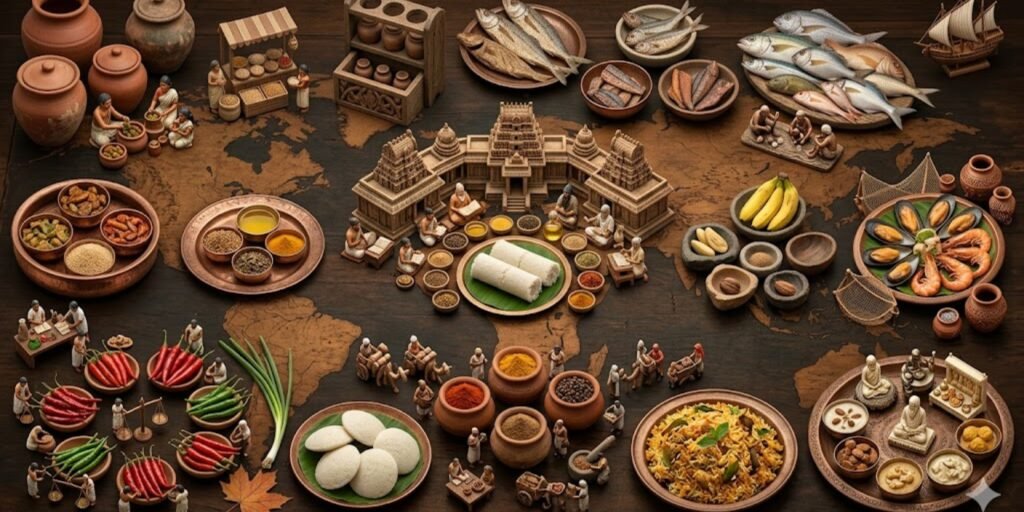
It offers genuine nutritional value beyond just great taste. Many traditional Indian ingredients carry well-documented health benefits that modern science continues to confirm.
Turmeric contains curcumin, a compound that researchers link to reduced inflammation in the body. Therefore, dishes like turmeric milk and golden dal serve both as comfort food and as natural health boosters. Lentils and legumes, which appear in food daily, provide exceptional plant-based protein and fiber.
Fermented foods also play a major role infood traditions. Yogurt, idli batter, and dosa batter all go through fermentation, which supports healthy gut bacteria. Moreover, spices like fenugreek help regulate blood sugar levels, making food a smart choice for people focused on metabolic health.
However, not every Indian dish qualifies as light. Fried snacks like samosas and rich desserts like gulab jamun contain significant calories. In addition, restaurant versions of food often use more oil and cream than home-cooked versions. As a result, balance and portion awareness matter just as much with food as with any other cuisine.
Indian Food Around the World
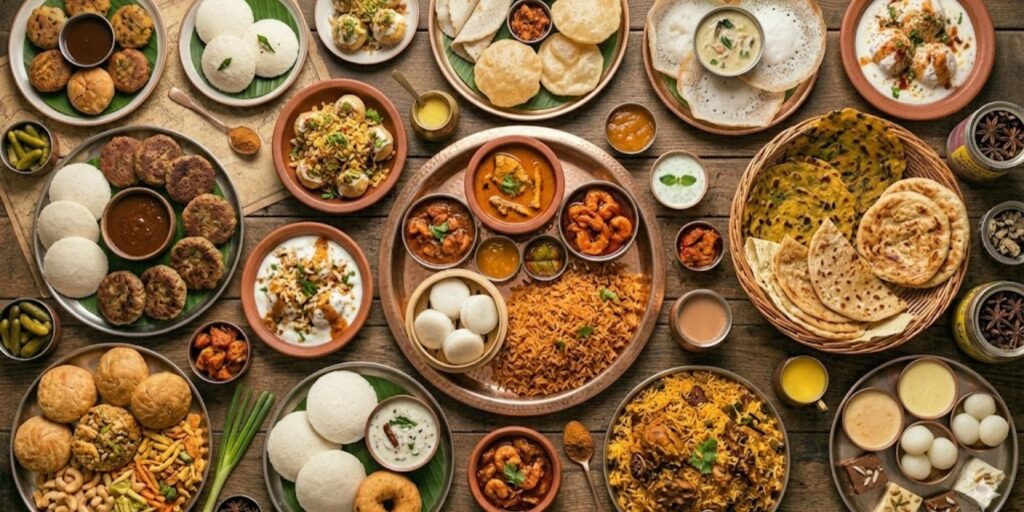
Indian food has traveled far beyond the subcontinent and established a powerful global presence. Today, Indian restaurants operate in virtually every major city across Europe, North America, Australia, and Southeast Asia.
The United Kingdom holds a particularly deep connection with food. Dishes like chicken tikka masala became so popular in Britain that many people consider it a British national dish. Furthermore, Indian-origin chefs now lead Michelin-starred restaurants across Europe, elevating food to fine dining status.
In the United States, Indian food has grown steadily over the past three decades. Cities like New York, Chicago, and San Francisco now host entire neighborhoods dedicated to Indian restaurants and grocery stores. Moreover, ready made food products fill supermarket shelves across the country, making home cooking more accessible than ever.
It also adapts well to dietary preferences around the world. Vegetarian and vegan diners find Indian menus naturally accommodating, since so many traditional dishes already exclude meat. Consequently, food continues to grow in popularity among health-conscious and plant-based communities globally.
FAQs
Q: What makes Indian food different from other cuisines?
A: Indian food stands apart because of its exceptional use of layered spices, regional diversity, and centuries-old cooking techniques that create complex flavors in every dish.
Q: Is Indian food always spicy?
A: Not all Indian food is spicy many dishes use mild spices that focus on aroma and flavor rather than heat, making them suitable for all spice tolerance levels.
Q: What is the most popular Indian food dish worldwide?
A: Butter chicken holds the title of the most widely ordered Indian food dish in restaurants across the globe.
Q: Can I enjoy Indian food on a vegetarian or vegan diet?
A: Indian food offers hundreds of naturally vegetarian and vegan dishes, making it one of the most inclusive cuisines for plant-based eaters worldwide.
Q: What spice appears most often in Indian food recipes?
A: Cumin appears in more Indian food recipes than almost any other spice, forming the earthy base of gravies, rice dishes, and spice blends.
Conclusion
Indian food represents far more than just a collection of recipes. It reflects the history, culture, geography, and soul of an entire civilization. From the smoky tandoors of Punjab to the coconut-laced curries of Kerala, every region adds its own chapter to this magnificent culinary story. Furthermore, Indian food continues to evolve absorbing new influences while holding firmly to ancient traditions. If you have not yet explored the full range of what] food has to offer, now is the perfect time to start. Your taste buds will thank you.