
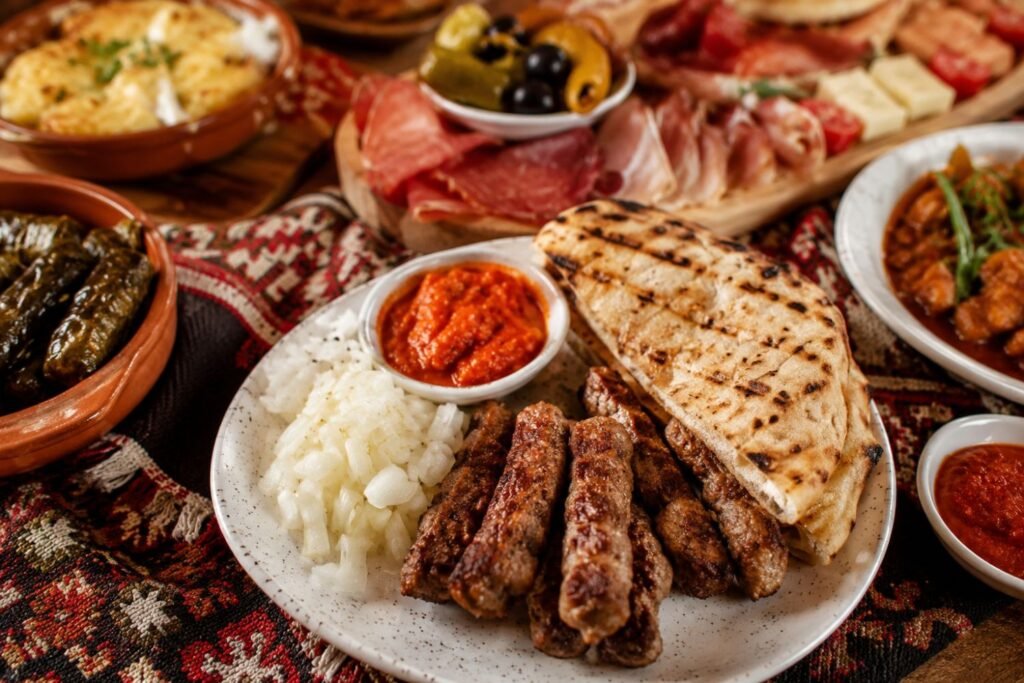
Croatian food is one of Europe’s best-kept culinary secrets. It combines the bold flavors of the Mediterranean with hearty Central European traditions. Furthermore, the country’s unique geography, from the rugged Adriatic coastline to the lush inland valleys, creates an incredibly diverse food culture. Whether you love fresh seafood, slow-cooked meats, or simple farm-to-table meals, Croatian cuisine offers something truly special for every type of food lover.
Moreover, Croatian food carries centuries of history in every bite. Different regions of Croatia developed their own recipes, cooking techniques, and ingredients. As a result, you will find striking differences between coastal Dalmatian food and the rich stews of the interior. In addition, Croatian recipes reflect influences from Italian, Ottoman, Hungarian, and Greek cuisines. Therefore, exploring traditional Croatian meals is like taking a flavorful journey through time and culture.
The Regional Diversity of Croatian Food
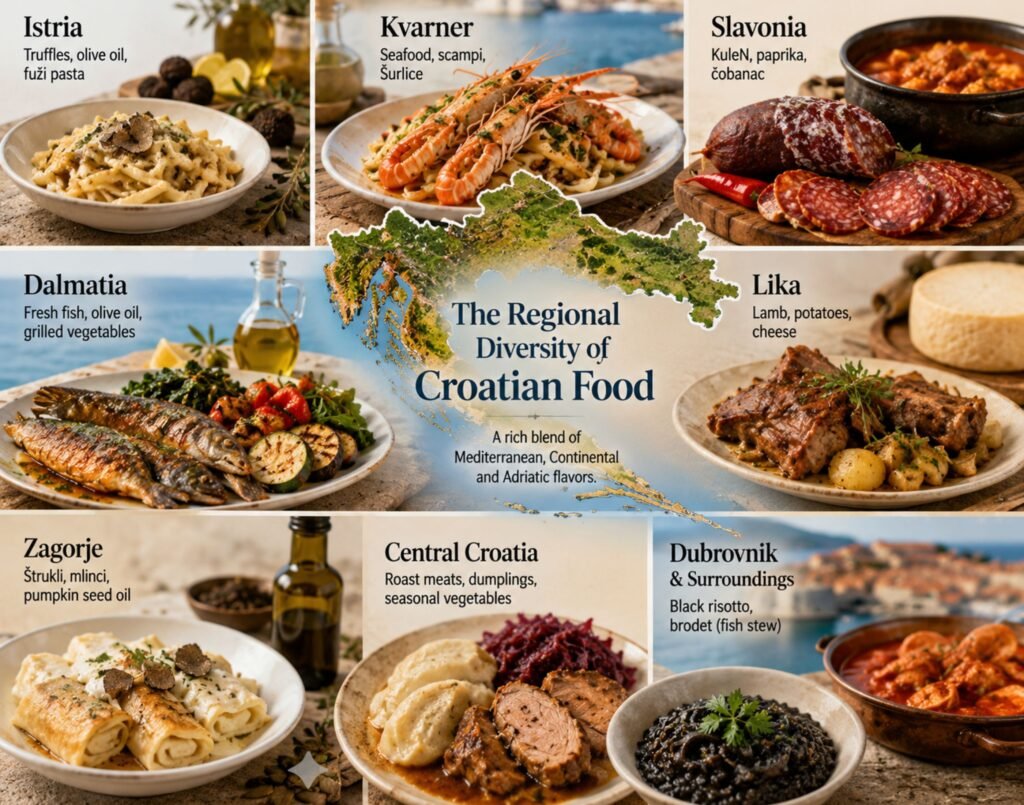
Croatia divides into several distinct culinary regions, and each one tells its own story through food. On one hand, the coastal areas serve fresh fish, octopus salads, and light olive oil-based dishes. On the other hand, the inland regions like Slavonia and Zagorje favor rich pork dishes, paprika-spiced stews, and hearty soups. Therefore, you cannot fully understand Croatian cuisine without exploring both sides of this beautiful country.
Coastal Croatian Food: Adriatic Dishes You Must Try
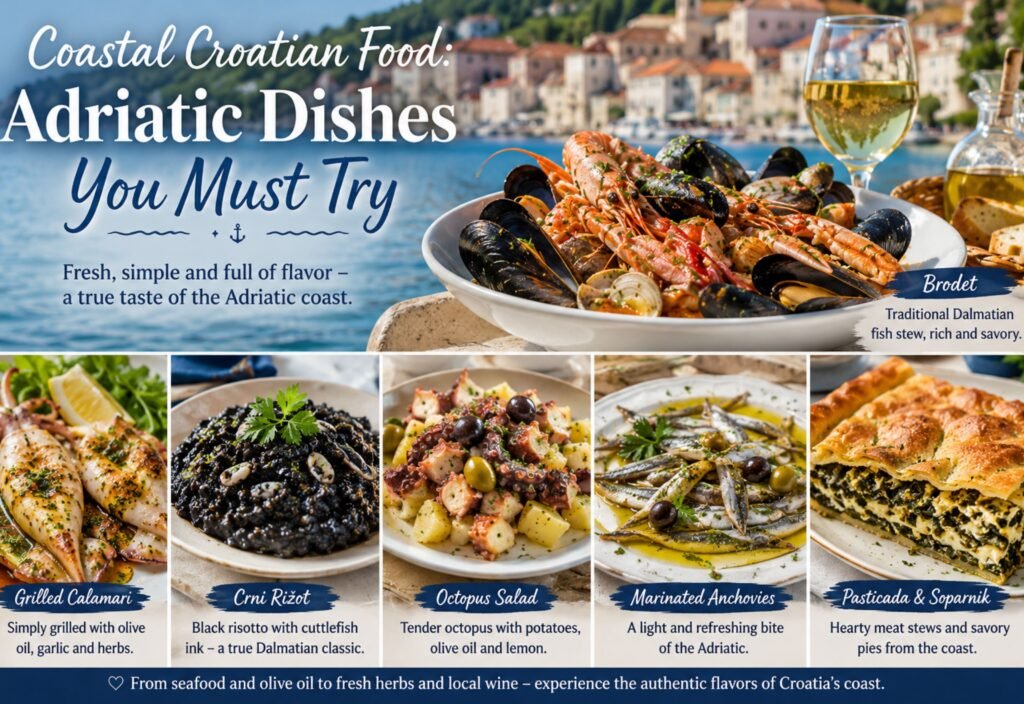
https://flavourein.com/norwegian_food/The Adriatic coast produces some of Croatia’s most celebrated dishes. For example, Dalmatian food centers around fresh catch from the sea: grilled sea bass, black risotto with cuttlefish ink, and marinated anchovies. Furthermore, olive oil, garlic, rosemary, and capers define the flavor profile of every coastal meal. The result is light, aromatic, and incredibly satisfying food that keeps tourists coming back year after year.
Popular Adriatic dishes include:
- Brudet a rich fish stew cooked with tomatoes, onions, and red wine vinegar
- Crni rižoto black squid ink risotto, a Dalmatian food staple
- Prstaci date mussels sautéed with garlic and white wine
- Peka meat or seafood slow-cooked under a bell-shaped lid covered in embers
Inland Croatian Food: Hearty Flavors from the Interior
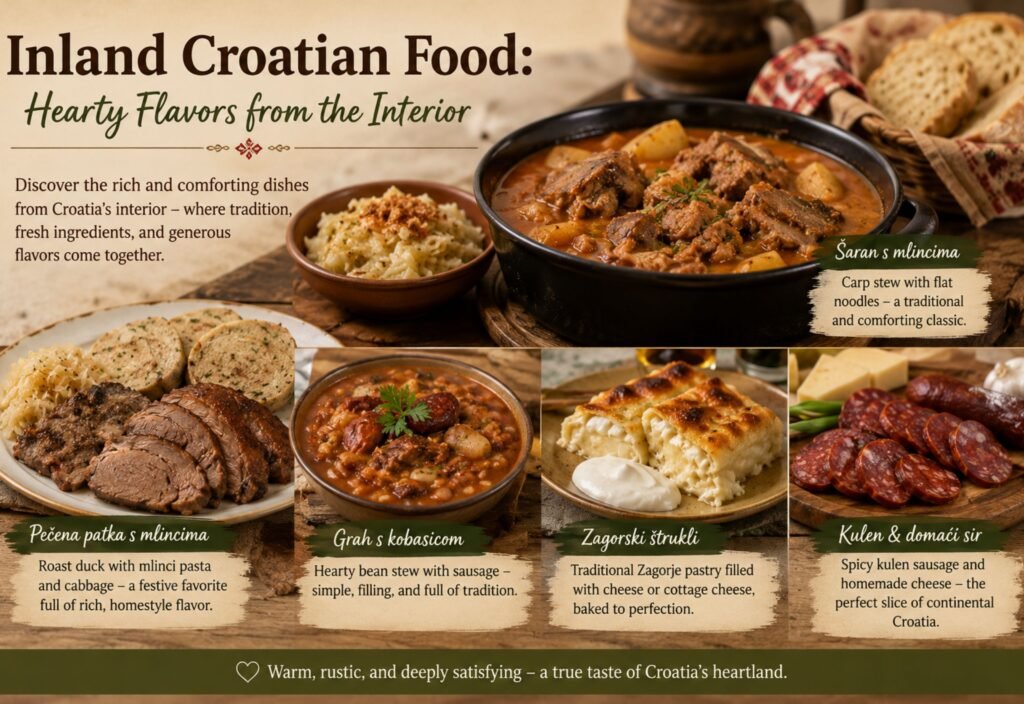
Inland Croatia delivers bold, comforting traditional Croatian meals that warm you from the inside out. For instance, Slavonian kulen is a spicy, slow-cured pork sausage that locals age for months before eating. In addition, the Zagorje region serves strukli soft dough filled with cottage cheese and baked or boiled to perfection. Moreover, game meats like venison and wild boar appear regularly in stews and roasts across the continental countryside.
Must-Try Traditional Croatian Meals

Several traditional Croatian meals stand out as absolute must-tries for any food lover. These dishes capture the heart of Croatian food culture and reflect centuries of culinary heritage. Furthermore, you can find most of these meals in local restaurants across the country, making them easy to explore during a visit.
Here are the top traditional Croatian meals you should try:
- Pasticada slow-braised beef marinated in wine and prunes, served with homemade gnocchi
- Lamb under peka slow-roasted Dalmatian lamb with potatoes cooked under embers
- Janjetina na ražnju spit-roasted whole lamb, especially popular at family celebrations
- Fritule small fried dough balls flavored with rum, citrus zest, and raisins
- Soparnik a flat pie filled with Swiss chard, garlic, and olive oil from the Dalmatian hinterland
Croatian Food Culture: How Croatians Eat and Celebrate
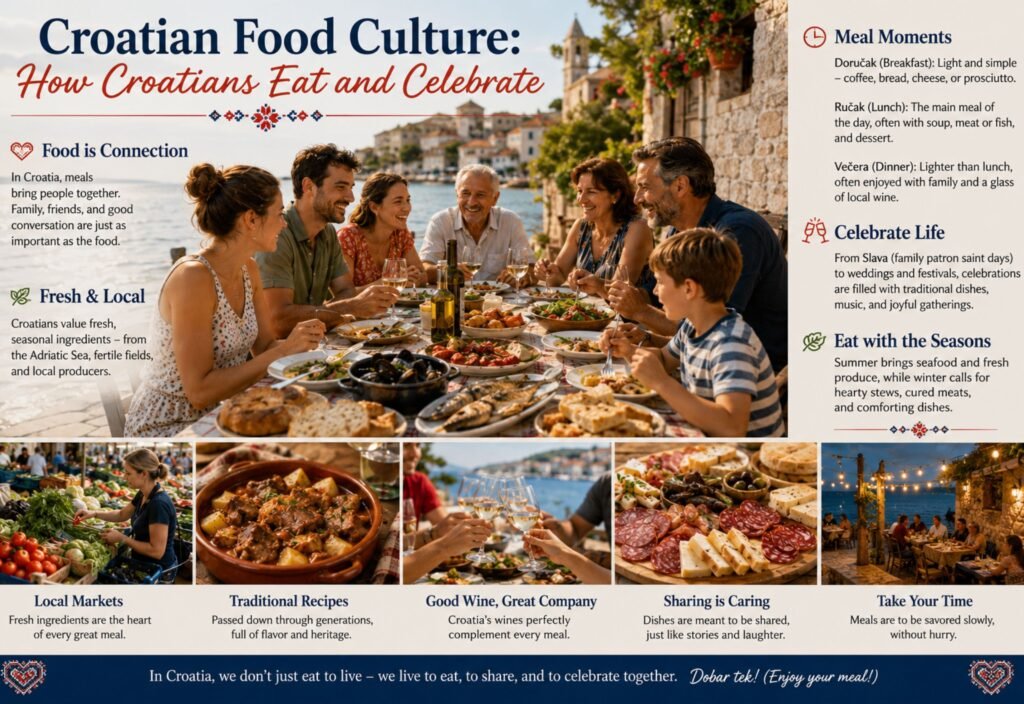
Food plays a central role in Croatian social life. Croatians treat mealtimes as sacred family moments, and they rarely rush through a meal. In fact, Sunday lunches often stretch for hours, with multiple courses flowing from soup to dessert. Furthermore, Croatian recipes pass from generation to generation, with grandmothers often serving as the true keepers of culinary tradition.
Moreover, Croatian food culture connects deeply to seasonal ingredients. Locals shop at farmers’ markets and pick produce based on what grows at that time of year. As a result, spring brings fresh asparagus and lamb, summer highlights tomatoes and grilled fish, autumn focuses on truffles and mushrooms, and winter centers on cured meats and root vegetables. Therefore, every season in Croatia brings a fresh set of flavors to the table.
Croatian Cheese, Wine, and Olive Oil: The Holy Trinity
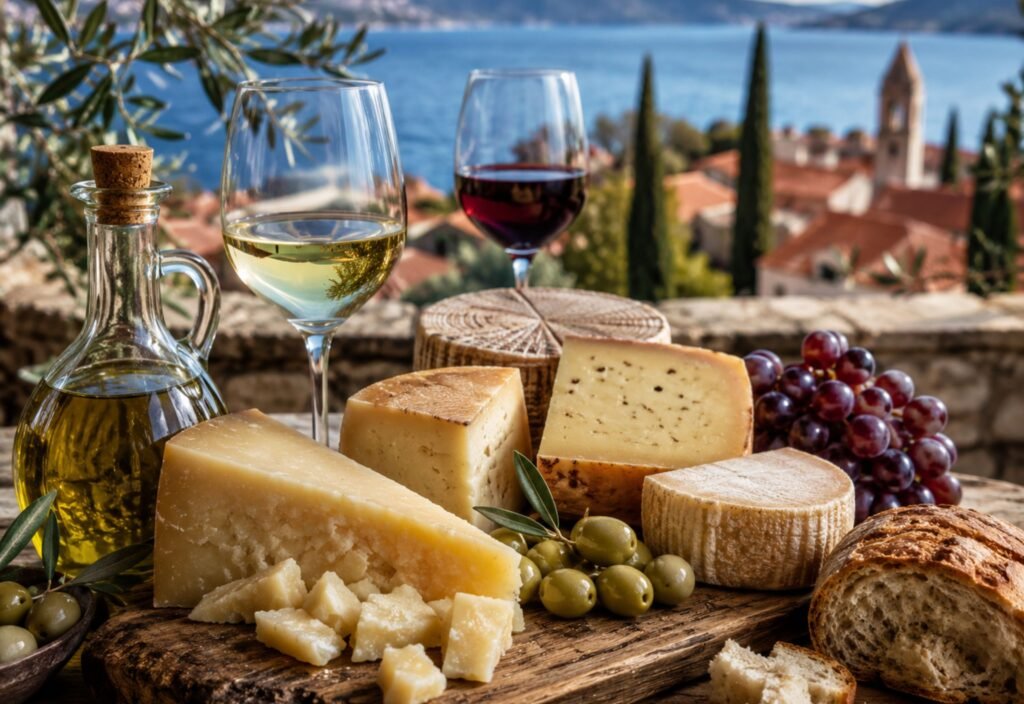
No discussion of Croatian cuisine is complete without mentioning its world-class accompaniments. Croatian olive oil, for example, regularly wins international awards and rivals the best Italian and Spanish varieties. Furthermore, Pag cheese, a hard sheep’s milk cheese from the island of Pag, carries a sharp, distinctive flavor that locals pair with prosciutto and fresh figs. In addition, Croatian wines have gained serious global recognition in recent years.
Moreover, the Istrian peninsula produces some of Europe’s finest truffles, which chefs incorporate into pasta, risotto, and scrambled eggs. However, you do not need a special occasion to enjoy these premium ingredients in Croatia. On the contrary, locals use them daily and treat fine ingredients as a normal part of life. As a result, even a simple breakfast in Croatia can taste extraordinary.
Croatian Street Food and Snacks Worth Exploring
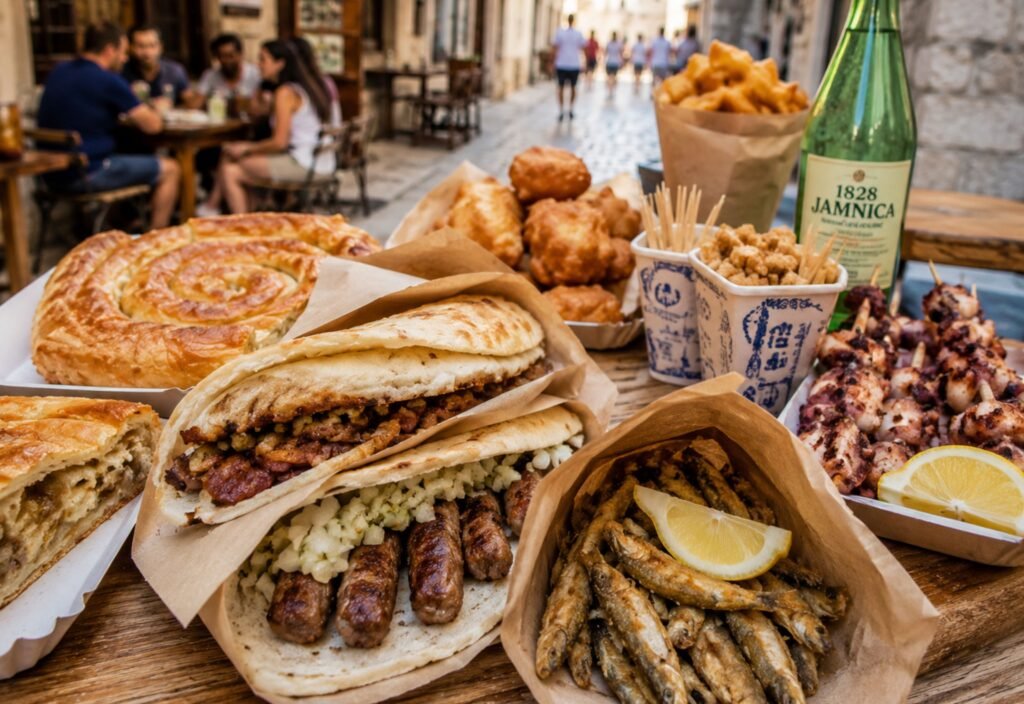
Croatian street food offers a delicious and affordable way to experience the country’s culinary identity. For example, burek, a flaky phyllo pastry stuffed with minced meat or cheese, makes a perfect on-the-go snack in every town and city. Furthermore, cevapi (small grilled minced meat sausages) appear at food stalls throughout the country and always draw a crowd. Therefore, a walk through any Croatian market becomes a full-on culinary experience.
In addition, roasted chestnuts fill the streets with an irresistible aroma during autumn and winter months. Moreover, lokve traditional Croatian donuts coated in sugar, are a nostalgic treat that generations of Croatians have grown up enjoying. However, if you want something savory and light, try skampi na buzaru, shrimp cooked in a wine and garlic sauce that locals scoop up with crusty bread. Consequently, Croatian street food satisfies both the curious traveler and the hungry local equally well.
How to Cook Croatian Food at Home
You do not need to travel to Croatia to enjoy authentic Croatian recipes. Furthermore, many traditional Croatian meals use simple, widely available ingredients that you can find at your local grocery store. For example, pasticada requires only beef, wine, prunes, and a handful of spices yet it delivers a deeply complex flavor. Therefore, home cooks of all skill levels can confidently attempt Croatian dishes.
Moreover, Croatian cooking rewards patience more than precision. Slow cooking is central to many traditional Croatian meals, and rushing the process almost always diminishes the result. In addition, quality olive oil makes a noticeable difference in Dalmatian food, so investing in a good bottle pays off immediately. As a result, anyone who loves cooking will find Croatian recipes both approachable and deeply rewarding.
Quick tips for cooking Croatian food at home:
- Use extra-virgin olive oil generously it is the foundation of most Dalmatian food
- Cook low and slow patience unlocks the depth in traditional Croatian meals
- Use fresh herbs like rosemary, sage, and bay leaves for authentic Adriatic flavor
- Pair Croatian recipes with local wine recommendations to enhance the experience
- Start with simpler Croatian recipes like brudet or strukli before attempting pasticada
FAQs
1. What is the most popular Croatian food?
Pasticada, slow-braised beef in wine sauce, is widely considered the most beloved traditional Croatian meal.
2. Is Croatian food similar to Italian food?
Croatian cuisine shares Italian influences along the coast but adds its own unique Slavic and Ottoman flavors throughout the interior.
3. What do Croatians eat for breakfast?
A typical Croatian breakfast includes burek, fresh bread, cheese, cold cuts, and a strong cup of coffee.
4. Is Croatian food spicy?
Coastal Croatian food is mild and herb-forward, while inland Slavonian dishes use paprika and can carry a moderate level of heat.
5. What is the best Croatian food for vegetarians?
Strukli, soparnik, and various seasonal vegetable dishes make Croatian cuisine quite welcoming for vegetarian diners.
Conclusion
Croatian food deserves far more global recognition than it currently receives. It combines fresh, high-quality ingredients with centuries of tradition and a deep love for sharing meals with family and friends. Furthermore, whether you explore the Adriatic coastline, the truffle forests of Istria, or the paprika-scented kitchens of Slavonia, every region of Croatia serves food that tells a powerful cultural story.
Therefore, make Croatian cuisine a priority on your next culinary adventure. In addition, try your hand at a few Croatian recipes at home you will quickly discover that great Croatian food does not require a plane ticket. As a result, the rich, honest flavors of traditional Croatian meals will earn a permanent place in your kitchen and your heart.