
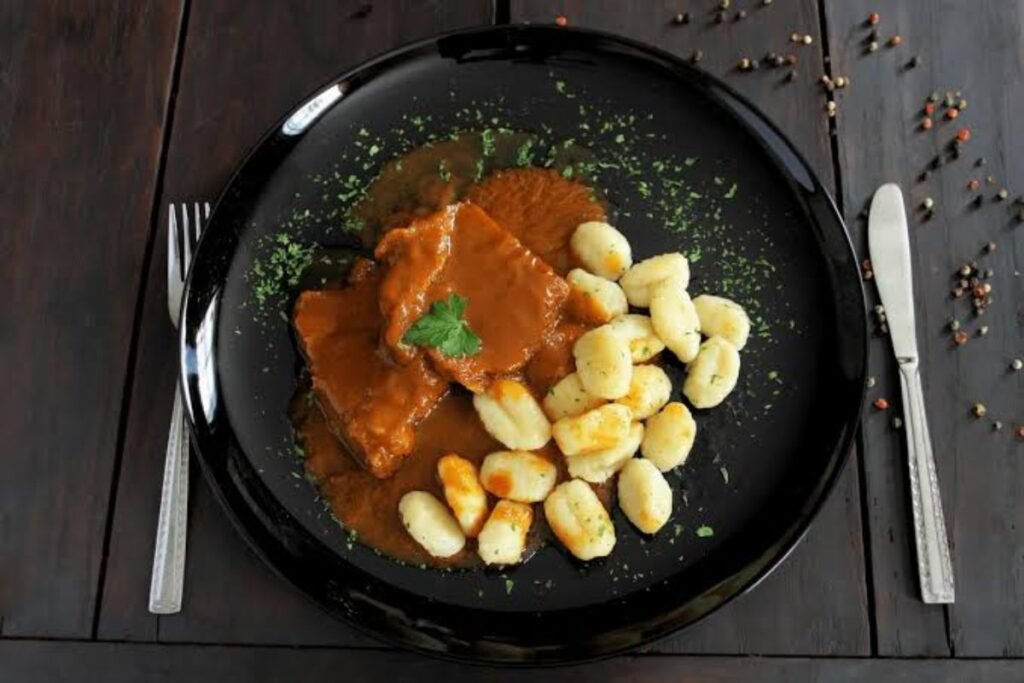
Croatian food tells a story that spans centuries of trade, conquest, and coastal living. Every region of Croatia adds its own flavor to the table, and the result is a cuisine that surprises most first-time visitors. Whether you crave fresh seafood pulled straight from the Adriatic or a rich meat stew simmered for hours, Croatian food delivers something for every appetite. This guide walks you through the origins, the must-try dishes, and the regional quirks that make Croatian cuisine one of Europe’s most underrated culinary treasures.
The Origins of Croatian Cuisine
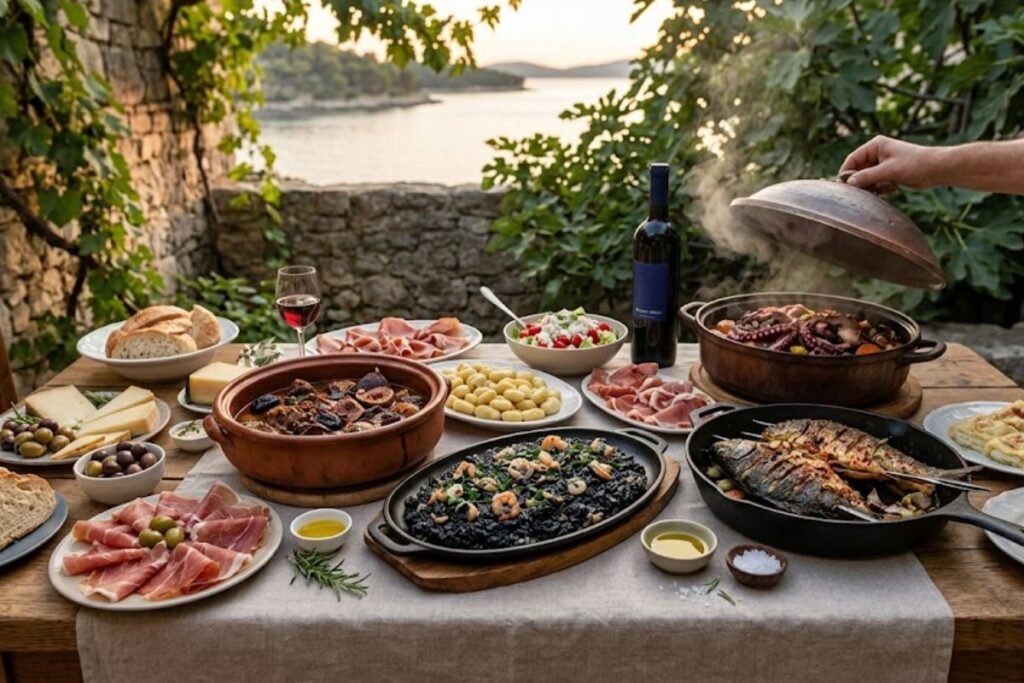
Croatian food didn’t develop in isolation. Instead, it grew through centuries of contact with neighboring cultures. The Romans, Venetians, Ottomans, and Austro-Hungarians all left their mark on local kitchens, and you can still taste their influence today.
For instance, the coastal regions lean heavily on Mediterranean staples like olive oil, garlic, and fresh herbs, much like Italian cuisine across the sea. Meanwhile, inland areas favor heartier, spice-forward dishes that echo Hungarian and Balkan traditions. As a result, Croatian food offers two distinct culinary identities within a single small country.
This blend of influences gives Croatian cuisine its unique character. You won’t find a single “national dish” that defines the whole country. Instead, you’ll discover a patchwork of regional specialties, each shaped by geography, history, and local ingredients.
Popular Traditional Croatian Dishes
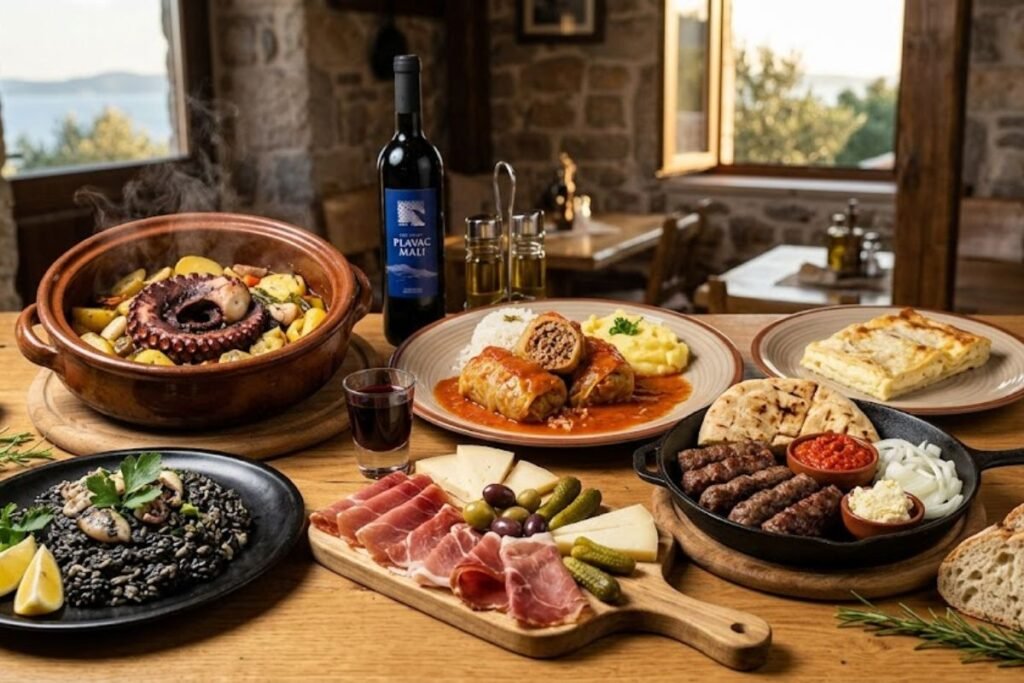
Croatian food shines brightest in its traditional dishes, many of which have stayed unchanged for generations. Locals take pride in these recipes, and most families still pass them down rather than relying on cookbooks.
Here are some of the most popular dishes you’ll encounter across the country:
- Peka – A slow-cooked dish of meat and vegetables baked under a bell-shaped lid covered in hot coals. The technique locks in flavor and creates incredibly tender meat.
- Čevapi – Small grilled sausages made from minced meat, usually served with flatbread, raw onions, and a creamy spread called kajmak.
- Štrukli – A pastry dish filled with cottage cheese, which can be baked or boiled, then served sweet or savory.
- Pašticada – A beef dish marinated in wine and spices, then slow-cooked and served with gnocchi or pasta.
- Black risotto (Crni rižot) – A coastal favorite made with cuttlefish or squid ink, giving the rice its signature dark color and briny flavor.
Each of these dishes highlights a different side of Croatian food. However, they all share one thing in common: a focus on simple, high-quality ingredients prepared with patience. Many recipes also rely on slow cooking, which allows flavors to develop fully without the need for heavy seasoning or artificial shortcuts.
Soups and stews also play a major role in everyday Croatian cooking. Manistra od bobica, a hearty bean and corn stew, appears often in coastal kitchens during colder months. Meanwhile, grah, a simple bean soup, shows up across the entire country as a comforting, budget-friendly staple. These everyday dishes may not appear on restaurant menus as often as peka or čevapi, yet they represent the true heart of home-cooked Croatian food.
Coastal vs. Inland: Two Worlds of Croatian Food
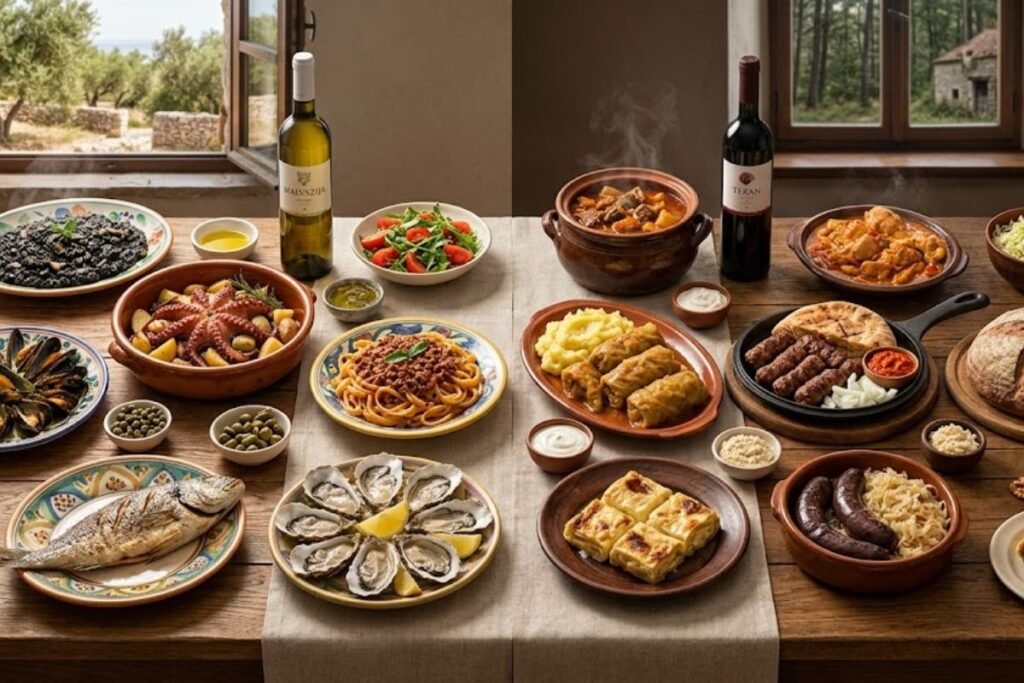
Croatian food changes dramatically depending on where you stand. The Adriatic coast and the inland regions offer almost opposite culinary experiences, yet both remain unmistakably Croatian.
Coastal Croatian Food
Along the coast, seafood takes center stage. Fishermen bring in fresh catches daily, and chefs prepare them simply to let the natural flavors shine. You’ll often find grilled fish drizzled with olive oil, octopus salad, and shellfish stews seasoned with garlic and white wine.
In addition, coastal Croatian food borrows heavily from Italian cuisine. Risottos, pasta dishes, and fresh tomato-based sauces appear on nearly every menu in cities like Split and Dubrovnik. Olive oil production also plays a major role here, and many families still press their own oil from local groves.
Inland Croatian Food
Move away from the coast, and the menu shifts entirely. Inland Croatian food relies more on meat, root vegetables, and dairy. Dishes tend to be richer and heavier, which makes sense given the colder climate and agricultural landscape.
For example, regions like Slavonia serve spicy sausages, paprika-heavy stews, and hearty soups that warm you up during cold winters. Zagreb, the capital, blends both Austrian and Balkan influences, offering dishes like štrukli alongside grilled meats and stews.
This contrast makes exploring Croatian food across the country feel like visiting two entirely different cuisines. Even the cheese varies by region: coastal areas produce salty, hard sheep’s milk cheese called Paški sir, while inland farms favor soft, creamy cow’s milk cheese paired with fresh herbs.
Travelers who only visit one part of Croatia often miss half the story. Therefore, food lovers should sample dishes from both regions to truly understand what Croatian food represents as a whole.
Croatian Street Food Worth Trying
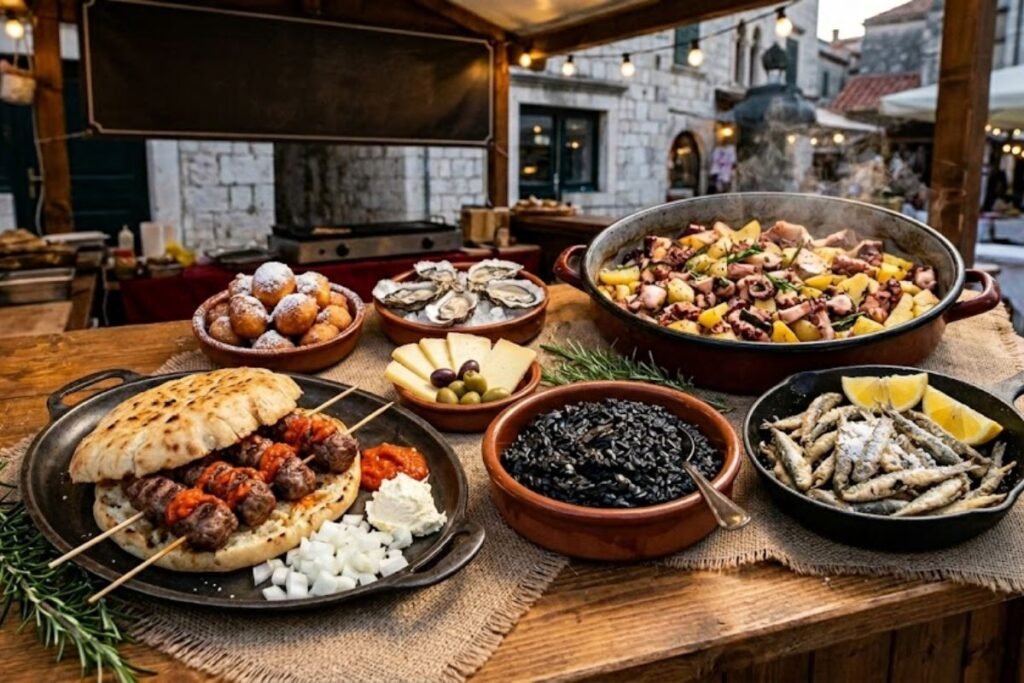
Croatian food isn’t limited to sit-down restaurants. Street food culture thrives here too, especially in busy coastal towns and city centers.
Burek, a flaky pastry filled with meat, cheese, or spinach, ranks among the most popular grab-and-go options. Vendors sell it fresh every morning, and locals often eat it for breakfast alongside yogurt.
Fritule, small fried dough balls dusted with sugar, also appear at street stalls, particularly during winter festivals. Meanwhile, grilled corn, roasted chestnuts, and fresh seafood snacks line the waterfront promenades during summer months.
If you want a quick yet authentic taste of Croatian food, street vendors offer some of the best value and flavor you’ll find anywhere in the country.
Sweet Endings: Croatian Desserts
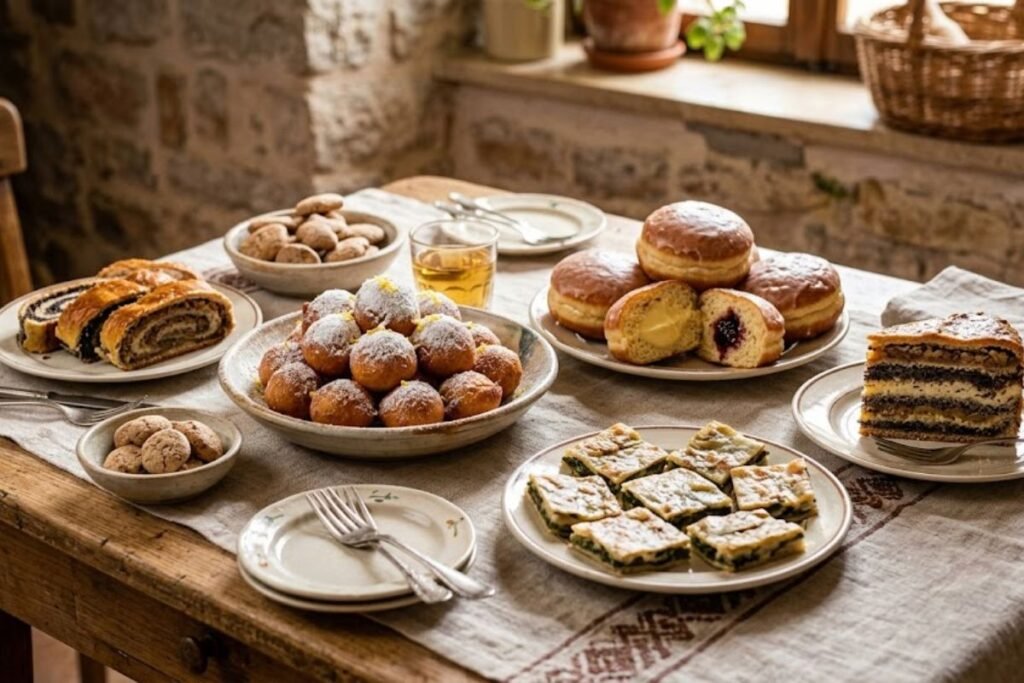
No exploration of Croatian food feels complete without dessert. Croatian sweets often combine simple ingredients with techniques borrowed from neighboring cultures.
Rožata, a custard dessert similar to crème caramel, remains a Dubrovnik specialty influenced by Italian and Spanish traditions. Kremšnita, a creamy custard slice popularized in the town of Samobor, draws crowds from across the country. Meanwhile, orahnjača, a walnut roll often baked during holidays, represents the inland, Austro-Hungarian side of Croatian baking.
These desserts may seem unfamiliar at first, but they reflect the same cultural blending that defines Croatian food as a whole.
Drinks That Pair with Croatian Food
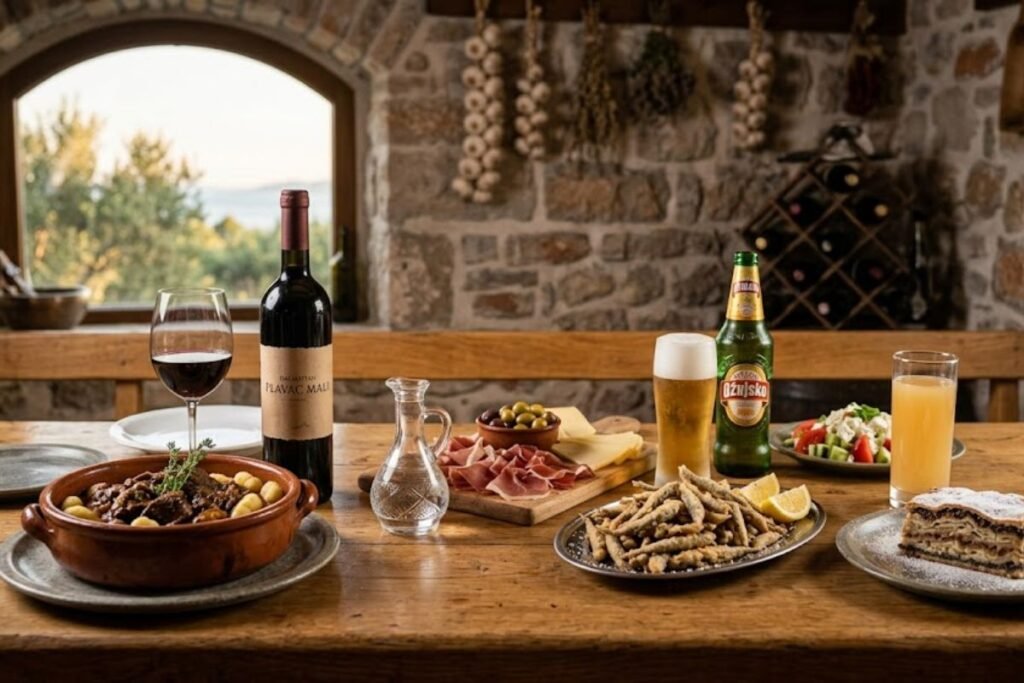
You can’t separate Croatian food from its drinks. Wine production stretches back thousands of years here, and Croatia now produces excellent reds and whites, particularly along the Dalmatian coast and in Istria.
Rakija, a strong fruit brandy, also plays a central role in Croatian hospitality. Hosts often offer a small glass before meals, and flavors range from plum to herb-infused varieties. Additionally, locally brewed beer and refreshing herbal liqueurs round out the country’s drink culture.
Pairing the right drink with Croatian food enhances the entire dining experience, and locals take this pairing seriously, especially during family gatherings and celebrations.
Croatian Dining Culture
Understanding Croatian food also means understanding how locals eat. Meals here move slowly, and conversation matters just as much as the food itself. Family gatherings often stretch for hours, with multiple courses served one after another.
Sunday lunches hold special importance in Croatian households. Families gather, share stories, and enjoy dishes like peka or pašticada together. Moreover, hospitality runs deep in Croatian culture, so guests rarely leave a table hungry.
Restaurants, known as “konobas” in coastal regions, offer a more rustic, home-style approach to dining. These family-run establishments often serve whatever ingredients are freshest that day, giving every meal a personal touch.
Tipping also reflects local hospitality customs. While not mandatory, leaving a small amount shows appreciation for good service. Furthermore, many konobas grow their own vegetables or source meat from nearby farms, so the menu often changes with the seasons. This farm-to-table approach existed in Croatia long before it became a global trend, and it remains one of the reasons Croatian food tastes so fresh and authentic today.
Final Thoughts on Croatian Food
Croatian food reflects the country’s diverse history and geography in every bite. From fresh Adriatic seafood to rich inland stews, the cuisine offers remarkable variety within a relatively small territory. Travelers who explore beyond the typical tourist menus will discover a culinary tradition built on quality ingredients, family recipes, and genuine hospitality. If you ever visit Croatia, make sure you taste both coastal and inland specialties, because each region tells a different part of the country’s flavorful story.
FAQs
1. What is the most popular traditional Croatian food?
Peka, a slow-cooked meat and vegetable dish, ranks as one of the most beloved traditional meals in Croatia.
2. Is Croatian food similar to Italian food?
Coastal Croatian food shares strong similarities with Italian cuisine due to centuries of Venetian influence.
3. What do Croatians typically eat for breakfast?
Many Croatians eat burek, a flaky pastry filled with meat or cheese, paired with yogurt for breakfast.
4. What drink pairs best with Croatian food?
Local wine or rakija, a fruit brandy, traditionally accompanies most Croatian meals.
5. Is Croatian food spicy?
Most Croatian dishes stay mild, though inland regions like Slavonia use paprika for added warmth.