
Have you ever wondered what people eat in one of the world’s happiest countries? Swedish food tells a beautiful story one of simplicity, comfort, and deep connection to nature. From hearty winter stews to light summer salads, Swedish cuisine brings something special to every plate. In this guide, you will explore the most popular Swedish dishes, the culture behind the food, and where you can taste them for yourself. Whether you are a food lover or just curious, this journey through Nordic food culture will leave you hungry for more.
What Is Swedish Food
Swedish food is the traditional cuisine of Sweden, a Scandinavian country known for its forests, lakes, and long winters. The food reflects the country’s geography and history in a very real way. Swedes have long relied on locally sourced ingredients like fish, potatoes, dairy, and wild berries.
Furthermore, Swedish cuisine is all about balance. It is hearty enough to survive cold winters, yet light enough to celebrate warm summers. Cooks focus on fresh, seasonal ingredients and simple preparation methods. As a result, the flavors are clean, honest, and deeply satisfying.
Traditional Swedish meals also carry a strong sense of togetherness. Families gather around the table for long lunches and slow dinners. Food, in Swedish culture, is never just about eating it is about connecting with the people you love.
Most Popular Swedish Foods
1. Swedish Meatballs (Köttbullar)
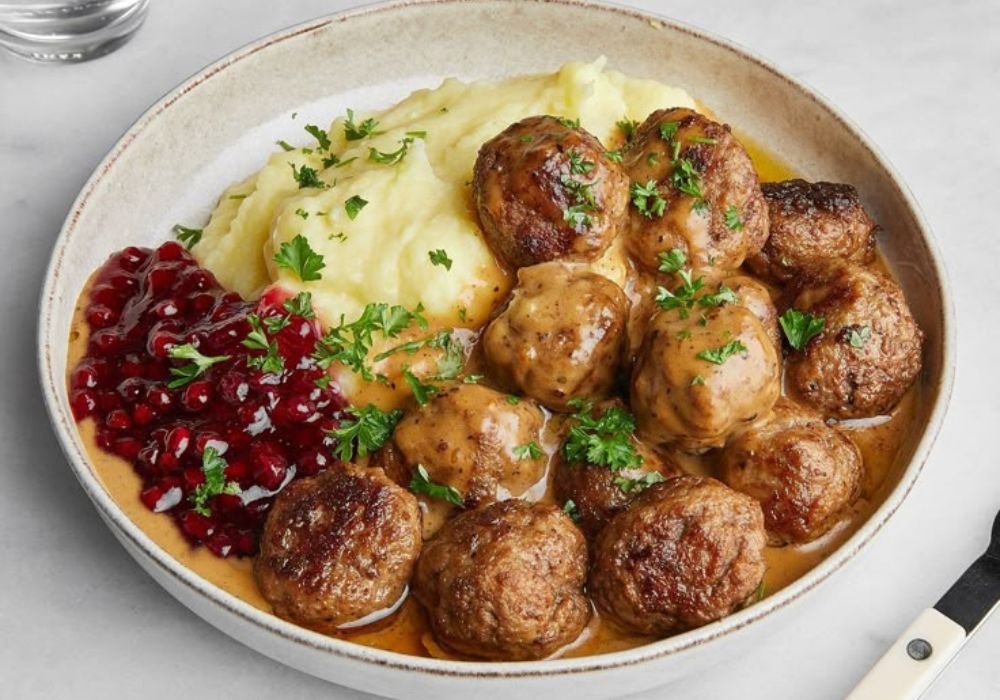
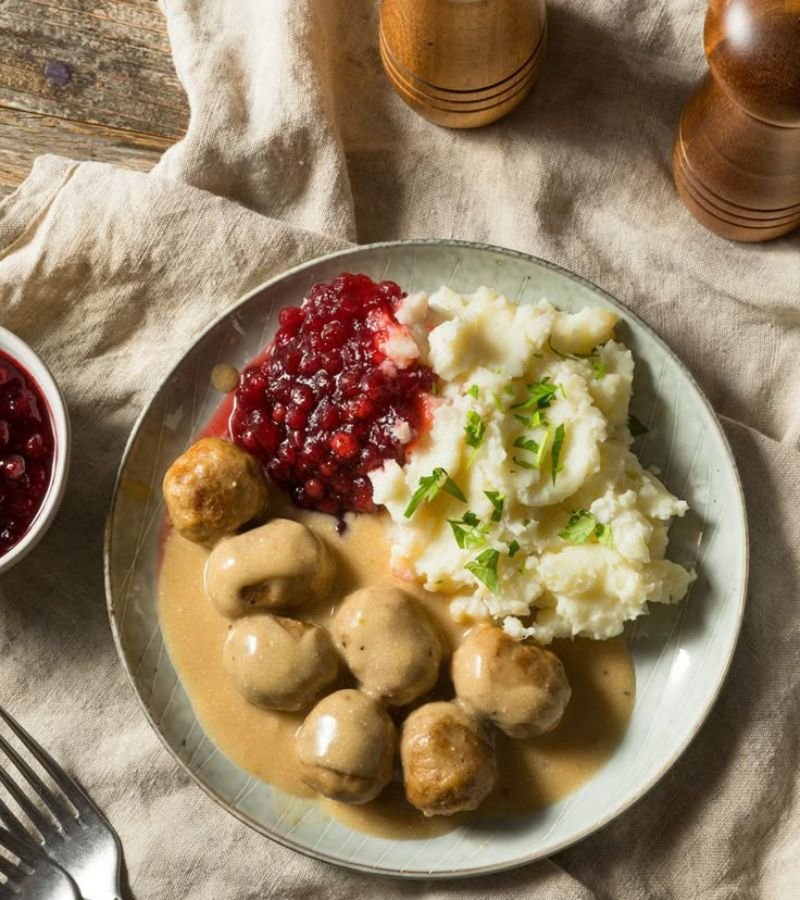
No dish represents Swedish food more than meatballs. Swedish meatballs are small, tender, and incredibly flavorful. Cooks serve them with creamy gravy, lingonberry jam, and mashed potatoes. This combination creates the perfect balance of savory and sweet. In fact, Swedish meatballs have become famous all over the world and for good reason.
2. Gravlax
Gravlax is a classic Scandinavian dish made from raw salmon cured with salt, sugar, and dill. It has a silky texture and a delicate, fresh flavor. Swedes typically serve gravlax with mustard sauce and crispy bread. It is one of the most elegant examples of traditional Swedish meals.
3. Crispbread (Knäckebröd)
Crispbread is a staple in every Swedish home. This dry, thin flatbread has a satisfying crunch and a mild, nutty taste. Swedes eat it with butter, cheese, or smoked fish at almost every meal. It is also incredibly long-lasting, which made it a survival food in earlier centuries.
4. Jansson’s Temptation (Janssons Frestelse)
This classic Swedish recipe is a creamy potato and anchovy gratin baked to golden perfection. It sounds unusual, but the combination works beautifully. The salty anchovies melt into the cream, creating a rich and deeply savory flavor. Additionally, it is a must-have dish during Swedish holidays.
5. Cinnamon Buns (Kanelbullar)
Sweden takes its cinnamon buns very seriously. These soft, fluffy pastries are packed with cinnamon, sugar, and cardamom. Swedes enjoy them during “fika,” the beloved Swedish coffee break tradition. In fact, Sweden even celebrates National Cinnamon Bun Day on October 4th every year.
6. Pea Soup with Pancakes (Ärtsoppa)
This humble dish has been part of Nordic food culture for centuries. Thick yellow pea soup, served with Swedish pancakes and lingonberry jam, appears on tables every Thursday across Sweden. It is simple, filling, and full of tradition.
Traditional Swedish Food Culture

Swedish food culture runs much deeper than the dishes themselves. It is about how people eat, when they eat, and why they eat together. One of the most important concepts in Swedish life is fika a daily ritual of slowing down to enjoy coffee and something sweet with friends or colleagues. Fika is not just a snack break; it is a social institution.
Moreover, Sweden has a long tradition of the smörgåsbord, a large buffet-style spread featuring dozens of dishes. You will find pickled herring, cured meats, cheeses, breads, and hot dishes all laid out together. This style of eating encourages sharing and abundance. It also shows how central hospitality is to Swedish identity.
Swedes also follow the seasons very closely when it comes to food. Summer brings fresh strawberries, crayfish parties, and outdoor grilling. Winter calls for warming soups, root vegetables, and holiday feasts. In addition, Midsummer celebrations almost always feature pickled herring, new potatoes, and sour cream. Swedish food truly lives in rhythm with nature.
Swedish Food and Health Benefits
Beyond taste, Swedish food offers real health benefits. The traditional Swedish diet includes a lot of fish, which provides omega-3 fatty acids that support heart and brain health. Swedes also eat plenty of root vegetables, whole grains like rye, and fermented foods such as filmjölk (a type of cultured milk).
Furthermore, the fika tradition, while it includes pastries, also encourages mindful eating and social connection both of which research links to better mental health. Eating slowly, enjoying company, and taking breaks all contribute to the Swedish concept of well-being.
In addition, lingonberries a small red berry that appears in many Swedish recipes are rich in antioxidants, vitamins, and anti-inflammatory compounds. Swedes use them as a jam, a juice, or a sauce alongside savory dishes. As a result, even something as simple as lingonberry jam adds a nutritional boost to every meal.
Where to Try Authentic Swedish Food
You do not have to travel to Stockholm to enjoy great Swedish food, but it certainly helps. Sweden’s capital city is home to hundreds of restaurants serving everything from traditional Scandinavian dishes to modern Nordic cuisine. Some top areas to explore include Östermalm’s food hall and the trendy Södermalm neighborhood.
However, if you cannot visit Sweden, you have other options. Many Swedish restaurants operate in major cities around the world, particularly in London, New York, and Amsterdam. IKEA’s food courts also serve recognizable Swedish classics like meatballs and lingonberry jam at an affordable price — a surprisingly authentic experience for most people.
Moreover, you can recreate Swedish food at home. Many traditional Swedish meals use simple ingredients that are easy to find in any grocery store. Swedish recipe books and online cooking channels have made Nordic food culture more accessible than ever before.
Conclusion
Swedish food is far more than just meatballs and crispbread. It is a living, breathing culture built on simplicity, seasonal ingredients, togetherness, and a deep respect for nature. From the elegant gravlax to the cozy cinnamon bun enjoyed during fika, every dish carries meaning and history.
Furthermore, Swedish cuisine offers real nutritional value alongside great taste. It balances indulgence with health in a way that feels natural and sustainable. Whether you visit Sweden, dine at a local Nordic restaurant, or try a Swedish recipe at home, you are in for a genuinely rewarding experience.
So why not start your Swedish food journey today? Pick one dish from this guide, gather your ingredients.
(FAQs)
Q1: What is the most famous Swedish food?
Swedish meatballs (köttbullar) served with creamy gravy and lingonberry jam are the most iconic Swedish dish worldwide.
Q2: Is Swedish food healthy?
Yes, traditional Swedish food includes fish, whole grains, fermented dairy, and antioxidant-rich berries, making it a nutritious diet overall.
Q3: What do Swedes eat for breakfast?
Swedes typically eat a light breakfast of crispbread, cheese, yogurt, or filmjölk with fruit or muesli.
Q4: What is fika in Swedish food culture?
Fika is Sweden’s beloved daily coffee break tradition, usually enjoyed with a cinnamon bun or other sweet treat and good company.
Q5: Can I make Swedish food at home easily?
Absolutely, most traditional Swedish recipes use simple, everyday ingredients that you can find in any well-stocked grocery store.