
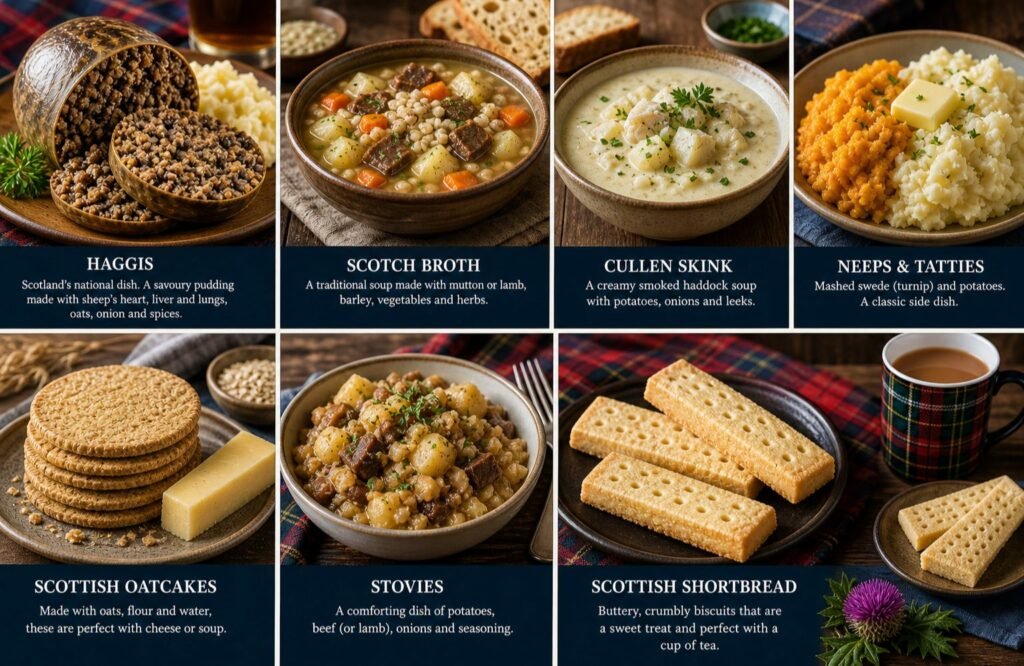
Scotland is a land of rugged landscapes, proud history, and incredible flavors. Scottish food tells the story of a nation that learned to cook with what the land and sea offered. From the misty Highlands to the busy streets of Edinburgh, every dish carries a piece of Scottish soul. People around the world are now discovering just how bold, comforting, and delicious Scottish food truly is. Furthermore, Scottish cuisine goes far beyond haggis and porridge, offering a wide variety of traditional and modern dishes. This guide walks you through everything you need to know about the history, the must-try dishes, the culture, and where to enjoy an authentic Scottish meal.
The History of Scottish Food
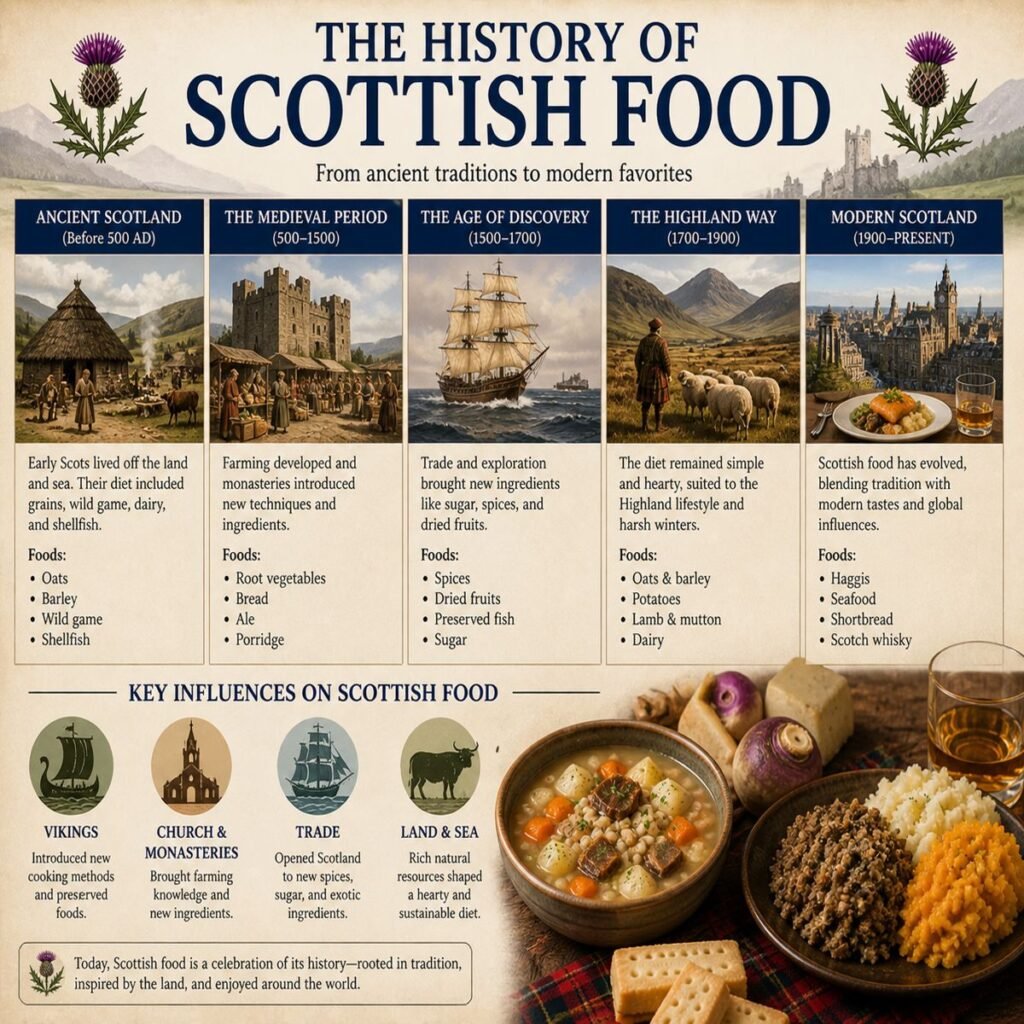
Scotland’s food culture runs deep. For centuries, Scottish people relied on simple, hearty ingredients. Moreover, farmers across the country grew oats, barley, and root vegetables. Meanwhile, the cold waters of the North Sea provided fresh seafood. In addition, the Highlands supported the raising of cattle and sheep for meat and dairy. As a result, Scottish cooking became practical, filling, and full of natural flavor.
In medieval times, the Scottish diet centered around oatmeal, kale, and wild game. However, trade with Europe later introduced new spices and ingredients. The French alliance, known as the Auld Alliance, even influenced Scottish cooking bringing in rich sauces and refined techniques. Over time, Scotland developed a unique culinary identity. Therefore, today’s Scottish cuisine blends old tradition with modern creativity in a truly exciting way.
Most Popular Scottish Foods
1. Haggis
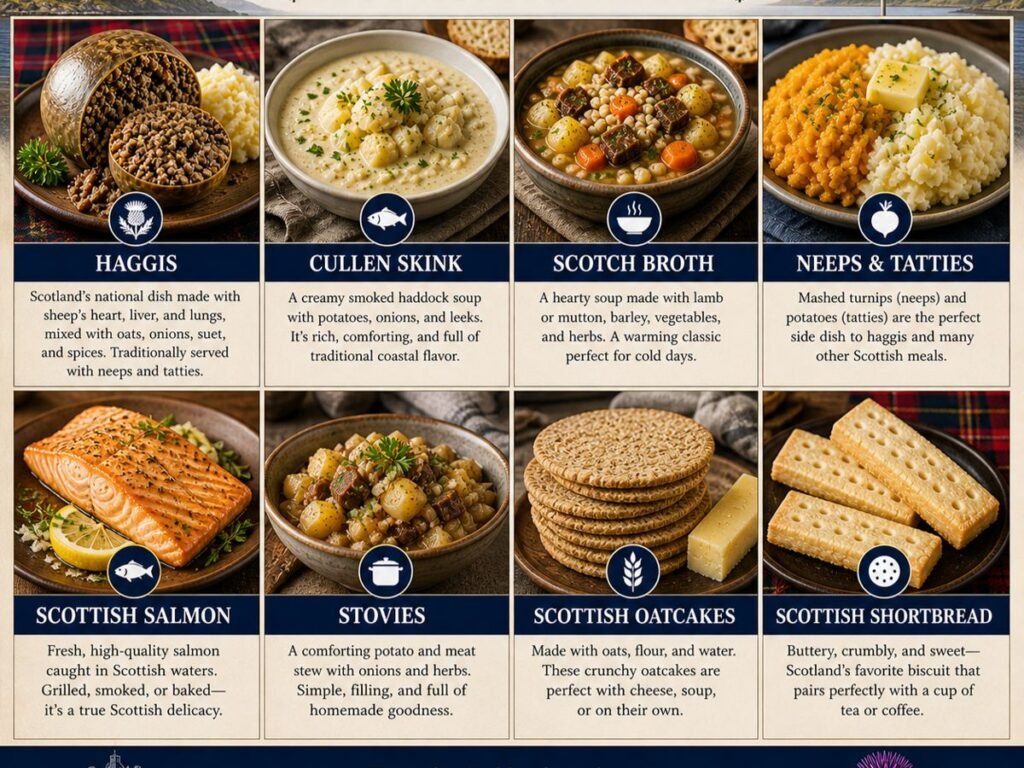
Haggis is Scotland’s national dish. Traditionally, cooks prepare it using sheep’s offal mixed with oatmeal, onions, suet, and spices. Then, they cook it inside a sheep’s stomach. As a result, the dish develops a rich, peppery, and deeply savory flavor. Moreover, Scots typically serve haggis with neeps (turnips) and tatties (potatoes), a combination known as “Haggis, Neeps, and Tatties.” Furthermore, people celebrate it every year on Burns Night, January 25th, in honor of the poet Robert Burns.
2. Cullen Skink
Cullen Skink is a thick, creamy soup from the coastal town of Cullen. It features smoked haddock, potatoes, and onions. The smoky, velvety flavor makes it one of the most comforting Scottish foods you can try. In addition, it works beautifully as a starter or a light main meal. Many Scottish restaurants serve it year-round.
3. Cranachan
Cranachan is Scotland’s most beloved dessert. Cooks layer whipped cream, toasted oatmeal, fresh raspberries, honey, and whisky in a glass. Each spoonful offers a perfect mix of creamy, crunchy, fruity, and boozy flavors. Consequently, it appears on almost every Scottish restaurant menu during summer. It is simple to make but absolutely stunning in taste.
4. Scotch Pie
The Scotch Pie is a small, double-crust meat pie with a distinctive straight-sided pastry shell. Bakers fill it with minced mutton or beef and season it with bold spices. Moreover, football fans across Scotland enjoy it as a stadium snack on match days. It is warm, filling, and deeply satisfying.
5. Cock-a-Leekie Soup
Cock-a-Leekie is a classic Scottish soup made with chicken, leeks, and sometimes prunes. The combination sounds unusual, but it delivers a gentle, sweet, and savory broth that warms you from the inside out. Additionally, Scottish cooks have prepared this dish for hundreds of years, making it a true piece of culinary heritage.
6. Tablet
Tablet is a traditional Scottish confection similar to fudge but harder and grainier in texture. Makers prepare it with sugar, condensed milk, and butter. The result is an intensely sweet, melt-in-your-mouth treat. Therefore, you find it at every Scottish market, gift shop, and bakery. It makes a perfect souvenir for anyone with a sweet tooth.
7. Arbroath Smokie
The Arbroath Smokie is a whole haddock hot-smoked over hardwood in the town of Arbroath. It carries Protected Geographical Indication (PGI) status, which means only producers in Arbroath can make the real version. The smoky, flaky fish tastes incredible on its own or in chowders. Moreover, food lovers consider it one of Scotland’s finest seafood delicacies.
8. Porridge
Porridge is a Scottish breakfast staple. Scots cook rolled oats slowly in water or milk until thick and creamy. However, opinions differ on toppings some prefer salt, others use honey or berries. Either way, porridge provides a nutritious, warming start to any day. It has fueled Scottish workers and warriors for generations.
Scottish Food and Culture
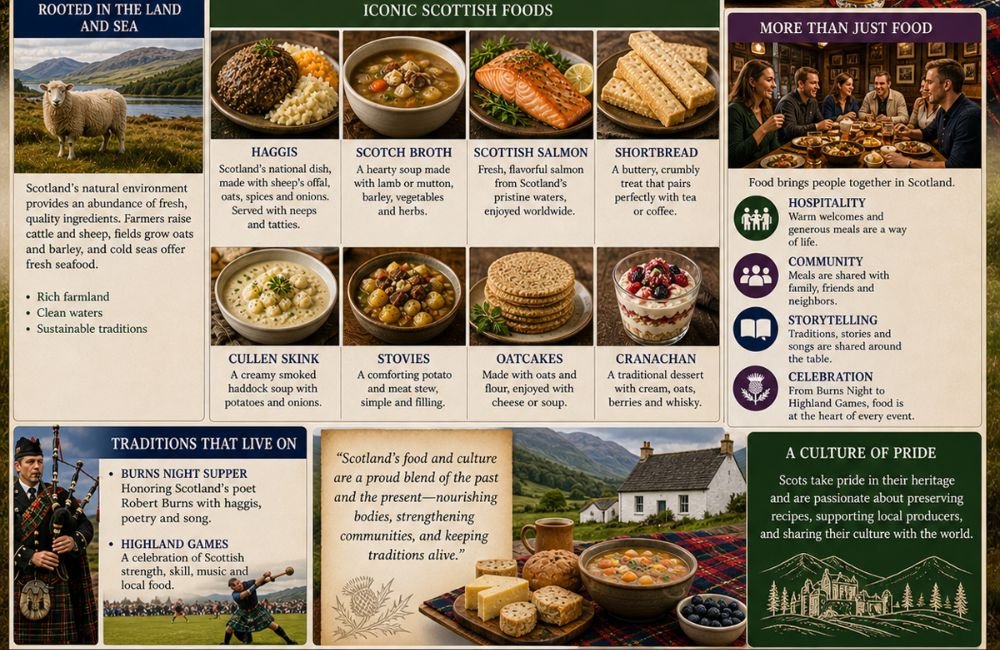
Food plays a central role in Scottish identity. Burns Night celebrations bring families together every January for a traditional three-course meal featuring haggis. St. Andrew’s Day, celebrated on November 30th, also centers around traditional Scottish dishes. Furthermore, Highland Games events always feature local food stalls selling pies, oatcakes, and fresh seafood.
Oatcakes deserve special mention here. Scots serve these thin, savory biscuits with cheese, smoked salmon, or soup. They represent the humble, practical spirit of Scottish cooking. Additionally, whisky culture connects deeply with Scottish food. Pairing the right whisky with haggis or smoked fish is a skill that many Scottish chefs and hosts take seriously.
Scottish food also reflects a strong sense of community. Sharing a pot of soup or a plate of tablet with neighbors is a long-standing tradition. Consequently, food in Scotland is never just about eating — it is about belonging.
Modern Scottish Cuisine
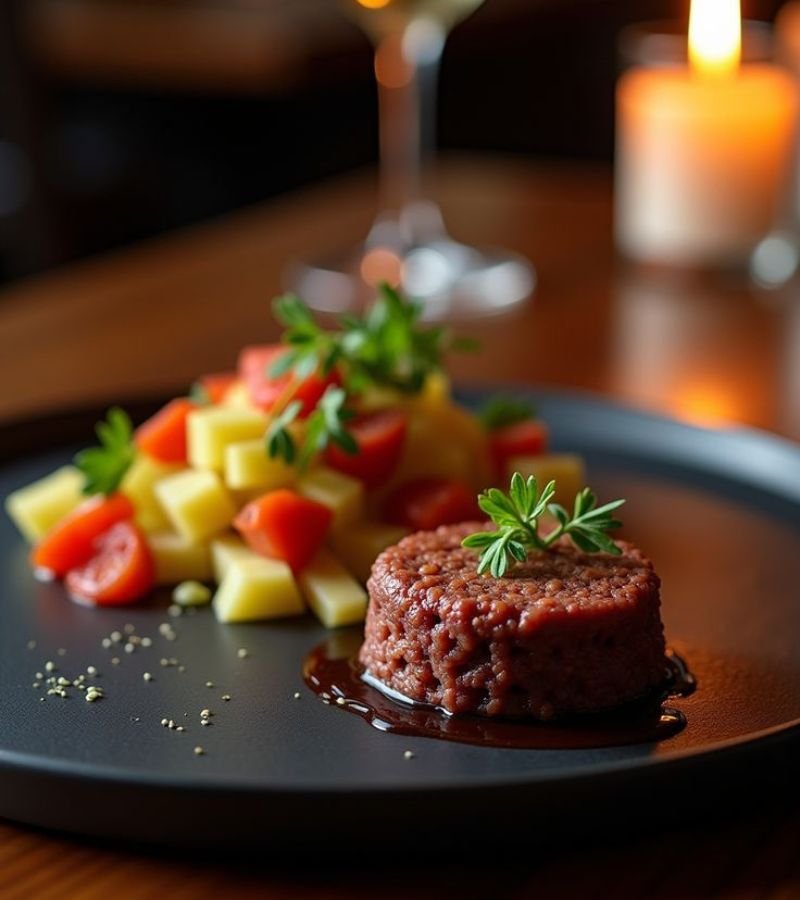
Scotland’s food scene has changed dramatically in recent years. Today, Scottish chefs blend traditional recipes with contemporary techniques. Edinburgh and Glasgow now host world-class restaurants that celebrate local, seasonal ingredients. Meanwhile, the farm-to-table movement has taken strong root across Scotland.
Chefs now spotlight Scottish seafood like langoustines, oysters, and scallops from the pristine waters of the Hebrides. Furthermore, Scottish beef and lamb, famous for their quality, appear on Michelin-starred menus across Europe. Scotland even produces award-winning artisan cheeses, craft gins, and specialty ales. Therefore, modern Scottish food is not just keeping up with global trends; it is leading them.
Where to Try Authentic Scottish Food
You do not need to travel far to find great Scottish food. However, eating in Scotland itself is an unforgettable experience. Here are the best places to start:
Edinburgh offers countless options. The Royal Mile features traditional restaurants serving haggis, Cullen Skink, and cranachan. In addition, the city’s Grassmarket area has cozy pubs with excellent Scottish menus.
Glasgow is a food lover’s paradise. The city blends working-class comfort food with innovative modern dining. Furthermore, the Barras Market is perfect for sampling local street food and traditional sweets like tablet.
The Highlands and Islands offer the freshest seafood experiences. Towns like Oban and Kyle of Lochalsh serve lobster, crab, and Arbroath Smokies straight from the source. Consequently, seafood lovers consider a trip to the Scottish coast a must-do food experience.
If you cannot visit Scotland, many online Scottish food shops deliver traditional products worldwide. Therefore, you can enjoy authentic Scottish food from the comfort of your own home.
FAQs
Q1. What is the most famous Scottish food? Haggis is Scotland’s most iconic and nationally celebrated dish.
Q2. Is Scottish food spicy? Scottish food is flavorful and savory but generally mild rather than spicy.
Q3. What do Scots eat for breakfast? A traditional Scottish breakfast includes porridge, bacon, eggs, black pudding, and toast.
Q4. Is Scottish food healthy? Many Scottish dishes use natural, wholesome ingredients like oats, fish, and fresh vegetables.
Q5. Where can I buy authentic Scottish food online? Websites like Scotland’s Larder and various Scottish deli shops ship traditional products worldwide.
Conclusion
Scottish food is bold, comforting, and full of heart. From the smoky richness of Cullen Skink to the sweet crunch of cranachan, every dish tells a story. Scotland’s culinary tradition runs centuries deep, yet it continues to grow and inspire chefs around the world. Therefore, whether you visit Scotland or simply explore its flavors from home, make it a point to try authentic Scottish food. You will not just enjoy a meal, you will experience a culture. So go ahead, take that first bite, and let Scotland’s incredible food tradition win you over completely.