
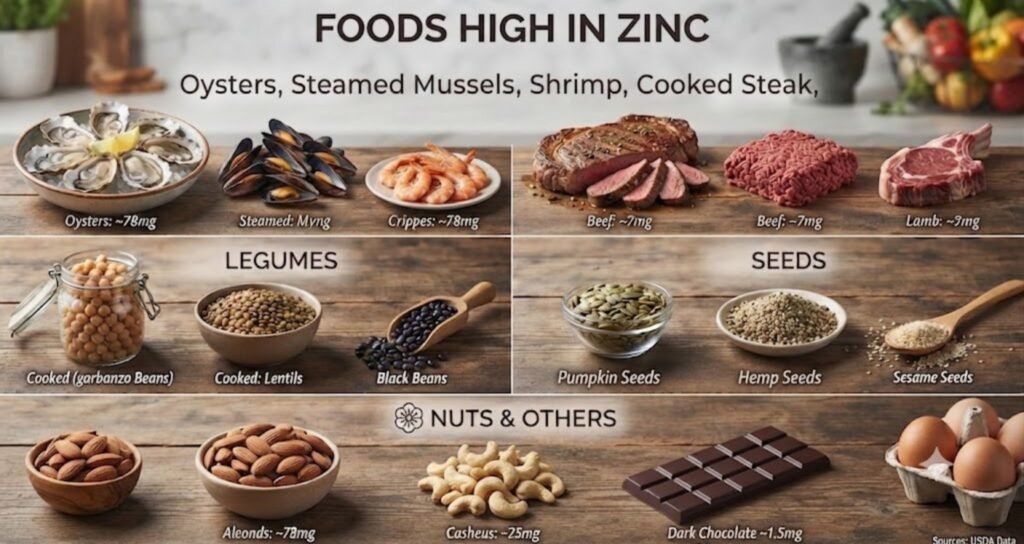
If you’ve ever wondered why some people seem to bounce back from colds faster, heal cuts quicker, or simply feel more energetic, the answer might come down to one small but mighty mineral: zinc. Foods high in zinc play a surprisingly big role in how our bodies function every single day, yet zinc rarely gets the spotlight that vitamin C or iron enjoys.
In this guide, we’ll walk through everything you need to know about foods high in zinc — what zinc actually does, why your body can’t live without it, and which natural sources of zinc deserve a permanent spot in your kitchen. Whether you eat meat, follow a plant-based diet, or you’re shopping for a growing kid or a pregnant mom-to-be, you’ll find practical, real-world options here. Let’s dig in.
What Is Zinc and Why Is It Important?
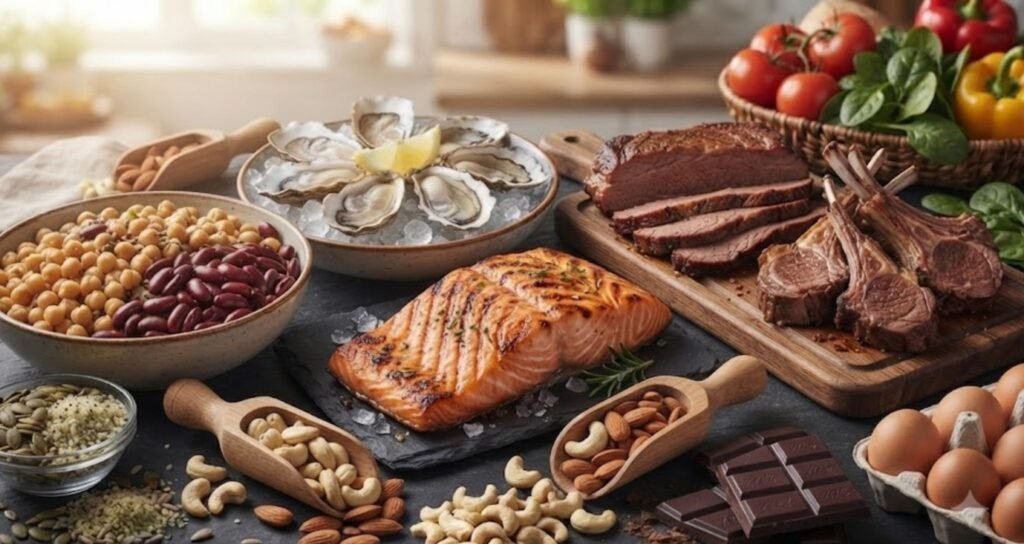
Zinc is a trace mineral, meaning your body only needs it in small amounts, but those small amounts matter enormously. It’s involved in more than 300 enzymatic reactions throughout the body, touching everything from digestion to DNA production. Because your body can’t store zinc for long periods, you need a steady supply from food or supplements.
So how much zinc do you actually need? For most adult men, the recommended daily intake is around 11 mg, while adult women need about 8 mg per day. Pregnant women require slightly more, around 11-12 mg, and breastfeeding mothers may need up to 12-13 mg daily. Children’s needs vary by age, generally ranging from 2 mg to 9 mg per day.
When zinc levels dip too low, your body sends out warning signs. Common symptoms of zinc deficiency include:
- Frequent colds or infections due to a weakened immune system
- Slow-healing wounds and cuts
- Hair thinning or hair loss
- Loss of appetite or altered sense of taste and smell
- Dry, irritated, or acne-prone skin
- Fatigue and difficulty concentrating
Beyond preventing these deficiency symptoms, zinc supports overall health in ways that go far beyond immunity. It plays a key role in cell growth, hormone production, and even mood regulation. Simply put, this is one essential mineral you don’t want to overlook.
Health Benefits of Foods High in Zinc
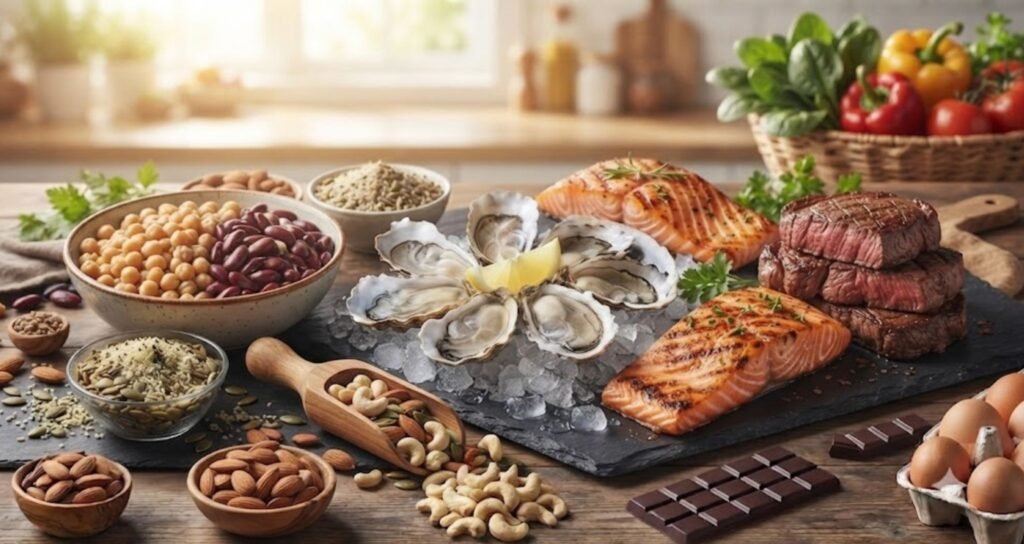
Eating a variety of zinc rich foods offers benefits that reach nearly every system in your body. Let’s break down exactly how this mineral works in your favor.
Supports the immune system. Zinc is often called nature’s immune booster because it helps your body produce and activate white blood cells that fight off viruses and bacteria. This is exactly why zinc for immunity has become such a popular topic, especially during cold and flu season.
Promotes wound healing. Because zinc is essential for collagen production and cell repair, it helps cuts, scrapes, and surgical wounds heal faster and more effectively.
Improves skin health. Zinc has natural anti-inflammatory properties that help calm acne, eczema, and other skin irritations. It also regulates oil production, which keeps breakouts in check.
Supports hair growth. Since hair follicles rely on protein synthesis to grow, and zinc plays a direct role in that process, a deficiency often shows up first as thinning or brittle hair.
Enhances brain function. Zinc is concentrated in areas of the brain linked to memory and learning, and adequate intake has been associated with sharper cognitive performance.
Helps with fertility and reproductive health. Zinc is crucial for hormone production in both men and women, and it plays a particularly important role in sperm health and quality.
Supports children’s growth and development. Because zinc is vital for cell division and protein synthesis, it directly influences healthy growth during childhood and adolescence.
Promotes healthy vision. Zinc helps transport vitamin A from the liver to the retina, which supports night vision and helps protect against age-related eye issues.
Top 30 Foods High in Zinc
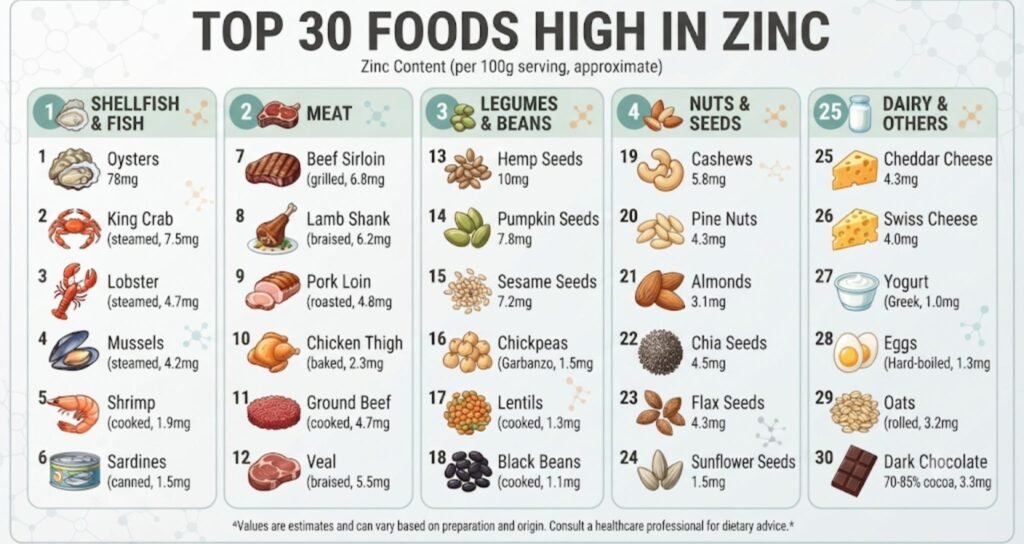
Below is a comprehensive look at the best natural sources of zinc, spanning seafood, meat, dairy, seeds, legumes, and more. Amounts are approximate per 100g or standard serving size.
1. Oysters — Roughly 16-90 mg per 100g depending on variety, making oysters the single richest natural source of zinc. Also packed with vitamin B12 and iron. Great for immunity and reproductive health. Best enjoyed raw, grilled, or lightly steamed.
Best Animal-Based Foods High in Zinc
2. Crab — About 4-7 mg per 100g. Rich in protein and omega-3 fatty acids. Supports brain function and immune health. Delicious steamed or added to salads.
3. Lobster — Around 3-4 mg per 100g. Provides lean protein and selenium. Good for skin and immune support. Best steamed or grilled with a light butter drizzle.
4. Beef — Roughly 4-6 mg per 100g. High in protein, iron, and B vitamins. Supports muscle repair and immunity. Best grilled, roasted, or stewed.
5. Lamb — About 4-5 mg per 100g. Contains healthy fats and B12. Supports energy levels and wound healing. Best slow-cooked or grilled.
6. Chicken — Around 1.5-2.5 mg per 100g, higher in dark meat. Lean protein source. Supports muscle and immune health. Best roasted, grilled, or baked.
7. Turkey — Roughly 2-3 mg per 100g. Low-fat protein packed with selenium. Supports thyroid and immune function. Best roasted or used in lean ground form.
8. Pork — About 2-3 mg per 100g. Good source of thiamine and protein. Supports energy metabolism. Best grilled or roasted lean cuts.
9. Salmon — Around 0.5-1 mg per 100g. Loaded with omega-3s and vitamin D. Supports brain and heart health. Best baked or grilled.
10. Sardines — About 1-1.5 mg per 100g. Rich in calcium and omega-3 fatty acids. Supports bone and heart health. Best eaten canned or grilled fresh.
11. Tuna — Roughly 0.4-0.9 mg per 100g. High in lean protein and B vitamins. Supports metabolism. Best grilled, seared, or canned.
Meat and Poultry High in Zinc
12. Eggs — About 1.3 mg per large egg. Contains choline and complete protein. Supports brain and muscle health. Best boiled, scrambled, or poached.
13. Milk — Roughly 0.4 mg per 100ml. Good source of calcium and vitamin D. Supports bone health. Best consumed cold or in smoothies.
14. Cheese — About 3-4 mg per 100g, depending on type (cheddar is highest). Rich in calcium and protein. Supports bone strength. Best added to meals or eaten as a snack.
15. Greek Yogurt — Around 0.5-1 mg per 100g. High in protein and probiotics. Supports gut and immune health. Best eaten with fruit or granola.
Seeds and Nuts High in Zinc
16. Pumpkin Seeds — Roughly 7-10 mg per 100g, one of the top plant-based zinc sources. Rich in magnesium and healthy fats. Supports prostate and immune health. Best roasted as a snack.
17. Sesame Seeds — About 7 mg per 100g. Contains calcium and healthy fats. Supports bone and skin health. Best sprinkled on salads or blended into tahini.
18. Hemp Seeds — Around 7 mg per 100g. High in omega-3s and complete protein. Supports heart and skin health. Best added to smoothies or oatmeal.
19. Chia Seeds — Roughly 4.5 mg per 100g. Packed with fiber and omega-3s. Supports digestion and heart health. Best soaked in liquid for pudding.
20. Cashews — About 5.5 mg per 100g. Contains healthy fats and magnesium. Supports heart and bone health. Best eaten raw or roasted.
21. Almonds — Roughly 3-3.5 mg per 100g. High in vitamin E and fiber. Supports skin and heart health. Best eaten raw or as almond butter.
22. Peanuts — About 3 mg per 100g. Good plant protein source. Supports muscle and energy. Best eaten roasted or as peanut butter.
Legumes and Whole Grains
23. Lentils — Around 3-4 mg per 100g cooked. High in fiber and folate. Supports digestion and heart health. Best simmered into soups or stews.
24. Chickpeas — Roughly 2.5 mg per 100g cooked. Rich in plant protein and fiber. Supports gut and blood sugar health. Best roasted or blended into hummus.
25. Black Beans — About 2 mg per 100g cooked. High in antioxidants and fiber. Supports heart and digestive health. Best added to salads or bowls.
26. Kidney Beans — Roughly 1-2 mg per 100g cooked. Contains iron and folate. Supports energy and blood health. Best used in chili or stews.
27. Quinoa — About 2 mg per 100g cooked. A complete plant protein with fiber. Supports muscle and digestive health. Best as a rice substitute or in salads.
28. Oats — Around 2-3 mg per 100g dry. Rich in beta-glucan fiber. Supports heart and gut health. Best as oatmeal or overnight oats.
Other Zinc-Rich Foods
29. Mushrooms — Roughly 1 mg per 100g. Contains B vitamins and antioxidants. Supports immune health. Best sautéed or grilled.
30. Dark Chocolate (70%+) — About 3-3.5 mg per 100g. Rich in antioxidants and magnesium. Supports mood and heart health. Best enjoyed in moderation as a treat.
Comparison Table: Foods High in Zinc
| Food | Zinc (mg per 100g) | Category | Other Nutrients | Best For |
|---|---|---|---|---|
| Oysters | 16-90 | Animal | B12, Iron | Immunity, Fertility |
| Crab | 4-7 | Animal | Omega-3, Protein | Brain Health |
| Beef | 4-6 | Animal | Iron, B Vitamins | Muscle Repair |
| Pumpkin Seeds | 7-10 | Plant | Magnesium, Fats | Prostate Health |
| Sesame Seeds | 7 | Plant | Calcium, Fats | Bone Health |
| Hemp Seeds | 7 | Plant | Omega-3, Protein | Heart Health |
| Cashews | 5.5 | Plant | Magnesium, Fats | Heart, Bone Health |
| Lentils | 3-4 | Plant | Fiber, Folate | Digestive Health |
| Cheese | 3-4 | Animal | Calcium, Protein | Bone Strength |
| Chickpeas | 2.5 | Plant | Protein, Fiber | Gut Health |
| Eggs | 1.3 (per egg) | Animal | Choline, Protein | Brain, Muscle |
| Quinoa | 2 | Plant | Protein, Fiber | Muscle Health |
Best Plant-Based Foods High in Zinc
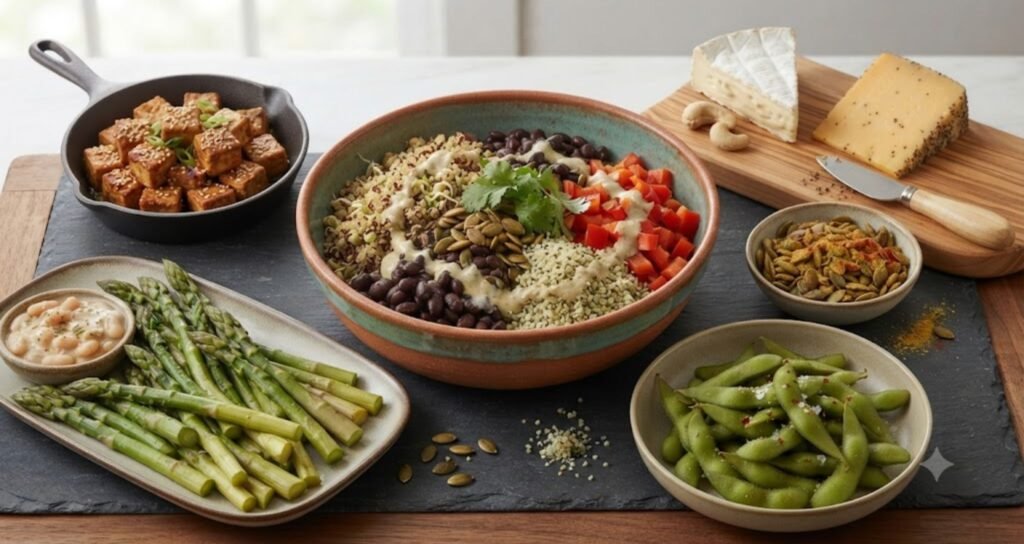
For anyone leaning toward a more plant-forward lifestyle, there are still plenty of excellent natural sources of zinc available. Pumpkin seeds, sesame seeds, and hemp seeds rank among the highest, delivering around 7 mg or more per 100g. Cashews and almonds add crunch along with healthy fats, while legumes like lentils, chickpeas, and black beans provide a solid dose alongside fiber and plant protein.
Whole grains such as quinoa and oats round out the list nicely, offering zinc along with sustained energy. Combining a few of these zinc rich foods throughout the day makes it entirely possible to meet your needs without any animal products at all.
Best Animal-Based Foods High in Zinc
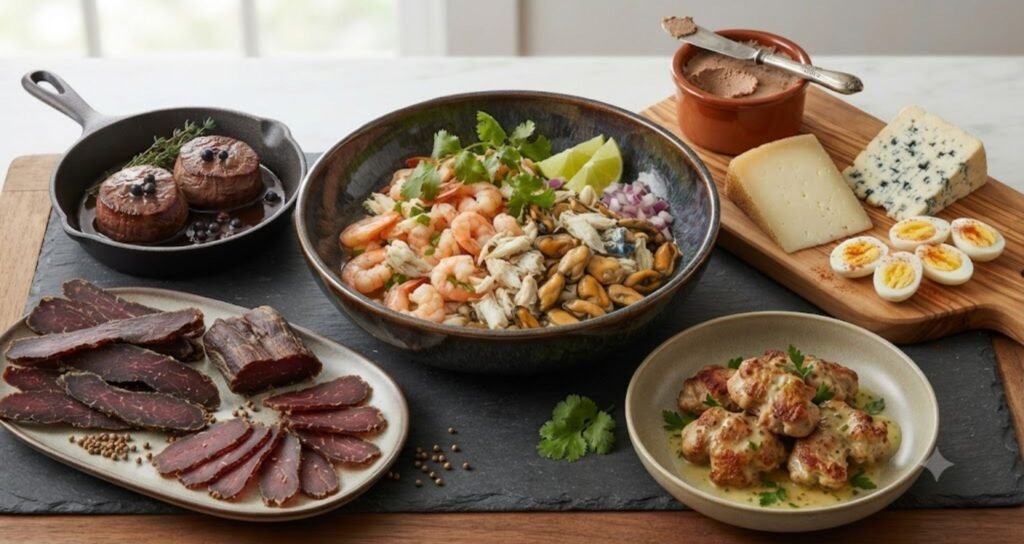
If you eat meat and seafood, hitting your daily zinc target is fairly straightforward. Oysters are, hands down, the best foods for zinc, delivering far more per serving than any other food on this list. Red meats like beef and lamb follow closely behind, offering highly absorbable zinc alongside iron and B vitamins.
Poultry, pork, and dairy products like cheese also contribute meaningfully, though generally in smaller amounts than red meat and shellfish. Because zinc from animal sources tends to be more bioavailable than zinc from plants, even moderate portions can go a long way toward meeting daily needs.
Foods High in Zinc for Vegetarians and Vegans
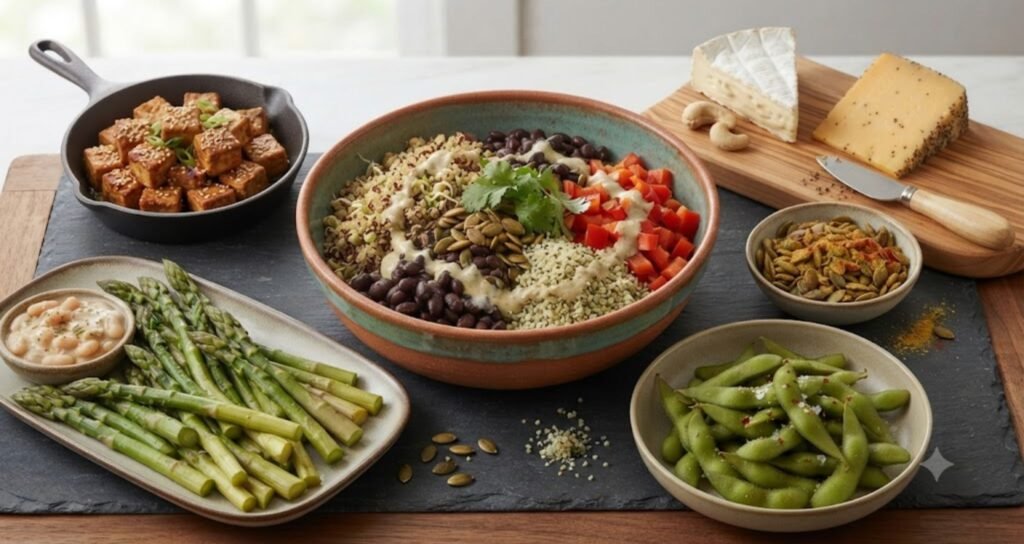
Following a vegetarian or vegan diet doesn’t mean missing out on adequate zinc intake, though it does take a little more intention. Since plant-based zinc sources contain phytates that can interfere with absorption, vegetarians and vegans may need slightly more zinc overall — around 50% more than the standard recommendation, according to many nutrition experts.
The best vegetarian zinc sources include eggs, dairy products, pumpkin seeds, sesame seeds, and legumes like lentils and chickpeas. For strict vegans, focusing on seeds, nuts, whole grains, and legumes, combined with smart preparation methods like soaking and sprouting, makes a real difference in how much zinc your body actually absorbs.
Zinc-Rich Foods for Kids
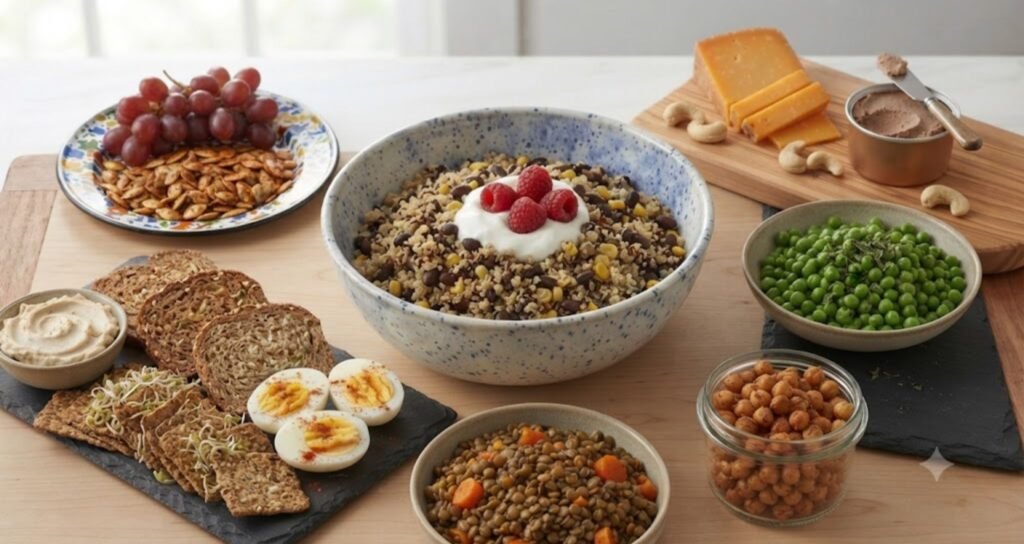
Growing bodies need a steady, reliable supply of zinc to support healthy development. Kid-friendly options include scrambled eggs, cheese cubes, yogurt, lean ground beef, and chicken. Pumpkin seeds and nut butters (when age-appropriate and allergy-safe) also make excellent snack additions.
Because picky eating is common in childhood, it often helps to sneak zinc-rich ingredients into familiar meals. Try blending chickpeas into a mild dip, adding shredded cheese to pasta, or mixing ground turkey into a favorite sauce.
Zinc-Rich Foods for Pregnancy
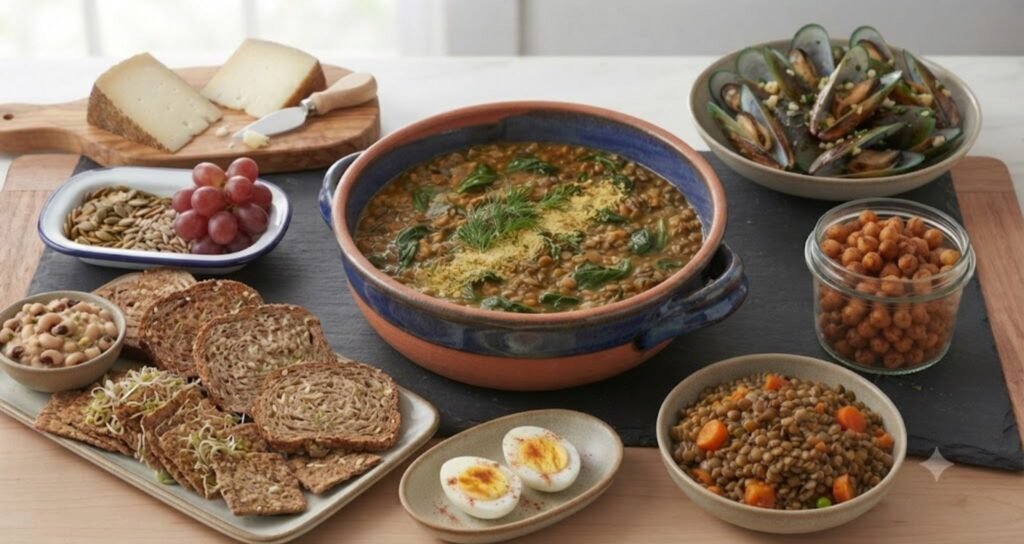
During pregnancy, zinc becomes especially important for fetal growth, immune development, and DNA synthesis. Expecting mothers should prioritize well-cooked seafood (avoiding high-mercury varieties), lean red meat, poultry, dairy, and fortified whole grains.
Plant-based options like beans, lentils, and pumpkin seeds are also excellent additions to a pregnancy-friendly zinc diet. As always, pregnant women should talk with their healthcare provider about whether a prenatal supplement is needed to fully cover their increased zinc requirements.
Foods That Improve Zinc Absorption
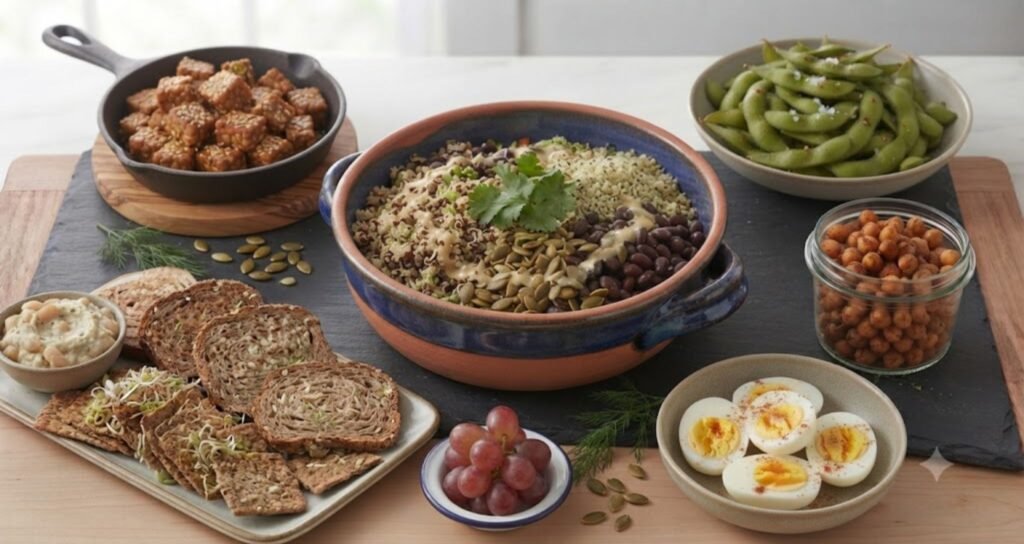
Not all zinc is absorbed equally, and pairing the right foods together can make a real difference.
Vitamin C-rich foods. While vitamin C is more famous for boosting iron absorption, eating it alongside zinc-rich meals still supports overall nutrient uptake and immune function. Think bell peppers, citrus fruits, and leafy greens on the same plate as your protein.
Protein-rich foods. Animal proteins in particular contain amino acids that enhance zinc absorption, which is part of why zinc from meat and seafood is generally more bioavailable than zinc from plants.
Fermented foods. Fermentation reduces phytate levels in grains and legumes, which in turn improves how much zinc your body can actually use. Foods like sourdough bread, tempeh, and fermented vegetables are smart additions to a zinc-conscious diet.
Foods That Reduce Zinc Absorption
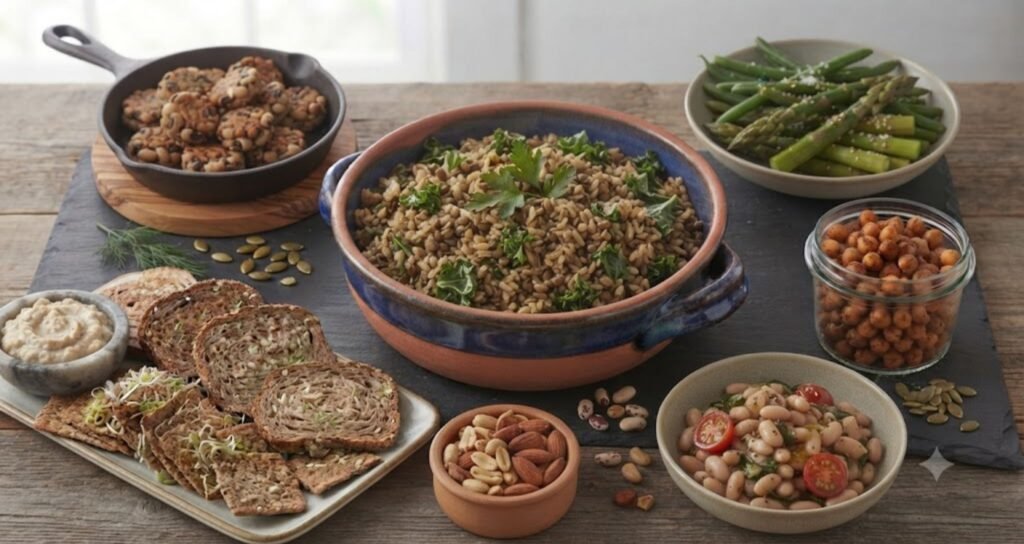
On the flip side, certain dietary habits can quietly block your body from absorbing the zinc you eat.
Excess phytates. Found in raw grains, legumes, and seeds, phytates bind to zinc and reduce its absorption. Soaking, sprouting, or fermenting these foods before eating helps counteract this effect.
Too much calcium from supplements. While calcium from food isn’t usually a problem, high-dose calcium supplements taken alongside zinc-rich meals can interfere with absorption.
Alcohol. Regular or excessive alcohol consumption increases zinc excretion through urine, which can contribute to deficiency over time.
Highly processed foods. Diets heavy in processed foods tend to be low in zinc to begin with and often lack the nutrient cofactors needed to absorb what little zinc is present.
Tips for Adding More Foods High in Zinc to Your Diet
Making small, consistent changes is often more sustainable than a complete diet overhaul. Here are a few practical ways to boost your intake:
- Eat a balanced diet. Include a mix of protein, whole grains, fruits, and vegetables so your body gets zinc alongside the nutrients that help absorb it.
- Combine plant and animal proteins. Pairing beans with a small portion of meat or fish maximizes both flavor and nutrient absorption.
- Soak or sprout legumes. This simple step reduces phytate content and makes plant-based zinc more available to your body.
- Snack on nuts and seeds. Keep pumpkin seeds, cashews, or almonds on hand for an easy, zinc-boosting snack between meals.
- Include seafood weekly. Even one or two servings of shellfish or fish per week can meaningfully improve your overall zinc intake.
Building these habits gradually leads to a genuinely healthy zinc diet without feeling restrictive or overwhelming.
FAQS
What food has the most zinc?
Oysters contain the most zinc of any natural food, often providing several times the daily recommended intake in a single serving.
Which fruits are high in zinc?
Fruits are generally low in zinc, though avocados, blackberries, and pomegranates contain small but notable amounts compared to other fruits.
Can I get enough zinc from food?
Yes, most people can meet their zinc needs by eating a balanced and varied diet. For example, seafood, meat, dairy products, legumes, nuts, and seeds are excellent sources of zinc. Additionally, including these foods regularly helps support immune function, wound healing, and overall health.
What are the symptoms of zinc deficiency?
Common signs include frequent illness, slow wound healing, hair loss, appetite changes, and skin issues like acne or dryness.
Is zinc good for immunity?
Absolutely. Zinc is essential for the development and function of immune cells, making it one of the most important minerals for fighting off infections.
Are eggs high in zinc?
Eggs contain a moderate amount of zinc, roughly 1.3 mg per large egg, making them a convenient everyday.
Conclusion
Zinc may be a trace mineral, but its impact on your health is anything but small. From strengthening your immune system to supporting healthy skin, hair, vision, and reproductive health, foods high in zinc deserve a regular place on your plate. The good news is that whether you enjoy seafood and meat or prefer a plant-based lifestyle, there are plenty of natural sources of zinc to choose from.
Try rotating a few zinc rich foods into your weekly meals a handful of pumpkin seeds here, a serving of lentils there, or oysters on a special occasion. Over time, these small, consistent choices add up to a genuinely balanced diet and a stronger, more resilient body. Your immune system, skin, and overall wellbeing will thank you for it.