
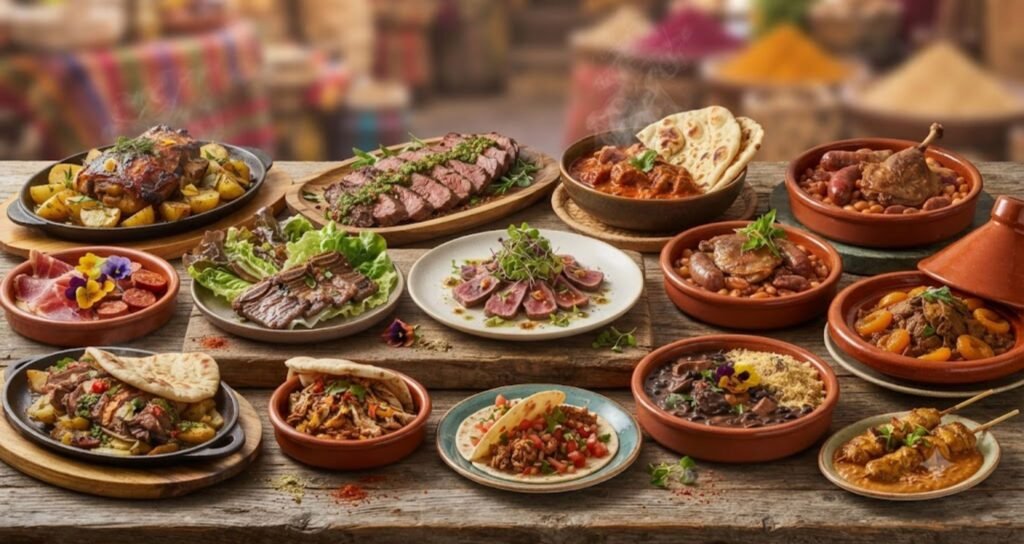
Food tells the story of a culture, and nowhere is this clearer than in traditional meat dishes around the world. From slow-roasted lamb in the Middle East to smoky barbecue in the Americas, every region has developed its own signature way of preparing meat. As a result, these dishes offer a delicious window into history, tradition, and local ingredients.
In this article, you’ll explore some of the most iconic traditional meat dishes around the world, learn what makes them unique, and discover practical tips for recreating them in your own kitchen. Whether you’re a curious home cook or a dedicated food lover, this guide will take your appreciation of global cuisine to the next level.
What Are Traditional Meat Dishes Around the World?
Traditional meat dishes around the world are recipes passed down through generations, often tied closely to a region’s climate, available livestock, and cultural customs. Unlike modern fusion recipes, these dishes rely on time-tested cooking methods that have remained largely unchanged for centuries.
Furthermore, many of these dishes carry deep cultural significance, appearing at festivals, family gatherings, and religious celebrations. For instance, roasting, smoking, stewing, and grilling all developed as practical ways to preserve and flavor meat long before refrigeration existed. Therefore, understanding these dishes means understanding the history behind them.
Popular Traditional Meat Dishes by Region
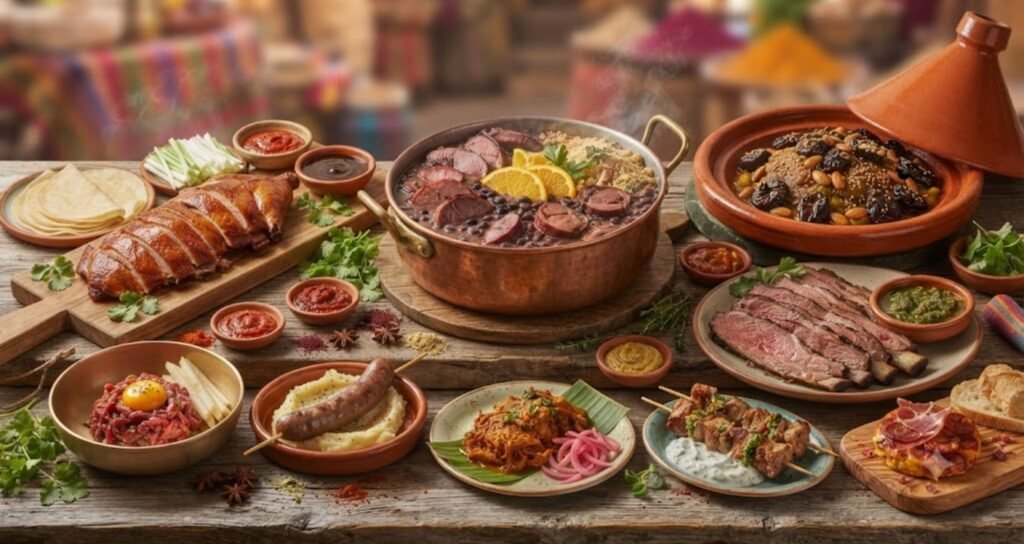
Every continent has its own take on preparing meat, and each version reflects local tastes and available resources. Below is a look at some standout traditional meat dishes around the world.
Middle East – Shawarma: Thin slices of marinated lamb or chicken are stacked and slow-roasted on a vertical spit. As a result, the outer layers become crispy while the inside stays juicy and tender.
Argentina – Asado: This beloved barbecue tradition involves grilling various cuts of beef over an open flame for hours. Consequently, Argentinian asado has become a symbol of family gatherings and national pride.
South Korea – Bulgogi: Thin strips of marinated beef are grilled quickly over high heat, creating a smoky, slightly sweet flavor. In addition, bulgogi is often wrapped in lettuce leaves for a fresh, balanced bite.
Morocco – Lamb Tagine: Lamb is slow-cooked with dried fruits, spices, and vegetables in a distinctive cone-shaped clay pot. Because of this gentle cooking process, the meat becomes incredibly tender and aromatic.
United States – Southern Barbecue: Pork or beef is smoked low and slow for several hours, often over hickory or oak wood. Meanwhile, a tangy or sweet barbecue sauce adds the finishing touch.
Germany – Schweinshaxe: This roasted pork knuckle features crispy skin on the outside and juicy, fall-off-the-bone meat inside. Traditionally, it’s served with sauerkraut and a cold beer.
India – Rogan Josh: Tender chunks of lamb are simmered in a rich, spiced curry sauce until deeply flavorful. Since it originated in Kashmir, the dish reflects centuries of Persian culinary influence.
Why Traditional Meat Dishes Around the World Remain Popular Today
Despite the rise of modern fusion cuisine, traditional meat dishes around the world continue to thrive globally. One major reason is nostalgia; these recipes often connect people to family traditions and childhood memories. As a result, they remain a comforting choice even in fast-paced modern life.
Additionally, authentic meat dishes offer bold, well-developed flavors that come from slow cooking and carefully balanced spices. Unlike quick modern recipes, traditional cooking methods allow ingredients to fully develop their taste over time. Therefore, food lovers often seek out these dishes specifically for their depth of flavor.
Global travel and social media have also played a role in keeping ethnic meat dishes relevant. Nowadays, people frequently share photos and videos of authentic meals from around the world, sparking curiosity in new audiences. Consequently, restaurants specializing in world cuisine continue to grow in popularity across major cities.
Health and Nutritional Aspects of Traditional Meat Dishes
Traditional meat dishes around the world are often more balanced than people assume, especially when prepared using classic methods. Slow-cooking techniques, for example, allow tougher cuts of meat to become tender without needing excessive added fats. As a result, many traditional recipes are naturally rich in protein while remaining relatively wholesome.
Moreover, these dishes are frequently paired with vegetables, legumes, or whole grains, creating a more complete meal. For instance, tagine includes dried fruits and vegetables, while bulgogi is typically served with rice and fresh greens. This balance reflects traditional cooking wisdom that developed long before modern nutrition science existed.
However, some dishes, such as smoked barbecue or fried preparations, can be higher in sodium or saturated fat. Therefore, moderation and mindful portion sizes remain important, just as with any rich, flavorful meal.
Tips for Cooking Authentic Traditional Meat Dishes at Home
Recreating traditional meat dishes around the world at home is easier than most people expect, as long as you follow a few key principles.
Use the right cut of meat. Since traditional recipes were built around specific cuts, choosing the correct one ensures the best texture and flavor.
Don’t rush the cooking process. Many authentic meat dishes rely on slow cooking, so patience is essential for tender, flavorful results.
Invest in proper spices. Because flavor depth comes largely from spice blends, sourcing authentic spices makes a noticeable difference.
Marinate whenever possible. Marinating meat overnight allows flavors to penetrate deeply, which is a common technique across most traditional cooking methods.
Pair dishes with traditional sides. Serving your dish alongside its traditional accompaniment, such as rice, flatbread, or pickled vegetables, completes the authentic experience.
Comparison Table: Traditional Meat Dishes Around the World
| Dish Name | Country of Origin | Main Meat Used | Cooking Method |
|---|---|---|---|
| Shawarma | Middle East | Lamb or Chicken | Vertical spit roasting |
| Asado | Argentina | Beef | Open-flame grilling |
| Bulgogi | South Korea | Beef | Quick high-heat grilling |
| Lamb Tagine | Morocco | Lamb | Slow clay-pot cooking |
| Southern Barbecue | United States | Pork or Beef | Low and slow smoking |
| Schweinshaxe | Germany | Pork | Roasting |
| Rogan Josh | India | Lamb | Slow simmering |
FAQS
What are some famous traditional meat dishes around the world? Popular examples include shawarma, asado, bulgogi, lamb tagine, and Southern barbecue.
Which country has the best traditional meat dishes? This depends on personal taste, but Argentina, Morocco, and South Korea are widely praised for their meat traditions.
Are traditional meat dishes healthy? Yes, when prepared with balanced portions and traditional slow-cooking methods, most are nutritious and protein-rich.
What meat is most commonly used in traditional dishes worldwide? Beef, lamb, and pork are the most commonly used meats across global culinary traditions.
Can traditional meat dishes be made at home easily? Yes, with the right ingredients, spices, and patience, most traditional meat dishes can be recreated successfully at home.
Conclusion
Traditional meat dishes around the world offer far more than just a meal; they offer a taste of history, culture, and craftsmanship passed down through generations. From the smoky richness of American barbecue to the fragrant spices of Moroccan tagine, each dish tells its own unique story. Ultimately, exploring global cuisine allows you to experience the world without ever leaving your kitchen.
Ready to expand your culinary adventures even further? Explore more authentic world cuisine guides on FlavourEin and continue discovering the rich flavors of traditional cooking from every corner of the globe.