
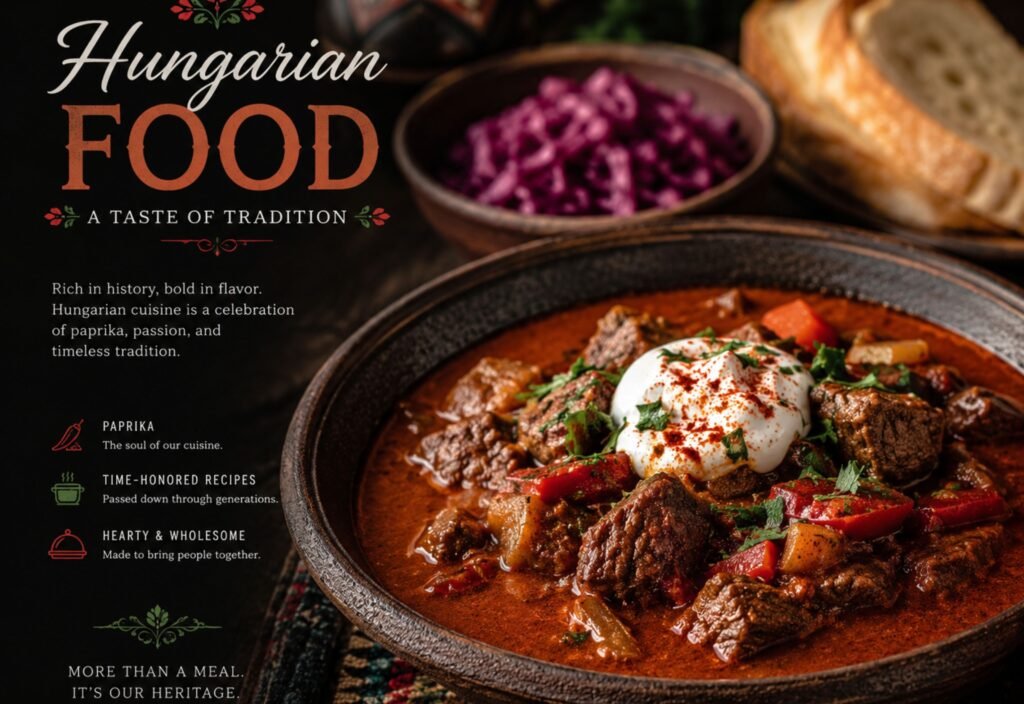
Hungarian Food offers rich flavors, comforting meals, and deep cultural traditions that attract food lovers from around the world. From hearty stews to sweet pastries, every dish reflects Hungary’s history, local ingredients, and love for bold seasoning. Moreover, Hungarian cuisine combines simple cooking methods with powerful flavors that create unforgettable meals. Many travelers visit Hungary not only for its beautiful cities but also for its famous culinary traditions. Whether you enjoy spicy dishes, warm soups, or delicious desserts, Hungarian Food brings something exciting to every table.
The Rich History Behind Hungarian Cuisine
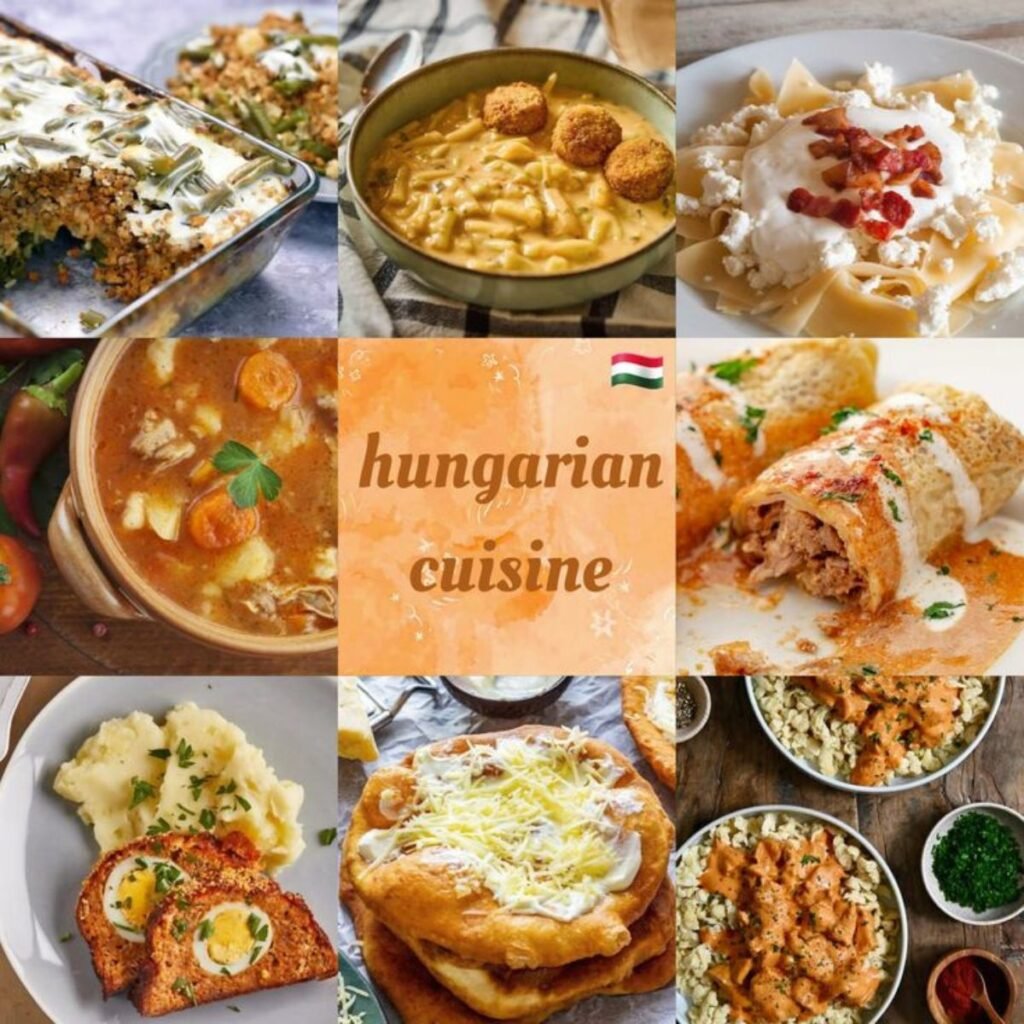
Hungary has a long culinary history shaped by different cultures and traditions. Over the centuries, Turkish, Austrian, and Slavic influences added new flavors and cooking techniques to local recipes. However, Hungarian cooks maintained their unique identity through traditional spices and homemade cooking methods.
Families across Hungary still pass recipes from one generation to another. As a result, many classic dishes continue to hold an important place in daily life and special celebrations. Traditional meals often bring people together during festivals, holidays, and family gatherings.
Why Hungarian Food Stands Out
Hungarian cuisine stands out because of its bold taste, comforting texture, and generous use of spices. In particular, paprika plays a major role in many recipes. This famous red spice gives dishes their rich color and smoky flavor.
In addition, Hungarian cooks often use fresh vegetables, meats, dairy products, and bread to create balanced meals. Most dishes feel hearty and satisfying, especially during cold weather. At the same time, desserts and pastries add sweetness to the country’s culinary culture.
Key Ingredients in Hungarian Cooking
Several ingredients appear regularly in Hungarian kitchens:
- Paprika
- Potatoes
- Onions
- Sour cream
- Pork
- Beef
- Sausages
- Cabbage
- Fresh bread
These ingredients help create the comforting flavors that define Hungarian Food.
Famous Hungarian Dishes You Must Try
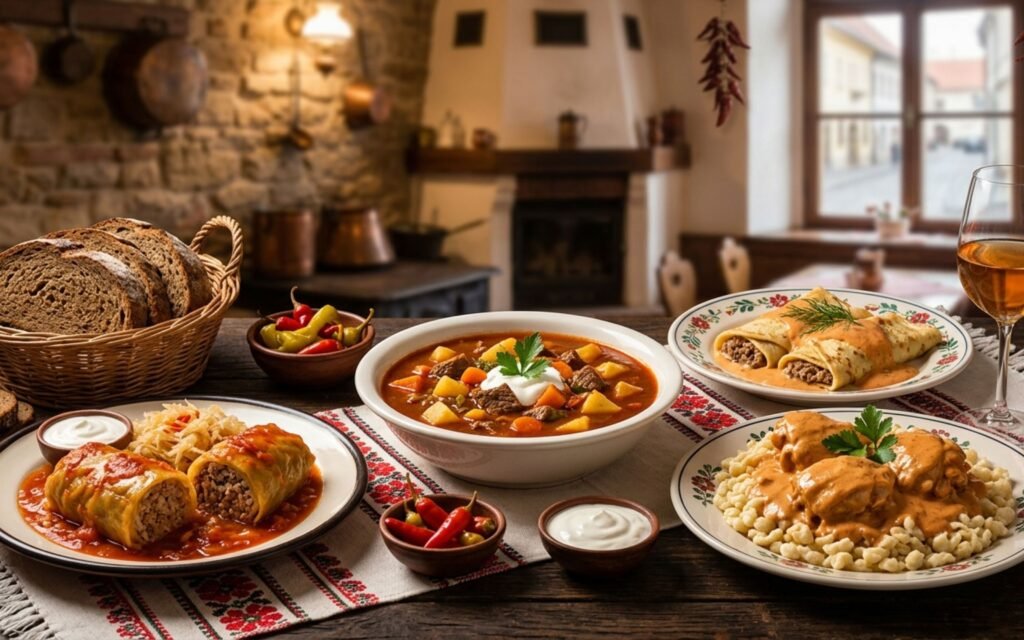
Hungarian cuisine includes many iconic dishes that locals proudly serve in homes and restaurants. Each recipe highlights traditional flavors and cooking techniques.
Goulash
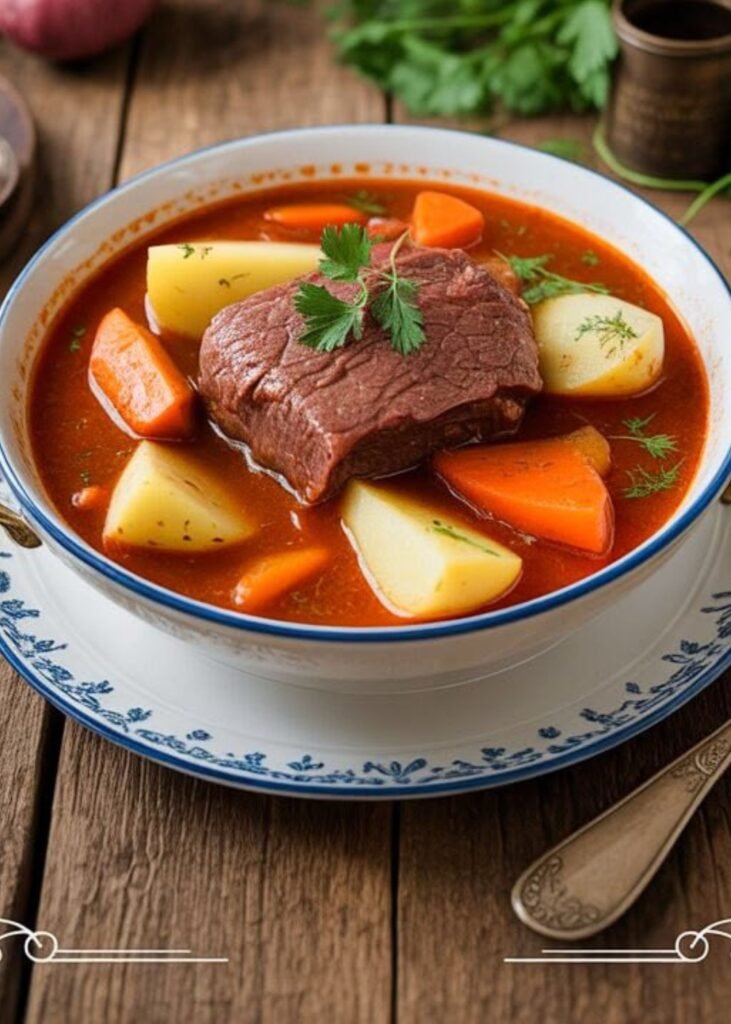
Goulash remains one of the most famous Hungarian dishes worldwide. This hearty soup combines beef, onions, potatoes, carrots, and paprika into a rich and flavorful meal. Unlike thick stews in other countries, authentic Hungarian goulash usually has a soup-like texture.
Families often enjoy goulash during lunch or dinner, especially in colder months. Furthermore, cooks usually prepare it slowly to develop deeper flavors.
Image Alt Attribute:
“Traditional Hungarian Food goulash served with fresh bread”
Chicken Paprikash
Chicken Paprikash features tender chicken cooked in a creamy paprika sauce. The dish usually comes with dumplings or noodles that absorb the flavorful sauce perfectly.
The balance between creamy texture and smoky seasoning makes this recipe a favorite among locals and tourists alike.
Image Alt Attribute:
“Creamy Chicken Paprikash Hungarian Food dish”
Lángos
Lángos represents one of Hungary’s most loved street foods. Vendors fry flat dough until golden and crispy, then top it with sour cream, cheese, or garlic butter.
People often enjoy this snack at food markets, festivals, and street stalls. Because of its crispy texture and rich toppings, Lángos offers an unforgettable street food experience.
Image Alt Attribute:
“Crispy Lángos Hungarian Food street snack”
Stuffed Cabbage Rolls
Stuffed cabbage rolls combine cabbage leaves with minced meat, rice, and seasoning. Cooks slowly simmer the rolls in a tomato-based sauce for rich flavor.
Families often prepare this comforting dish during holidays and celebrations. Therefore, stuffed cabbage rolls hold both cultural and emotional value in Hungarian homes.
Fisherman’s Soup
Fisherman’s Soup, also known as Halászlé, features spicy fish broth flavored with paprika and river fish. This dish remains especially popular near the Danube River.
The soup delivers strong flavors and reflects Hungary’s fishing traditions perfectly.
Traditional Hungarian Desserts
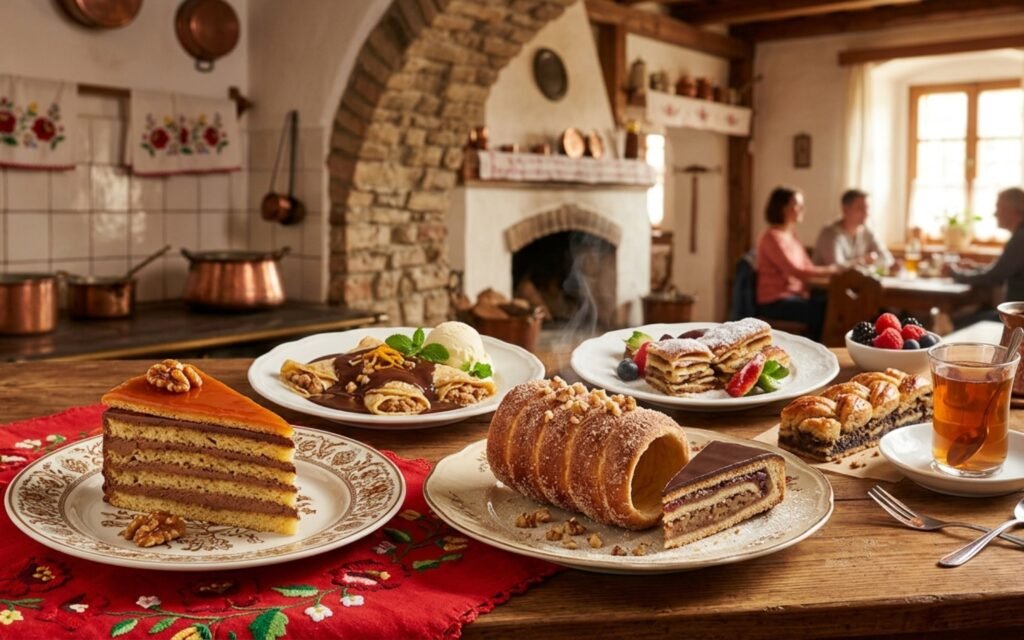
Hungarian desserts offer rich sweetness, beautiful textures, and unique flavors. Many recipes combine nuts, chocolate, cream, and fruit.
Chimney Cake
Chimney Cake, or Kürtőskalács, ranks among the country’s most popular sweet treats. Bakers wrap dough around a cylinder, roast it over heat, and coat it with sugar.
The outside becomes crispy while the inside stays soft and fluffy. In many cities, the sweet aroma fills the streets during festivals and winter markets.
Image Alt Attribute:
“Sweet Chimney Cake Hungarian Food dessert”
Dobos Torte
Dobos Torte includes several layers of sponge cake with chocolate buttercream and caramel topping. This elegant dessert appears in bakeries and celebrations across Hungary.
Its rich flavor and beautiful appearance make it one of the country’s most famous cakes.
Strudel
Hungarian strudel contains thin pastry layers filled with apples, cherries, cheese, or poppy seeds. Bakers carefully roll the dough to create delicate layers that melt in the mouth.
People often serve strudel with coffee or tea during afternoon gatherings.
The Importance of Paprika in Hungarian Food
Paprika plays a central role in Hungarian cuisine and culture. Hungarian farmers grow different varieties of peppers, then dry and grind them into spice powder.
Some paprika tastes sweet, while other varieties deliver intense heat. Because of this versatility, cooks use paprika in soups, stews, sauces, and meat dishes.
In fact, many people associate Hungarian Food directly with paprika because of its signature flavor and bright red color.
Hungarian Street Food Culture
Hungary offers a lively street food culture filled with delicious snacks and quick meals. Street vendors often serve fresh, affordable food that reflects local traditions.
Besides Lángos, visitors can enjoy sausages, roasted meats, pretzels, and sweet pastries in busy markets and public squares. Food festivals also attract large crowds throughout the year.
Street food allows travelers to experience authentic flavors while exploring Hungarian cities and towns.
Dining Traditions in Hungary
Meals hold strong social importance in Hungarian culture. Families often gather around the table to share long meals and meaningful conversations.
Lunch usually serves as the largest meal of the day, while dinner tends to feel lighter. During celebrations, hosts prepare multiple dishes to welcome guests warmly.
In addition, Hungarian hospitality encourages generous portions and homemade cooking. Guests rarely leave the table hungry.
Regional Differences in Hungarian Cuisine
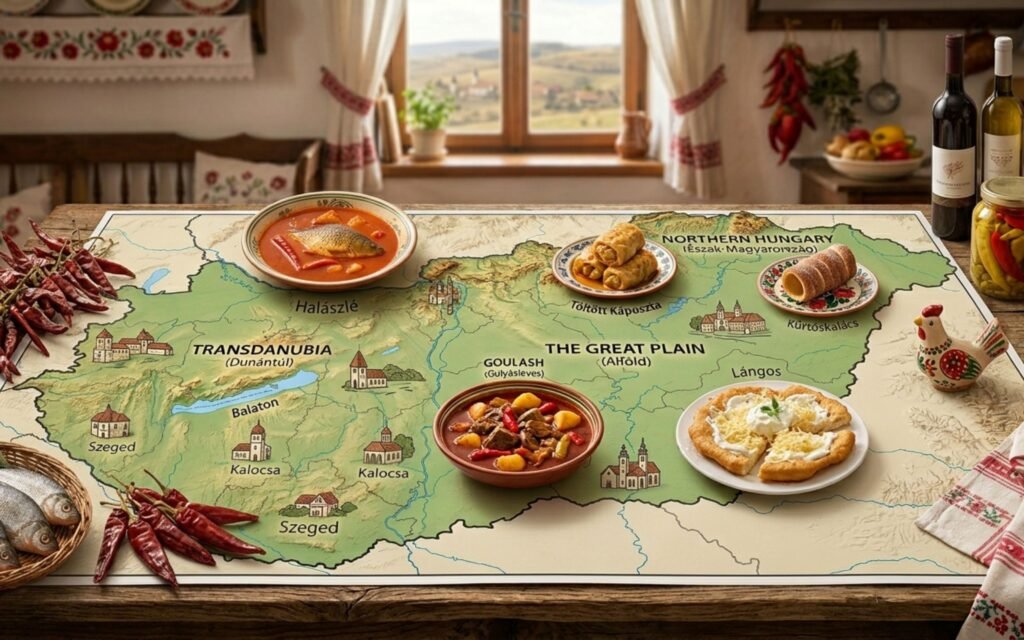
Different regions of Hungary offer unique flavors and specialties. For example, areas near rivers focus more on fish dishes, while rural villages often prepare hearty meat-based meals.
Meanwhile, larger cities combine traditional recipes with modern culinary creativity. This regional diversity keeps Hungarian cuisine exciting and varied.
Eastern Hungary
Eastern Hungary features spicy dishes and rich stews. Paprika-heavy recipes dominate the local food scene.
Western Hungary
Western regions show stronger Austrian influence through pastries, cakes, and lighter dishes.
Southern Hungary
Southern Hungary often includes Balkan-inspired recipes with grilled meats and vegetables.
Modern Influence on Hungarian Food
Modern chefs continue to reinvent traditional Hungarian recipes while preserving authentic flavors. Many restaurants now combine classic cooking with creative presentation and healthier ingredients.
At the same time, younger generations continue to appreciate traditional meals passed down through family traditions. Therefore, Hungarian cuisine successfully balances history and innovation.
Food tourism has also increased international interest in Hungarian Food. Travelers now visit Hungary specifically to explore local restaurants, markets, and cooking experiences.
Tips for Trying Authentic Hungarian Cuisine
Travelers who want authentic experiences should explore local markets, family-owned restaurants, and food festivals. These places often serve recipes prepared with traditional methods and fresh ingredients.
In addition, trying seasonal dishes helps visitors understand the country’s culinary culture more deeply. Asking locals for recommendations can also lead to unforgettable dining experiences.
Best Foods for First-Time Visitors
If you visit Hungary for the first time, start with:
- Goulash
- Chicken Paprikash
- Lángos
- Chimney Cake
- Fisherman’s Soup
These dishes provide a great introduction to Hungarian flavors and traditions.
Health and Nutrition in Hungarian Cooking
Although many traditional dishes feel rich and hearty, Hungarian cuisine also includes nutritious ingredients like vegetables, fish, and homemade soups.
Modern restaurants increasingly offer lighter versions of classic meals. Consequently, visitors can enjoy traditional flavors while maintaining balanced eating habits.
Portion control and fresh ingredients also help create healthier dining experiences.
Conclusion
Hungarian Food combines history, flavor, comfort, and culture into one unforgettable culinary experience. From rich stews and spicy soups to sweet pastries and street snacks, every dish tells a story about Hungary’s traditions and identity. Moreover, the country’s love for hospitality and homemade cooking makes every meal feel warm and welcoming. Whether you explore local markets, dine in traditional restaurants, or cook Hungarian recipes at home, you will discover flavors that leave a lasting impression. Hungarian cuisine continues to win hearts worldwide because it blends tradition, creativity, and authentic taste beautifully.
FAQs
What is the most famous Hungarian dish?
Goulash is the most famous traditional Hungarian dish.
Why is paprika important in Hungarian cuisine?
Paprika gives Hungarian dishes their signature flavor and color.
What is a popular Hungarian street food?
Lángos is one of Hungary’s most loved street foods.
Are Hungarian desserts sweet and rich?
Yes, Hungarian desserts often feature chocolate, cream, and pastry layers.
Is Hungarian Food spicy?
Many Hungarian dishes include mild to strong paprika spice levels.