
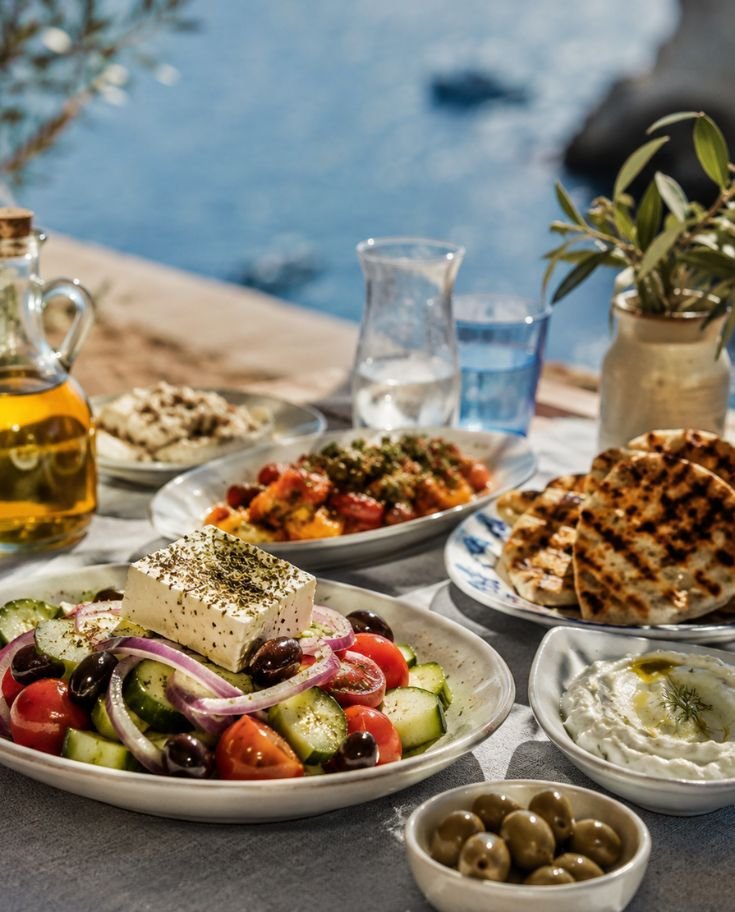
Greece is a country with a rich history, stunning landscapes, and an even more impressive food culture. Food Greece lovers explore every year goes far beyond just gyros and hummus. Greek cuisine tells a story of tradition, family, and love for fresh ingredients. Every dish carries centuries of culture on the plate.
Furthermore, Greek food draws heavily from the Mediterranean lifestyle. Olive oil, fresh vegetables, grilled meats, and aromatic herbs form the backbone of this cuisine. Additionally, the location of Greece surrounded by sea means seafood plays a huge role in everyday meals. As a result, you get a cuisine that is both healthy and deeply satisfying.
In addition, Greek cooking is simple yet bold. Greeks believe in letting fresh ingredients speak for themselves. Therefore, if you want to understand the soul of Greece, start with its food.
1. The Heart of Greek Cuisine
What Makes Greek Food Unique
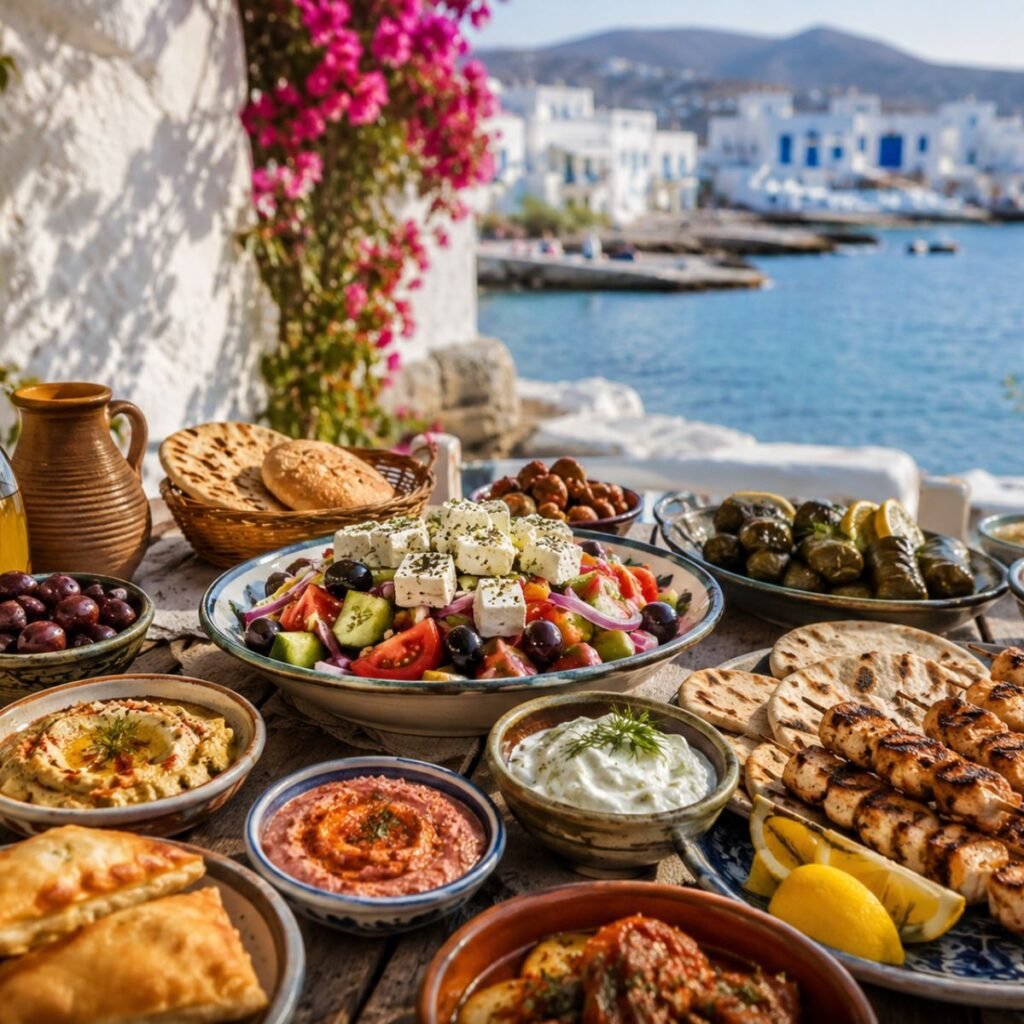
Greek cuisine stands apart because it relies on quality over complexity. Cooks use olive oil instead of butter in almost every recipe. They prefer fresh herbs like oregano, thyme, and rosemary over heavy spices. However, the result is always full of flavor.
Additionally, Greeks eat seasonally. They cook what the land and sea offer each month. Therefore, the food always tastes fresh and natural. This approach keeps traditional Greek food connected to the earth.
The Role of Olive Oil
Greece produces some of the finest olive oil in the world. Farmers use it in salads, meat dishes, dips, and even desserts. Furthermore, olive oil gives Greek dishes their signature smooth and rich taste. It also adds enormous health benefits to every meal.
2. Must-Try Traditional Greek Dishes
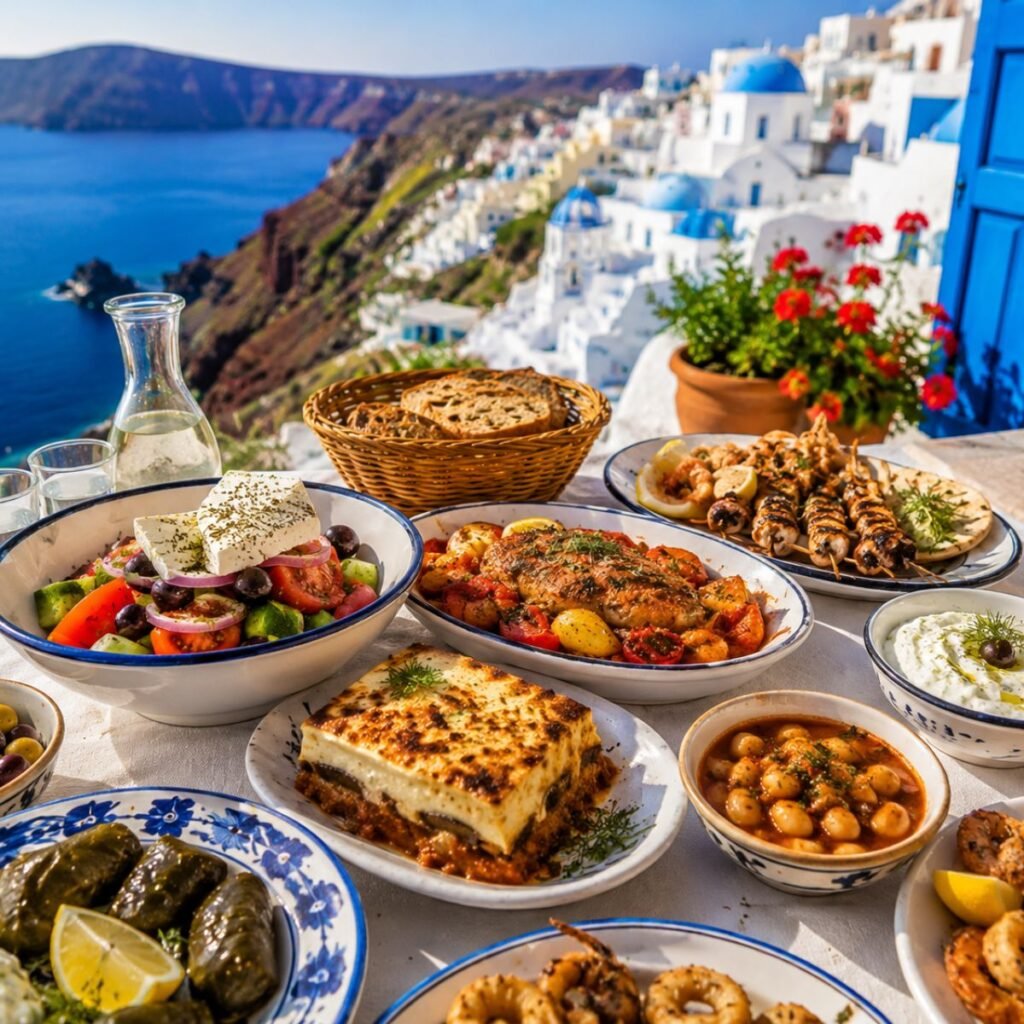
Food Greece travelers must experience includes some legendary dishes. These recipes have survived for generations and remain popular across the country today.
Moussaka
Moussaka is one of Greece’s most iconic dishes. Cooks layer eggplant, spiced ground meat, and creamy béchamel sauce before baking it to golden perfection. Furthermore, every Greek family has its own version of this recipe. However, the classic version always wins hearts worldwide.
Souvlaki and Gyros
Souvlaki features small pieces of grilled meat on a skewer. Greeks serve it with pita bread, tomatoes, onions, and tzatziki sauce. Additionally, gyros uses meat cooked on a vertical rotisserie and wrapped in warm pita. Both dishes represent fast, delicious, and affordable Greek street food.
Spanakopita
Spanakopita is a savory pastry filled with spinach and feta cheese. Cooks wrap the filling in crispy phyllo dough and bake it until golden. In addition, Greeks enjoy this dish as a snack, appetizer, or light meal. Therefore, you will find it in almost every bakery across the country.
Tzatziki
Tzatziki is a cool yogurt dip mixed with cucumber, garlic, and fresh dill. Greeks serve it alongside grilled meats, pita bread, or vegetables. Furthermore, it balances the richness of heavier dishes perfectly. As a result, it appears on nearly every Greek table.
3. Greek Seafood and Coastal Cuisine Greece Food
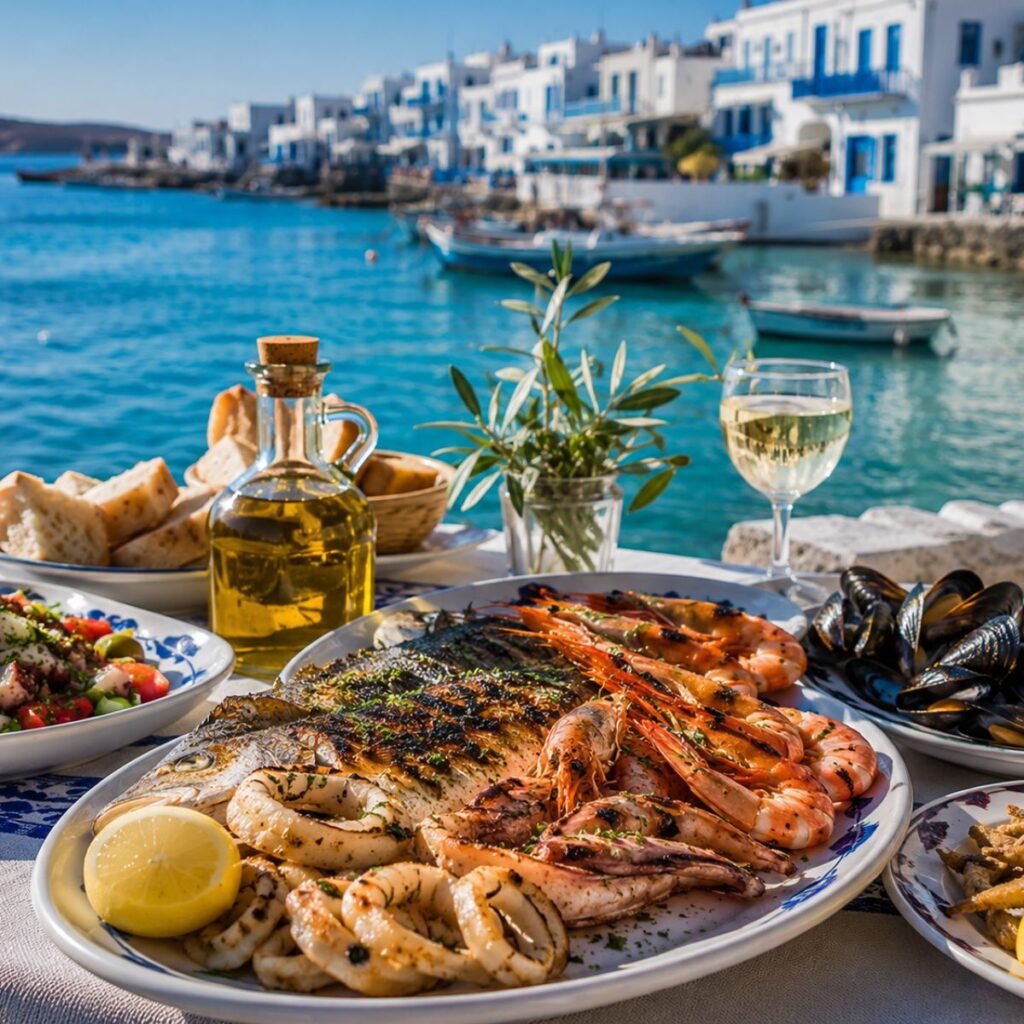
Greece has thousands of kilometers of coastline. Therefore, seafood holds a central place in Greek food culture. Fishermen bring in fresh catch daily, and restaurants cook it simply to preserve the natural flavor.
Popular Seafood Dishes
Greeks grill octopus over charcoal and serve it with lemon and olive oil. They also fry small fish like sardines and anchovies as a popular meze. Furthermore, grilled sea bass and sea bream appear on menus across coastal villages. In addition, shrimp saganaki cooked in a spiced tomato and feta sauce is a crowd favorite.
The Meze Culture
Greeks love to share food. They call small sharing dishes “meze.” Additionally, a typical meze spread includes dips, fried cheese, olives, and grilled vegetables. Therefore, dining in Greece becomes a social and joyful experience every time.
4. Greek Cheese and Dairy Traditions Greece Food
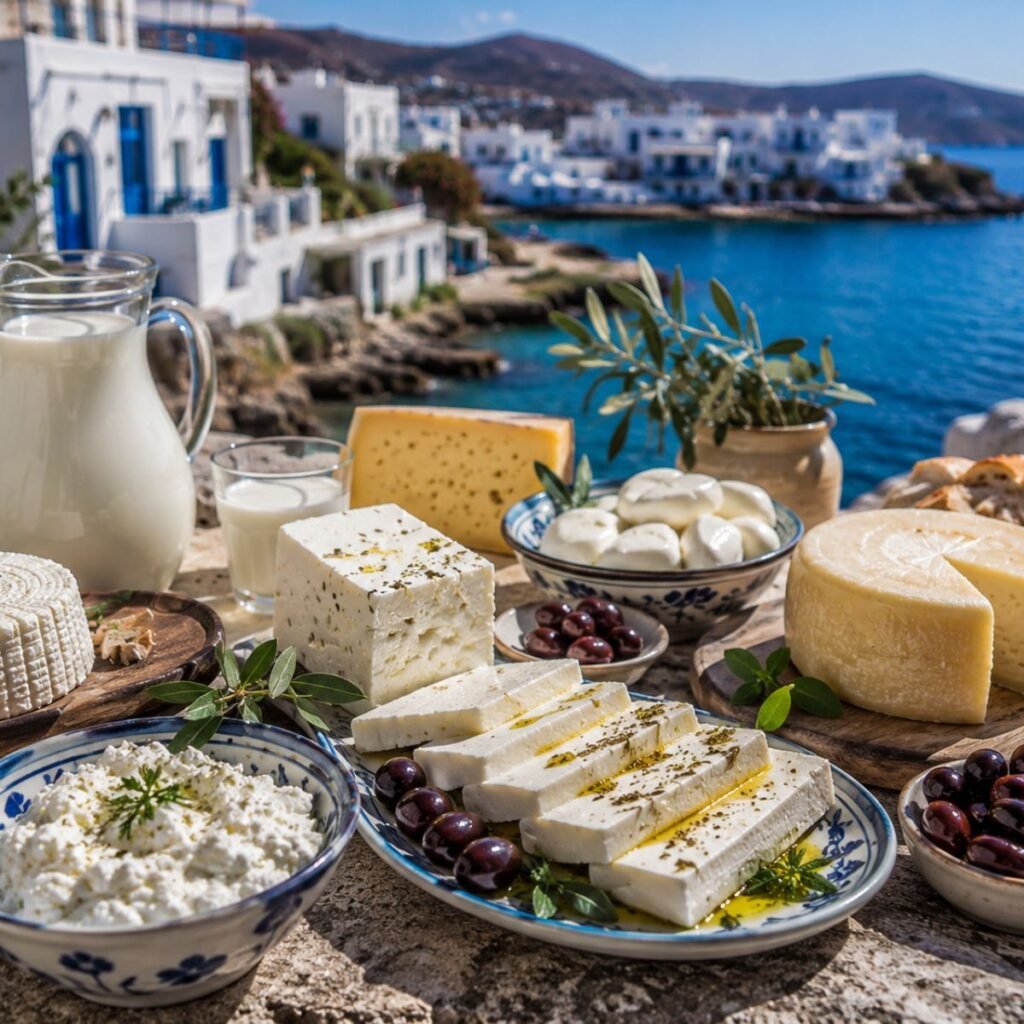
Feta Cheese
Feta is the most famous Greek cheese in the world. Producers make it from sheep’s milk or a blend of sheep and goat’s milk. Furthermore, the European Union grants feta a protected designation of origin. Therefore, only cheese produced in specific Greek regions carries the name “feta.”
Greeks crumble feta over salads, bake it in pastries, and eat it fresh with olive oil. In addition, feta adds a salty and tangy flavor that elevates any dish instantly.
Other Greek Cheeses
Greece also produces kasseri, graviera, and halloumi-style cheeses. However, these remain lesser known outside the country. Additionally, many Greek islands have their own unique local cheese traditions. As a result, cheese lovers find Greece to be a paradise of dairy exploration.
5. Greek Desserts and Sweet Treats

Baklava
Baklava is a rich pastry made of layered phyllo dough, chopped nuts, and honey syrup. Bakers cut it into small diamond shapes and soak it in sweet syrup after baking. Furthermore, baklava is a staple at celebrations, holidays, and family gatherings. Therefore, no trip to Greece ends without tasting this legendary dessert.
Loukoumades
Loukoumades are small fried dough balls drizzled with honey and sprinkled with cinnamon. Greeks consider them one of the oldest desserts in history. Additionally, street vendors sell them fresh and hot across every major city. As a result, they make the perfect sweet snack at any time of day.
Greek Yogurt
Greek yogurt is thick, creamy, and packed with protein. Greeks eat it plain, with honey, or topped with walnuts. Furthermore, it forms the base of many savory sauces and dips. In addition, the world now recognizes Greek yogurt as a superfood because of its health benefits.
6. Food Greece Offers Throughout the Regions
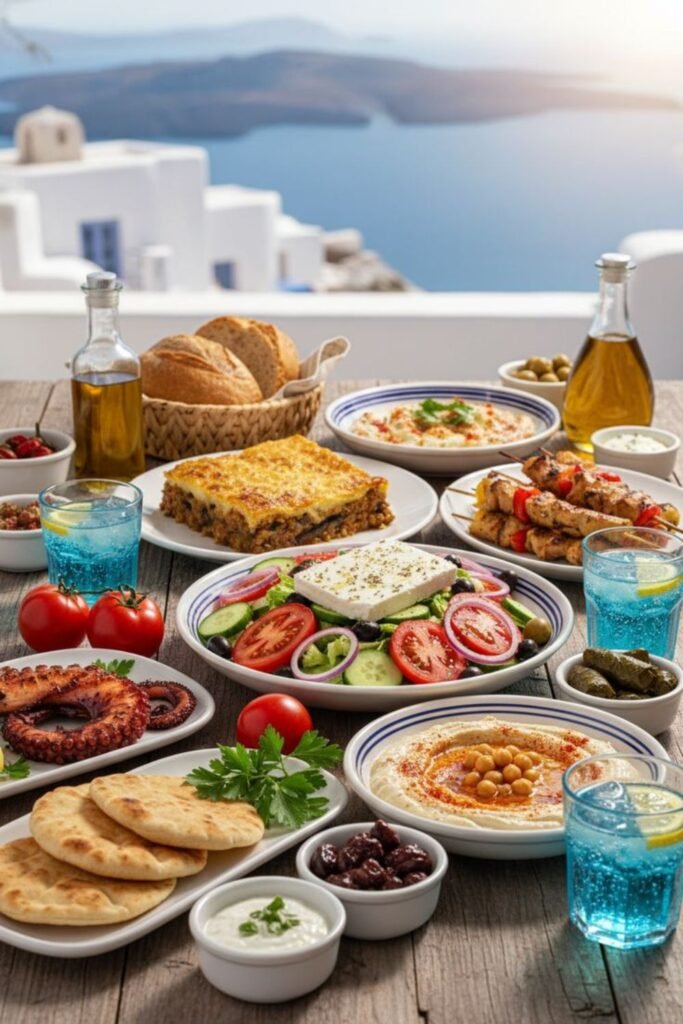
Different regions of Greece offer unique culinary experiences. Therefore, the food you eat in Athens differs from what you find on the islands.
Athens Street Food Scene
Athens buzzes with street food energy. Vendors sell souvlaki, gyros, and spanakopita on nearly every corner. Furthermore, the central market, Varvakios Agora, showcases the freshest local produce and seafood. In addition, modern Greek chefs now blend traditional recipes with contemporary cooking styles.
Island Cuisine
Greek islands each carry distinct food identities. Crete, for example, follows one of the purest Mediterranean diets in the world. Additionally, Santorini is famous for its cherry tomatoes, capers, and fresh fish. As a result, island hopping in Greece becomes a delicious culinary adventure.
FAQs
Q1. What is the most popular food in Greece?
Moussaka and souvlaki are the most popular dishes that both locals and tourists enjoy across Greece.
Q2. Is food in Greece healthy?
Yes, Greek food follows the Mediterranean diet, which doctors and nutritionists widely consider one of the healthiest in the world.
Q3. What do Greeks eat for breakfast?
Greeks typically eat a light breakfast of bread, olive oil, cheese, olives, and sometimes yogurt with honey.
Q4. Is Greek food spicy?
No, Greek food is flavorful but mild, relying on fresh herbs and olive oil rather than hot spices.
Q5. What is a typical Greek dinner?
A typical Greek dinner includes grilled meat or seafood, a Greek salad, fresh bread, and a yogurt-based dip like tzatziki.
Conclusion
Food Greece offers is truly world-class. From hearty moussaka to light tzatziki, every dish reflects a deep love for fresh ingredients and bold flavors. Furthermore, Greek cuisine promotes health, community, and tradition all at once. Whether you explore street food in Athens or seafood on a quiet island, Greek food always delivers an unforgettable experience. Therefore, add Greece to your travel list and bring your appetite.