

Canadian food tells the story of a country built on diversity, history, and natural abundance. From the Atlantic coast to the Pacific shore, Canada offers a rich and exciting food culture that surprises many visitors. Whether you enjoy hearty comfort meals or fresh, locally sourced ingredients, Canadian food has something special for everyone. Furthermore, the blend of Indigenous traditions, French influence, and British heritage makes this cuisine truly one of a kind. In this guide, we explore the most popular dishes, regional specialties, and the cultural roots behind one of the world’s most underrated food scenes.
History and Origins of Canadian Food

Indigenous Roots and Early Traditions
The story of Canadian food begins with Indigenous peoples who lived across the land for thousands of years. They used natural resources like wild game, fish, berries, and corn to create nutritious and flavorful meals. Moreover, their farming and hunting techniques shaped the foundation of Canadian cuisine. Therefore, Indigenous food traditions remain a deeply important part of Canada’s culinary identity today.
European Influence on Canadian Cuisine
When European settlers arrived, they brought new cooking methods, ingredients, and recipes. The French introduced dairy products, bread-making, and rich stews to the country. In addition, British settlers added roasted meats and baked goods to the Canadian diet. As a result, Canadian food became a beautiful fusion of Indigenous wisdom and European tradition.
Most Popular Canadian Food Dishes

Poutine Canada’s Most Iconic Dish
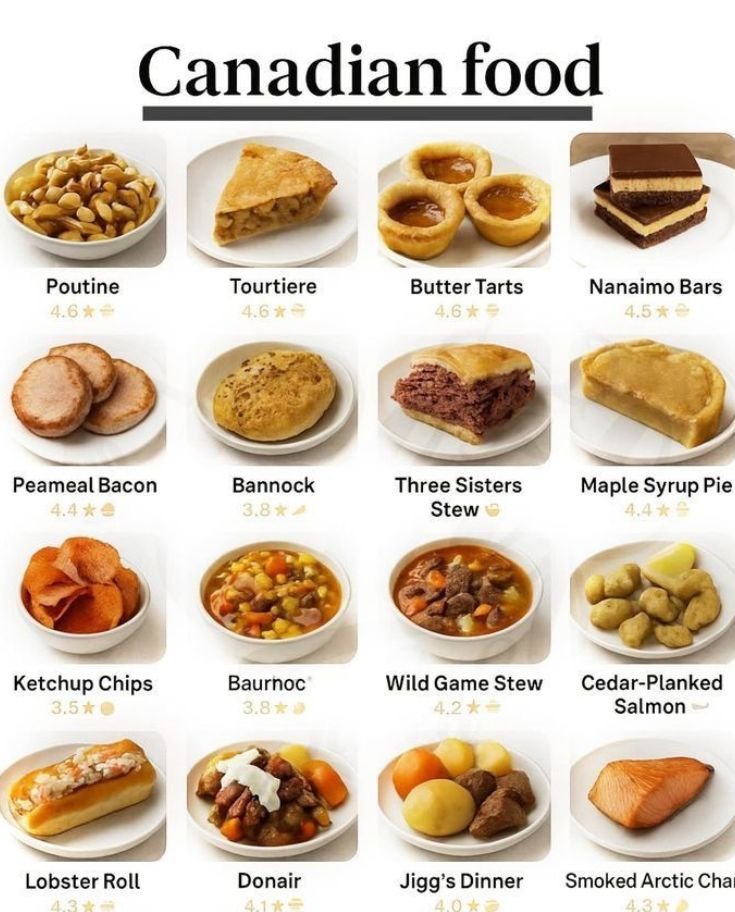
Poutine stands as the most recognised symbol of Canadian food around the world. This dish combines crispy French fries, fresh cheese curds, and rich brown gravy in one satisfying bowl. Furthermore, restaurants across Canada put their own creative twist on this classic recipe. Therefore, you can now find poutine topped with pulled pork, lobster, or even truffle oil in major cities.
Butter Tarts A Sweet Canadian Classic
Butter tarts hold a very special place in the heart of Canadian food culture. These small, flaky pastry shells carry a sweet, gooey filling made from butter, sugar, eggs, and syrup. Moreover, Canadians often debate whether raisins belong in butter tarts a friendly argument that never seems to end. In addition, bakeries across Ontario proudly compete in butter tart festivals every year.
Tourtière French-Canadian Meat Pie
Tourtière is a traditional French-Canadian meat pie that families serve during the holiday season. Cooks fill the flaky pastry crust with spiced ground pork, beef, or game meat. Furthermore, every family in Quebec passes down their own unique tourtière recipe from generation to generation. Therefore, this dish carries deep emotional and cultural meaning within Canadian cuisine.
Nanaimo Bars No-Bake Canadian Delight
Nanaimo bars originate from the city of Nanaimo in British Columbia, and they represent a beloved part of popular food in Canada. These no-bake dessert bars have three distinct layers: a chocolate crumb base, a creamy custard filling, and a smooth chocolate topping. Moreover, home bakers and coffee shops across the country serve Nanaimo bars year-round. As a result, this dessert has become one of the most searched Canadian recipes on the internet.
Regional Canadian Food Specialties
Quebec The Heart of French-Canadian Food
Quebec delivers some of the richest and most flavourful traditional Canadian meals in the country. The province specialises in maple syrup, artisan cheeses, and hearty pea soup. Furthermore, Montreal-style bagels and smoked meat sandwiches attract food lovers from around the world. In addition, sugar shacks in Quebec serve maple taffy and pancakes during the spring harvest season.
Atlantic Canada Fresh Seafood Traditions
Atlantic Canada serves some of the freshest seafood dishes you will find anywhere on earth. Nova Scotia and Prince Edward Island produce world-famous lobster, oysters, and scallops. Moreover, fish and brewis a traditional Newfoundland dish of salt cod and hard bread, reflects the region’s deep fishing heritage. Therefore, seafood lovers consider Atlantic Canada a true paradise for Canadian cuisine.
British Columbia Fresh and Health-Focused Flavours
British Columbia brings a fresh, health-conscious approach to Canadian food that sets it apart from other regions. The province produces abundant salmon, wild mushrooms, and organic vegetables that inspire local chefs daily. Furthermore, Vancouver’s diverse multicultural population adds strong Asian influences to the local food scene. As a result, you can enjoy Japanese ramen, Chinese dim sum, and farm-to-table Canadian dishes all in one city block.
Canadian Food Culture and Influences

Canadian food culture reflects the multicultural nature of the country in the most delicious way. Canada welcomes immigrants from every corner of the globe, and each community adds its own cooking traditions to the national table. Moreover, Indigenous food movements continue to gain momentum as chefs and communities reclaim traditional recipes and ingredients. Therefore, Canadian cuisine constantly evolves and grows richer with every passing decade.
Farmers’ markets, food festivals, and local food movements also play a huge role in shaping Canadian food culture today. Canadians take great pride in supporting local farmers and producers who grow seasonal fruits, vegetables, and grains. Furthermore, the farm-to-table movement encourages chefs to design their menus around what grows locally and sustainably. In addition, Indigenous-owned restaurants now introduce diners to bannock, bison, and wild game in exciting new ways.
Health Aspects of Canadian Food
Nutritious Traditional Ingredients
Many traditional Canadian meals feature wholesome, nutrient-rich ingredients that support a healthy lifestyle. Wild salmon provides excellent omega-3 fatty acids, while wild berries like saskatoons and blueberries deliver powerful antioxidants. Moreover, maple syrup contains trace minerals like zinc and manganese that refined sugar completely lacks. Therefore, incorporating traditional Canadian ingredients into your diet can genuinely improve your overall health.
Canada’s Food Guide and Modern Nutrition
Canada’s official food guide encourages Canadians to eat a variety of vegetables, fruits, whole grains, and proteins in balanced portions. Furthermore, the updated guide emphasises plant-based proteins and reduces its focus on dairy compared to older versions. In addition, the guide actively promotes mindful eating, cooking at home, and sharing Canadian meals with family and friends. As a result, Canadians now approach food with a much stronger focus on both physical and mental wellness.
(FAQs)
Q1: What is the most famous Canadian food?
Poutine, a dish of fries, cheese curds, and gravy, is the most famous Canadian food worldwide.
Q2: What do Canadians eat for breakfast?
Canadians commonly eat pancakes with maple syrup, eggs, toast, and oatmeal for a typical breakfast.
Q3: Is Canadian food different from American food?
Yes, Canadian food has stronger French, Indigenous, and British influences that make it distinct from American cuisine.
Q4: What is a traditional Canadian meal?
A traditional Canadian meal often includes tourtière, pea soup, bannock bread, or fresh Atlantic seafood depending on the region.
Q5: Why is maple syrup so important to Canadian food culture?
Canada produces over 70% of the world’s maple syrup, making it a national symbol and key ingredient in Canadian cuisine.
Conclusion
Canadian food is far more than poutine and maple syrup it is a living, breathing expression of a diverse and welcoming nation. From the seafood traditions of the Atlantic coast to the farm-fresh flavours of British Columbia, every region contributes something unique and delicious. Furthermore, the deep influence of Indigenous cultures, French heritage, and global immigration makes Canadian cuisine endlessly fascinating. Therefore, whether you are a local who wants to rediscover your culinary roots or a visitor eager to explore, Canadian food will never disappoint. In addition, supporting local farmers, attending food festivals, and trying regional specialties helps keep this beautiful food culture alive for future generations. Finally, the best way to truly understand Canada is to sit down and enjoy a meal that tells its incredible story.