
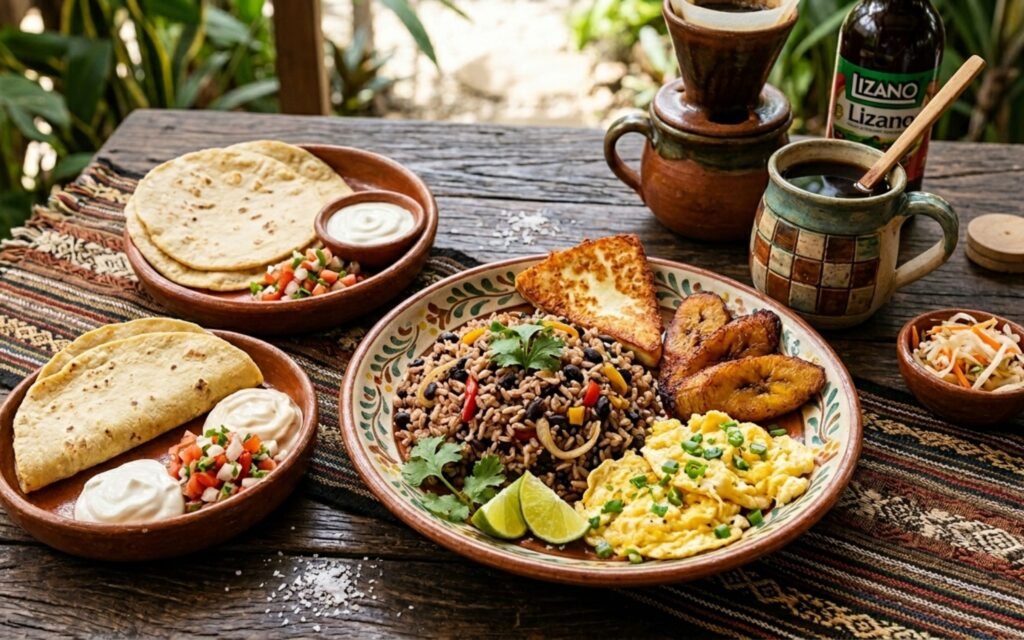
Costa Rican food tells a story that goes far beyond a simple plate of rice and beans. Every dish carries centuries of tradition, culture, and passion. Locals call their culinary philosophy “Pura Vida,” pure life, and that spirit shows up in every meal. Furthermore, the food here does not try to impress with complexity. Instead, it wins hearts with honesty, freshness, and bold, comforting flavors. Whether you travel through San José or explore a small mountain village, Costa Rican food follows you everywhere, warm and welcoming.
In addition, Costa Rica sits at the crossroads of indigenous, Spanish, and Afro-Caribbean influences. As a result, the cuisine reflects a beautiful blend of traditions that evolved over hundreds of years. Today, Costa Rican food attracts food travelers, culinary writers, and home cooks from around the world. Therefore, if you want to understand this country deeply, start by understanding what people eat.
A Brief History Costa Rican Food.
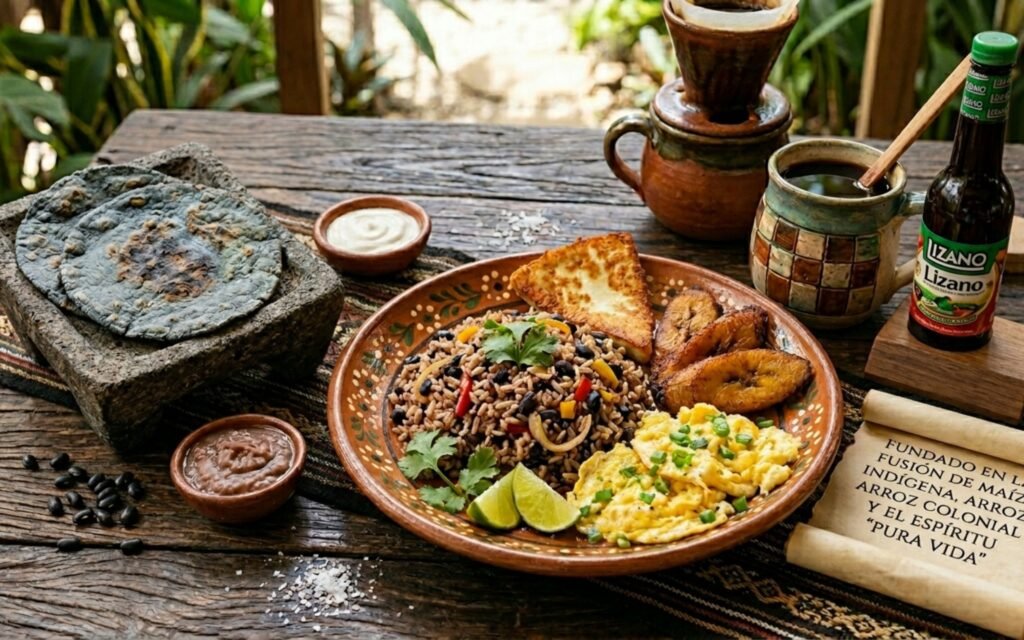
Costa Rica’s food history stretches back to its indigenous roots. Before Spanish colonization in the 16th century, native communities grew corn, cassava, beans, and tropical fruits. Moreover, these ingredients still form the backbone of traditional Costa Rican dishes today. The Spanish settlers introduced cattle, pigs, wheat, and new cooking techniques, which blended naturally with local ingredients.
Furthermore, African slaves brought to the Caribbean coast introduced coconut milk, plantains, and bold spice combinations. Therefore, the Afro-Caribbean influence gave Costa Rican cuisine a distinct regional identity, especially in the Limón province. Over time, these three streams, indigenous, Spanish, and Caribbean, merged into the rich food culture that defines Costa Rican food today.
Staple Ingredients That Define Costa Rican Food
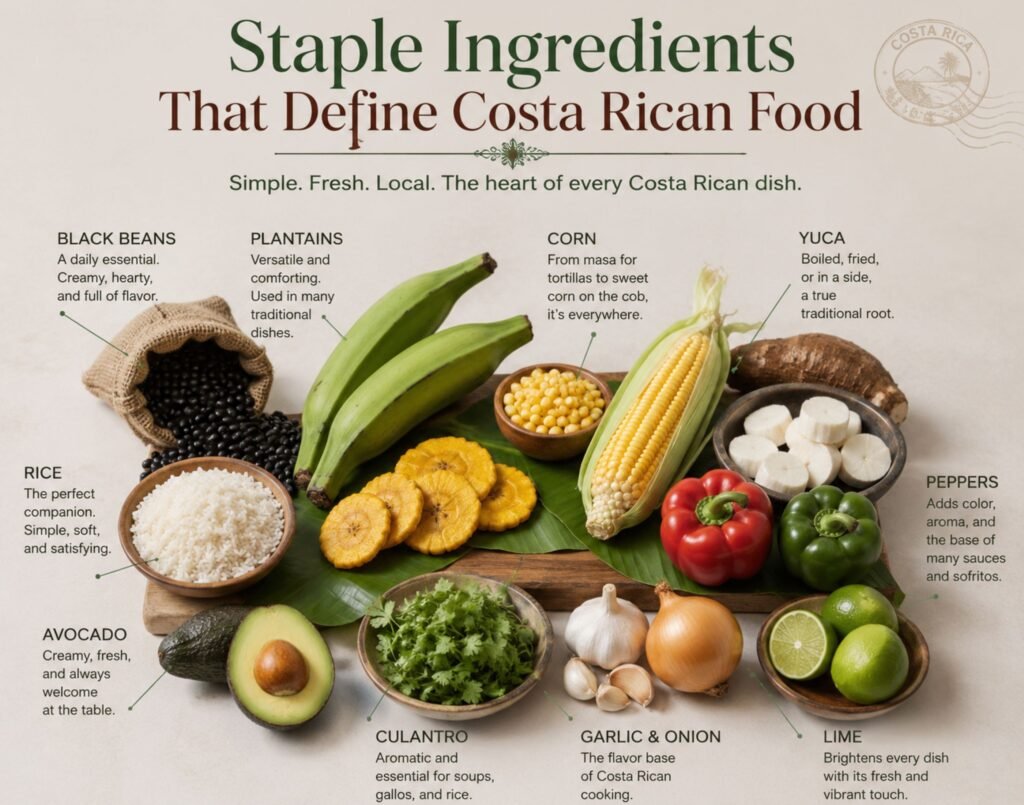
Every cuisine has its foundation, and Costa Rican food builds its foundation on just a few key ingredients. These staples appear in almost every meal, from breakfast to dinner, and they carry deep cultural meaning.
Rice and Black Beans: A Classic Comfort Food
Rice and black beans form the heart of nearly every traditional Costa Rican dish. Locals eat them together so often that the combination has become a cultural symbol. Moreover, cooks prepare these two ingredients in different ways depending on the time of day. For example, cooks often mix rice and beans together for breakfast but serve them separately at lunch and dinner. In addition, the beans carry a deep earthiness that pairs perfectly with the mild, fluffy rice.
Corn
Corn holds a sacred place in Central American food history, and Costa Rica is no exception. Cooks use corn to make tortillas, tamales, and corn porridge called “atol.” Furthermore, corn appears in both savory and sweet dishes, making it one of the most versatile ingredients in the country’s pantry.
Tropical Fruits and Vegetables
Costa Rica’s tropical climate produces an abundance of fresh fruits and vegetables. Therefore, cooks use plantains, yuca, chayote, and heart of palm regularly in traditional meals. In addition, fruits like mango, papaya, and guanábana appear fresh or in juices called “frescos.” As a result, Costa Rican food always feels vibrant and alive with natural color.
Must-Try Costa Rican Food Dishes for Every Traveler
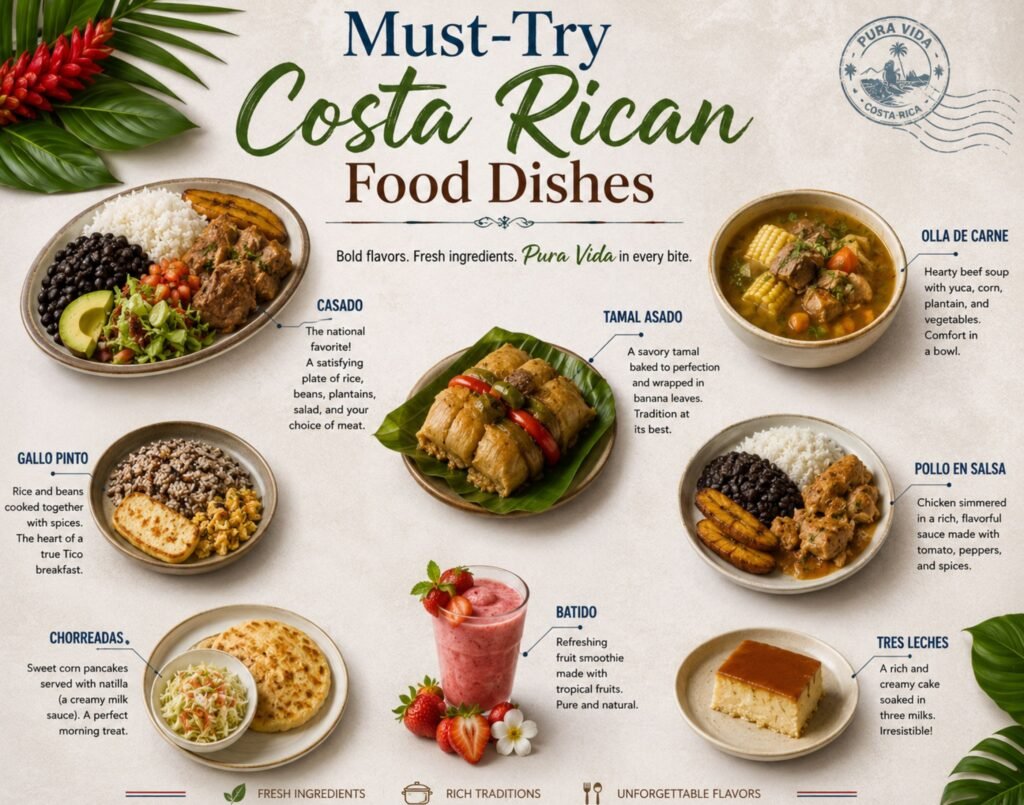
If you want to experience authentic Costa Rican food, start with these iconic dishes. Each one reflects a different side of the country’s culinary soul.
Gallo Pinto : The National Breakfast
Gallo pinto stands as the undisputed king of Costa Rican breakfasts. Cooks prepare this dish by stir-frying leftover rice and black beans together in a pan with onions, sweet peppers, cilantro, and a splash of Salsa Lizano, a mild, tangy Worcestershire-style sauce. Furthermore, locals eat gallo pinto alongside eggs, sour cream, and fresh tortillas every single morning. Moreover, the name literally means “spotted rooster,” which describes the speckled look of the black beans mixed through the white rice. Many travelers claim that gallo pinto alone makes the trip to Costa Rica worthwhile.
Casado : The Complete Lunch
Casado means “married man” in Spanish, and this dish truly brings everything together under one roof. A typical casado plate includes rice, black beans, a protein such as chicken, beef, fish, or pork, a small salad, fried plantains, and often a vegetable stew. Therefore, casado delivers a full, balanced meal in one serving. In addition, restaurants across the country offer casado as their daily lunch special, which makes it the most widely eaten midday meal in Costa Rica. Furthermore, the generous portion and affordable price make it a favorite among locals and visitors alike.
Olla de Carne : The Comfort Soup
Olla de carne translates directly to “pot of meat,” and this hearty soup lives up to its name. Cooks slow-cook beef with a mix of root vegetables including yuca, chayote, potatoes, corn on the cob, and plantains in a rich savory broth. Moreover, families traditionally prepare olla de carne on Sundays as a gathering dish. As a result, the soup carries strong emotional meaning as a symbol of family, warmth, and home. In addition, the combination of tender meat and starchy vegetables makes it one of the most filling traditional Costa Rican dishes available.
Arroz con Leche : The Classic Dessert
No exploration of Costa Rican food is complete without tasting arroz con leche. Cooks prepare this creamy rice pudding by simmering rice in whole milk with sugar, cinnamon, and vanilla. Furthermore, they often add a pinch of cloves or a strip of lemon zest for extra depth. As a result, the dessert delivers a warm, fragrant sweetness that feels both simple and luxurious. Moreover, arroz con leche appears at family celebrations, school cafeterias, and roadside sodas alike, which proves its universal popularity.
Chifrijo : The Beloved Bar Snack
Chifrijo combines two words: chicharrón (fried pork) and frijoles (beans), and the dish lives up to both. Cook’s layer rice, beans, chicharrón, pico de gallo, and tortilla chips in a bowl or glass. Therefore, chifrijo delivers crunch, richness, and freshness in every spoonful. In addition, locals typically enjoy chifrijo with a cold beer at a local “soda,” the Costa Rican term for a casual, family-run eatery.
Regional Variations in Costa Rica Cuisine
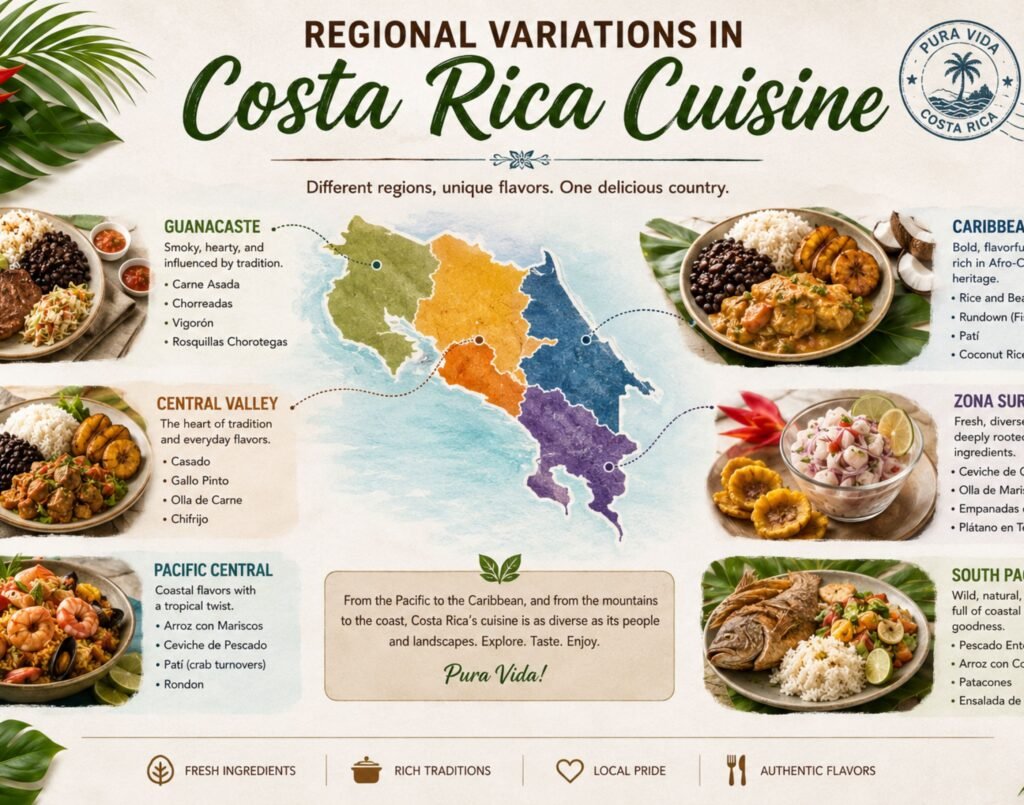
Costa Rica may be a small country, but its cuisine changes significantly from region to region. Furthermore, geography and history shape the local food identity in each area.
Caribbean Coast Cuisine
The Caribbean coast, especially around Limón, showcases the strongest Afro-Caribbean influence in Costa Rican cuisine. Cooks here use coconut milk generously in rice dishes, seafood stews, and even chicken preparations. Moreover, dishes like “rice and beans”, distinct from gallo pinto, cook the rice directly in coconut milk with kidney beans, which creates a richer, creamier texture. In addition, spices like allspice and thyme appear more prominently in this region than anywhere else in the country.
Central Valley and Highlands
The Central Valley around San José represents the heart of traditional Costa Rican food. Therefore, visitors find the most classic versions of casado, gallo pinto, and olla de carne in this region. Furthermore, the cooler highland climate supports vegetables like potatoes, carrots, and chayote, which appear frequently in local cooking. In addition, dairy farming thrives in the highlands, so fresh cheese and sour cream play important roles in highland meals.
Authentic Costa Rican Food in San José
Visitors who want to taste real, authentic Costa Rican food should look for local sodas. These small, family-owned restaurants serve home-style cooking at very affordable prices. Moreover, sodas rarely advertise aggressively locals simply know where the good ones are. Therefore, asking a local for their favorite soda always leads to the best meals.
In addition, local markets called “mercados” offer incredible food experiences. For example, the Mercado Central in San José buzzes with vendors serving everything from fresh ceviche to hot tamales. Furthermore, street food stalls near bus stops and parks sell quick snacks like chorreadas (corn pancakes) and empanadas throughout the day. As a result, excellent Costa Rican food is never far away, no matter where you travel in the country.
Fresh Ingredients in Costa Rican Food Culture
Costa Ricans do not simply eat to survive, they eat to connect. Therefore, mealtimes carry deep social meaning in this country. Families gather around the table every day, and hosts always offer food to guests as a sign of warmth and respect. Moreover, the phrase “Pura Vida,” which translates to “pure life,” applies perfectly to the food culture. Costa Rican food is honest, uncomplicated, and made with care.
Furthermore, sustainability plays a growing role in the country’s food identity. Many Costa Rican cooks prioritize locally grown ingredients, seasonal produce, and traditional farming methods. As a result, the food here tastes fresh and genuine in a way that processed, industrial food simply cannot match. In addition, the country’s commitment to environmental preservation naturally extends to its food practices, which makes Costa Rican food a model of responsible, joyful eating.
Conclusion
Costa Rican food is more than a collection of recipes; it is an expression of identity, community, and joy. From the humble gallo pinto at breakfast to the hearty casado at lunch and the soul-warming olla de carne on Sunday afternoons, every dish carries meaning. Furthermore, the rich blend of indigenous, Spanish, and Afro-Caribbean influences gives this cuisine a depth and character that rewards every curious eater. Therefore, whether you visit Costa Rica in person or recreate these dishes at home, you will discover that Costa Rican food nourishes not just the body but also the spirit. As the locals say, Pura Vida.
FAQs
Q: What is the most popular dish in Costa Rican food?
A: Gallo pinto, a flavorful mix of rice and black beans cooked with Salsa Lizano, is the most iconic and widely eaten dish in Costa Rica.
Q: Is Costa Rican food spicy?
A: Costa Rican food is generally mild, relying on fresh herbs, Salsa Lizano, and aromatics rather than hot chili peppers for flavor.
Q: What do Costa Ricans eat for breakfast?
A: Most Costa Ricans start their day with gallo pinto, eggs, sour cream, fresh tortillas, and a cup of locally grown coffee.
Q: What is a “soda” in Costa Rica?
A: A soda is a small, family-owned restaurant in Costa Rica that serves affordable, home-style traditional Costa Rican dishes daily.
Q: Does Costa Rican food have vegetarian options?
A: Yes, many traditional Costa Rican dishes like gallo pinto, rice and beans, and vegetable-based casados are naturally vegetarian-friendly.