
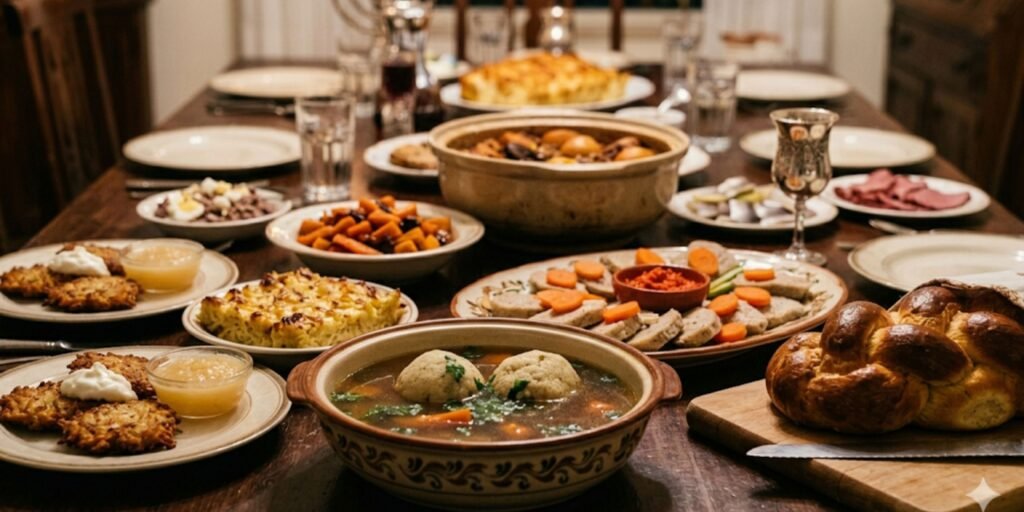
Jewish Food is one of the most diverse and culturally rich cuisines in the world. It carries thousands of years of history, tradition, and meaning in every single dish. Whether you are tasting a warm bowl of matzo ball soup or biting into a fresh piece of challah bread, you are experiencing something truly special. Jewish cuisine reflects the journey of the Jewish people across continents, cultures, and centuries. In this guide, you will discover the origins, traditions, flavors, and health benefits that make Jewish Food so unique and beloved worldwide.
The Rich History and Origins of Jewish Cuisine
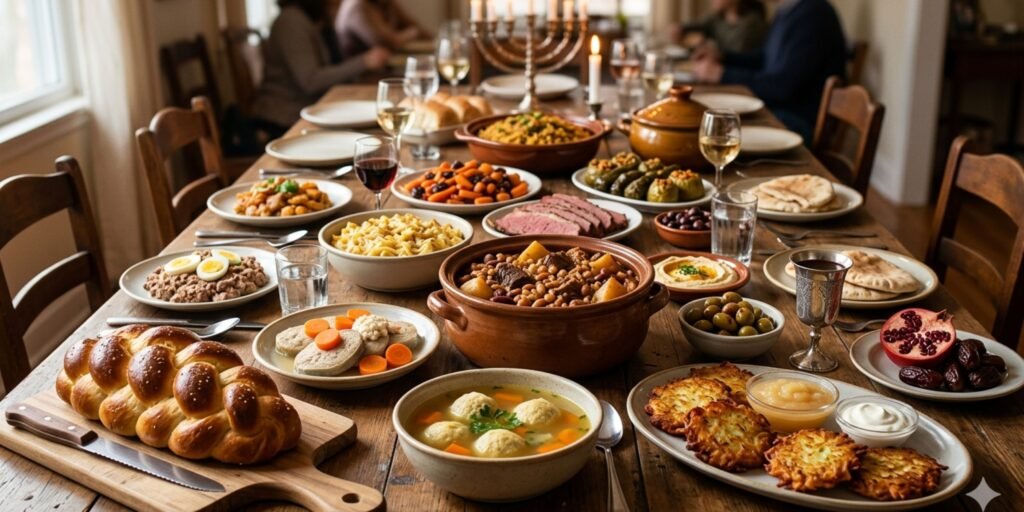
Jewish Food has deep roots that go back more than 3,000 years. The Bible itself mentions many foods that Jewish people still enjoy today figs, olives, pomegranates, and honey, for example. Over centuries, Jewish communities spread across the world. As a result, they absorbed local flavors and cooking styles while still following their own food laws.
Furthermore, two major branches shaped Jewish cuisine into what it is today. Ashkenazi Jews settled in Eastern Europe, while Sephardic Jews made their homes across the Middle East, North Africa, and Spain. Both communities developed their own unique dishes, ingredients, and cooking methods. However, both traditions share the same foundation the laws of kosher food.
Understanding the Key Principles of Kosher Food
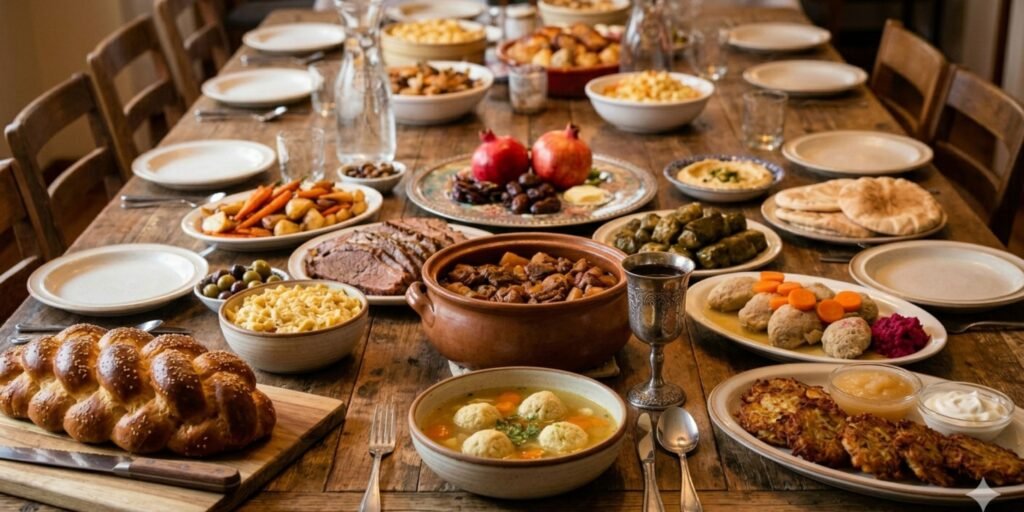
Kosher food follows a set of dietary laws from the Torah. These rules guide what Jewish people can eat and how they prepare their meals. For example, kosher laws forbid mixing meat and dairy in the same meal. In addition, they allow only certain animals cows, chickens, and fish with fins and scales- while pork and shellfish are not.
Therefore, kosher cooking requires separate utensils, pots, and even refrigerators for meat and dairy. Many traditional Jewish dishes reflect these rules directly. For instance, chicken soup contains no dairy, and cheesecake uses no meat. Understanding kosher principles helps you appreciate why Jewish Food tastes and looks the way it does.
Popular Ashkenazi Jewish Food Dishes You Must Try

Ashkenazi food comes from Jewish communities in Poland, Russia, Germany, and Hungary. This cuisine uses hearty ingredients like potatoes, beets, cabbage, and cured fish. Moreover, Ashkenazi cooking reflects the cold European climate where these communities lived for centuries.
Matzo Ball Soup
This classic Jewish comfort food features soft, fluffy dumplings in a golden chicken broth. Many families pass down their matzo ball recipes from generation to generation. Furthermore, Jewish people traditionally serve this soup during Passover and Shabbat meals.
Brisket
Slow-cooked beef brisket is a staple of Ashkenazi Jewish homes. Cooks braise it for hours with onions, carrots, and tomatoes until it becomes incredibly tender. As a result, it fills the entire kitchen with a warm, rich aroma.
Gefilte Fish
Gefilte fish consists of ground fish formed into patties or balls and poached in broth. Many Ashkenazi families serve it as a starter on Shabbat and Jewish holidays. On the other hand, modern cooks now experiment with new versions using fresh herbs and spices.
Latkes
These crispy potato pancakes are a beloved Hanukkah treat. Cooks grate potatoes and fry them until golden and crunchy. People typically serve latkes with sour cream or applesauce — both equally delicious choices.
Exploring Sephardic Jewish Dishes
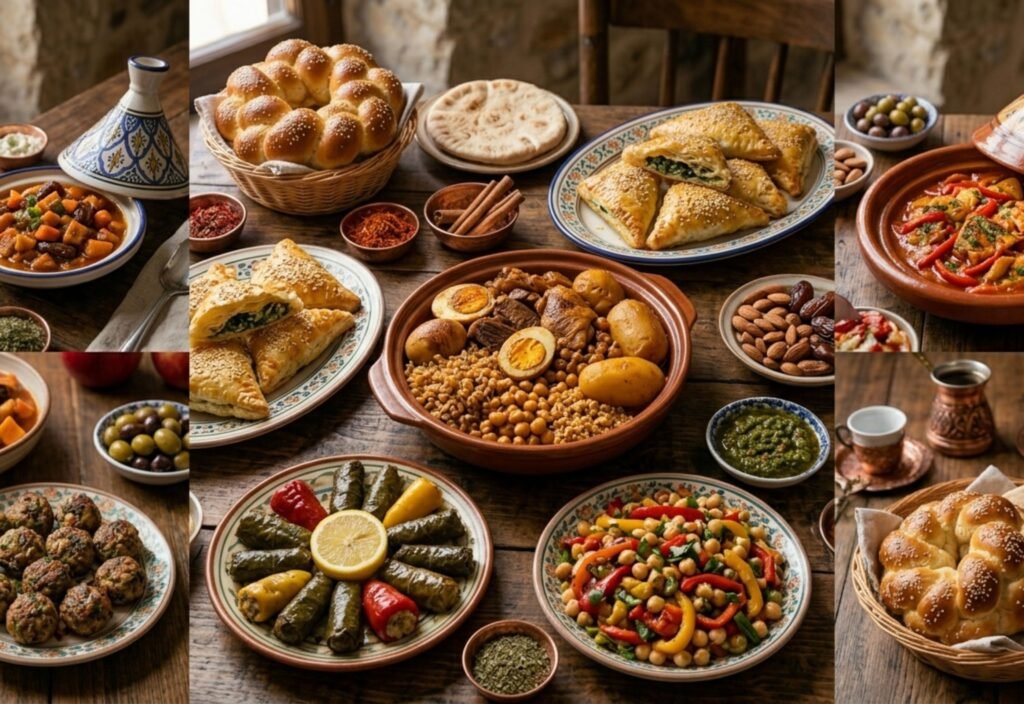
Sephardic Jewish cuisine brings warmth, color, and bold spices to the table. These dishes come from Jewish communities in Morocco, Turkey, Israel, Iran, and Iraq. Therefore, Sephardic food uses ingredients like chickpeas, lentils, eggplant, saffron, and fresh herbs.
Shakshuka Jewish Food
This vibrant dish features eggs poached directly in a spiced tomato and pepper sauce. It works perfectly as a breakfast, lunch, or dinner option. In addition, it requires simple ingredients that most people already keep at home.
Moroccan Lamb Tagine Food
Slow-cooked lamb with honey, dried apricots, almonds, and warm spices like cinnamon and cumin — this dish represents Sephardic cooking at its finest. Furthermore, the combination of sweet and savory flavors creates something truly unforgettable.
Stuffed Vegetables (Dolmas)
Sephardic cooks love filling vegetables like zucchini, bell peppers, and grape leaves with spiced rice or meat. Meanwhile, they simmer them slowly in a tangy tomato broth. The result is a deeply satisfying and aromatic meal.
Traditional Jewish Holiday Foods
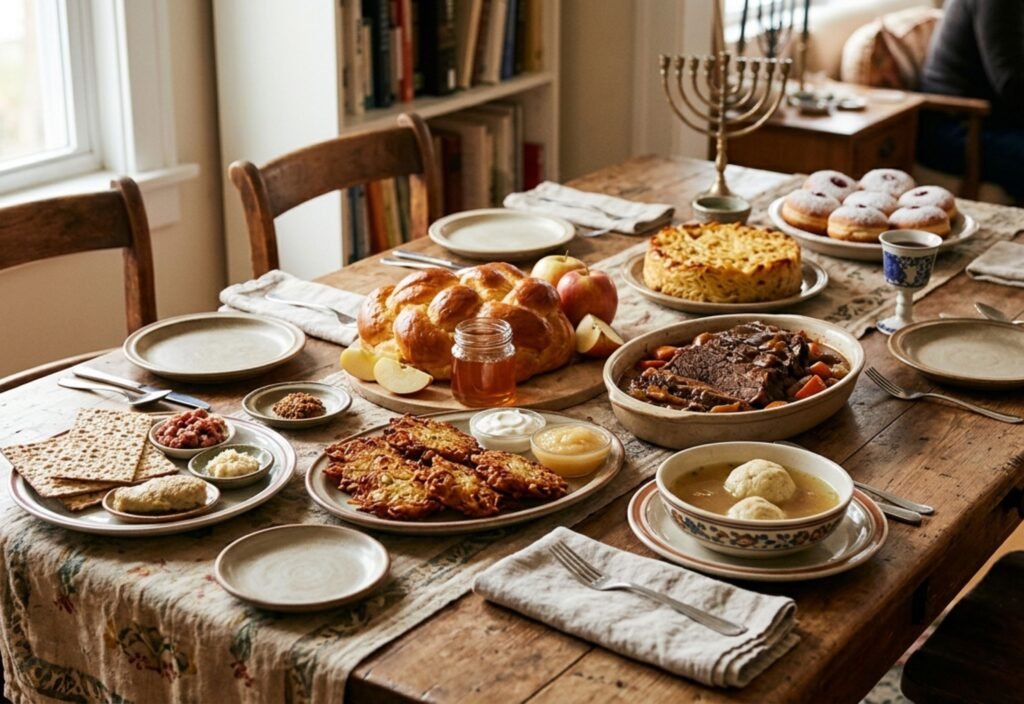
Jewish holidays revolve around food. Each celebration brings its own set of special dishes that carry deep meaning and memory.
Passover Food
During Passover, Jewish people avoid all leavened bread. Instead, they eat matzo a flat, unleavened cracker. Furthermore, the Passover Seder plate includes symbolic foods like bitter herbs, charoset (a sweet fruit paste), and a lamb bone.
Shabbat Meals
Every Friday night, Jewish families welcome the Sabbath with a festive dinner. Shabbat meals often include challah bread, chicken soup, roasted chicken, and kugel (a baked noodle or potato pudding). In addition, families light candles and say blessings over wine before eating together.
Hanukkah jewish Foods
Hanukkah celebrates the miracle of oil, so people fry most traditional foods during this holiday. Latkes and sufganiyot (jelly-filled doughnuts) are the two most popular Hanukkah treats. As a result, kitchens smell incredible during the eight nights of celebration.
Famous Jewish Breads and Desserts

Jewish bakers have created some of the world’s most beloved breads and sweets. These recipes combine centuries of tradition with incredible flavor.
Challah
Challah is a braided egg bread that Jewish families eat every Shabbat and on holidays. Its golden crust and soft, pillowy interior make it impossible to resist. Furthermore, bakers often add raisins or honey during the Jewish New Year to symbolize a sweet new year.
Rugelach
These small crescent-shaped pastries come filled with jam, nuts, cinnamon, or chocolate. Rugelach originally came from Eastern European Jewish kitchens. Today, however, bakeries all over the world sell them because everyone loves them.
Matzo
Matzo is the simplest Jewish food just flour and water baked quickly. However, it carries enormous symbolic importance during Passover. Moreover, people enjoy matzo year-round with butter, cream cheese, or smoked salmon.
Jewish Food Around the World
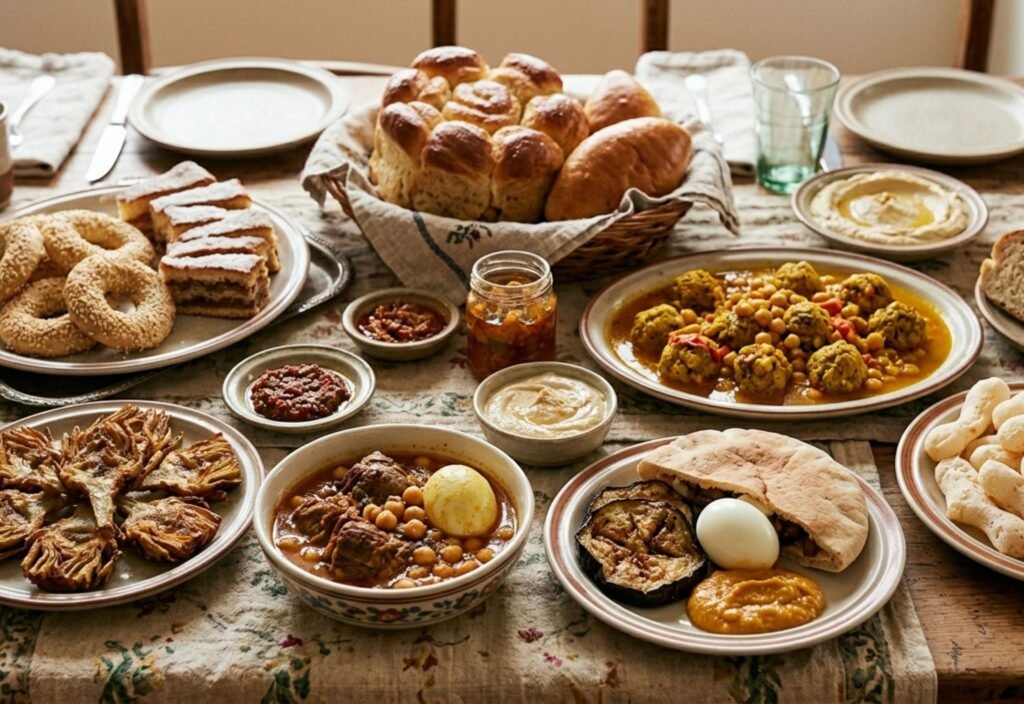
Jewish communities exist on every continent, and each one developed its own local food traditions. For example, Indian Jewish cuisine from the Bene Israel community uses coconut milk and curry spices in their Jewish recipes. Meanwhile, Ethiopian Jewish food known as Beta Israel cuisine features injera flatbread and spiced stews.
In America, Jewish delis became cultural institutions. They serve towering pastrami sandwiches, bagels with lox, and black-and-white cookies. Therefore, American Jewish Food has become a distinct and celebrated cuisine of its own. Israeli food, on the other hand, blends Ashkenazi and Sephardic traditions with Middle Eastern influences, creating a bold, modern Jewish cuisine that the whole world now admires.
Health Benefits and Nutritional Value of Jewish Food
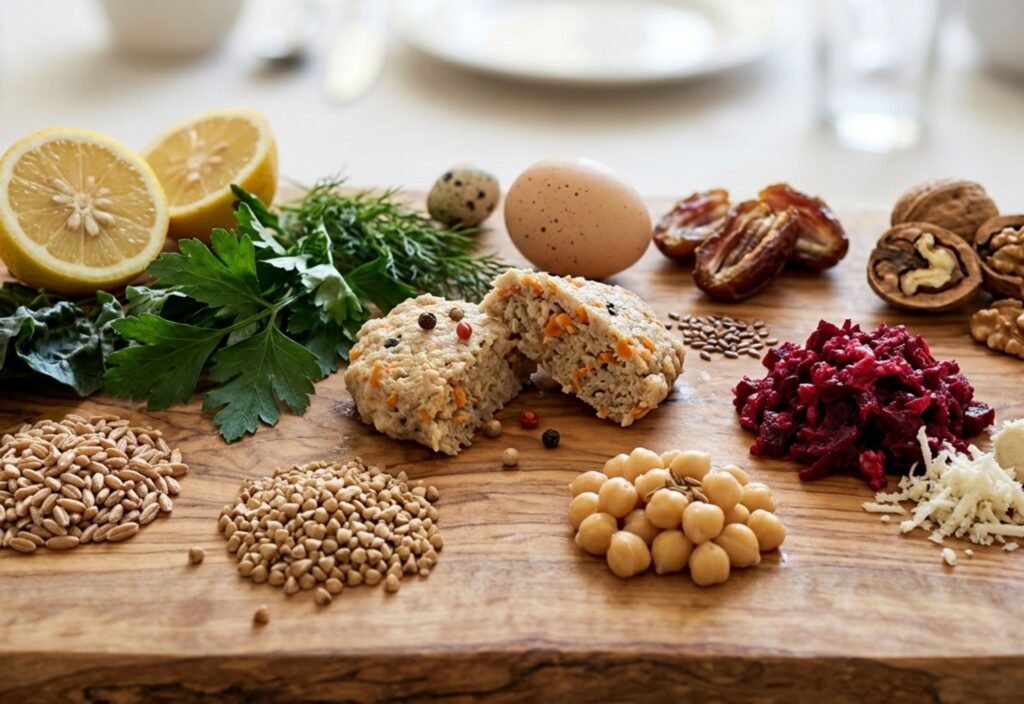
Many traditional Jewish dishes offer real nutritional benefits. For example, chicken soup contains minerals and collagen that support your immune system. In addition, lentil soups and chickpea dishes provide excellent plant-based protein and fiber.
Furthermore, Sephardic cooking relies heavily on olive oil, fresh vegetables, and legumes, all key components of the Mediterranean diet. As a result, many Sephardic dishes naturally support heart health and healthy digestion. Meanwhile, fermented foods like pickles and sauerkraut, common in Ashkenazi kitchens, promote healthy gut bacteria. Therefore, Jewish Food is not just delicious. It is genuinely good for your body too.
Conclusion
Jewish Food tells a story that spans thousands of years, dozens of countries, and millions of families. From the smoky brisket of an Ashkenazi grandmother’s kitchen to the saffron-scented rice of a Sephardic Shabbat table, every dish carries love, memory, and meaning. Furthermore, Jewish cuisine continues to evolve and inspire chefs around the globe.
Now it is your turn to explore this incredible world of flavor. Try a new Jewish recipe this week, visit a local Jewish deli, or cook a traditional dish for your family. You will not just enjoy a great meal you will connect with one of the world’s oldest and most beautiful food cultures.
FAQs
Q1: What is Jewish Food?
A: Jewish Food refers to the traditional dishes and culinary practices of Jewish communities worldwide, shaped by kosher laws and diverse cultural influences.
Q2: What does kosher food mean?
A: Kosher food follows Jewish dietary laws from the Torah, which regulate which foods people can eat and how they must prepare them.
Q3: What do Jewish people eat during Passover?
A: During Passover, Jewish people eat matzo instead of leavened bread and prepare special symbolic foods for the Seder meal.
Q4: What is the difference between Ashkenazi and Sephardic food?
A: Ashkenazi food comes from Eastern European Jewish communities and features hearty dishes, while Sephardic food comes from Middle Eastern and Mediterranean communities and uses bold spices.
Q5: Is Jewish Food healthy?
A: Yes, many Jewish dishes, especially Sephardic recipes rich in legumes, vegetables, and olive oil, offer significant nutritional and health benefits.