
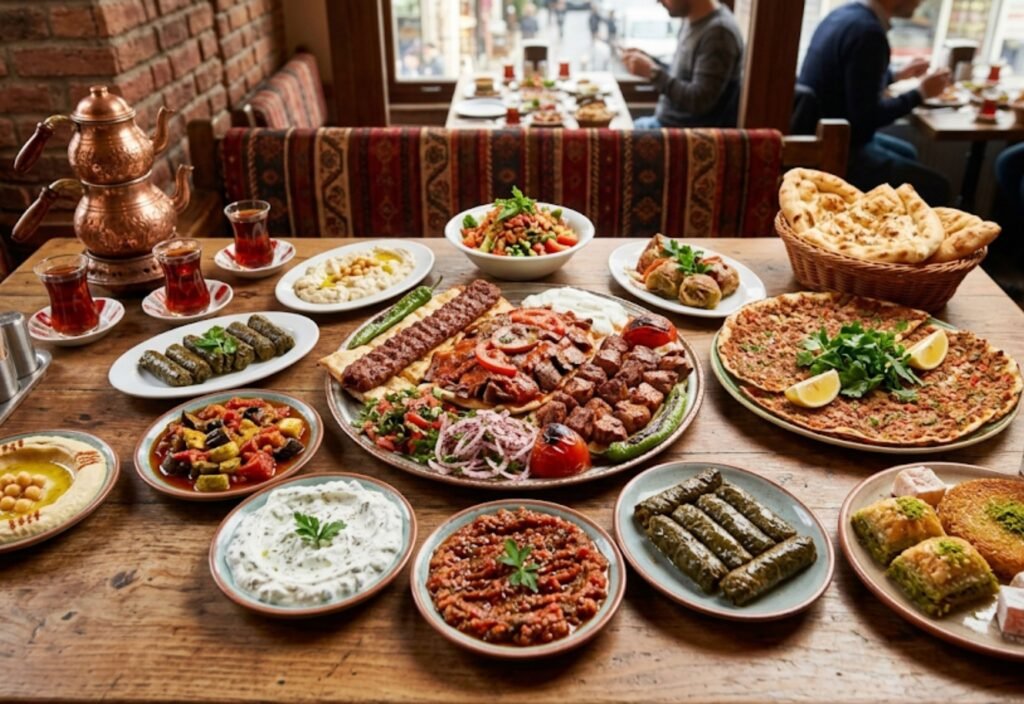
Turkish Food is one of the most beloved and diverse cuisines in the entire world. It blends bold flavors, fresh ingredients, and centuries-old cooking traditions into every single dish. Whether you enjoy rich meat stews, flaky pastries, or vibrant vegetable spreads, Turkish Food offers something truly special for every taste.
Turkey sits at the crossroads of Europe and Asia. As a result, its cuisine draws influences from both continents, creating a unique and unforgettable culinary identity. Furthermore, the country’s geography from its fertile plains to its Mediterranean coastline gives Turkish cooks access to an incredibly wide range of fresh ingredients.
If you have never tried Turkish Food before, you are in for a real treat.
The History and Cultural Roots of Turkish Food
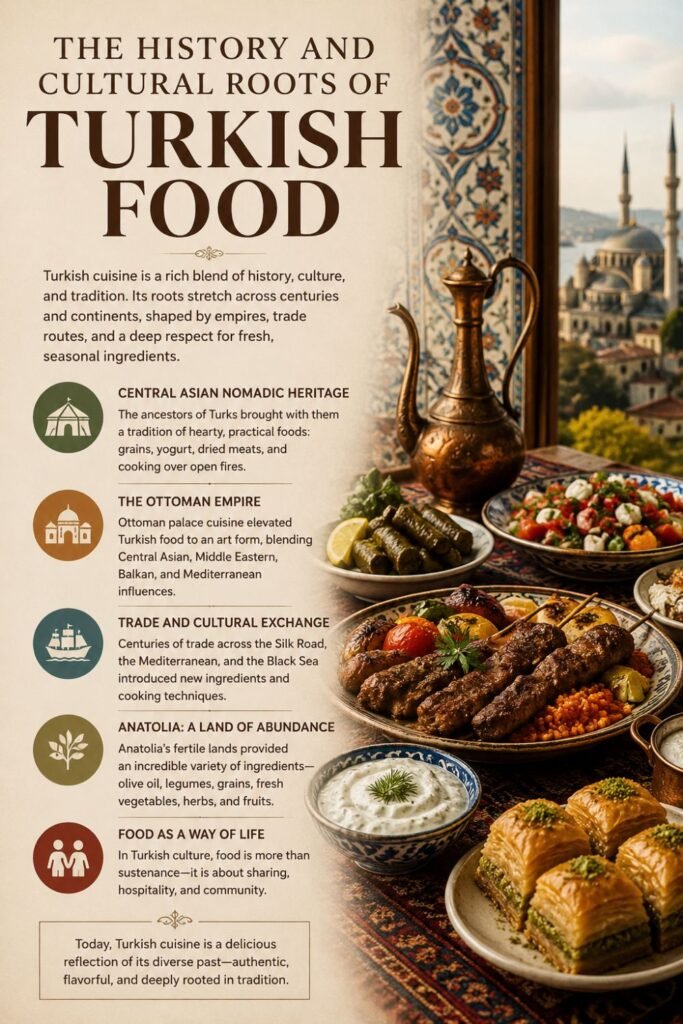
Turkish Food carries a history that stretches back more than a thousand years. The Ottoman Empire played a massive role in shaping this cuisine. Palace chefs in Istanbul experimented with exotic spices, meats, and cooking techniques, and those traditions still live on today.
Moreover, Turkish Food absorbed influences from Central Asia, the Middle East, the Balkans, and the Mediterranean. Each region added its own ingredients and cooking styles. Over time, all these flavors came together to form the rich and layered cuisine Turkey is famous for today.
Food in Turkish culture goes far beyond just eating. It represents hospitality, family, and celebration. Turks take great pride in feeding their guests well, and a meal shared around the table is a deeply meaningful event.
Most Popular Turkish Food Dishes

Kebabs The Crown Jewel
When most people think of Turkish Food, kebabs come to mind first. Turkey offers dozens of kebab varieties, and each region has its own signature style. Adana kebab, for example, uses spicy minced meat pressed onto a flat skewer. Döner kebab, on the other hand, features thin slices of seasoned meat carved from a rotating vertical spit.
In addition to these, Iskender kebab tops tender lamb slices with rich tomato sauce and melted butter over a bed of pita bread. Every bite delivers a burst of flavor that is hard to forget.
Meze The Endless Appetizer Spread
No Turkish meal begins without meze. These are small, shareable dishes that set the table before the main course arrives. Hummus, stuffed grape leaves (dolma), smoky eggplant dip (baba ghanoush), and white bean salad all appear on a typical meze table.
Furthermore, meze encourages people to eat slowly, talk, and enjoy each other’s company. It is not just food it is an experience.
Bread and Börek
Turks love bread deeply. Fresh, crusty simit, a sesame-covered circular bread, fills the streets of every Turkish city every morning. Moreover, börek is another staple, made from thin layers of phyllo dough stuffed with cheese, spinach, or minced meat.
Börek appears at breakfast, lunch, and dinner. It is simple, satisfying, and absolutely delicious.
Soups and Stews
Turkish cooks make hearty soups that warm the soul. Mercimek çorbası, a red lentil soup, is one of the most common dishes across the country. Additionally, işkembe çorbası (tripe soup) is a traditional late-night remedy that locals swear by after a long evening.
Sweets and Desserts
Turkish Food shines brightest when it comes to sweets. Baklava, layers of phyllo pastry soaked in sweet syrup and filled with pistachios, is the most iconic dessert. Furthermore, künefe — a warm cheese pastry drizzled with syrup delivers a gooey, crispy combination that dessert lovers cannot resist.
Turkish delight (lokum) also deserves a special mention. These soft, chewy candies come in rose, pistachio, and pomegranate flavors. They make wonderful gifts and even better snacks.
Turkish Food Ingredients and Spices
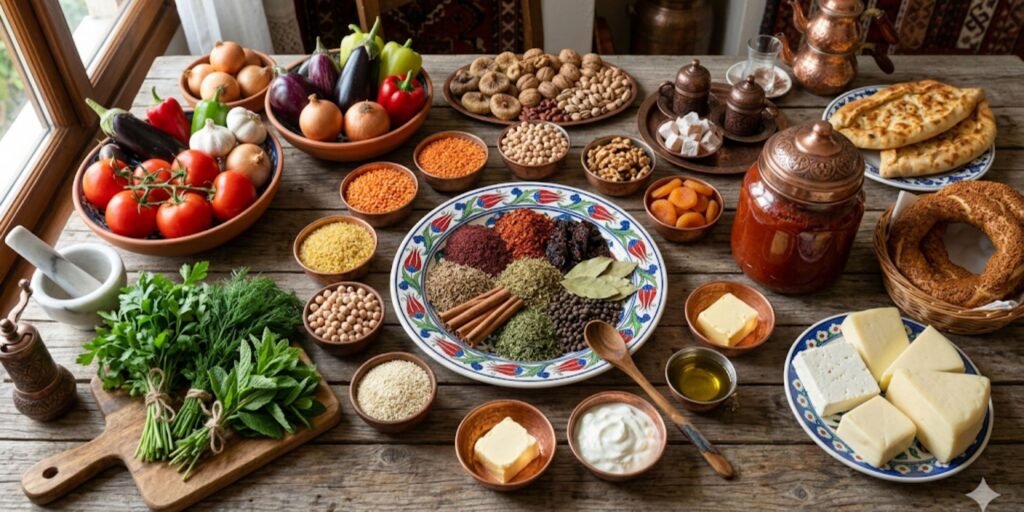
The secret behind great Turkish Food lies in its ingredients. Turkish cooks use fresh, seasonal produce and layer flavors carefully. Some key ingredients include:
- Olive oil the base of countless dishes, especially in the Aegean region
- Sumac a tart, ruby-red spice that adds brightness to meats and salads
- Red pepper flakes (pul biber) a staple in every Turkish kitchen
- Cumin and coriander warm spices that flavor meat dishes and soups
- Fresh herbs parsley, mint, and dill appear in salads, dips, and garnishes
In addition, Turkish cooks use pomegranate molasses to add a sweet and sour depth to dishes. Yogurt also plays a starring role across the cuisine, appearing in sauces, dips, and desserts.
Turkish Food and Healthy Eating
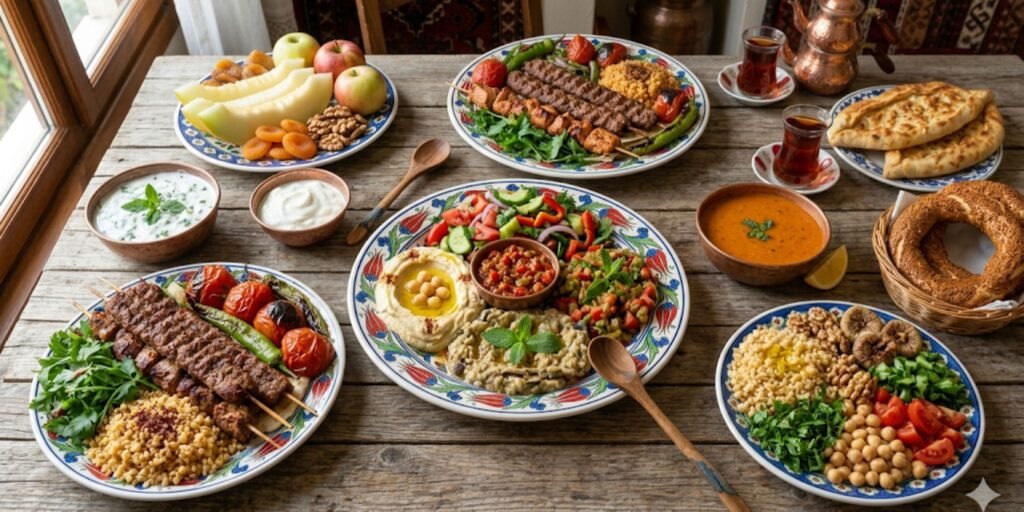
Many people do not realize how nutritious Turkish Food actually is. The cuisine naturally emphasizes vegetables, legumes, whole grains, and lean proteins. Moreover, olive oil replaces heavy animal fats in many recipes, which makes the food heart-friendly.
Dishes like mercimek soup, grilled kebabs, and stuffed peppers pack a serious nutritional punch. They deliver protein, fiber, and vitamins without relying on processed ingredients. Furthermore, the Mediterranean diet, which Turkish Food closely resembles, consistently ranks among the healthiest diets in the world.
Therefore, if you want to eat well without sacrificing flavor, Turkish Food is an excellent choice.
Turkish Food Around the World

Turkish Food has earned a devoted fan base far beyond Turkey’s borders. Today, you can find Turkish restaurants in New York, London, Berlin, Sydney, and almost every major city on the planet. Döner kebab shops, in particular, have become incredibly popular in Europe.
Moreover, the global popularity of Turkish Food continues to grow. Food travel shows, cooking videos, and social media have introduced millions of new fans to the cuisine. Chefs around the world now draw inspiration from Turkish cooking techniques and flavor combinations.
As a result, Turkish Food has firmly established itself as a global culinary powerhouse. It no longer belongs only to Turkey; it belongs to the world.
How to Make a Simple Turkish Food Recipe at Home: Red Lentil Soup
You do not need to travel to Turkey to enjoy great Turkish Food. This simple red lentil soup takes about 30 minutes and uses ingredients you can find in most grocery stores.
Ingredients:
- 1 cup red lentils
- 1 onion, finely chopped
- 2 garlic cloves, minced
- 1 tablespoon olive oil
- 1 teaspoon cumin
- 1 teaspoon red pepper flakes
- 4 cups vegetable broth
- Salt and pepper to taste
- Fresh lemon juice for serving
Instructions:
- Heat olive oil in a large pot over medium heat. Add the onion and cook for 5 minutes until soft.
- Add garlic, cumin, and red pepper flakes. Stir for one minute to release the spices’ aroma.
- Add the lentils and vegetable broth. Bring everything to a boil, then reduce the heat and simmer for 20 minutes.
- Blend the soup until smooth using an immersion blender.
- Season with salt and pepper. Squeeze fresh lemon juice over each bowl before serving.
This soup is warm, nourishing, and genuinely tastes like something a Turkish grandmother would make. Moreover, it keeps well in the fridge for up to three days.
FAQs
Q: What is the most popular Turkish Food dish?
A: Kebab is the most iconic and widely recognized dish in all of Turkish cuisine.
Q: Is Turkish Food spicy?
A: Turkish Food uses flavorful spices, but most dishes are mildly spiced rather than intensely hot.
Q: What do Turks typically eat for breakfast?
A: A traditional Turkish breakfast includes olives, cheese, eggs, tomatoes, cucumbers, bread, and tea.
Q: Is Turkish Food healthy?
A: Yes, Turkish Food is naturally rich in vegetables, legumes, lean proteins, and heart-healthy olive oil.
Q: What is the most famous Turkish dessert?
A: Baklava, a sweet pastry made with layers of phyllo dough, nuts, and syrup, is Turkey’s most beloved dessert.
Conclusion
Turkish Food is more than just a meal it is a journey through history, culture, and flavor. From the smoky grills of a kebab house to the sweet counters of a baklava shop, every bite tells a story. Furthermore, this cuisine welcomes everyone, whether you eat meat, follow a vegetarian diet, or simply love bold and satisfying food.
So go ahead and explore Turkish Food. Try a new dish, cook a simple recipe at home, or visit a Turkish restaurant near you. You will quickly understand why millions of people around the world consider it one of the greatest cuisines on earth.