
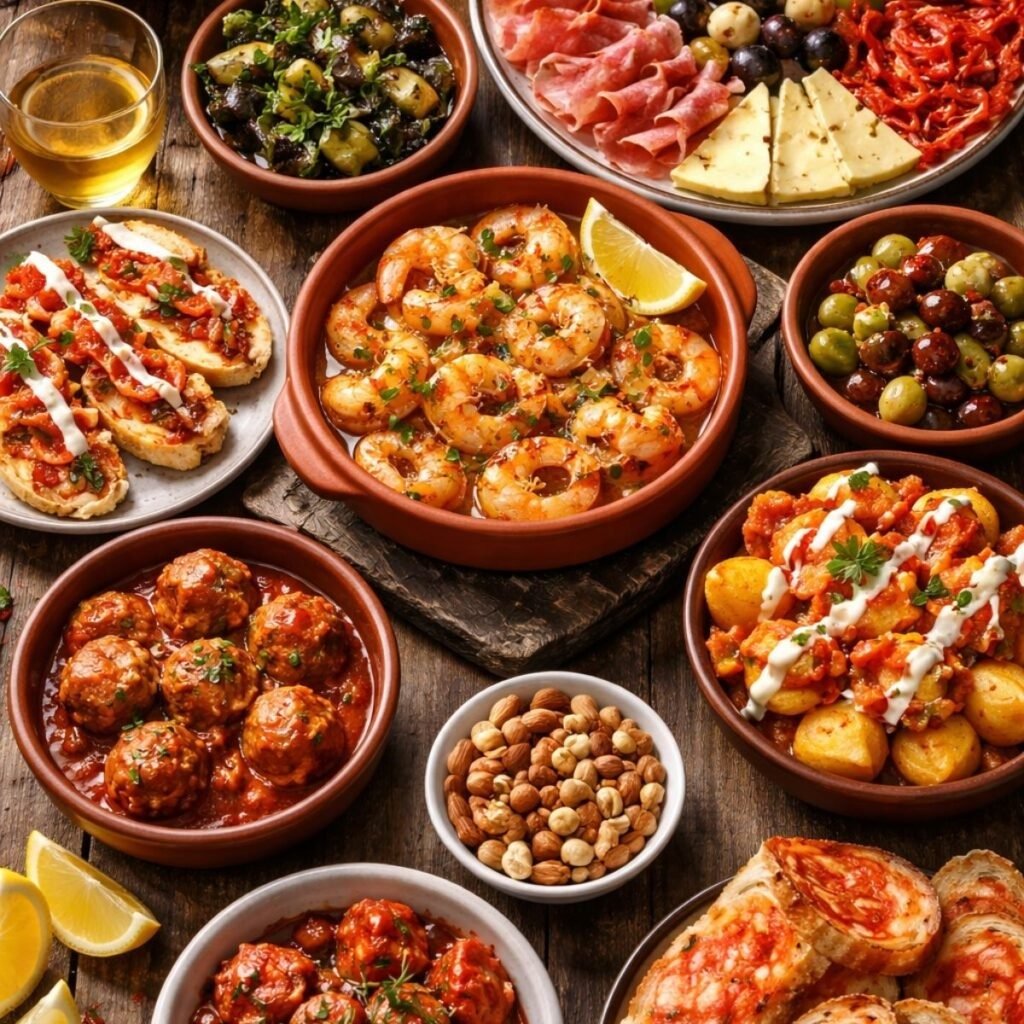
Tapas food has become a symbol of Spanish culture and culinary tradition. Originating in Spain, tapas are small, flavorful dishes often served as appetizers or snacks but can also form an entire meal when combined. These dishes are designed to be shared, making tapas a social experience that brings friends and family together over good food and conversation.
The concept of tapas food has transcended Spain and is now enjoyed worldwide. From traditional classics like patatas bravas and gambas al ajillo to modern interpretations, tapas offers something for every palate.
Delicious Tapas Food Ideas for Every Occasion
A tapas platter is an ideal way to experience a variety of flavors in one sitting, combining meats, cheeses, seafood, vegetables, and more. Similarly, the mezze platter, popular in Mediterranean and Middle Eastern cuisine, shares the concept of a shared plate filled with diverse small dishes, highlighting the universality of communal dining.
In this article, we’ll explore the history of tapas, the most popular dishes, tips for creating your own tapas platter at home, and how it relates to similar shared dining experiences like the mezze platter. Additionally, we’ll answer common questions about tapas to help you enjoy this rich culinary tradition fully.
Delicious Tapas Food Ideas for Every Occasion
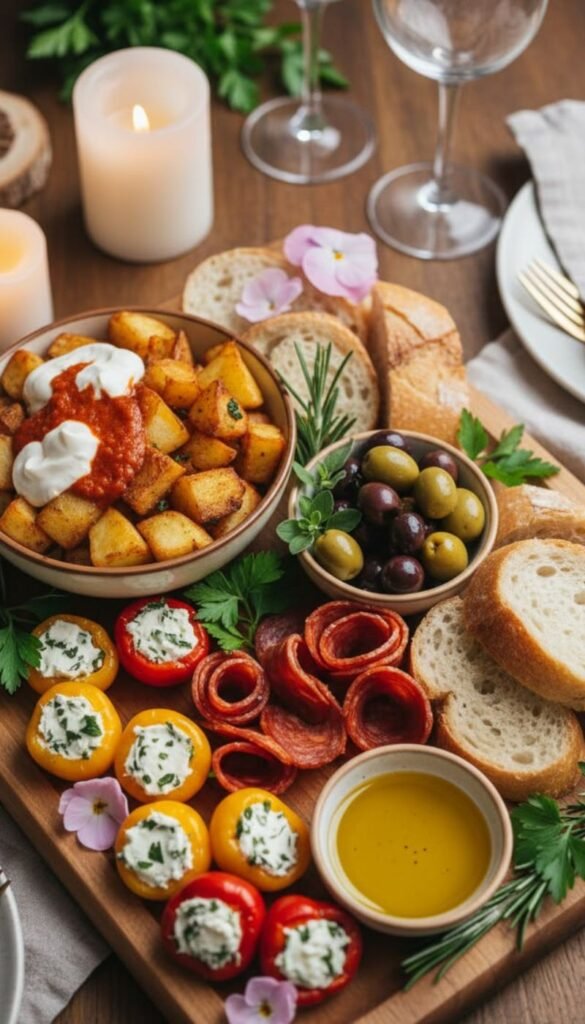
The word “tapas” comes from the Spanish verb tapar, meaning “to cover.” Originally, tapas were slices of bread or meat placed over drinks in taverns to keep out flies and dust. Over time, these simple coverings evolved into more elaborate small plates, showcasing local ingredients and culinary creativity.
Historically, tapas served as a way for people to enjoy drinks socially without getting too intoxicated because the small plates encouraged slower consumption. Today, tapas food has become an essential part of Spanish culture, with tapas bars found in almost every city and town.
Popular Tapas Dishes To Try
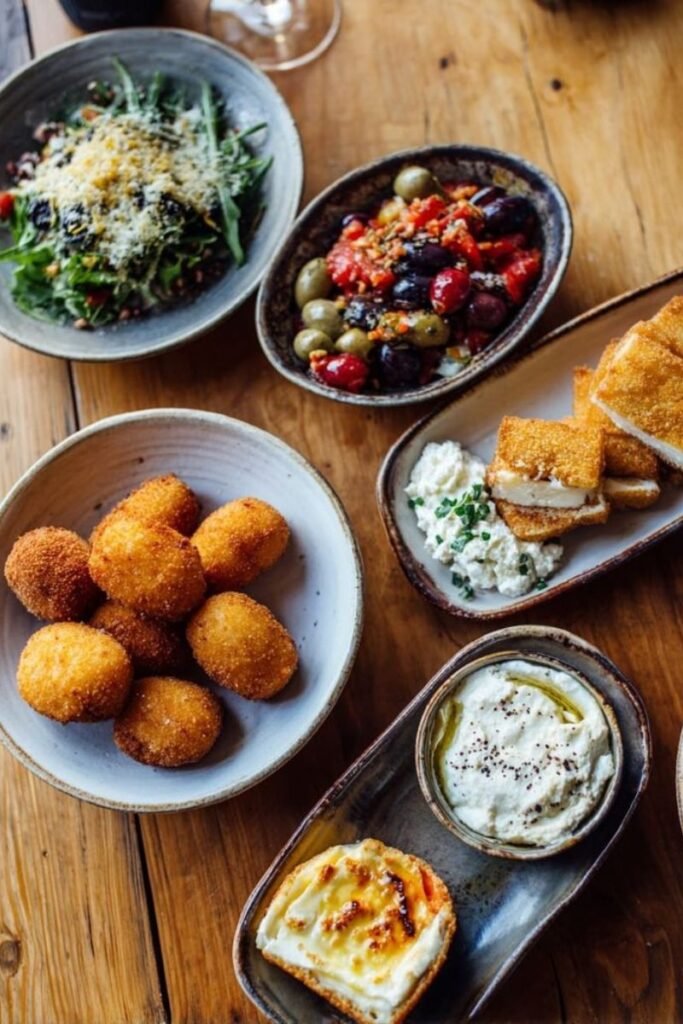
- Patatas Bravas – Crispy fried potatoes served with a spicy tomato sauce and aioli.
- Gambas al Ajillo – Shrimp sautéed in garlic, olive oil, and chili, often served sizzling hot.
- Chorizo a la Sidra – Spicy Spanish sausage cooked in cider, creating a savory, slightly sweet dish.
- Tortilla Española – A Spanish omelet made with eggs, potatoes, and onions.
- Jamón Ibérico – Cured Iberian ham, thinly sliced and often paired with Manchego cheese.
- Croquetas – Deep-fried rolls filled with béchamel and ingredients like ham, chicken, or mushrooms.
- Pan con Tomate – Toasted bread rubbed with fresh tomato, olive oil, and garlic.
- Classic Spanish Tapas Food Favorites
Other dishes might include olives, pickled vegetables, and cheeses, all arranged beautifully on a tapas platter to maximize variety and flavor.
Classic Spanish Tapas Food Platters
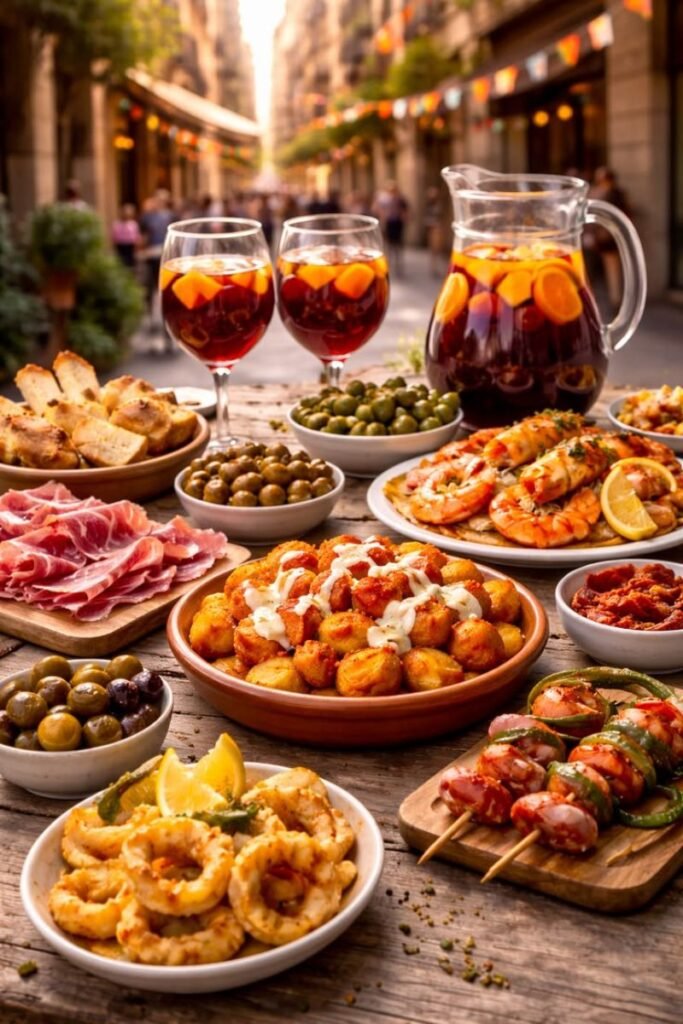
A traditional tapas platter often includes a variety of hot and cold dishes.
Here are some classic options:
Mezze platter components often include:
- Hummus, baba ganoush, and tzatziki
- Stuffed grape leaves (dolmas)
- Falafel and grilled meats
- Fresh vegetables and olives
- Pita bread for dipping
The key difference lies in flavor profiles and ingredients: tapas are Mediterranean-Spanish with olive oil, seafood, and cured meats as staples, while mezze often focuses on legumes, yogurt, and herbs like mint and parsley. Both encourage communal dining and allow diners to sample a wide variety of tastes.
How to Create Your Own Tapas Food Platter at Home
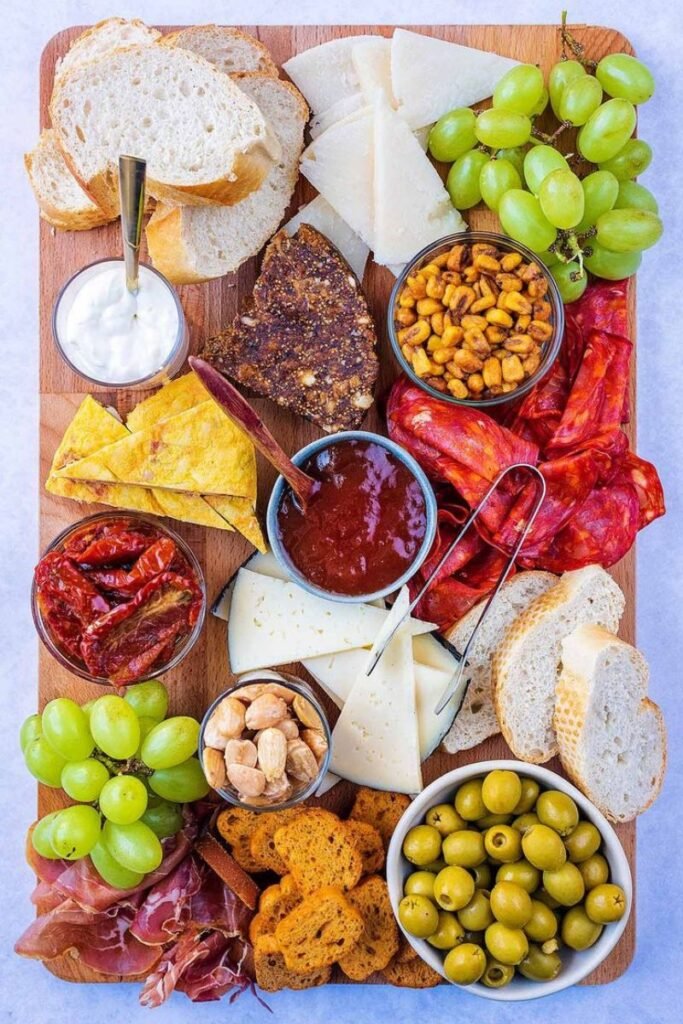
You don’t have to travel to Spain to enjoy tapas. Here’s how you can create your own tapas platter at home:
Step 1: Choose Your Base
Start with a mix of breads such as baguette slices, rustic rolls, or crackers to serve as a foundation for various toppings.
Step 2: Include Hot and Cold Dishes
Balance your platter with hot options like fried potatoes or garlic shrimp and cold options such as cured meats, cheeses, and marinated olives.
Step 3: Add a Variety of Flavors
Ensure your platter has a combination of spicy, savory, sweet, and tangy elements. For example, pair sweet roasted peppers with salty jamón ibérico.
Step 4: Garnish and Serve
Use fresh herbs like parsley, rosemary, or chives to enhance flavor and visual appeal. Serve with small plates, forks, or toothpicks to encourage sharing.
Tapas Food and Spanish Culture
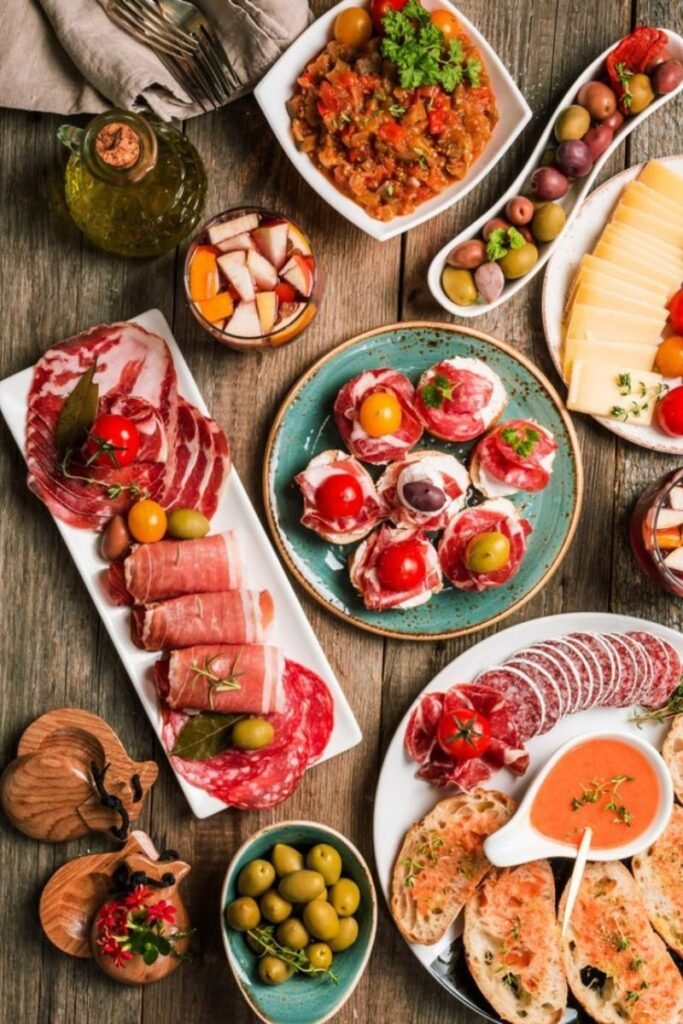
Tapas are more than just food; they reflect the Spanish way of life. The culture of tapas food emphasizes socializing, savoring flavors slowly, and enjoying a meal as an experience rather than just nourishment. Tapas bars are often lively, with patrons standing at the counter, chatting, and sharing dishes.
Spain even has the tradition of tapeo, which means going from one tapas bar to another, sampling a dish at each location. This highlights the communal nature of tapas and the joy of discovering new flavors in a social setting.
Health Benefits of Tapas Food
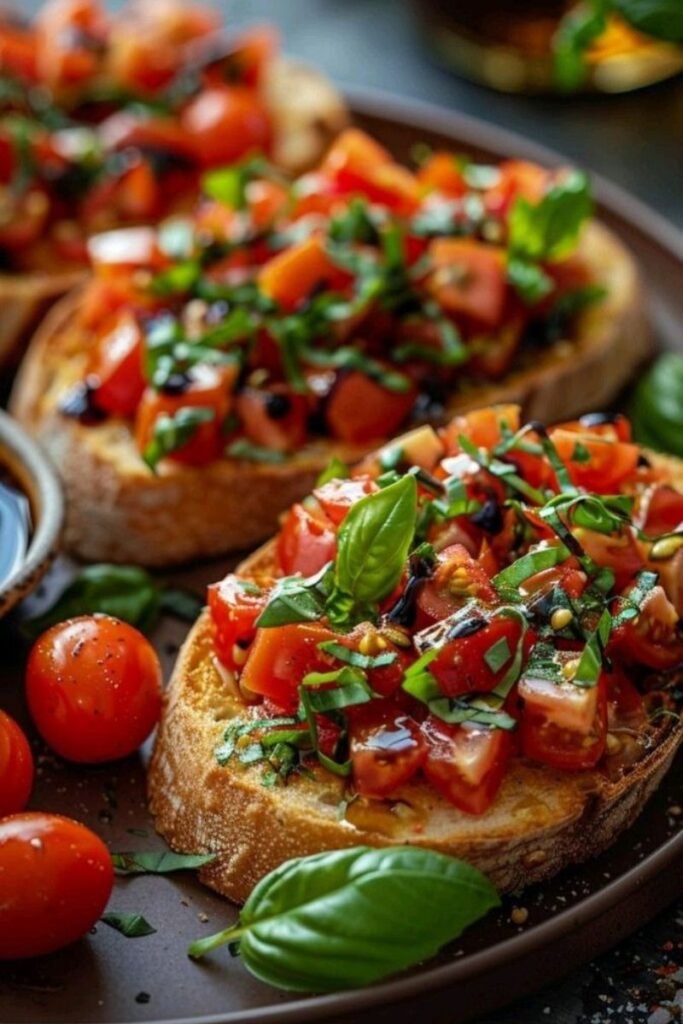
Contrary to misconceptions about fried or rich foods, a well-balanced tapas platter can be healthy due to its variety and inclusion of fresh ingredients:
- Vegetables: Many tapas dishes include tomatoes, peppers, and greens, which are rich in vitamins and antioxidants.
- Seafood: Dishes like garlic shrimp provide protein and omega-3 fatty acids.
- Olive Oil: Common in Spanish cuisine, olive oil is a heart-healthy fat that adds flavor without processed ingredients.
- Portion Control: The small-plate format naturally limits overeating, encouraging moderation.
FAQs.
1. What is tapas food?
Tapas food refers to small Spanish dishes served as appetizers or snacks. These dishes can range from fried potatoes to seafood and cured meats, often enjoyed in a social, communal setting.
2. What is a tapas platter?
A tapas platter is an assortment of different tapas dishes served together on a single plate or tray. It allows diners to experience a variety of flavors in one meal.
3. How is a tapas platter different from a mezze platter?
Both involve shared plates, but a tapas platter is Spanish and focuses on cured meats, seafood, and olive oil-based dishes, while a mezze platter is Mediterranean/Middle Eastern, emphasizing legumes, yogurt, herbs, and grilled vegetables.
4. Can tapas food be healthy?
Yes, if it includes fresh vegetables, seafood, and olive oil, tapas can be a nutritious way to enjoy a variety of flavors without overeating.
5. Can tapas food be made at home?
Absolutely! By selecting a mix of hot and cold dishes, meats, cheeses, and vegetables, you can easily create a tapas platter at home for gatherings or family meals.
Conclusion:
Tapas food represents the essence of Spanish culinary tradition: sharing, variety, and enjoyment. From classic dishes like patatas bravas and garlic shrimp to the modern innovations seen on tapas platters, these small plates offer something for every taste. Similar shared dining experiences, like the mezze platter, highlight how cultures around the world value communal meals and flavor exploration.
Whether enjoyed in a bustling Spanish tapas bar or recreated at home, tapas food brings people together, turning meals into an experience of conversation, laughter, and unforgettable taste. By exploring tapas, you not only enjoy delicious food but also connect with centuries of culinary history and social tradition.
So, next time you plan a gathering, consider preparing a tapas platter or even a mezze platter, and watch as friends and family delight in the shared joy of small, flavorful bites.